Category
page 1Extant Late Cretaceous first appearances

bird
Birds are a group of warm-blooded theropod dinosaurs constituting the class Aves, characterised by feathers, toothless beaked jaws, the laying of hard-shelled eggs, a high metabolic rate, a four-chambered heart, and a strong yet lightweight skeleton. Birds live worldwide and range in size from the bee hummingbird to the common ostrich. There are over 11,000 living species and they are split into 44 orders. More than half are passerine or "perching" birds. Birds have wings whose development varies according to species; the only known groups without wings are the extinct moa and elephant birds.

Siluriformes
Catfish are a diverse group of ray-finned fish of the order Siluriformes (historically Nematognathi). Catfish are named for their prominent barbels, which resemble a cat's whiskers, though not all catfish have prominent barbels. All Siluriformes lack scales, instead possessing either smooth skin or armour-plated bodies. This order of fish are defined by features of the skull (such as maxillae modified into the barbels' bases) and swimbladder. Catfish range in size and behavior from the three largest species alive, the Mekong giant catfish from Southeast Asia, the wels catfish of Eurasia, and t

Asparagales
Asparagales (asparagoid lilies) are a diverse order of flowering plants in the monocots. Under the APG IV system of flowering plant classification, Asparagales are the largest order of monocots with 14 families, 1,122 genera, and about 36,000 species, with members as varied as asparaguses, orchids, yuccas, irises, onions, garlics, leeks, and other alliums, daffodils, snowdrops, amaryllis, agaves, butcher's broom, agapanthuses, Solomon's seal, hyacinths, bluebells, spider plants, grasstrees, aloes, freesias, gladioli and crocuses.

Phasmatodea
thumb|upright|Phasmid in marginal forest on a pitcher plant in the [[Philippines]]
The Phasmatodea (also known as Phasmida or Phasmatoptera) are an order of insects whose members are variously known as stick insects, stick bugs, walkingsticks, stick animals, or bug sticks. They are also occasionally referred to as '''Devil's darning needles, although this name is shared by both dragonflies and crane flies. They can be generally referred to as phasmatodeans, phasmids, or ghost insects, with phasmids in the family Phylliidae called leaf insects, leaf-bugs, walking leaves, or bug leaves'. The ord

Iguanidae
The Iguanidae is a family of lizards composed of the iguanas, chuckwallas, and their prehistoric relatives, including the widespread green iguana.

Anthocerotophyta
Hornworts are a group of non-vascular Embryophytes (land plants) constituting the division Anthocerotophyta (). The common name refers to the elongated horn-like structure, which is the sporophyte. As in mosses and liverworts, hornworts have a gametophyte-dominant life cycle, in which cells of the plant carry only a single set of genetic information; the flattened, green plant body of a hornwort is the gametophyte stage of the plant.
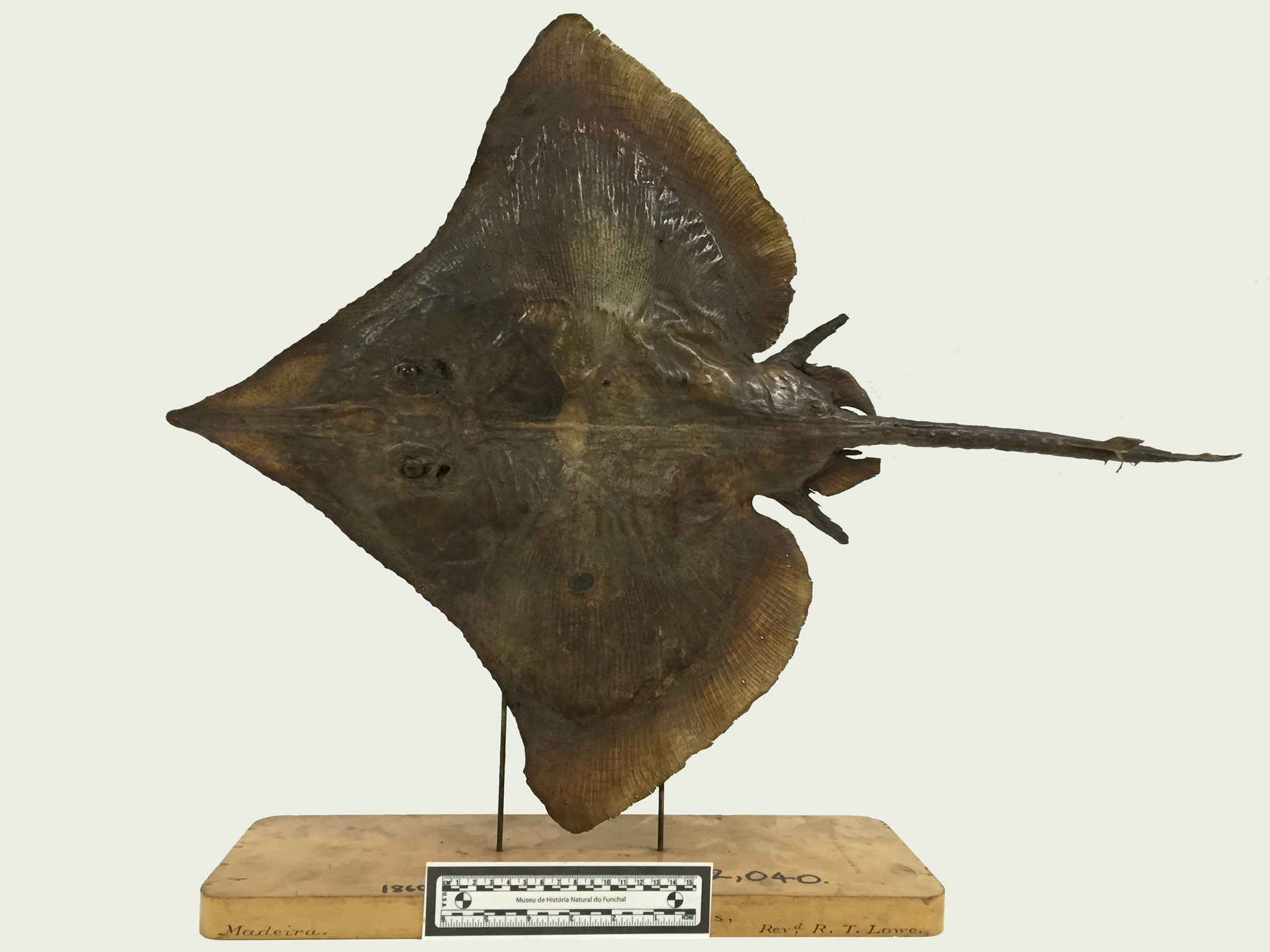
Rajidae
family of fishes

Taxodium
Taxodium is a genus of one to three species (depending on taxonomic opinion) of extremely flood-tolerant conifers in the cypress family, Cupressaceae. The name is derived from the Latin word taxus 'yew' and the Greek word εἶδος (eidos) 'similar to'. Within the family, Taxodium is most closely related to Chinese swamp cypress (Glyptostrobus pensilis) and sugi (Cryptomeria japonica).

Lamnidae
The Lamnidae are the family of mackerel sharks known as white sharks. They are large, fast-swimming predatory fish found in oceans worldwide, though they prefer environments with colder water. The name of the family is formed from the Greek word lamna, which means "fish of prey", and was derived from the Greek legendary creature, the Lamia.

mako shark
Isurus (meaning "equal tail") is a genus of mackerel sharks in the family Lamnidae, commonly known as the mako sharks. They are largely pelagic, and are fast, predatory fish capable of swimming at speeds of up to .

Squalidae
Squalidae, more commonly known as dogfish, dog sharks, or spiny dogfish, are one of several families of sharks categorized under Squaliformes, making it the second largest order of sharks, numbering 119 species across 7 families. Having earned their name after a group of fishermen reportedly observed the species chasing down smaller fish in dog-like packs, dogfish have slender, streamlined bodies, usually more compact in comparison to other species, and a pointed snout. Dogfish likewise have two dorsal fins, each with smooth spines, but no anal fin, and their skin is generally rough to the tou

Notacanthiformes
The Notacanthiformes are an order of deep-sea ray-finned fishes, consisting of the families Halosauridae and Notacanthidae (spiny eels).

newt
A newt is a salamander in the subfamily Pleurodelinae. The terrestrial juvenile phase is called an eft. Unlike other members of the family Salamandridae, newts are semiaquatic, alternating between aquatic and terrestrial habitats. Not all aquatic salamanders are considered newts, however. More than 100 known species of newts are found in North America, Europe, North Africa and Asia. Newts metamorphose through three distinct developmental life stages: aquatic larva, terrestrial juvenile (eft), and adult. Adult newts have lizard-like bodies and return to the water every year to breed, otherwise

Cercidiphyllum
Cercidiphyllum is a genus containing two species of plants, both commonly called katsura. They are the sole members of the monotypic family Cercidiphyllaceae. The genus is native to Japan and China and unrelated to Cercis (redbuds).

sand shark
family of fishes

Blattidae
Blattidae is a cockroach family in the order Blattodea containing several of the most common household cockroaches. Notable species include:
.jpg)
Pomacanthus
Pomacanthus from Ancient Greek poma, meaning "cover", and ákantha, meaning "spine", is a genus of marine angelfish that is usually found around reefs and coral. Some of the notable places one can see these vari-coloured fish includes the Maldives, Sri Lanka, and Sipidan off the southern coast of Sabah, Malaysia. Generally the patterns and colors of these fish undergo a major transformation from juvenile to adult forms. The juveniles may even appear to be a different species.
.jpg)
Atractosteus
Atractosteus (from Greek atraktos (ἀτρακτὀς), 'spindle' and osteon (ὀστέον), 'bone') is a genus of gars in the family Lepisosteidae, with three extant species. It is one of two surviving gar genera alongside Lepisosteus.

Charonia
right|thumb|X-ray image of the shell of Charonia lampas
Echinoida
Echinoida is an order of sea urchins in the class Echinoidea. They are distinguished from other sea urchins by simultaneously possessing both an un-sculpted test and a feeding lantern with large plates fused across the top of each pyramid.
Dermatemydidae
The Dermatemydidae are a family of turtles. The family was named by John Edward Gray in 1870, and its only extant genus is Dermatemys.

Metanephrops
Metanephrops is a genus of lobsters, commonly known as scampi. Important species for fishery include Metanephrops australiensis (Australian scampi) and Metanephrops challengeri (New Zealand scampi). It differs from other lobsters such as Homarus and Nephrops norvegicus in that its two main claws are of equal size, rather than being differentiated into a crusher and a pincher. There are 18 extant species recognised in the genus:

Gibbula
Gibbula is a genus of small sea snails, marine gastropod molluscs in the subfamily Cantharidinae of the family Trochidae, the top snails.

abalone
Abalone ( or ; via Spanish , from Rumsen aulón), in singular "an abalone", are sea snails in the genus Haliotis, the only genus in the family Haliotidae. Abalone shells are distinctive for their flattened, ear-like shape, nacreous interior, and row of holes used for respiration. The flesh of abalone is widely considered to be a delicacy, and is consumed raw or cooked by a variety of cuisines. Abalone are globally distributed, with approximately 70 known species alive today. Though some species are small, the largest abalone can attain a length of .
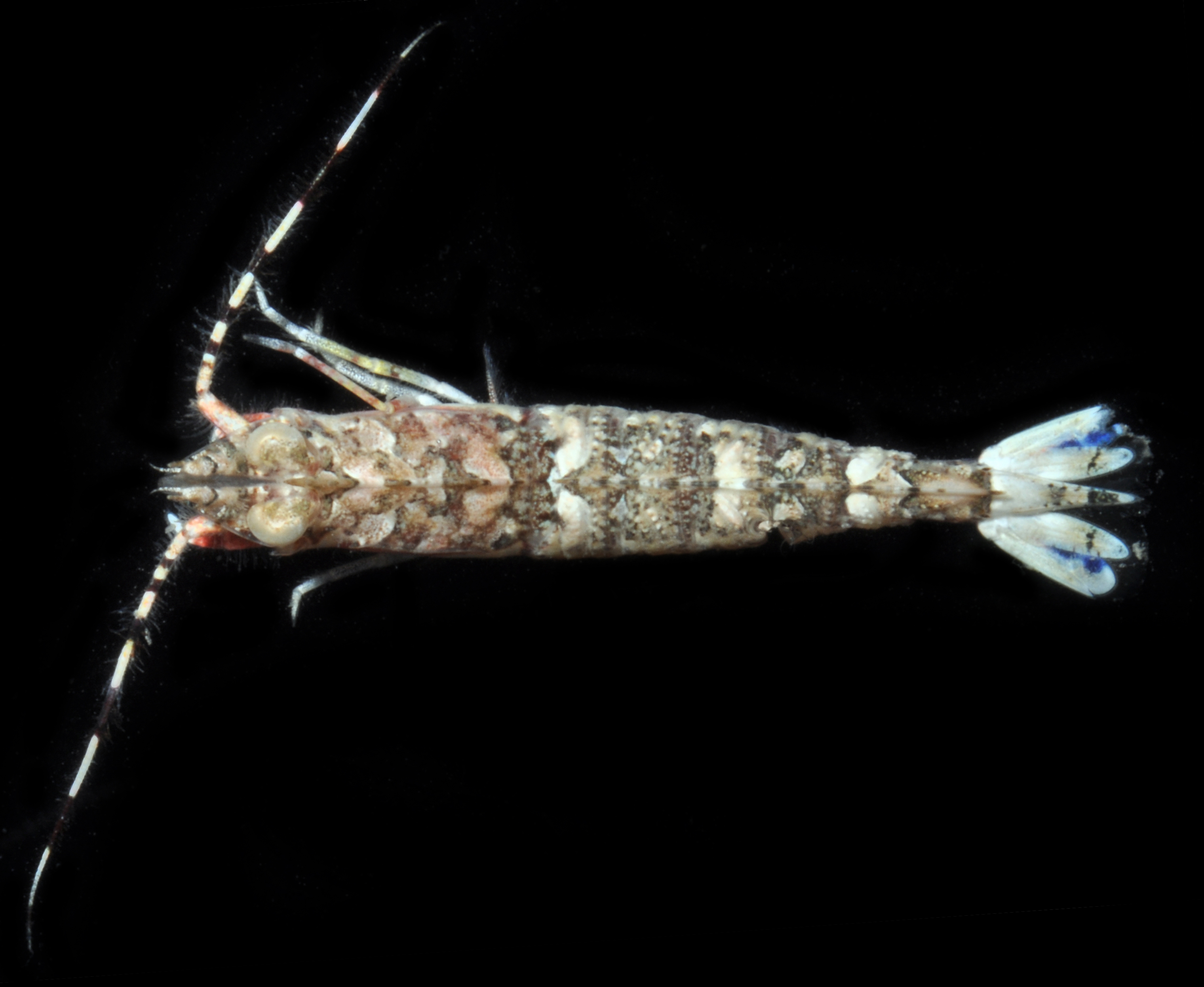
Sicyonia
Sicyonia is a genus of prawns, placed in its own family, Sicyoniidae. It differs from other prawns in that the last three pairs of its pleopods are uniramous, rather than biramous as seen in all other prawns.
Dorippoidea
Dorippoidea is a superfamily of crabs. The earliest fossils attributable to the Dorippoidea date from the Late Cretaceous.
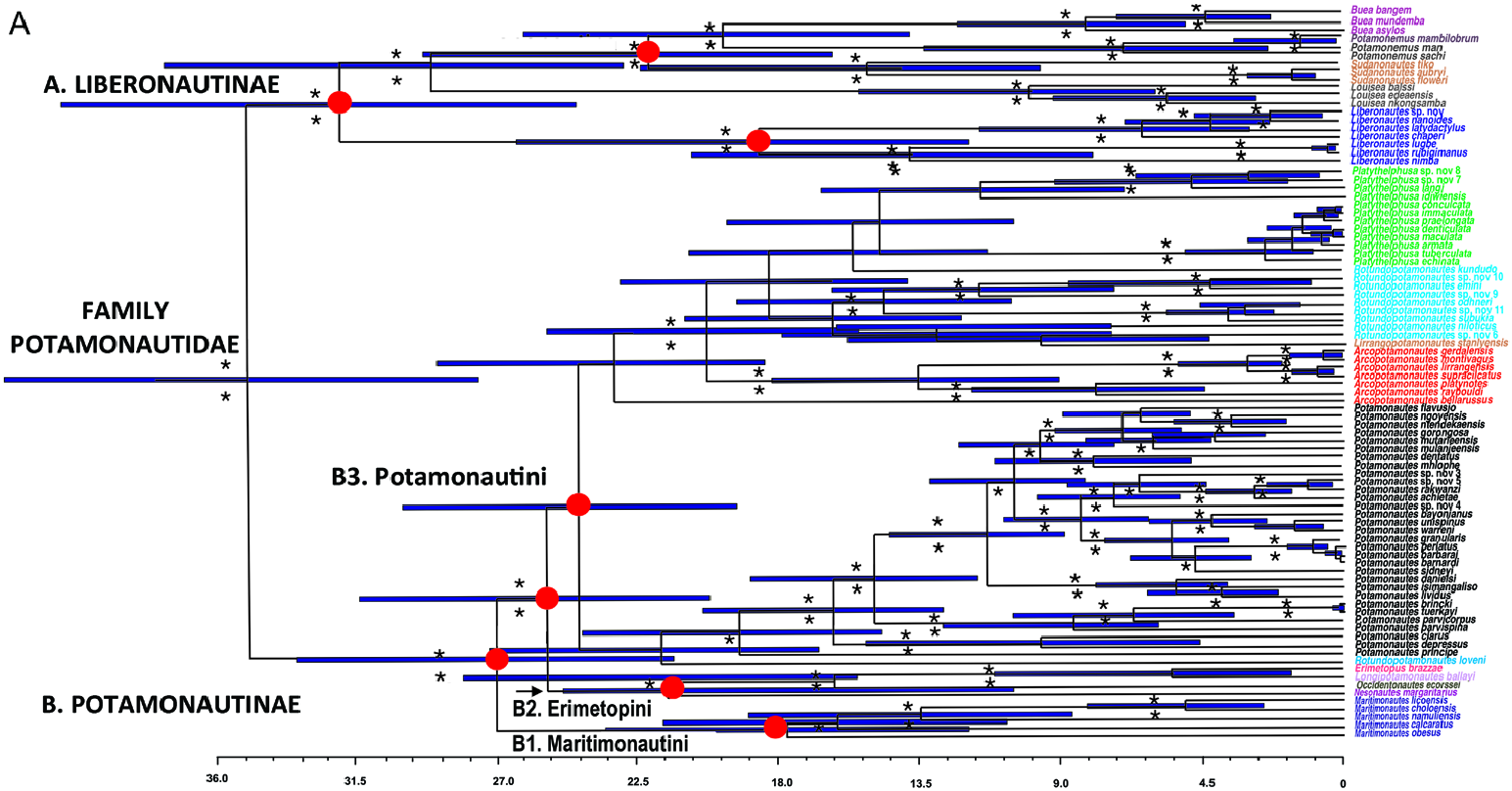
Potamonautes
Potamonautes is a genus of African freshwater crabs in the family Potamonautidae. It is both the most widespread and most diverse genus of African freshwater crabs, including more than half the species of this continent. They are found in most freshwater habitats of the African mainland and some species are semi-terrestrial.
Osteoglossinae
Osteoglossinae are a subfamily of freshwater bony fish, commonly known as arowanas or bonytongues (though the latter is also used for other osteoglossiform fish). The name "bonytongues" is derived from a toothed bone on the floor of the mouth, the "tongue", equipped with teeth that bite against teeth on the roof of the mouth. In this family of fish, the head is bony and the elongated body is covered by large, heavy scales, with a mosaic pattern of canals. The dorsal and anal fins have soft rays and have long fin origins, while the pectoral and ventral fins have stiffer, longer rays. Arowanas a

Cribrilinidae
The Cribrilinidae family is a part of the suborder Flustrina within the bryozoans. They are characterized by numerous spinose ribs (costae) overarching the frontal membrane of each zooid.

Catenicellidae
The Catenicellidae are a family of bryozoans in the suborder Flustrina.

Volutomitra
Volutomitra is a genus of sea snails, marine gastropod molluscs in the family Volutomitridae, the mitres, with global distribution.
Temnopleuridea
Temnopleuridea is an infraorder of sea urchins in the order Camarodonta. They are distinguished from other sea urchins by the presence of large fused plates on top of the feeding lantern. The test is usually sculpted to some degree, and has perforated tubercles.