Category
page 4Extant Miocene first appearances

Pedetidae
The Pedetidae are a family of rodents. The two living species, the springhares, are distributed throughout much of Southern Africa and also around Kenya, Tanzania, and Uganda. Fossils have been found as far north as Turkey. Together with the anomalures and zenkerella, Pedetidae forms the suborder Anomaluromorpha. The fossil genus Parapedetes is also related.
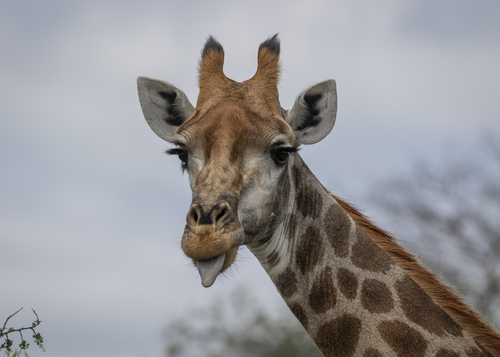
Southern giraffe
species of African even-toed ungulate herbivore

Galeus
Galeus is a genus of deepwater catshark, belonging to the family Pentanchidae, commonly known as sawtail catsharks in reference to a distinctive saw-toothed crest of enlarged dermal denticles, found along the upper edges of their caudal fins. They are found in the Atlantic, the western and central Pacific, and the Gulf of California, inhabiting deep waters at or close to the sea floor. Members of this genus are rather small, slim sharks with firm bodies and thick, rough skin. Their heads are usually fairly long and pointed, and have large mouths with well-developed furrows at the corners. They
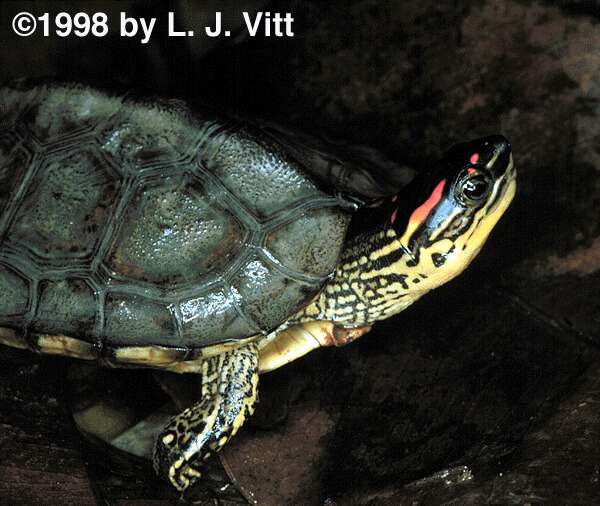
Rhinoclemmys
Rhinoclemmys is a genus of turtles in the family Geoemydidae (formerly Bataguridae), the only genus in the subfamily Rhinoclemmydinae. Member species of the genus are commonly known as the Neotropical wood turtles and are the only geoemydids known from the Americas. As such, they have adapted to a wide range of habitats, which is reflected in the species' common names.
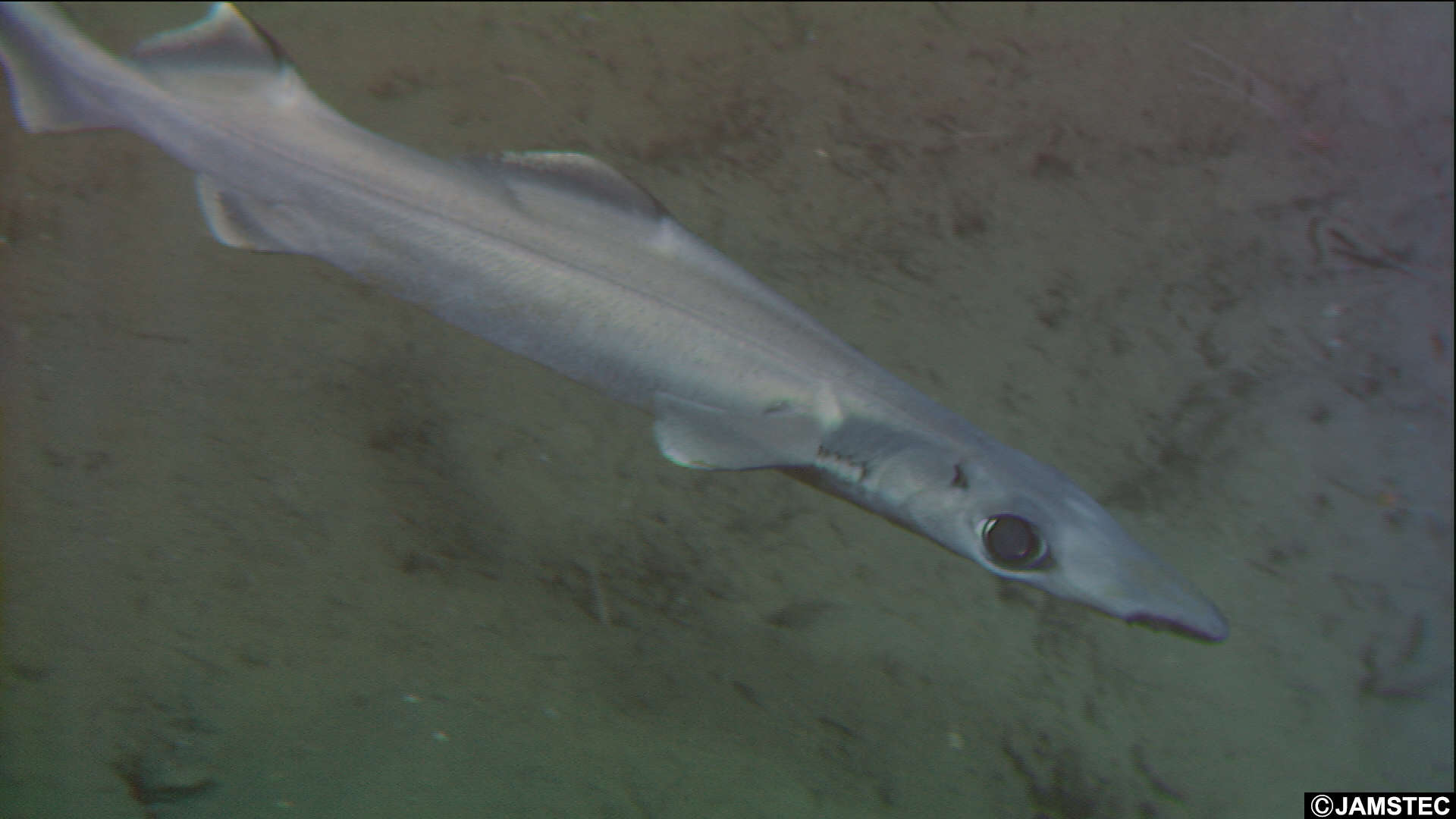
Deania
Deania is a genus of long-snouted, deepwater dogfish sharks in the family Centrophoridae.
Eligmodontia
The genus Eligmodontia consists of five or six species of South American sigmodontine mice restricted to Bolivia, Chile, and Argentina. Species of Eligmodontia occur along the eastern side of the Andes Mountains, in Patagonia, and in the Chaco thorn forest of South America. They can be found in arid and semiarid habitats and in both high and low elevation areas. These rodents are commonly known as gerbil mice or by their local name lauchas. Sometimes they are also called silky desert mice, highland desert mice or silky-footed mice. The closest living relatives are probably the chaco mice (Anda
sixgill sawshark
Pliotrema warreni
Lithognathus
Lithognathus is a genus of marine ray-finned fish belonging to the family Sparidae, which includes the seabreams and porgies. Species in this genus are given the common name of steenbras. The genus is found in the Eastern Atlantic Ocean from southwestern Europe to South Africa and into the southwestern Indian Ocean.
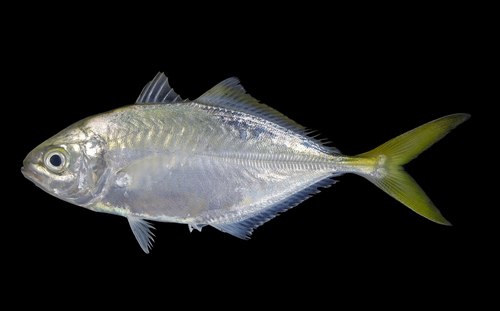
Alepes
Alepes is a genus containing five extant species of tropical marine fishes in the jack family, Carangidae. They are commonly known as scads, a term applied to many genera of carangid fishes. Their body form, however, differs from these other scads by being much more ovate in shape, more similar to the larger jacks taken as game fish, although scads are generally much smaller. They are found in coastal waters throughout the Indo-West Pacific region.
Aneides lugubris
species of amphibian

Prosopium
Prosopium is a genus of freshwater whitefishes found in North America and parts of eastern Russia. It contains three fairly widespread species: the round whitefish, the pygmy whitefish, and the mountain whitefish. The remaining species, the Bonneville cisco, the Bonneville whitefish, and the Bear Lake whitefish are endemic to Bear Lake.

Philoria
Philoria is a genus of frogs native to eastern and southern Australia. These frogs are all confined to mountain areas, with 7 species occurring in the mountains of northern New South Wales and southern Queensland. One species occurs in Victoria. All species are listed as endangered, except the Baw Baw frog, which is listed as critically endangered. They are small to medium-sized frogs that live in water saturated sites, such as sphagnum bogs and seepages on rocky slopes. The eggs are laid in foam nests hidden from light. The tadpoles remain within the nest and live entirely on the yolk.

Balaena
Balaena is a genus of cetacean (whale) in the family Balaenidae. Balaena is considered a monotypic genus, as it has only a single extant species, the bowhead whale (B. mysticetus). It was named in 1758 by Linnaeus, who at the time considered all of the right whales (and the bowhead) as a single species. Historically, both the family Balaenidae and genus Balaena were known by the common name, "right whales", however Balaena are now known as bowhead whales.
upright|thumb|left|Holotype of Balaena montalionis
Throughout history, the family Balaenidae has been the subject of great taxonomic debate

Atelinae
The Atelinae are a subfamily of New World monkeys in the family Atelidae, and includes the various spider and woolly monkeys. The primary distinguishing feature of the atelines is their long prehensile tails, which can support their entire body weight.
Trichodactylidae
Trichodactylidae is a family of crabs, in its own superfamily, Trichodactyloidea. They are all freshwater animals from Central and South America, including some offshore islands, such as Ilhabela, São Paulo. Only one of the 50 species is known from the fossil record, Sylviocarcinus piriformis from the Miocene of Colombia. The family contains 15 genera in two subfamilies:
Subfamily Dilocarcininae Pretzmann, 1978
Bottiella Magalhães & Türkay, 1996
Dilocarcinus H. Milne-Edwards, 1853
Forsteria Bott, 1969
Fredilocarcinus Pretzmann, 1978
Goyazana Bott, 1969
Melocarcinus Magalhães & Türkay, 1996
Mor
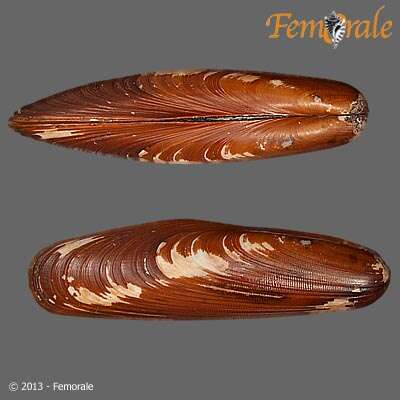
Lithophaga lithophaga
species of mollusc
Blennius
Blennius is a genus of combtooth blennies in the family Blenniidae. Its members include Blennius ocellaris, the butterfly blenny.
Synodus
Synodus is a genus of fish in the family Synodontidae found in Atlantic, Indian, and Pacific Oceans.

Alepisauridae
Lancetfishes are large oceanic predatory ray-finned fishes in the genus Alepisaurus ("scaleless lizard") in the monogeneric family Alepisauridae.
Pitheciinae
Pitheciinae is a subfamily of the New World monkey family Pitheciidae. It contains three genera and 14 species. Pitheciines are forest dwellers from northern and central South America, east of the Andes.

Neogale
Neogale (colloquially referred to as the New World weasels) is a genus of carnivorous, highly active small mammals belonging to the Mustelidae family (which also contains badgers, weasels, martens, otters, and wolverines, among others). Native to the Americas, members of the genus can be found as far north as Alaska and as far south as Argentina and Bolivia. Across this distribution, they thrive in a range of habitats, from the deep-freezes of the Alaskan and Canadian boreal forests to the arid desert southwest, and from the humid tropics of Central and South America (including the Amazon basi
Hooktooth shark
species of shark (Chaenogaleus macrostoma)
Ambloplites
Ambloplites is a genus of North American freshwater ray-finned fish in the sunfish family (Centrarchidae) of order Centrarchiformes. The type species is A. rupestris, the rock bass, and the species of this genus are known collectively as the rock basses.
Gorillini
Gorillini is a taxonomic tribe containing three genera: Gorilla and the extinct Chororapithecus and (possibly) Nakalipithecus.
Echinidae
Echinidae is a family of sea urchins in the order Camarodonta. Members of the family are found in the Atlantic Ocean and the Antarctic.

chipmunk
Chipmunks are small, striped squirrels of subtribe Tamiina. Chipmunks are found in North America, with the exception of the Siberian chipmunk, which is found primarily in Asia. The name "chipmunk" originated in the 19th century, and other names for this group of squirrels include chitmunk, chipmuck, chipping squirrel, and ground squirrel, though the last name can refer to squirrels of other genera.
Lampanyctus
Lampanyctus is a genus of lanternfishes.

Electrona
genus of fishes
Myctophum
Myctophum is a genus of lanternfishes, some species of which, such as M. punctatum, are noted for having the Stylophthalmine trait in their larval form.

Enneacanthus
Enneacanthus is a genus of freshwater ray-finned fish in the sunfish family (Centrarchidae) of order Centrarchiformes. The type species is E. obesus, the banded sunfish, and the species of this genus are known collectively as the banded or little sunfishes.

Redear sunfish
species of fish

Kingcroaker
Menticirrhus is a genus of marine ray-finned fish belonging to the family Sciaenidae, the drums or croakers. They are commonly known as kingcroakers or kingfish. These fish are found in the Western Atlantic and Eastern Pacific Oceans.

Equinae
Equinae is a subfamily of the family Equidae, known from the Hemingfordian stage of the Early Miocene (16 million years ago) onwards. They originated in North America, before dispersing to every continent except Australia and Antarctica. They are thought to be a monophyletic grouping. Members of the subfamily are referred to as equines; the only extant equines are the horses, asses, and zebras of the genus Equus, with two other genera Haringtonhippus and Hippidion becoming extinct at the beginning of the Holocene, around 11–12,000 years ago.
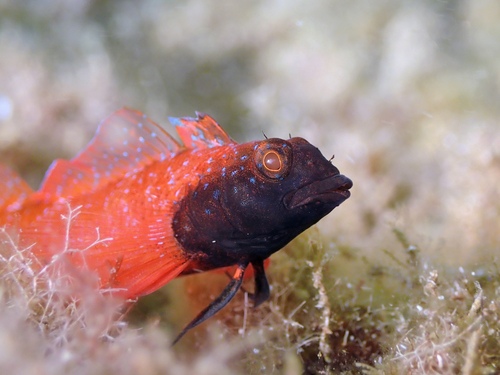
Tripterygion
Tripterygion is a genus of fish in the family Tripterygiidae, the threefin blennies, the species of which are found in the north eastern Atlantic Ocean, the Mediterranean Sea and the Black Sea.

slender-snouted crocodiles
Mecistops is a genus of crocodiles, the slender-snouted crocodiles, native to sub-Saharan Africa.
Corystidae
Corystidae is a family of crabs, in its own superfamily, Corystoidea. It includes what was once thought to be the oldest Eubrachyuran fossil, Hebertides jurassica, thought to be dating from the Bathonian (Middle Jurassic); the species was subsequently reinterpreted as being Cenozoic in age. Corystidae contains ten extant and five extinct species in eight genera:
Corystes Bosc, 1802
Corystites Lőrenthey, in Lőrenthey & Beurlen, 1929
Gomeza Gray, 1831
Gomezinus † Collins, Lee & Noad, 2003
Harenacorystes † Van Bakel, Jagt, Artal & Fraaije, 2009
Hebertides † Guinot, De Angeli & Garassino, 2007
Jon

Melongena
Melongena is a genus of sea snails, marine gastropod mollusks in the family Melongenidae, the crown conches and their allies.

midshipman fish
genus of fishes

Nannospalax
Nannospalax is a genus of rodent in the family Spalacidae, found in eastern Europe and western Asia. It is one of two genera in the blind mole-rats (subfamily Spalacinae), alongside Spalax. Members of this genus are also known as small-bodied mole-rats. As with members of the genus Spalax, they are completely blind, with their eyes being entirely covered by skin.

Thalassina
Thalassina is a genus of mud lobsters found in the mangrove swamps of the Indian Ocean and western Pacific Ocean. Its nocturnal burrowing is important for the recycling of nutrients in the mangrove ecosystem, although it is sometimes considered a pest of fish and prawn farms.

Jasus
Jasus is a genus of spiny lobsters which live in the oceans of the Southern Hemisphere. They have two distinct "horns" projecting from the front of the carapace, but lack the stridulating organs present in almost all other genera of spiny lobsters. Like all spiny lobsters, they lack claws, and have long stout antennae which are quite flexible.
Citharichthys
Citharichthys is a genus of flatfish in the large-tooth flounder family, Paralichthyidae. They have both eyes on the left sides of their heads. They are native to the oceans around the Americas, with a single species, C. stampflii off the West African coast. Most are found in relatively shallow depths, but the genus also includes species found in deep water (down to at least ) and species that enter fresh water.

jumping mice
Zapodidae, the jumping mice, is a family of mouse-like rodents in North America and China.
Ailuropodinae
Ailuropodinae is a subfamily of Ursidae that contains only one extant species, the giant panda (Ailuropoda melanoleuca) of China. The fossil record of this group has shown that various species of pandas were more widespread across the Holarctic, with species found in places such as Europe, much of Asia, North America and even Africa. The earliest pandas were not unlike other modern bear species in that they had an omnivorous diet but by around 2.4 million years ago, pandas had evolved to be more herbivorous.
The giant panda (Ailuropoda) belongs to the order of Carnivora, this means that the m

Relictual Slender Salamander
species of amphibian
Symbolophorus
Symbolophorus is a genus of lanternfishes. It feeds on various small forms of sea life, in particular fish. Some species in this genus are known to exhibit the Stylophthalmine trait in their larval form. Symbolophorus grows slowly, and shows clear seasonal growth patterns that can be seen in its ear bones which records temperature change in the ocean’s environment.
Euleptorhamphus
Euleptorhamphus is a genus of halfbeaks (family Hemiramphidae) in the order Beloniformes.
Bovoidea
Bovoidea is a superfamily of pecoran ruminants containing the Bovidae and Moschidae. The Bovoidea today is defined in part by very specific dental and anatomical traits, and genetic research indicates that the Moschidae is the sister taxon to the Bovidae.
Ventrifossa
Ventrifossa is a genus of rattails in the family Macrouridae.
Nicoletiidae
Nicoletiidae is a family of primitive insects belonging to the order Zygentoma. These insects live primarily underground, under detritus, or in caves. A few species are recorded as commensals inside nests of social insects, such as the species Allotrichotriura saevissima which lives inside fire ant nests. Nicoletiids lack eyes and they lack pigmentation. They have long antennae and terminal abdominal filaments. Coletinia, a genus of this family, range in size between 10 and 15mm, and may have yellowish pigmentation but most species are transparent.
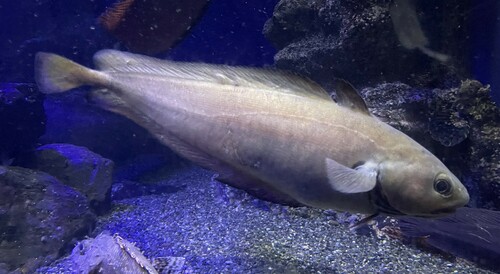
Physiculus
Physiculus is a genus of morid cods.
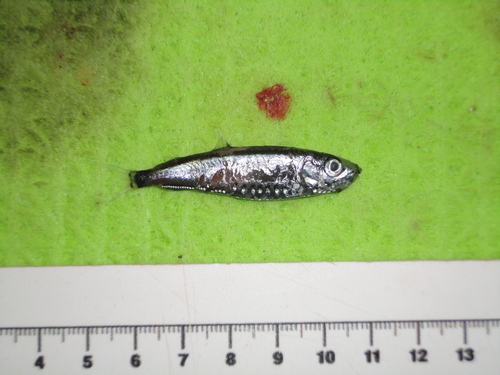
Maurolicus
Maurolicus is an oceanic ray-finned fish genus which belongs in the marine hatchetfish family Sternoptychidae. They are commonly known as pearlsides, but the brilliant pearlside is the related Argyripnus iridescens. Occasionally, "bristle-mouth fishes" is used as a common name, but that usually refers to the genus Argyripnus or the family Gonostomatidae.
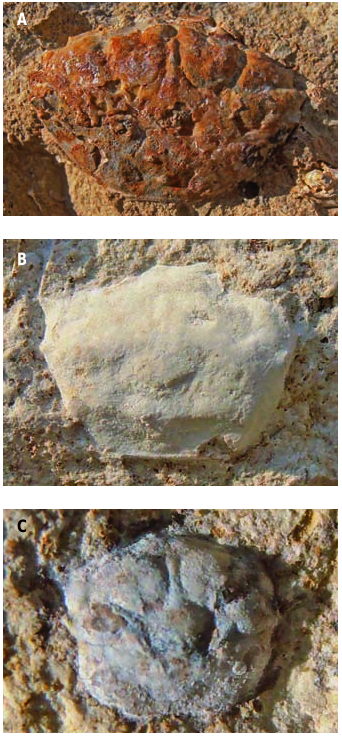
Goneplax
Goneplax is a genus of crabs, containing the following extant species:
Goneplax barnardi (Capart, 1951)
Goneplax clevai Guinot & Castro, 2007
Goneplax rhomboides (Linnaeus, 1758)
Goneplax sigsbei (A. Milne-Edwards, 1880)
A further five species are also known from the fossil record, dating from the Miocene onwards.

Megabalanus
Megabalanus is a genus of barnacles in the family Balanidae. Members of the genus grow to in length and inhabit the lower intertidal zone.
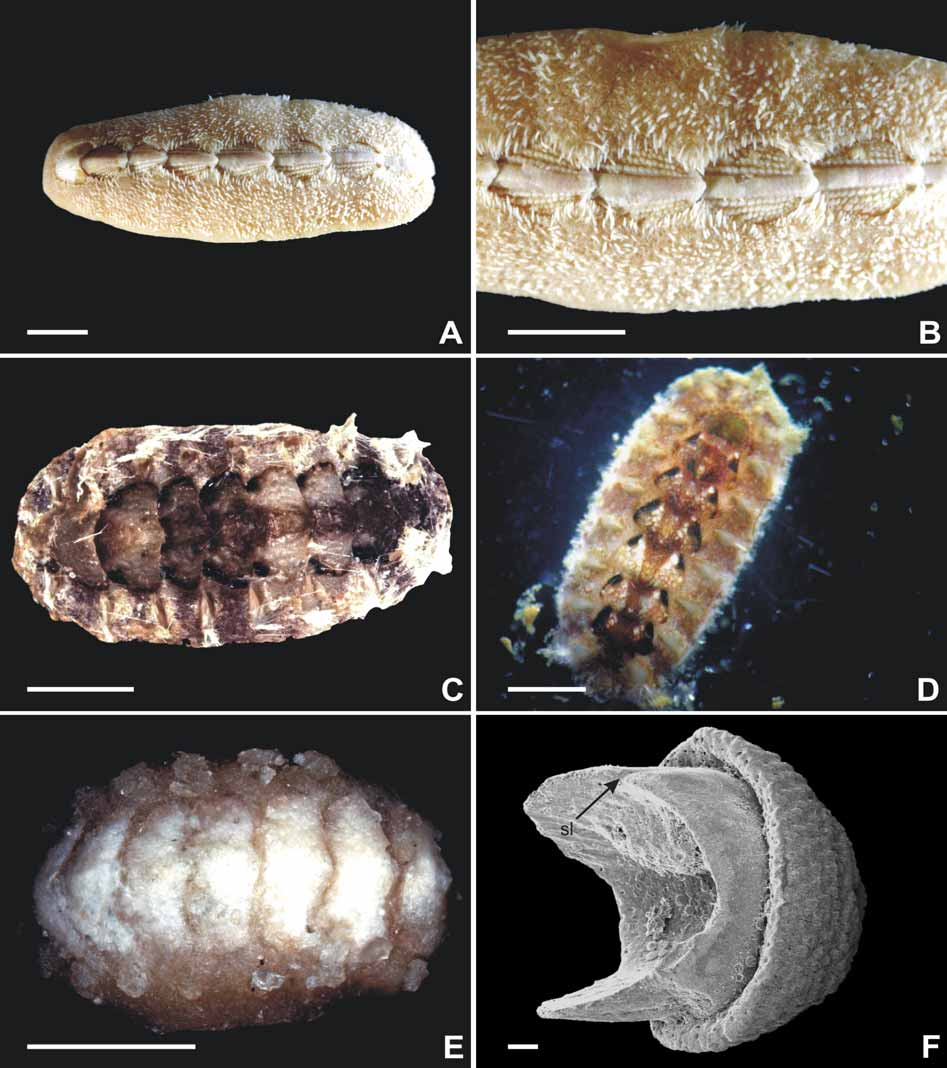
Cryptoplax
Cryptoplax is a genus of polyplacophoran molluscs.
The genus consists of the following living species:
Cryptoplax burrowi E. A. Smith, 1884
Cryptoplax caledonicus Rochebrune, 1882
Cryptoplax dawydoffi Leloup, 1937
Cryptoplax dimidiata Ang, 1967
Cryptoplax dupuisi Ashby, 1931
Cryptoplax elioti Pilsbry, 1901
Cryptoplax hartmeyeri Thiele, 1911
Cryptoplax iredalei Ashby, 1923
Cryptoplax japonica Pilsbry, 1901
Cryptoplax larvaeformis Burrow, 1815
Cryptoplax mystica Iredale & Hull, 1925
Cryptoplax oculata Quoy & Gaimard, 1835
Cryptoplax plana Ang, 1967
Cryptoplax propior Is. & Iw. Taki, 1930
Crypto

Bolinus
Bolinus is a genus of sea snails, marine gastropod mollusks in the family Muricidae, the murex snails or rock snails.
Ateleopus
Ateleopus is a genus of ray-finned fish in the jellynose family Ateleopodidae. It is the type genus of its family, and the order Ateleopodiformes. For some time, it was known as Podateles, because Ateleopus had been used to replace the frog genus name Atelopus, which was deemed to be a spelling error. This was mistaken, however, and the fish and frog genera reverted to their original names.

Gadomus
thumb|A doublethread grenadier (Gadomus arcuatus) in deep water off Puerto Rico in April 2015.
Gadomus is a genus of rattails in the family Bathygadidae.
Maccullochella
Maccullochella is a genus of large Australian predatory freshwater fish within the family Percichthyidae. The genus Maccullochella was named after an early Australian fish researcher with the surname McCulloch.
Submyotodon
Submyotodon is a genus of vespertilionid bats, published as a new taxon in 2003 to describe a Miocene fossil species. Extant species and subspecies previously included in Myotis were later transferred to this genus. Species in this genus are referred to as broad-muzzled bats or broad-muzzled myotises.