Category
page 1Extant Tortonian first appearances

dolphin
A dolphin is any one of the 40 extant species of aquatic mammal from the cetacean families Delphinidae (the oceanic dolphins), Platanistidae (the Indian river dolphins), Iniidae (the New World river dolphins), Pontoporiidae (the brackish dolphins), and the probably extinct Lipotidae (baiji or Chinese river dolphin). All these families belong to the parvorder Odontoceti, i.e., toothed whales, which also include the closely related families Monodontidae (beluga and narwhal) and Phocoenidae (porpoises), as well as the more distant families Physeteroidea (sperm whales) and Ziphiidae (beaked whales
gibbon
thumb|Gibbon Rehabilitation Project, 2013
Gibbons () are apes in the family Hylobatidae (; hylobatids). The family historically contained one genus, but now is split into four extant genera and 20 species. Gibbons live in subtropical and tropical forests from eastern Bangladesh and Northeast India to Southeast Asia and Indonesia (including the islands of Sumatra, Borneo and Java).
.png)
Canis
Canis is a genus of the Caninae which includes multiple extant species, such as wolves, dogs, coyotes, and golden jackals. Species of this genus are distinguished by their moderate to large size, their massive, well-developed skulls and dentition, long legs, and comparatively short ears and tails.

Tinamidae
Tinamous () are members of the order Tinamiformes (), and family Tinamidae (), divided into two distinct subfamilies, containing 46 species found in Mexico, Central America, and South America. The word "tinamou" comes from the Galibi term for these birds, tinamu. Tinamous are the only living group of palaeognaths able to fly, and were traditionally regarded as the sister group of the flightless ratites, but recent work places them well within the ratite radiation as most closely related to the extinct moa of New Zealand, implying flightlessness emerged among ratites multiple times. Tinamous fi

American alligator
species of alligator

Loxia
Crossbills are birds of the genus Loxia within the finch family (Fringillidae), with six extant and one extinct species. These birds are characterized by their mandibles with crossed tips, which gives the group its English name. Adult males tend to be red or orange in color, and females green or yellow, but there is much variation.

spiny dogfish shark
species of fish

Grey reef shark
species of fish

Uranoscopidae
family of fish

Crax
Crax is a genus of curassows in the order Galliformes, a clade of large, heavy-bodied, ground-feeding birds. They are known from tropical South America with one species, the great curassow, ranging northwards through Central America as far as Mexico. The curassows in this genus are noted for their sexual dimorphism; males are more boldly coloured than females and have facial ornamentation such as knobs and wattles. They are also characterised by curly crests and contrastingly-coloured crissa (the area around the cloaca). Crax curassows probably originated as a distinct lineage during the Late

Carcharhinus amboinensis
species of fish

Syrmaticus
__NOTOC__

Pauxi
The genus Pauxi consists of the three species of helmeted curassows, terrestrial black fowl with ornamental casque on their heads. All are found in South America.

Carcharhinus brevipinna
species of fish

Carcharhinus amblyrhynchoides
species of fish

Carcharhinus sealei
taxon

Parachromis managuensis
species of cichlid fish
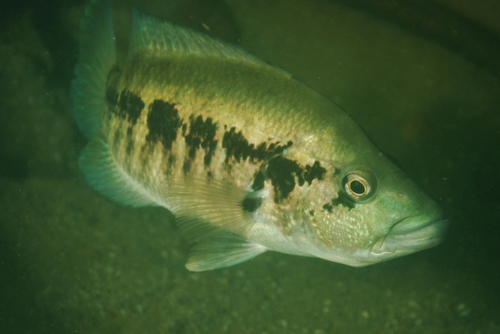
Parachromis dovii
species of fish

electric stargazers
Astroscopus (from Ancient Greek ἀστήρ (astḗr), meaning "star", and σκοπέω (skopéō), meaning "to look"), the electric stargazers, is a genus of stargazers, a type of percomorph fish from the family Uranoscopidae, part of the order Labriformes. The species in this genus are anatomically distinct uranoscopids, being characterized by internal nares and being the only group of marine bony fish having organs which produce electricity which are derived from the extraocular muscles. They are found on the Atlantic and Pacific coasts of the Americas.

Ceratotherium
Ceratotherium (from Greek: keras κέρας "horn" and thērion θηρίον "beast") is a genus within the family Rhinocerotidae. It comprises one living species, the white rhinoceros (Ceratotherium simum), and several extinct fossil species that trace its evolutionary lineage.
Neobalaenidae
Neobalaenidae is a defunct family of baleen whales (suborder Mysticeti) including the extant pygmy right whale. Although traditionally considered related to balaenids, recent studies by Fordyce and Marx (2013) and Ludovic Dutoit and colleagues (2023) have recovered the living pygmy right whale as a member of Cetotheriidae, making it the only extant cetotheriid. Not all authors agree with this placement.
prions
informal group of birds
Rotulidae
Rotulidae is a family of small sand dollars native to the Atlantic coast of Africa, with 3 genera, with Rotula and Heliophora being extant, the other, Rotuloidea, being extinct since the Pliocene, but all three being found in the fossil record along the Atlantic African coast since the Miocene.