Category
page 1Fasteners
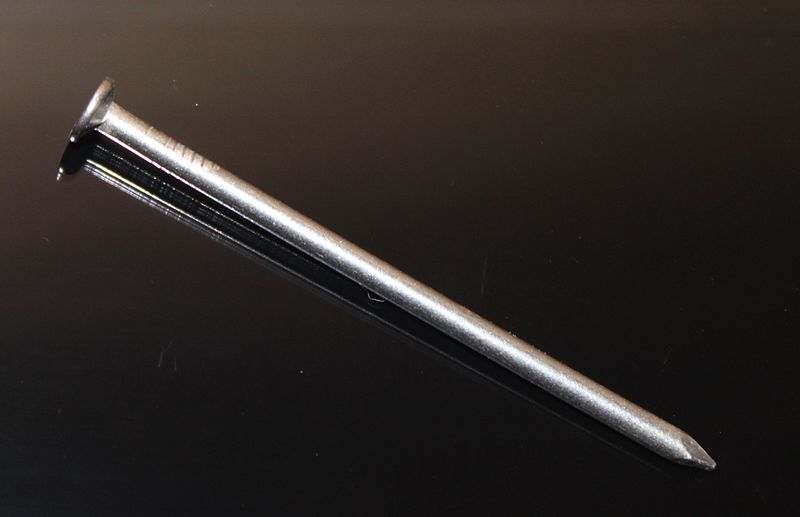
nail
sharp object of hard metal used as a fastener

zipper
thumb|Zippers with common teeth variations: metal teeth (top), coil teeth and plastic teeth

stapler
thumb|Office stapler
thumb|A spring-loaded stapler

pin
A pin is a device, typically pointed, used for fastening objects or fabrics together. Pins can have the following sorts of body:
a shaft of a rigid inflexible material meant to be inserted in a slot, groove, or hole (as with pivots, hinges, and jigs)
a shaft connected to a head and ending in a sharp tip meant to pierce one or more pieces of soft materials like cloth or paper (the straight or push pin)
a single strip of a rigid but flexible material (e.g. a wire) whose length has been folded into parallel prongs in such fashion that the middle length of each curves towards the other so that, w
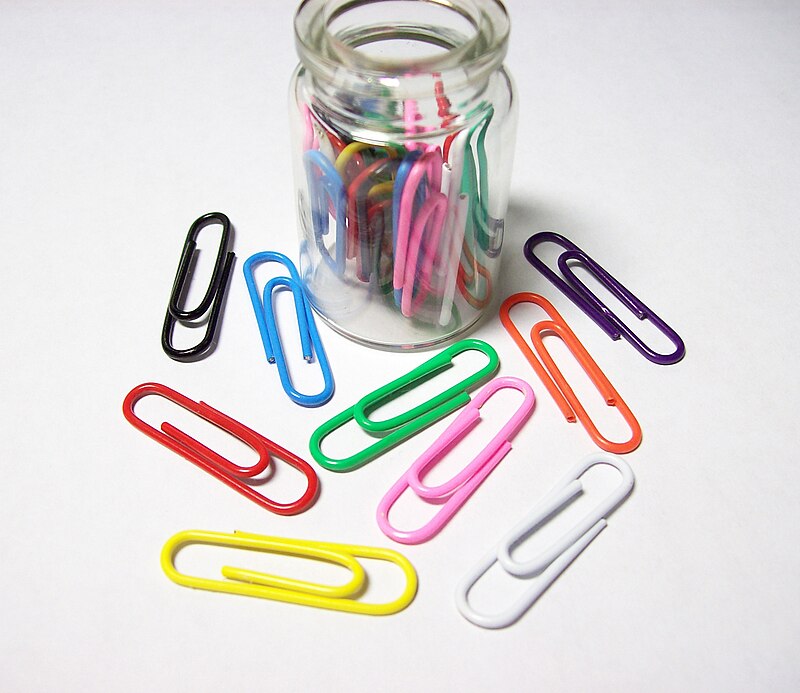
paper clip
metal device to hold papers together

brooch
thumb|Wing Brooch, 2nd century AD, Metropolitan Museum of Art
A brooch (, ) is a decorative jewellery item designed to be attached to garments, often to fasten them together. It is usually made of metal, often silver or gold or some other material. Brooches are frequently decorated with enamel or with gemstones and may be solely for ornament or serve a practical function as a clothes fastener. The earliest known brooches are from the Bronze Age. As fashions in brooches changed rather quickly, they are important chronological indicators. In archaeology, ancient European brooches are usually re

rivet
right|thumb|220px|Solid rivets
right|thumb|upright=1.6|Sophisticated riveted joint on a railway bridge
thumb|upright=1.6|Riveting team working on the cockpit shell of a C-47 transport at the plant of [[North American Aviation. The woman on the left operates an air hammer, while the man on the right holds a bucking bar.]]
thumb|upright=1|Women rivet heaters, with their tongs and catching buckets, Puget Sound Navy Yard, May 1919

latch
thumb|Opening a captured draw bolt-style latch

pushpin
short nail or pin used to fasten items to a wall or board for display

hook and loop fastener
thumb|A shoe using hook-and-loop closures

carabiner
thumb|Clockwise from top left: Center is a standard carabiner rating.
thumb|Using a carabiner to connect to a rope

clothespin
thumb|upright=1.35|Plastic clothespins on a clothes line
thumb|Laundry pegged onto a clothes line
A clothespin (US English) or clothes peg (UK English), also spelled "clothes pin" is a fastener used to hang up clothes for drying, usually on a clothes line. Clothespins come in many different designs.
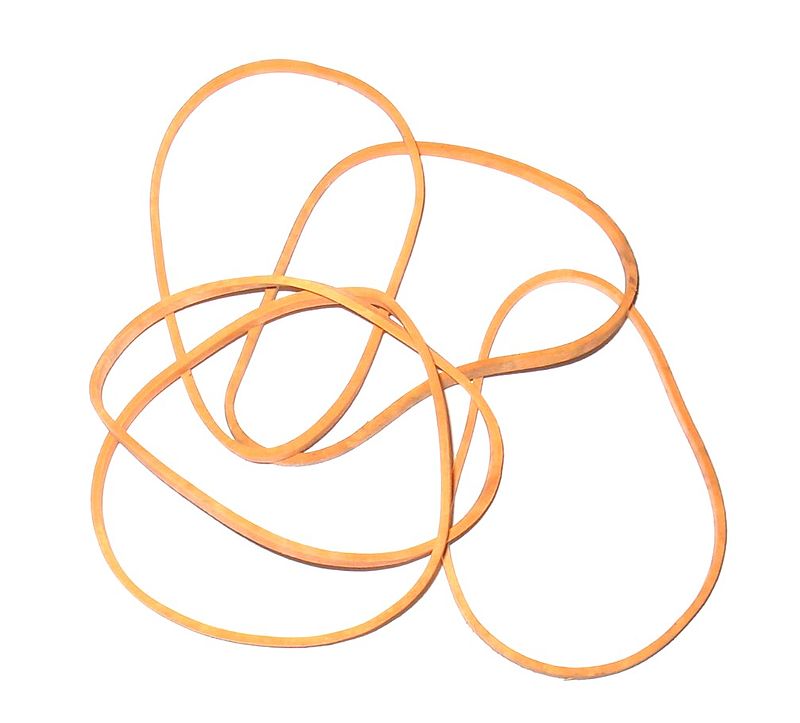
rubber band
short circular elastic length of rubber and latex, commonly used to hold objects together
staple
connecting element for fixing flat items (paper, fabric, foil etc.) to each other or to another item

fastener
thumb|275px|Typical fasteners (Quarter (United States coin)|US quarter shown for scale)

hairpin
thumb|A modern hair pin, typically used for formal styling such as updos and buns
thumb|Hairpins (around 600 BC)
thumbnail|A golden double-spiral-headed pin from Georgia (3rd millennium BC)

twine
thumb|upright=1.35|Twine showing component strands
Twine is a strong thread, light string or cord composed of string in which two or more thinner strands are twisted, and then twisted together (plied). The strands are plied in the opposite direction to that of their twist, which adds torsional strength to the cord and keeps it from unravelling. This process is sometimes called reverse wrap. The same technique used for making twine is also used to make thread, which is thinner, yarn, and rope, which is stronger and thicker, generally with three or more strands.

dowel
thumb|Wooden dowel pins
cable tie
ratcheting fastener for electrical cable
wall plug
Wall plugs
split pin
metal fastener with two tines that are bent during installation

shackle
thumb|Different types of shackles. The yellow cable ties indicate the date of the last tool inspection.
thumb|A well-used shackle.
anchor plate
large plate or washer connected to a tie rod or bolt

circlip
right|thumb|upright=1.5|Internal circlip
thumb|upright=0.5|External circlip

grommet
thumb|right|Curtain grommets, used among others in shower curtains
bayonet mount
type of mechanical fastening mechanism
trammel hook
adjustable hook used to hold a pot or kettle over a fire
binder clip
a simple device for binding sheets of paper together
spring pin
mechanical fastener that secures the position of two or more parts relative to each other
retaining ring
fastener often attached to a groove on an axle to act as a shoulder
mechanical joint
section of a machine which is used to connect one mechanical part to another
brass fastener
type of paper fastener
Pyrotechnic fastener
A type of fastener
surgical staples
staples used in surgery in place of sutures
tie-down straps
load securing webbing
cable grommet
tube or ring through which an electrical cable passes
3-ring release system
parachute cut-away system
string
String is a long flexible tool made from fibers twisted together into a single strand, or from multiple such strands which are in turn twisted together. String is used to tie, bind, or hang other objects. It is also used as a material to make things, such as textiles, and in arts and crafts. String is a simple tool, and its use by humans is known to have been developed tens of thousands of years ago. String may also be a component in other tools, and in devices as diverse as weapons, musical instruments, and toys. The ubiquity of string as a tool has led to conceptual and scientific uses of th
bread clip
device used to hold plastic bags closed, such as common packages for sliced bread
snap-fit
A snap-fit is an assembly method used to attach flexible parts, usually plastic, to form the final product by pushing the parts' interlocking components together. There are a number of variations in snap-fits, including cantilever, torsional and annular. Snap-fits, as integral attachment features, are an alternative to assembly using nails or screws, and have the advantages of speed and no loose parts. Snap-fit connectors can be found in everyday products such as battery compartment lids, snap fasteners and pens.
angle bracket
L-shaped structural fastener for fastening two objects together at an angle
cotter
in mechanical engineering a pin or wedge passing through a hole to fix parts tightly together
bungee cord
elastic cord composed of one or more elastic strands forming a core, usually covered in a woven cotton or polypropylene sheath
linchpin
thumb|Wagon wheel, with forged linchpin
thumb|A modern linchpin with an integral spring retainer
taper pin
mechanical fastener with one end having a slightly larger diameter than the other; a steep conical rod which is forced into a hole
bulldog clip
type of paper fastener

safety wire
wire to secure bolted joint

R-clip
__NOTOC__
An R-clip, also known as an R-pin, R-key, hairpin cotter pin, hairpin cotter, bridge pin, hitch pin clip or spring cotter pin, is a fastener made of a durable but flexible material, commonly hardened metal wire, resembling the shape of the letter "R".
tension element
linear structural component designed to resist tension
connector gender
designation differentiating two dissimilar connectors which together form a physical connexion
book clasp
fastener for a book cover
twist tie
metal wire encased in plastic used to tie bags