File:Rubber_bands.jpg · Wikimedia Commons · See Wikimedia Commons
rubber band
Sign in to saveAlso known as elastic, elastic band, lackey band, binder, laggy band, gum band, rubber bands, gumband
short circular elastic length of rubber and latex, commonly used to hold objects together
Wikidata facts
- Instance of
- stationery
- Material used
- natural rubber
- Image
- Rubber bands.jpg
- Has use
- energy storage
Show 2 more facts
- Commons category
- Rubber bands
- color
- tan
Sources (1)
via Wikidata · CC0
~18 min read
Encyclopedic overview
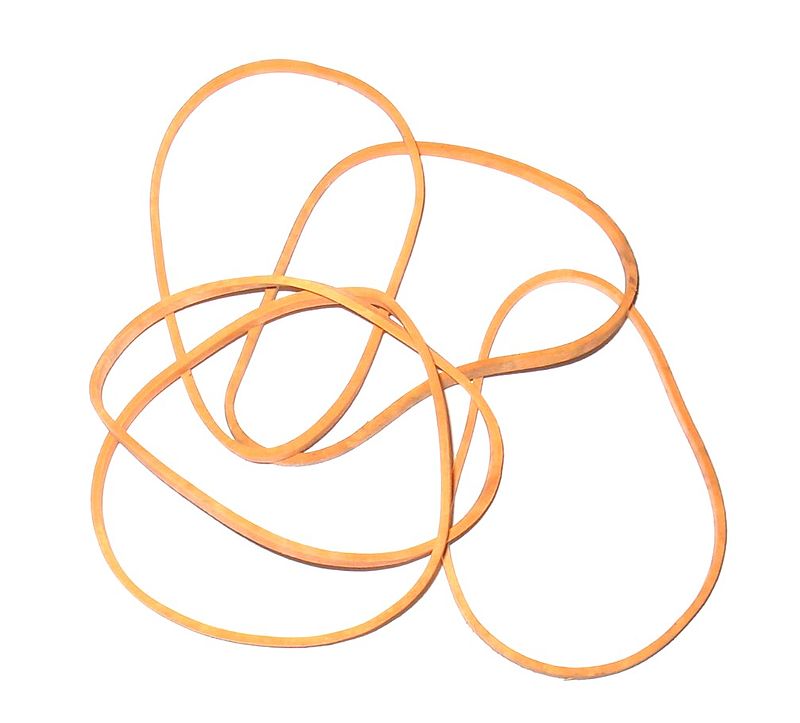
Standard amber rubber bands
A rubber band (also known as an elastic, gum band or lacky band) is a loop of rubber, usually ring or oval shaped, and commonly used to hold multiple objects together. The rubber band was patented in England on March 17, 1845, by Stephen Perry. They were originally used to hold papers and envelopes. Most rubber bands are manufactured out of natural rubber as well as for latex free rubber bands or, especially at larger sizes, a synthetic elastomer, and are sold in a variety of sizes.
Excerpted from Wikipedia’s “rubber band” article, available under the CC BY-SA 4.0 licence.