Category
page 1Filter frequency response
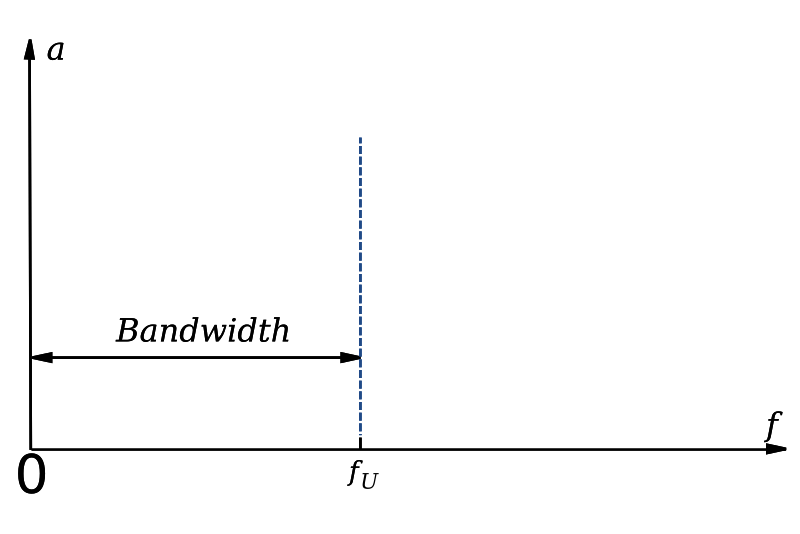
signal bandwidth
difference between the upper and lower frequencies passed by a filter, communication channel, or signal spectrum
low-pass filter
filter that passes signals with a frequency lower than a certain cutoff frequency, and attenuates signals with higher frequencies
Bode plot
graph of the frequency response of a linear system presented in logarithmic scale
high-pass filter
filter that passes signals with a frequency higher than a certain cutoff frequency, and attenuates signals with lower frequencies
band-pass filter
filter that passes signals within a certain frequency range, and attenuates signals outside that range
band-stop filter
filter that passes signals outside a certain frequency range, and attenuates signals within that range
all-pass filter
filter that passes signals of all frequencies with same gain, but changes the phase relationship among various frequencies

passband
A passband is the range of frequencies or wavelengths that can pass through a filter. For example, a radio receiver contains a bandpass filter to select the frequency of the desired radio signal out of all the radio waves picked up by its antenna. The passband of a receiver is the range of frequencies it can receive when it is tuned into the desired frequency as in a radio station or television channel.
sinc filter
idealized filter that removes all signal frequency components above a given frequency