Category
page 1Flamenco

flamenco
Flamenco () is an art form based on the various folkloric music traditions of southern Spain, developed within the gitano subculture of the region of Andalusia, and also having historical presence in Extremadura and Murcia. In a wider sense, the term is used to refer to a variety of both contemporary and traditional musical styles typical of southern Spain. Flamenco is closely associated to the gitanos of the Romani ethnicity who have contributed significantly to its origination and professionalization. However, its style is uniquely Andalusian and flamenco artists have historically included S
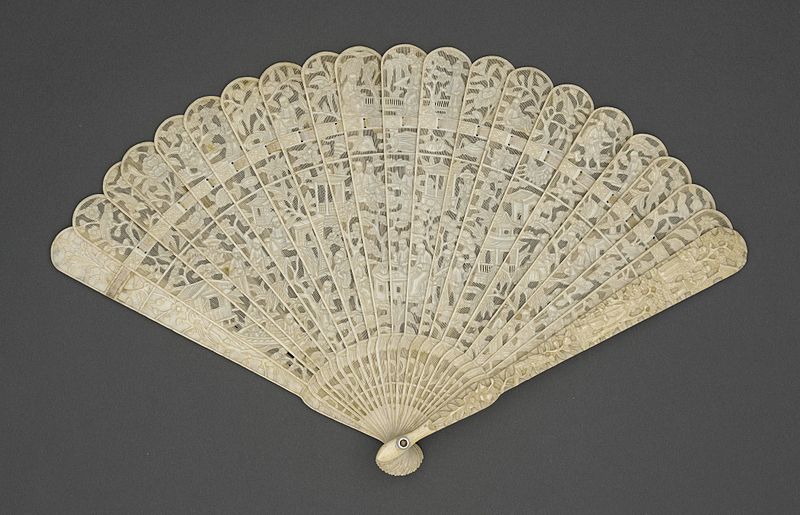
hand fan
device used to cool oneself, usually made of folded paper

Riverdance
Riverdance is a theatrical show that consists mainly of traditional Irish music and dance. With a score composed by Bill Whelan, it originated as an interval act during the Eurovision Song Contest 1994, featuring Irish dancing champions Jean Butler, Michael Flatley and the vocal ensemble Anúna. Shortly afterwards, husband and wife production team John McColgan and Moya Doherty expanded it into a stage show, which opened in Dublin on 9 February 1995. As of 2025, the show continues to tour the world.
flamenco guitar
acoustic guitar

Tomatito
José Fernández Torres (born Fondón, 1958), known professionally as Tomatito, is a Spanish Roma flamenco guitarist and composer. Having started his career accompanying famed flamenco singer Camarón de la Isla (with Paco de Lucía), he has made a number of collaborative albums and six solo albums, two of which have won Latin Grammy Awards.

Valeriy Didyula
Valery Mikhailovich Didula (Belarusian: Валерій Міхайловіч Дзідзюля — Romanized: Valeriy Mikhaylovich Dzidzyulya), better known by his stage name, DiDuLa, is a Soviet-Belarusian guitarist, composer and producer. He is known as the founder of the Belarusian-Russian instrumental folk band, DiDuLa.
David Broza
Israeli singer-songwriter

Raimundo Amador
Spanish guitarist
Phrygian dominant scale
musical scale occuring in Indian, Middle Eastern, Balkan, Eastern European, Central Asian, flamenco,Arabic and Egyptian music
cante jondo
musical form and style of flamenco
rasgueado
Rasgueado (also called Golpeado, Rageo (spelled so or Rajeo), Rasgueo or Rasgeo in Andalusian dialect and flamenco jargon, or even occasionally Rasqueado) is a guitar finger strumming technique commonly associated with flamenco guitar music. It is sometimes used on other fretted instruments such as the ukulele and in other styles of guitar playing. The rasgueado is executed using the fingers of the strumming hand in rhythmically precise, and often rapid, strumming patterns. The important characteristic of this strumming style is the fingernail (outer) side of the finger tips (as opposed to the
Palacio de los Olvidados
museum in Granada, Spain
tablao
thumb|200px|Advertisement of the tablao Café de Chinitas, Madrid.A tablao (colloquial term for the Spanish "tablado", floorboard) is a place where flamenco shows are performed and also tablao is the term used for the platform floor in which a flamenco dancer dances. Tablao venues were developed during the 1960s throughout Spain replacing the cafés cantantes (cabarets).
traje de flamenca
traditional clothing of flamenco dancers of Andalusia
jaleo
thumb|400px|El Jaleo, John Singer Sargent, 1882
palo
flamenco term used to group different traditional musical forms
flamenco rock
Spanish rock music genre
Aniya la Gitana
Spanish flamenco guitarist, singer and dancer
Bienal de Flamenco
Spanish festival
flamencology
Flamencology, from the Spanish word Flamencología, is an academic discipline pertaining to the Flamenco arts. It combines research, documentation, and other techniques to achieve the diffusion and preservation of the art.
Tientos
flamenco palo
palmas
style of handclapping used in Flamenco music
Golpe
guitar technique
Rondeña
A Rondeña is a palo or musical form of flamenco originating in the town of Ronda in the province of Málaga in Spain.