Category
page 1Forages
.jpg)
Hordeum vulgare
Barley (), a member of the grass family, is a major cereal grain grown in temperate climates globally. One of the first cultivated grains, it was domesticated in the Fertile Crescent around 9000 BC, giving it nonshattering spikelets and making it much easier to harvest. Its use then spread throughout Eurasia by 2000 BC. Barley prefers relatively low temperatures and well-drained soil to grow. It is relatively tolerant of drought and soil salinity, but is less winter-hardy than wheat or rye.

Sorghum
genus of plants

Trifolium
Clovers, also called trefoils, are plants of the genus Trifolium (), consisting of about 300 species of flowering plants in the legume family Fabaceae originating in Europe. The genus has a cosmopolitan distribution with the highest diversity in the temperate Northern Hemisphere, but many species also occur in South America and Africa, including at high altitudes on mountains in the tropics.

Trigonella foenum-graecum
thumb|Fenugreek greens

Medicago sativa
Alfalfa (; in North America), lucerne (in the United Kingdom, South Africa, Australia, and New Zealand), Medicago sativa is a perennial flowering plant in the legume family Fabaceae. It is cultivated as an important forage crop in many countries around the world and is used for grazing, hay, and silage, as well as a green manure and cover crop. It has also been cultivated as livestock fodder since at least the era of the ancient Greeks and Romans. Alfalfa has clusters of small purple flowers followed by fruits spiraled in two to three turns containing 10–20 seeds. It is native to warmer temper

Portulaca oleracea
species of flowering plant

Cynodon dytahilo
species of plant
%20II.jpg)
Lupinus
Lupinus, commonly known as lupin, lupine, or regionally bluebonnet, is a genus of plants in the legume family Fabaceae. The genus includes over 199 species, with centres of diversity in North and South America. Smaller centres occur in North Africa and the Mediterranean. They are widely cultivated both as a food source and as ornamental plants, but are invasive to some areas. For instance, lupine has become an ecological problem in Iceland since the beginning of the 21st century.

Vicia
Vicia is a genus of over 240 species of flowering plants that are part of the legume family (Fabaceae), and which are commonly known as vetches. Vicia species are native to Eurasia, Africa, and the Americas.

Trifolium pratense
species of plant

Panicum miliaceum
species of plant

Astragalus
genus of plants

Trifolium repens
species of plant

Clitoria ternatea
species of plant originally from Indonesian island of Ternate

Vicia cracca
species of plant

Leucaena leucocephala
species of plant

Dactylis glomerata
species of plant

Mucuna pruriens
species of plant

Vachellia nilotica
species of plant

Phleum pratense
species of grass

Albizia
Albizia is a genus of more than 160 species of mostly fast-growing subtropical and tropical trees and shrubs in the subfamily Mimosoideae of the family Fabaceae. The genus is pantropical, occurring in Asia, Africa, Madagascar, America and Australia, but mostly in the Old World tropics. In some locations, some species are considered weeds.
%20Sweet%2C%201804.jpg)
Lablab purpureus
thumb|Lablab purpureus, illustration from the Japanese agricultural encyclopedia Seikei Zusetsu (1804)Lablab purpureus is a species of bean in the family Fabaceae. It is native to sub-Saharan Africa and it is cultivated throughout the tropics for food. English language common names include hyacinth bean, lablab-bean bonavist bean/pea, dolichos bean, seim or sem bean, lablab bean, Egyptian kidney bean, Indian bean, bataw and Australian pea. Lablab is a monotypic genus.
Sorghum halepense
species of plant

Vachellia farnesiana
species of plant

Onobrychis
__NOTOC__

Arachis
Arachis is a genus of about 70 species of annual and perennial flowering plants in the family (Fabaceae), native to South America, and was recently assigned to the informal monophyletic Pterocarpus clade of the Dalbergieae. At least one species, the peanut (Arachis hypogaea), is a major food crop species of global importance; some of the other species are cultivated for food to a small extent in South America. Other species such as A. pintoi are cultivated worldwide as forage and soil conditioner plants, with the leaves providing high-protein feed for grazing livestock and a nitrogen source in

Trifolium incarnatum
species of plant

Lolium arundinaceum
species of plant

Phalaris
genus of plants

Albizia lebbeck
species of plant. Siris

Onobrychis viciifolia
species of plant

Prosopis
thumb|Prosopis articulata (MHNT)
Prosopis is a genus of flowering plants in the family Fabaceae. The current circumscription of the genus contains three species found in northern Africa, the Middle East, Central and South Asia. Previously it also contained around 40 species of spiny trees and shrubs found in subtropical and tropical regions of the Americas and Africa, now mostly placed in genera Strombocarpa and Neltuma. They often thrive in arid soil and are resistant to drought, on occasion developing extremely deep root systems. Their wood is usually hard, dense and durable. Their fruits ar

Cenchrus purpureus
species of plant

Desmodium
Desmodium is a genus of plants in the legume family Fabaceae, sometimes called tick-trefoil, tick clover, hitch hikers or beggar lice. There are dozens of species and the delimitation of the genus has shifted much over time. Species are distributed widely – from Quebec to northern Argentina in the Americas, across northern and southern tropical Africa, in the southern Arabian Peninsula, in Myanmar and Thailand, New Guinea, and northern and eastern Australia.

Lotus pedunculatus
species of plant

Panicum maximum
species of plant

Panicum virgatum
species of plant

Atriplex halimus
species of plant

Alopecurus arundinaceus
rhizome species

Poa palustris
species of plant

forage
thumb|300px|Sorghum grown as forage crop.
Forage is a plant material (mainly plant leaves and stems) eaten by grazing livestock. Historically, the term forage has meant only plants eaten by the animals directly as pasture, crop residue, or immature cereal crops, but it is also used more loosely to include similar plants cut for fodder and carried to the animals, especially as hay or silage.
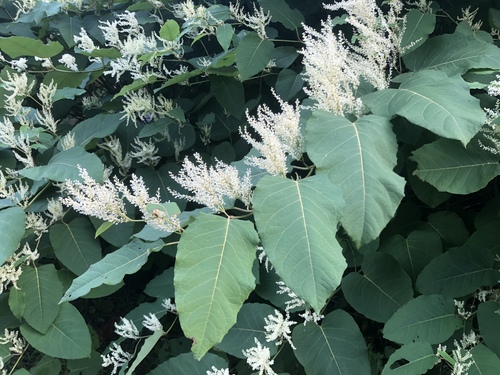
Reynoutria sachalinensis
species of plant

Astragalus propinquus
species of plant
Chloris gayana
species of plant

Ornithopus sativus
species of plant

Themeda triandra
species of plant

Mimosa tenuiflora
species of plant

Acacia leucophloea
species of plant

Heteropogon contortus
species of plant
forage harvester
harvesting machine

Sideroxylon spinosum
species of plant

Vachellia sieberiana
species of plant

Medicago truncatula
species of legume

Astrebla
Astrebla is a small genus of xerophytic (adapted to survive in an environment with little liquid water) grasses found only in Australia. They are the dominant grass across much of the continent. They are commonly known as Mitchell grass after Scottish explorer Thomas Mitchell (1792-1855), who first collected a specimen near Bourke in New South Wales.

Atriplex canescens
species of plant

Phalaris aquatica
species of plant

Cenchrus ciliaris
species of plant

Hyparrhenia rufa
species of plant
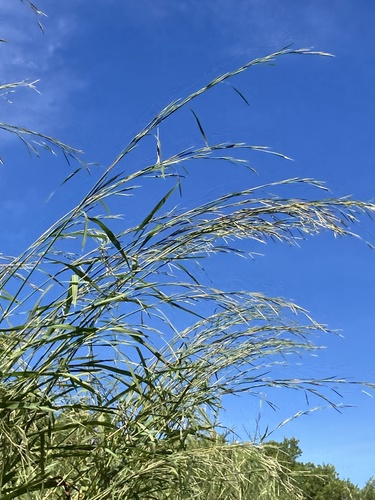
Andropogon gayanus
species of grass

Artemisia tridentata
species of plant