Category
page 1Former confederations

United States
The United States of America (USA), also known as the United States (U.S.) or America, is a country primarily located in North America. It is a federal republic consisting of 50 states and a federal capital district, Washington, D.C. The 48 contiguous states border Canada to the north and Mexico to the south, with the semi-exclave of Alaska in the northwest and the archipelago of Hawaii in the Pacific Ocean. The United States also asserts sovereignty over five major island territories and various uninhabited islands in Oceania and the Caribbean. It is a megadiverse country, with the world's third-largest land area and third-largest population, exceeding 341 million.

Holy Roman Empire
multi-ethnic complex of territories in Western and Central Europe (800/962–1806)

Serbia and Montenegro
federal republic (1992–2003) and political union (2003–2006) in the Balkans

Hanseatic League
1200s–1669 trade confederation in Northern Europe
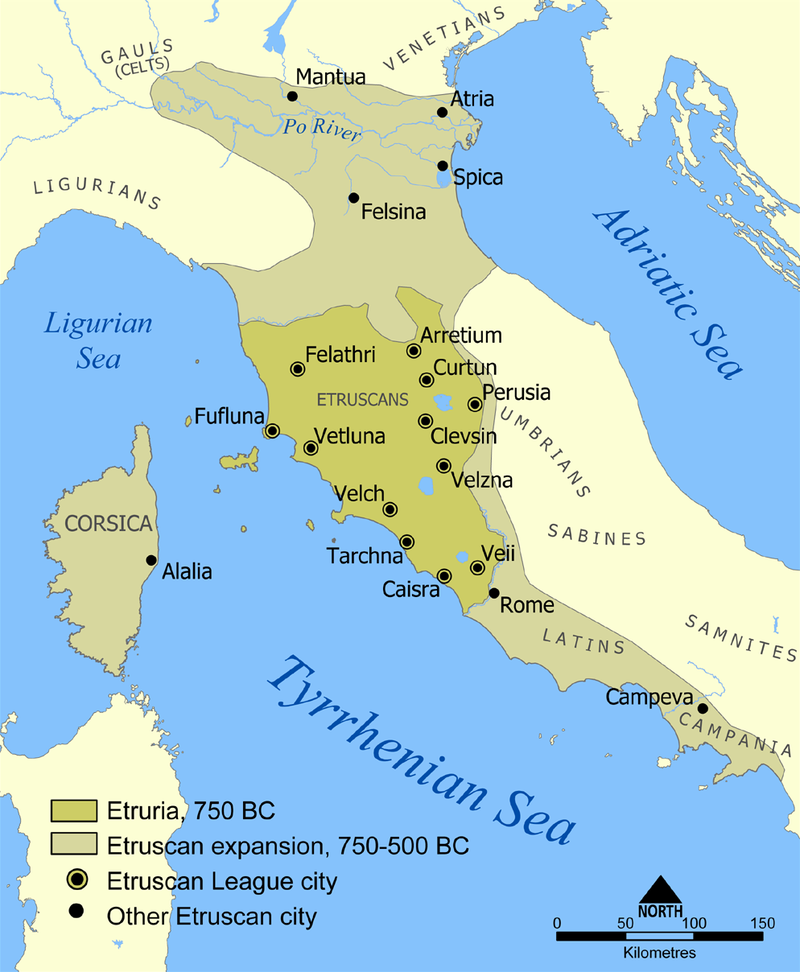
Etruscans
ancient civilization on the Appenine Peninsula

Confederate States of America
former country in North America formed by the Southern United States during the American Civil War (1861-1865)

Dutch Republic
predecessor state of the Netherlands (1581–1795)

United Arab Republic
Middle Eastern state between 1958 and 1961 in the present territories of Egypt and Syria

Maratha Empire
1674–1818 empire in the Indian subcontinent

Xiongnu
The Xiongnu (, ) were a tribal confederation of nomadic peoples who, according to ancient Chinese sources, inhabited the eastern Eurasian Steppe from the 3rd century BC to the late 1st century AD. Modu Chanyu, the supreme leader after 209 BC, founded the Xiongnu Empire.

Crown of Aragon
composite monarchy which existed between 1162–1716

Champa
Champa was a collection of independent Cham polities that extended across the coast of what is present-day central and southern Vietnam from approximately the 2nd century AD until 1832.

North German Confederation
historical federal state in today's Northern Germany (1867–1871)

Novorossiya
proposed merger of Donetsk and Lugansk People Republics that was never realized

Delian League
Association of ancient Greek city-states under Athenian hegemony

Göktürks
The Göktürks (; ), also known as Türks, Celestial Turks or Blue Turks, were a Turkic people in medieval Inner Asia. The Göktürks, under the leadership of Bumin Qaghan (d. 552) and his sons, succeeded the Rouran Khaganate as the main power in the region and established the First Turkic Khaganate, one of several nomadic dynasties that would shape the future geolocation, culture, and dominant beliefs of Turkic peoples.

Old Swiss Confederacy
confederation of cantons (1291-1798)

Rouran Khaganate
state established by proto-Mongols, from the late 4th century until the middle 6th century

Belgae
thumb|upright=1.35|Approximate location of pre-Roman Belgic Gaul shortly before Roman conquest, according to an interpretation of Caesar
300px|thumb|Map of northeastern Gaul around 70 AD
The Belgae ( , ) were a large confederation of tribes living in northern Gaul, between the English Channel, the west bank of the Rhine, and the northern bank of the river Seine, from at least the third century BC. They were discussed in depth by Julius Caesar in his account of his wars in Gaul. Some peoples in southern Britain were also called Belgae and had apparently moved from the continent. T. F. O'Rahilly

Achaean League
Hellenistic-era confederation of Greek city states

Karakhanid Khanate
Turkic dynasty

Latin Union
international organization

Azuchi-Momoyama period
final phase of the Sengoku period of Japanese history (1568-1600)
.png)
Cumania
The name Cumania originated as the Latin exonym for the Cuman–Kipchak confederation, which was a tribal confederation in the western part of the Eurasian Steppe, between the 10th and 13th centuries. The confederation was dominated by two Turkic nomadic tribes: the Cumans (also known as the Polovtsians or Folban) and the Kipchaks. Cumania was known in Islamic sources as Dasht-i Qipchaq (دشت قپچاق) which means "Steppe of the Kipchaks" or "Kipchak Plains" in Persian, and al-Qumāniyīn (القمانيين) which means "The Cumans" or "The Cuman people" in Arabic. Russian sources have referred to Cumania as
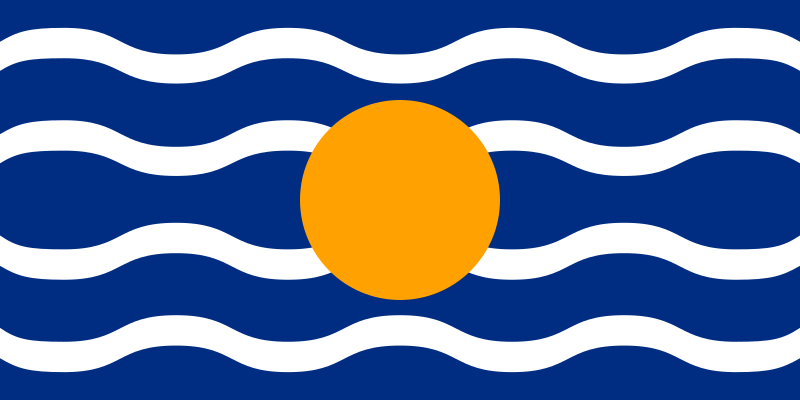
West Indies Federation
federation of British colonies (1958–1962)

Xianbei
The Xianbei (Mongolian:Сүнбэ; ; ) were an ancient nomadic people in northern East Asia who developed a distinct cultural and political identity by the 1st century BC. They inhabited regions spanning parts of present-day northeastern China, Inner Mongolia, and the eastern Eurasian steppe. Several Xianbei groups formed ruling regimes, with early political center around present-day Datong in Shanxi. The Xianbei were likely not of a single ethnicity, but rather a multilingual, multi-ethnic confederation consisting of mainly Proto-Mongols (who spoke either pre-Proto-Mongolic, or Para-Mongolic langu

Aztec Empire
former Mesoamerican empire
Aetolian League
confederation of tribal communities and cities in ancient Greece
Federation of Arab Republics
unsuccessful attempt of establishing a state consisting of Egypt, Libya and Syria
Senegambia Confederation
former confederation between Senegal and The Gambia
Arab Federation
short-lived country that was formed in 1958 from the union of Iraq and Jordan
Merkit people
The Merkit (; ; ) was one of the five major tribal confederations of Mongol or Turkic origin in the 12th-century Mongolian Plateau.
United Belgian States
confederation in the Southern Netherlands (1790)
League of Lezhë
former country
Kingdom of Lunda
pre-colonial African confederation of states in what is now the Democratic Republic of Congo, Angola and Zambia
Vajji
republican confederacy in ancient India
Argentine Confederation
1831–1861 republic in South America
Principality of Hungary
predecessor of the Kingdom of Hungary

Philistia
Philistia refers to the territory inhabited by the Philistines in Canaan, where they maintained a pentapolis comprising the cities of Gaza, Ashkelon, Ashdod, Ekron, and Gath. For a time, Philistia also included Jaffa, which may have briefly changed hands with Israel before it was ultimately lost to the Neo-Assyrian Empire during Sennacherib's Levantine campaign.

Yamatai
Yamatai or Yamatai-koku is the Sino-Japanese name of an ancient country in Wa (Japan) during the late Yayoi period The Chinese text Records of the Three Kingdoms first recorded the name as () or () (using reconstructed Eastern Han Chinese pronunciations) followed by the character for "country", describing the place as the domain of Priest-Queen (died ). Generations of Japanese historians, linguists, and archeologists have debated where Yamatai was located and whether it was related to the later .
Banu Hilal
A huge Arab tribe
%2C%20Timurid%20genealogy%2C%201405-1409%2C%20Samarkand%20(TSMK%2C%20H2152).jpg)
Barlas
The Barlas (; Chagatai Turkic/ Barlās; also Berlās) were a Mongol tribal confederation clan, which later became Turkified in Central Asia, forming a nomadic confederation. They were a sub-clan of the Borjigin, emerged within the Khamag Mongol confederation in present-day Mongolia in the early to mid-12th century, and traced their military roots to one of the elite regiments of the Mongol Empire’s Kheshig guard. The Barlas spawned as one imperial dynasties with two major empires in Asia: the Timurid Empire in Central Asia and Persia; and its later branch, the Mughal Empire in the Indian subcont
Confederate Ireland
Irish historical period
Illinois Confederation
group of 12–13 Native American tribes
Prussian Confederation
organization of Prussian nobles in opposition to the Teutonic Order (1440-66)
Ba
former country in ancient China

Caledonians
thumb|right|180px|Peoples of Northern Britain according to Ptolemy's 2nd-century Geography
Masmuda
The Masmuda (, Berber: ⵉⵎⵙⵎⵓⴷⵏ) is a Berber tribal confederation, one of the largest in the Maghreb, along with the Zenata and the Sanhaja. Historical Arabic sources locate them within the Maghreb, primarily in territories that fall within the borders of present-day Morocco, with additional communities noted in what is now Algeria.
Union of African States
international organization
Ionian League
confederation of thirteen ancient Greek city-states in the region Ionia on the western coast of Anatolia (present-day Turkey)

Ishmaelites
The Ishmaelites (; ) were a collection of various Arab tribes, tribal confederations and small kingdoms described in Abrahamic tradition as being descended from and named after Ishmael.
Jinhan confederacy
confederation of protostates in southeastern Korean peninsula
Samhan
Samhan, or Three Hans (), is the collective name of the three confederacies: Byeonhan, Jinhan, and Mahan that emerged in the first century BCE during the Proto–Three Kingdoms of Korea, or Samhan, period. Located in the central and southern regions of the Korean Peninsula, the Samhan confederacies eventually merged and developed into the Paekche, Silla kingdoms and Kaya confederacy. The name "Samhan" also refers to the Three Kingdoms of Korea.
Kimek Khanate
Medieval Turkic state formed by the Kimek and Kipchak people
Byeonhan confederacy
former country
Donghu people
Nomadic confederacy, 697-150 BCE
Mahan confederacy
former country on Korean peninsula
Tlaxcala
Nahua state

Cañari
thumb|right|200px|Cañari musicians
thumb|right|200px|A Cañari weaver at his loom
Confederation of Mountain Peoples of the Caucasus
former militarized political organization in the Caucasus