Category
page 1French poems

The Song of Roland
medieval epic work

Le Roman de la Rose
medieval French poem

Yvain, the Knight of the Lion
Arthurian romance by Chrétien de Troyes

Erec and Enide
literary work by Chrétien de Troyes
Perceval, the Story of the Grail
romance of Chrétien de Troyes

Lancelot, the Knight of the Cart
12th-century Old French poem by Chrétien de Troyes
Girart de Roussillon
Frankish Burgundian leader and count of Paris, 790-877

Cligès
Cligès (also Cligés) is a poem by the medieval French poet Chrétien de Troyes, dating from around 1176. It is the second of his five Arthurian romances; Erec and Enide, Cligès, Yvain, Lancelot and Perceval. The poem tells the story of the knight Cligès and his love for his uncle's wife, Fenice.

Calligrammes
thumb|A calligram from Calligrammes
Calligrammes: Poems of Peace and War 1913–1916, is a collection of poems by Guillaume Apollinaire which was first published in 1918. Calligrammes is noted for how the typeface and spatial arrangement of the words on a page plays just as much of a role in the meaning of each poem as the words themselves – a form called a calligram. In this sense, the collection can be seen as either concrete poetry or visual poetry.

Lais of Marie de France
series of twelve short narrative Breton lais by the poet Marie de France
Chanson d'Antioche
chanson de geste

Huon of Bordeaux
13th-century French epic poem
The Four Sons of Aymon
medieval tale

La Légende des siècles
poetry collection by Victor Hugo

Le Testament
1461 poetry collection by François Villon
Chanson de Guillaume
literary work
Ballade des dames du temps jadis
poem by François Villon
Amis et Amiles
medieval French epic poem
Bisclavret
thumb|Marie de France from an illuminated manuscript
"Bisclavret" ("The Werewolf") is one of the twelve Lais of Marie de France written in the 12th century. Originally written in French, it tells the story of a knight who is trapped in wolf form by the treachery of his wife. The tale shares a common ancestry with the comparable Lay of Melion, and is probably referenced in Sir Thomas Malory's ''Le Morte d'Arthur'' with the tale of Sir Marrok, who has a similar story.
Le Pèlerinage de Charlemagne
Old French chanson de geste
Charroi de Nîmes
Old French chanson de geste
Roman d'Alexandre
literary work by Alexandre de Paris
Girart de Vienne
late twelfth-century Old French chanson de geste

Lanval
Lanval is one of the Lais of Marie de France. Written in Anglo-Norman, it tells the story of Lanval, a knight at King Arthur's court, who is overlooked by the king, wooed by a fairy lady, given all manner of gifts by her, and subsequently refuses the advances of Queen Guinevere. The plot is complicated by Lanval's promise not to reveal the identity of his mistress, which he breaks when Guinevere accuses him of having "no desire for women". Before Arthur, Guinevere accuses Lanval of shaming her, and Arthur, in an extended judicial scene, demands that he reveal his mistress. Despite the broken p

Battle of the Wines
1224 French poem by Henry of Andeli

Gormond et Isembart
French epic poem (before 1150)
Aspremont
12th-century Old French chanson de geste
Li coronemenz Looïs
twelfth-century Old French medieval narrative
Les Deux Amants
narrative lay by Marie de France
Chevrefoil
"Chevrefoil" is a Breton lai by the medieval poet Marie de France. The eleventh poem in the collection is called The Lais of Marie de France and its subject is an episode from the romance of Tristan and Iseult. The title means "honeysuckle," a symbol of love in the poem. "Chevrefoil" consists of 118 lines and survives in two manuscripts, Harley 978 or MS H, which contains all the Lais, and in Bibliothèque Nationale, nouv. acq. fr. 1104, or MS S.

Le Lac
poem by Alphonse de Lamartine

Guigemar
"Guigemar" is a Breton lai, a type of narrative poem, written by Marie de France during the 12th century. The poem belongs to the collection known as The Lais of Marie de France. Like the other lais in the collection, Guigemar is written in the Anglo-Norman language, a dialect of Old French, in rhyming octosyllabic couplets.
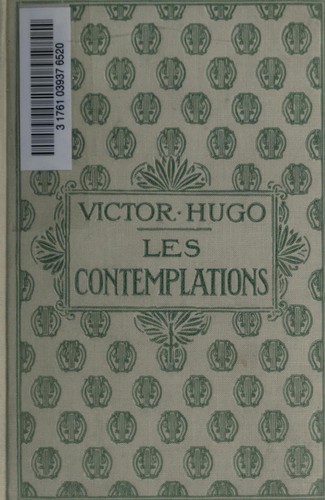
Les Contemplations
collection of poetry by Victor Hugo

Aymeri de Narbonne
figure of legend
Aliscans
Aliscans is a chanson de geste of the late twelfth century. It recounts the story of the fictional battle of Aliscans (Alescans), a disastrous defeat of a Christian army by a Saracen army. The name 'Aliscans' presumably refers to the Alyscamps in Arles. It belongs to the Guillaume d'Orange cycle, and in the action Guillaume's nephew Vivien is killed.
Ballade des pendus
poem by François Villon

Virgile travesti
Parodic verse by Paul Scarron (1648)

Bevis of Hampton
legendary hero
Equitan
"Equitan" is a Breton lai (a type of narrative poem) written by Marie de France sometime in the 12th century. The poem belongs to what is collectively known as The Lais of Marie de France. Like the other lais in the collection, Equitan is written in the Anglo-Norman language, a dialect of Old French, in rhyming octosyllabic couplets. In this 320 line poem, the author cautions that those who plot to harm another person may find only their own misfortune.
Laüstic
thumb | 220x124px | right | alt= The first 12 lines of the British Library’s copy of L’Austic by Marie de France from the first edition 1175-1200 CE. | The first 12 lines of the British Library’s copy of L’Austic by Marie de France from the first edition 1175-1200 CE.
"Laüstic", also known as "Le Rossignol", "Le Laustic", "Laostic", and "Aüstic", is a Breton lai by the medieval poet Marie de France. The title comes from the Breton word for "nightingale" (eostig), a symbolic figure in the poem. It is the eighth poem in the collection known as the Lais of Marie de France, and the poem is only f

Le Fresne
narrative lay by Marie de France

Guillaume de Dole
work by Jean Renart

Eliduc
"Eliduc" is a Breton lai by the medieval poet Marie de France. The twelfth and last poem in the collection known as The Lais of Marie de France, it appears in the manuscript Harley 978 at the British Library. Like the other poems in this collection, "Eliduc" is written in the Anglo-Norman dialect of Old French, in couplets of eight syllables in length. At 1184 lines, it is the longest of the lais attributed to Marie de France. The text of the lai notes that its correct title should be Guildeluec and Guilliadon, but the name Eliduc has stuck.

Basin
chanson de geste about Charlemagne's childhood
Yonec
thumb|An image of the Yonec text"Yonec" is one of the Lais of Marie de France, written in the twelfth century by the French poet known only as Marie de France. Yonec is a Breton lai, a type of narrative poem. The poem is written in the Anglo-Norman dialect of Old French in rhyming couplets of eight syllables each. This lai tells the story of a woman who seeks to escape a loveless marriage, and of the child born from the love that she found elsewhere.

Liberté, j'écris ton nom
1942 poem written by Paul Éluard
Melion
Melion is an anonymous Breton lai that tells the story of a knight who transforms into a werewolf for the love of his wife who betrays him.
L'Âtre périlleux
13th-century French romance
Yde et Olive
Old French chanson de geste
Guillaume d'Angleterre
poem by Chretien
Le dit des rues de Paris
poem written by Guillot de Paris
Vows of the Peacock
early 14th-century chivalric poem by Jacques de Longuyon
Prise d'Orange
12th-century chanson de geste