Category
page 1Freshwater crustaceans

crayfish
thumb|Rearing white-clawed crayfish at Cynrig hatchery, Wales. Establishing a breeding population from introduced captive-bred animals.
thumb|Cajun style crayfish
thumb|Dried crayfish at an African market
Daphnia
Daphnia is a genus of small planktonic crustaceans, in length. Daphnia are members of the order Anomopoda, and are one of the several small aquatic crustaceans commonly called water fleas because their saltatory swimming style resembles the movements of fleas. Daphnia spp. live in various aquatic environments ranging from acidic swamps to freshwater lakes and ponds.

Anostraca
Anostraca is one of the four orders of crustaceans in the class Branchiopoda; its members are referred to as fairy shrimp. They live in vernal pools and hypersaline lakes across the world, and they have even been found in deserts, ice-covered mountain lakes, and Antarctic ice. They are usually long (exceptionally up to ). Most species have 20 body segments, bearing 11 pairs of leaf-like phyllopodia (swimming legs), and the body lacks a carapace. They swim "upside-down" and feed by filtering organic particles from the water or by scraping algae from surfaces, with the exception of Branchinecta

Notostraca
The order Notostraca, containing the single family Triopsidae, is a group of crustaceans known as tadpole shrimp or shield shrimp. The two genera, Triops and Lepidurus, are considered living fossils, with similar forms having existed since the end of the Devonian, around 360 million years ago. They have a broad, flat carapace, which conceals the head and bears a single pair of compound eyes. The abdomen is long, appears to be segmented and bears numerous pairs of flattened legs. The telson is flanked by a pair of long, thin caudal rami. Phenotypic plasticity within taxa makes species-level ide

Cyclops
genus of copepods
Macrobrachium
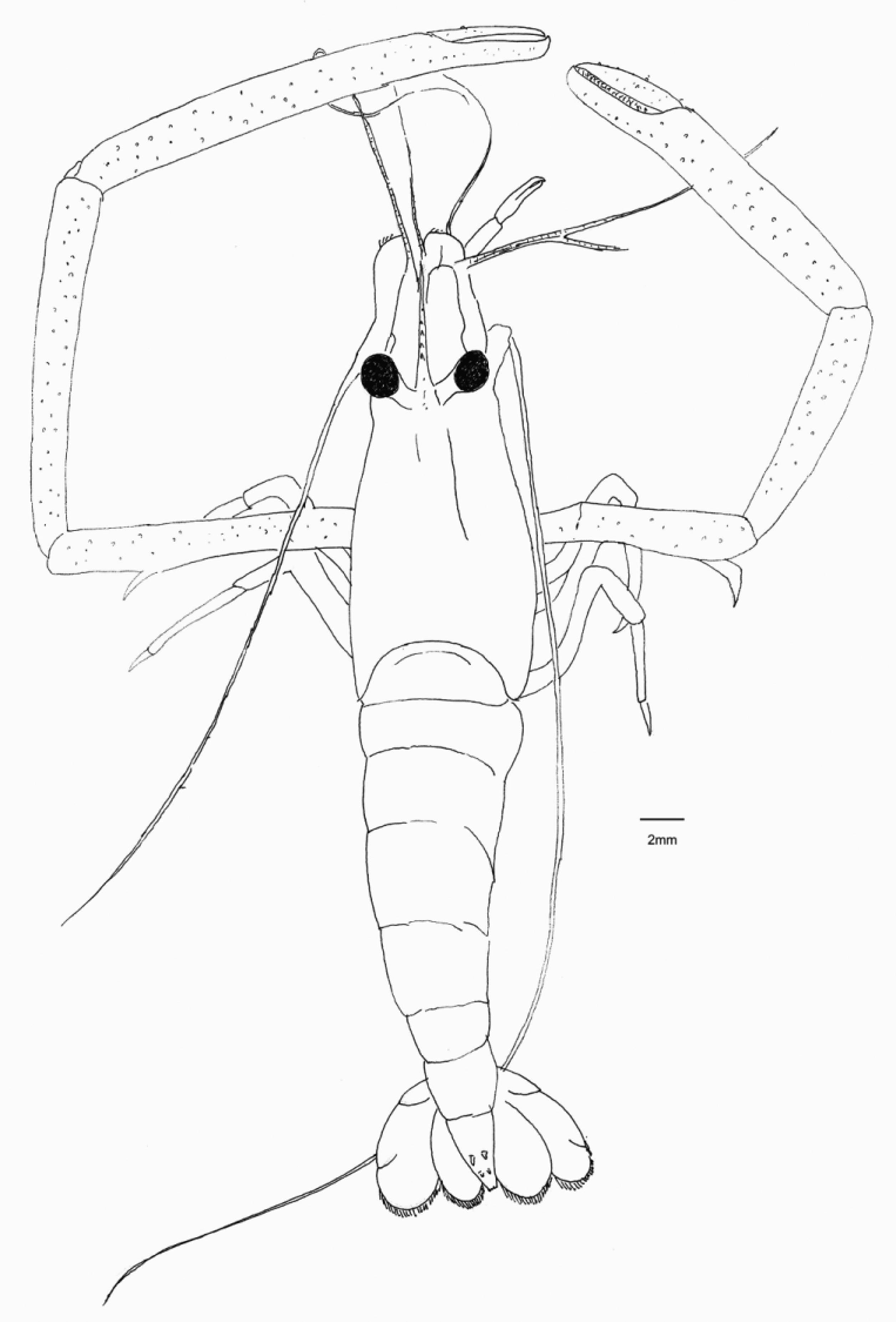
Macrobrachium is a genus of freshwater prawns or shrimps characterised by the extreme enlargement of the second pair of pereiopods, at least in the male. The genus is cosmopolitan, found throughout the tropical, freshwater and estuarine ecosystems of both the Old and New Worlds. The genus has a difficult taxonomic history due to morphological conservation between its species (plesiomorphy), and conversely, variations within a single species (polymorphism), leading to the discovery of cryptic species which were only revealed through genetic analysis and morphometry.
Asellidae
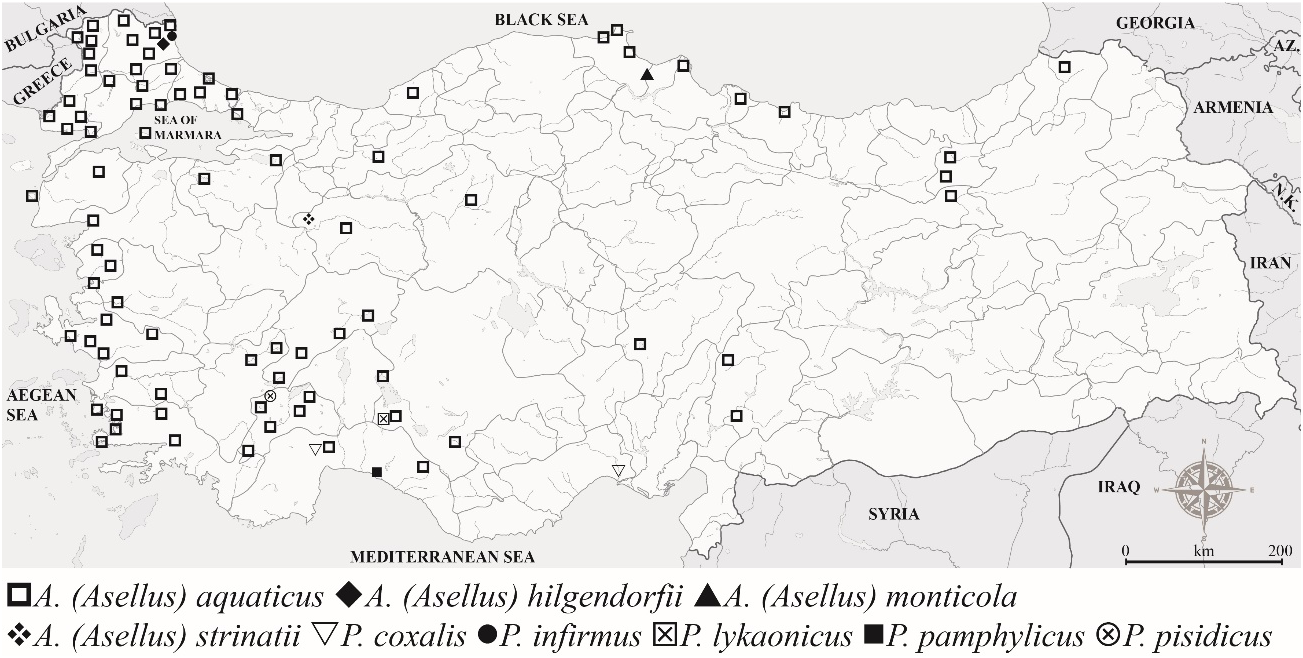
The Asellidae are a family of isopod crustaceans, one of the largest families of freshwater isopods, living in both epigean and hypogean habitats in North America and Europe.
Neocaridina
Neocaridina is a genus of small, land-locked freshwater shrimp in the family Atyidae (order Decapoda, infraorder Caridea) native to East Asia. The genus comprises roughly c. 25–30 described species (numbers vary with ongoing revision and differing treatments of synonyms and subspecies).

Diplostraca
The Diplostraca or Cladocera, commonly known as water fleas, is a superorder of small, mostly freshwater crustaceans, most of which feed on microscopic chunks of organic matter, though some forms are predatory.
Bathynellacea
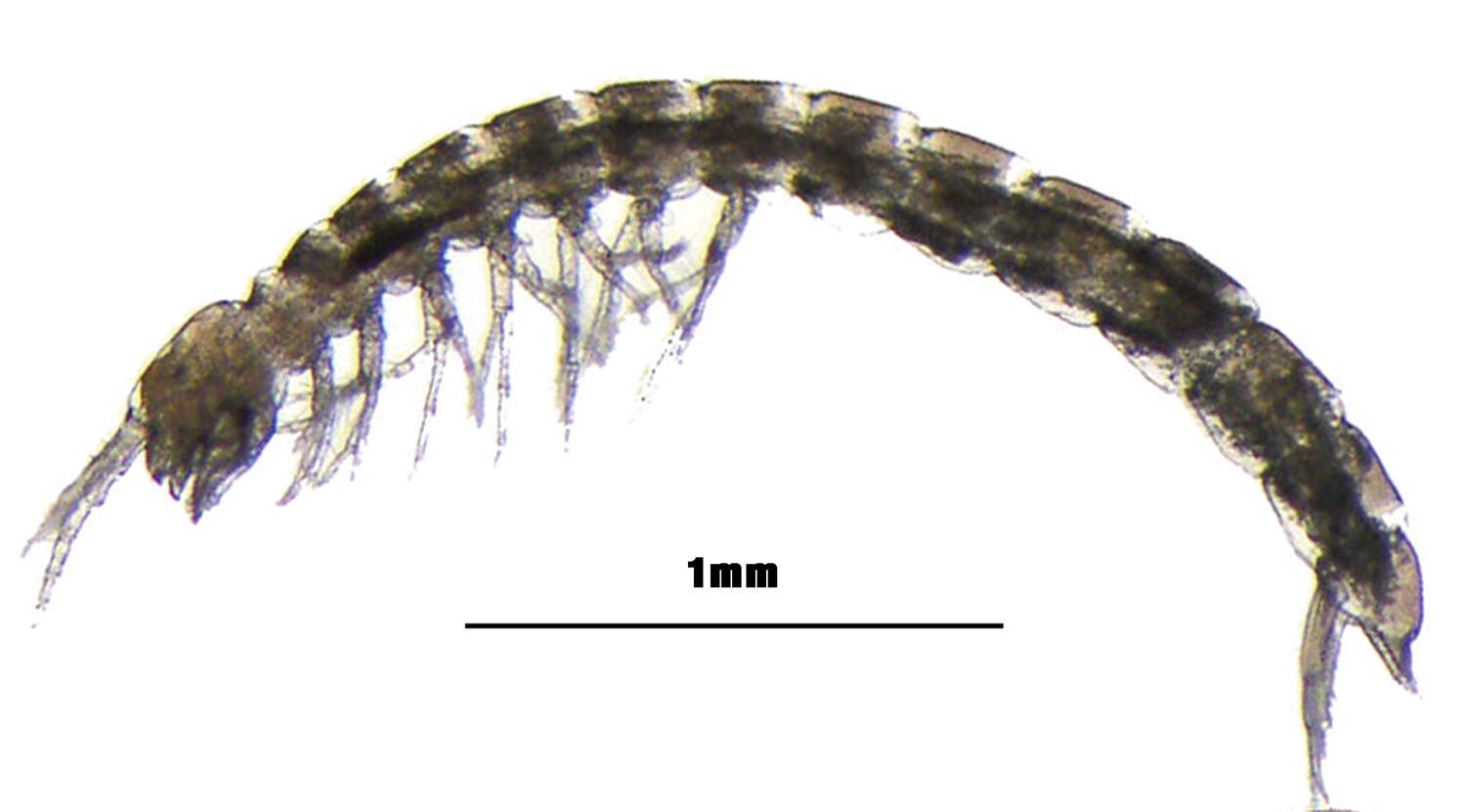
Bathynellacea is an order of crustaceans which live interstitially in groundwater. Some species can tolerate low salt concentrations, and at least one African species is a thermophile, living in hot springs and tolerating temperatures up to . Bathynellaceans are minute, blind, worm-like animals with short, weak legs, reaching a maximum size of . They are found on every continent except Antarctica, although they are missing from some islands, including Fiji, New Caledonia and the Caribbean islands. There are two families, Bathynellidae and Parabathynellidae; a third family, "Leptobathynellidae"
Astacoidea
Astacoidea is superfamily of freshwater crayfish that live in the Northern Hemisphere. The other superfamily of crayfish, Parastacoidea, lives in the Southern Hemisphere. Astacoidea consists of three families: Astacidae (from Europe and western North America), Cambaridae (from eastern North America), and Cambaroididae (from eastern Asia). Crayfish are closely related to lobsters, as shown in the simplified cladogram below.
freshwater crab
common name for a non-marine crab

Anaspidacea
Anaspidacea is an order of crustaceans, comprising eleven genera in four families. Species in the family Anaspidesidae vary from being strict stygobionts (only living underground) to species living in lakes, streams and moorland pools, and are found only in Tasmania. Koonungidae is found in Tasmania and the south-eastern part of the Australian mainland, where they live in the burrows made by crayfish and in caves. The families Psammaspididae and Stygocarididae are both restricted to caves, but Stygocarididae has a much wider distribution than the other families, with Parastygocaris having spec
Spelaeogriphacea
Spelaeogriphacea is an order of crustaceans that grow to no more than . Little is known about the ecology of the order.
Paratya
Paratya is a genus of freshwater shrimp of the family Atyidae, found in various islands in the Pacific Ocean. The split between the North Pacific clade (Japan) and the South Pacific clade (New Zealand, Australia, New Caledonia, Lord Howe Island) has been estimated to have occurred .

Atya
Atya is a genus of freshwater shrimp of the family Atyidae, ranging through the Antilles and along the Atlantic and Pacific slopes of Central and South America and in western Africa. It contains the following species:

Daphnia galeata
species of crustacean
Bragasellus conimbricensis
species of crustacean
Bragasellus afonsoae
species of crustacean
Cyclops bicuspidatus
species of crustacean
Bragasellus notenboomi
species of crustacean
Bragasellus seabrai
species of crustacean
Bragasellus escolai
species of crustacean
Bragasellus stocki
species of crustacean
Bragasellus meijersae
species of crustacean
Bragasellus incurvatus
species of crustacean
Bragasellus aireyi
species of crustacean
Bragasellus molinai
species of crustacean
Bragasellus pauloae
species of crustacean
Bragasellus frontellum
species of crustacean
Chirocephalus marchesonii
species of crustacean
Bragasellus comasioides
species of crustacean
Bragasellus comasi
species of crustacean
Bragasellus lagari
species of crustacean
Bragasellus lagarioides
species of crustacean
Bragasellus cortesi
species of crustacean
Bragasellus rouchi
species of crustacean
Anomopoda
Anomopoda is an order of the superorder Diplostraca. These crustaceans, a type of water flea, are members of the class Branchiopoda. The Anomopoda typically have five pairs of thoracic limbs, but sometimes have six pairs. The head of the Anomopoda lacks a clear separation from the trunk and the posterior, while the abdomen area gradually merges with the anterior of the trunk.
Daphnia pulicaria
species of crustacean
Proasellus peltatus
species of crustacean
Caecidotea bicrenata
species of crustacean

Mesocyclops aspericornis
species of arthropods

Caecidotea attenuata
species of crustacean
Caecidotea ancyla
species of crustacean
Bragasellus
Bragasellus is a genus of crustaceans in the family Asellidae. It is endemic to Spain and Portugal.

Caecidotea beattyi
species of crustacean

Caecidotea alabamensis
species of crustacean
ephippia
thumb|right|Resting egg pouch (ephippium) and the juvenile daphnid that just hatched from it

Caecidotea acuticarpa
species of crustacean

Caecidotea adenta
species of crustacean
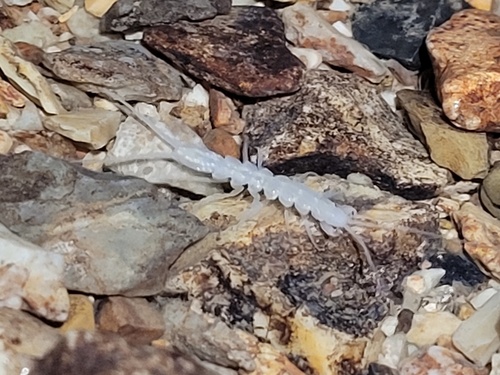
Caecidotea antricola
species of crustacean
Phreatoicidea
Phreatoicidea is a suborder of isopod crustaceans. Extant species are confined to freshwater environments in South Africa, India, and Oceania. This seemingly Gondwana-derived distribution belies the fact that the group once had a cosmopolitan distribution; fossils which can be assigned to the Phreatoicidea are the oldest isopod fossils, and are found throughout the world. In the intervening 325 million years, phreatoicideans have changed little, and are thus considered living fossils.
Clibanarius fonticola
species of crustacean
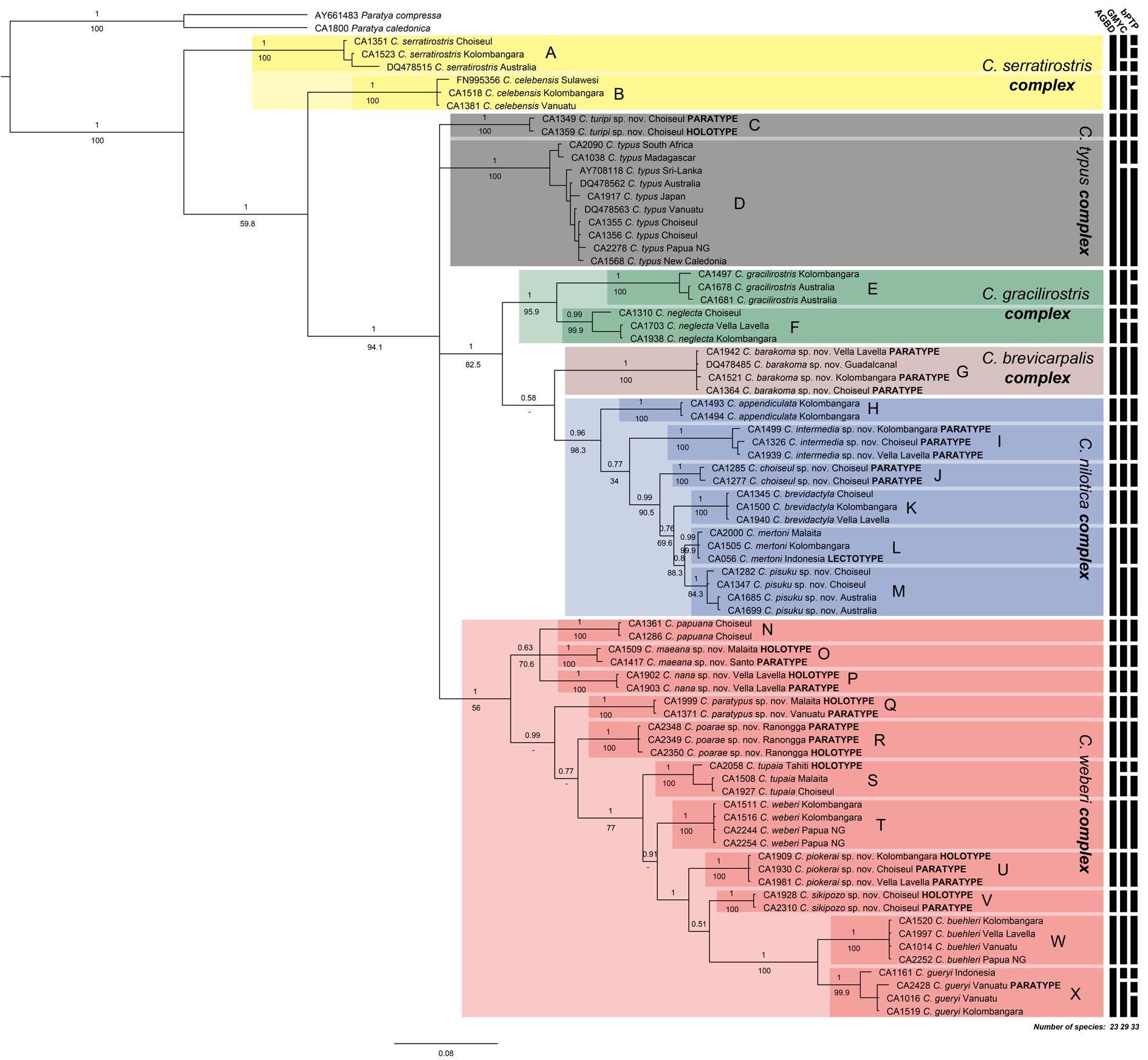
Caridina typus
species of crustacean
Ramellogammarus similimanus
species of crustacean
Potamalpheops
Potamalpheops is a genus of shrimp in the family Alpheidae. It was originally erected by Powell in 1979 to house species from Africa. Later, Horton H. Hobbs, Jr. realised that the troglobitic shrimp he had described in 1973 from Oaxaca, Mexico as Alpheopsis stygicola, also belonged to the genus, and in 1991, A. J. Bruce described a new species from Australia, further expanding the genus' geographical range. It is now thought to represent a relict taxon from the Tethys Sea.