Category
page 1Fuels

coal
Coal is a combustible black or brownish-black sedimentary rock, formed as layers called coal seams. Coal is mostly carbon with variable amounts of other elements, chiefly hydrogen, sulfur, oxygen, and nitrogen. It is a fossil fuel, formed when plants decay into peat which is converted into coal by the heat and pressure of deep burial over millions of years. Vast deposits formed from wetlands called coal forests that covered much of the tropics during the late Carboniferous and early Permian.

methane
Methane ( , ) is a chemical compound that has the chemical formula (one carbon atom bonded to four hydrogen atoms). It is a group-14 hydride, the simplest alkane, and the main constituent of natural gas. The abundance of methane on Earth makes it an economically attractive fuel, although capturing and storing it is difficult because it is a gas at standard temperature and pressure. In the Earth's atmosphere methane is transparent to visible light but absorbs infrared radiation, acting as a greenhouse gas. Methane is an organic hydrocarbon, and among the simplest of organic compounds.

fuel
thumb|upright=1.35|Firewood was one of the first fuels used by humans.

charcoal
thumb|Charcoal
thumb|alt=workers packing charcoal in paper bags | Packaging of charcoal for export in Namibia

biofuel
thumb|upright|A sample of biodiesel

firewood
thumb|Stack of firewood next to a building
thumb|Stack of split firewood and a splitting maul, Czech Republic

diethyl ether
chemical compound

filling station
establishment that primarily sells fuel, lubricating oils, and other merchandise, such as tires and batteries, for motor vehicles and that often also perform minor repair work

coke
a grey, hard, and porous fuel with high carbon content and few impurities

methenamine
Hexamethylenetetramine (HMTA), also known as 1,3,5,7-tetraazaadamantane, is a heterocyclic organic compound with diverse applications. It has the chemical formula (CH2)6N4 and is a white crystalline compound that is highly soluble in water and polar organic solvents. It is useful in the synthesis of other organic compounds, including plastics, pharmaceuticals, explosives, and rubber additives. The compound is also used medically for certain conditions. It sublimes in vacuum at 280°C. It has a tetrahedral cage-like structure similar to adamantane. The four vertices are occupied by nitrogen atom

nitromethane
Nitromethane, sometimes shortened to simply "nitro", is an organic compound with the chemical formula . It is the simplest organic nitro compound. It is a polar liquid commonly used as a solvent in a variety of industrial applications such as in extractions, as a reaction medium, and as a cleaning solvent. As an intermediate in organic synthesis, it is used widely in the manufacture of pesticides, explosives, fibers, and coatings. Nitromethane is used as a fuel additive in various motorsports and hobbies, e.g. Top Fuel drag racing and miniature internal combustion engines in radio control, con
dimethyl ether
chemical compound
heat of combustion
quantity measuring the energy per unit of mass or volume that some substance releases upon oxidation
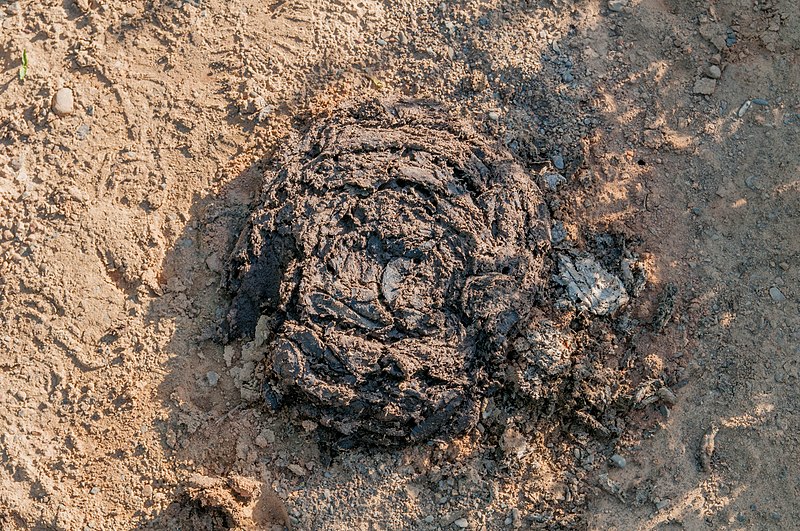
cow dung
waste product from a cow's (or cattle in general) digestive tract

oxyhydrogen
thumb|right|Nineteenth-century electrolytic cell for producing oxyhydrogen
Oxyhydrogen is a mixture of hydrogen (H2) and oxygen (O2) gases. This gaseous mixture is used for torches to process refractory materials and was the first
nitroethane
Nitroethane is an organic compound having the chemical formula C2H5NO2. Similar in many regards to nitromethane, nitroethane is an oily liquid at standard temperature and pressure. Pure nitroethane is colorless and has a fruity odor.
alternative fuel
group of non-conventional fuel materials
fire point
lowest temperature at which a fuel will burn continuously
motor fuel
fuel used by an internal combustion engine

biohydrogen
thumb|Microbial hydrogen production.
Biohydrogen is H2 that is produced biologically. Interest is high in this technology because H2 is a clean fuel and can be readily produced from certain kinds of biomass, including biological waste. Furthermore some photosynthetic microorganisms are capable of producing H2 directly from water splitting using light as energy source.
dry animal dung fuel
animal feces that has been dried in order to be used as a fuel source
tert-butylperoxide
DTBP: organic compound consisting of a peroxide group bonded to two tert-butyl groups
gas flare
gas combustion device
.jpg)
Binchōtan
thumb|Binchō-tan, or white charcoal
thumbnail|Burning binchō-tan
Binchō-tan (, ), also called white charcoal or binchō-zumi, is a type of high-quality charcoal traditionally used in Japanese cooking. Its use dates back to the Edo period when during the Genroku era, a craftsman named Bichū-ya Chōzaemon () began to produce it in Tanabe, Wakayama. The typical raw material used to make binchō-tan in Japan is oak, specifically ubame oak, now the official tree of Wakayama Prefecture. Wakayama continues to be a major producer of high-quality charcoal, with the town of Minabe, Wakayama, producing more
cryogenic fuel
fuels that require storage at extremely low temperatures in order to maintain them in a liquid state
water splitting
chemical reaction in which water is broken down into oxygen and hydrogen
Hexamine fuel tablet
German brand for solid fuel in tablet form
natural gasoline
type of gasoline from natural gas
Sterno
thumb|right|250px|A can of Sterno aflame|alt=A grey colored can of Sterno on fire
Sterno is a brand of jellied denatured alcohol sold in and meant to be burned directly in its can. Popular both in commercial food service and home entertainment, its primary uses are as a fuel for heating chafing dishes in buffets and serving fondue. Other uses are for portable stoves and as an emergency heat source. It is also used with toy and model steam and other external combustion engines.
flammable liquid
any liquid that can catch fire
mond gas
cheap form of Coal gas
energy efficiency in transportation
Bamboo charcoal
charcoal made from bamboo
green wood
unseasoned wood
ultra-low-sulfur diesel
diesel fuel grade with minimal sulfur content
coal-water slurry fuel
type of coal-based fuel
oxygenate
thumb|Automobile exhaust
In the liquid fuel industry, oxygenates are hydrocarbon-derived fuel additives containing at least one oxygen atom to promote complete combustion. Absent oxygenates, fuel combustion is usually incomplete, and the exhaust stream pollutes the air with carbon monoxide, soot particles, aromatic and polyaromatic hydrocarbons, and nitrated polyaromatic hydrocarbons.
charcoal lighter fluid
aliphatic petroleum solvent used in lighting charcoal in a barbecue grill