Category
page 1Gendered occupations

king
alt=|thumb|341x341px|Charlemagne or Charles the Great (748–814) was [[King of the Franks, King of the Lombards, and the first Holy Roman Emperor. Due to his military accomplishments and conquests, he has been called the "Father of Europe".]]

emperor
thumb|Emperor Naruhito and [[Empress Masako of Japan. The Emperor and Empress of Japan are the only current monarchs in the world left carrying this title.]]
.jpg)
monk
thumb|264x264px
A monk (; from , monachos, 'single, solitary', via ) is a man who is a member of a religious order and lives in a monastery. A monk usually lives his life in prayer and contemplation. The concept is ancient and can be seen in many religions, and in philosophy, across numerous cultures.

geisha
thumb|alt=A profile view of a geisha sat kneeling. She wears a black formal kimono a gold belt, a traditionally styled wig and white make-up with red lips and accents.|Profile of a Miyagawa-chō (geisha) Kimiha wearing a trailing, formal black kimono () and a -style wig
<!-- Please use

midwife
A midwife (: midwives) is a health professional who cares for mothers and newborns around childbirth, a specialisation known as midwifery.

nun
A nun is a woman who vows to dedicate her life to religious service and contemplation, typically living under vows of poverty, chastity, and obedience in the enclosure of a monastery or convent. The term is often used interchangeably with religious sisters, who do take simple vows but live an active vocation of prayer and charitable work in the wider society.

surrogacy
thumb|upright=1.5|Intended parents attend the birth of their child by a gestational surrogate.
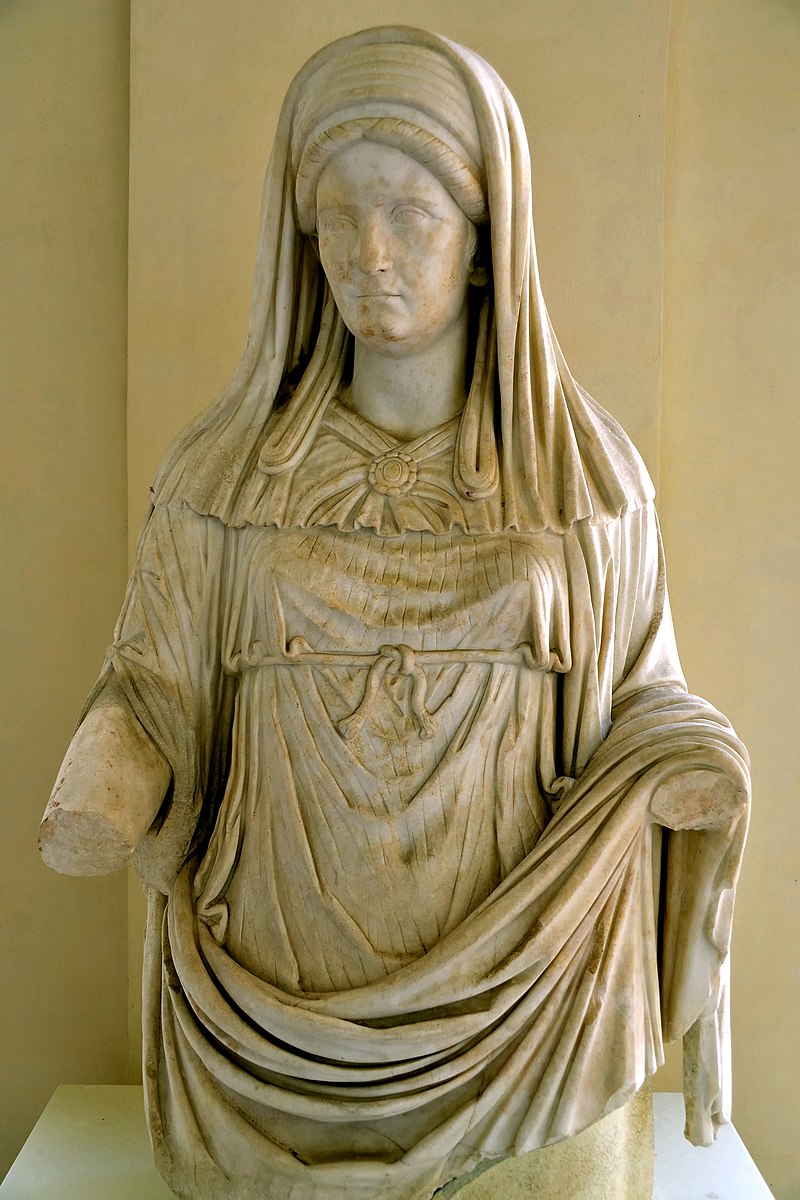
Vestal Virgin
priestesses of goddess Vesta in Ancient Rome

wet nurse
woman employed to breastfeed and care for another's child

warrior
A warrior is a guardian specializing in combat or warfare, especially within the context of a tribal or clan-based warrior culture society that recognizes a separate warrior aristocracy, class, or caste.

lady-in-waiting
thumb|Princess Tatiana Alexandrovna Yusupova, a lady-in-waiting of the Imperial Court of Russia
pin-up model
model whose mass-produced pictures see wide appeal as popular culture

nanny
thumb|upright|A child and her nanny
A nanny is a person who provides child care. Typically, this care is given within the children's family setting. Throughout history, nannies were usually servants in large households and reported directly to the lady of the house. Today, modern nannies, like other domestic workers, may live in or out of the house, depending on their circumstances and those of their employers. Some employment agencies specialize in providing nannies, as there are families that specifically seek them and may make them a part of the household.

maid
thumb|Illustration by William Thomas Smedley, 1906
thumb|La Toilette by Raimundo Madrazo|Raimundo de Madrazo y Garreta,
thumb|A maid cleaning in Denmark in 1912.
call girl
a sex worker

Haenyeo
Haenyeo () are female divers in the South Korean province of Jeju, whose livelihood consists of harvesting a variety of mollusks, seaweed, and other sea life from the ocean. Known for their independent spirit and determination, haenyeo are representative of the semi-matriarchal family structure of Jeju.
gigolo
A gigolo ( ) is a male escort, call boy or social companion who is supported by a person in a continuing relationship.
.jpg)
doula
alt=|thumb|325x325px|A doula (left) applying pressure to a pregnant woman during labor
A doula (; ; ) is a non-medical professional who provides guidance for the service of others and who supports another person (the doula's client) through a significant health-related experience, such as childbirth, miscarriage, induced abortion or stillbirth, as well as non-reproductive experiences such as dying. A doula might also provide support to the client's partner, family, and friends.

squire
thumb| Wolfram von Eschenbach and his squire ([[Codex Manesse, 14th century)]]
thumb|The Squire - Ellesmere Chaucer
page
young male servant

oiran
thumb|upright=1.2|An sitting with a client and an apprentice. Ukiyo-e print by [[Suzuki Harunobu (1765).]]
thumb| dancing, 2023
is a collective term for the highest-ranking courtesans in Japanese history, who were considered to be above common prostitutes (known as ) for their more refined entertainment skills and training in the traditional arts. Divided into a number of ranks within this category, the highest rank of were the , who were considered to be set apart from other due to their intensive training in the traditional arts and the fact that they lived and worked in Kyoto, the politica

butler
thumb|right|A butler in the White House Butler's Pantry.
A butler is a person who works in a house serving and is a domestic worker in a large household. In great houses, the household is sometimes divided into departments, with the butler in charge of the dining room, wine cellar, and pantry. Some also have charge of the entire parlour floor and housekeepers caring for the entire house and its appearance. A butler is usually male and in charge of male servants, while a housekeeper is usually female and in charge of female servants. Traditionally, male servants (such as footmen) were better-p

professional dominatrix
thumb|Phyllis and Aristotle, a fictional tale written in the 13th century, as depicted by artist [[Giovanni Buonconsiglio in the early 1500s]]

governess
right|thumb|300px|In Rebecca Solomon's 1851 painting The Governess, the title figure (seated right, with her charge) exhibits the modest dress and deportment appropriate to her quasi-invisible role in the Victorian household.

milkmaid
thumb|A Danish milk maid with shoulder yoke circa 1935
A milkmaid, milk maid, milkwoman, dairymaid, or dairywoman is a girl or woman who works with milk or cows. She milks cows and may prepare dairy products such as cream, butter, and cheese. The term milkmaid is not the female equivalent of milkman in the sense of one who delivers milk to the consumer; it is the female equivalent of milkman in the sense of cowman or dairyman.
cabin boy
young low ranking male employee who waits on the officers and passengers of a ship
office lady
female pink-collar employee
ring girl
type of model at combat sports fights

kagema
right|thumb|A man cavorts with a (probably a ) and a female sex worker. The (wearing headscarf) sneaks a kiss from the lady behind his patron's back. Nishikawa Sukenobu, . Hand-colored print.
women in music
women in music in different genres, eras, and all over the world
%20at%20Scala%20Theatre%2C%20The%20Hague%2C%20by%20Isaac%20Israels.jpg)
showgirl
thumb|Show-girl (La ) in at Scala Theatre, Wagenstraat, The Hague; by [[Isaac Israëls, 1920s ]]

Naemyeongbu
Naemyŏngbu (), was a category of rank in the royal court of Joseon that referred to concubines and female officials living within the palaces. It was separate from the Oemyŏngbu () category, which consisted of royal women living outside the palace.

washerwoman
thumb|Bronze sculpture by Renoir, 1916

cicisbeo
thumb|300px|Luigi Ponelato, Il cicisbeo, etching, 1790
care work
sub-category of work that includes all tasks that directly involve care processes done in service of others
traditional birth attendant
person who provides maternity care informally

Groom of the Stool
English monarch courtier

bargirl
thumb|A bar girl in Las Vegas

lactation consultant
allied health professional who specializes in the clinical management of breastfeeding

Governess of the Children of France
royal governess in the Kingdom of France

Accla
thumb|250px|right|Acllas in the manuscript of Guamán Poma of 1615.
Aclla (), also called Chosen Women, Virgins of the Sun, and Wives of the Inca, were sequestered women in the Inca Empire. They were virgins, chosen at about age 10. They performed several services. They were given in marriage to men who had distinguished themselves in service to the empire; they produced luxury items, weaving fine cloth, preparing ritual food, and brewing the chicha (beer) drunk at religious festivals; and some, the most "perfect," were selected as human sacrifices for religious rites. Others lived out their li
.jpg)
mondina
thumb|right|240px|A mondina
thumb|right|240px|A monument for the mondine in Vercelli
A (; : ; from the verb , meaning 'to peel', 'to husk', 'to clean', or 'to weed') is a seasonal rice paddy female worker, especially in Italy's Po Valley from the late 19th century to the first half of the 20th; though this practice traces back to about 600 years.

gungnyeo
Kungnyŏ () is a Korean term referring to women waiting on the king and other royalty in traditional Korean society. It is short for "gungjung yeogwan", which translates as "a lady officer of the royal court". Kungnyŏ includes sanggung (palace matron) and nain (assistant court ladies), both of which hold rank as officers. The term is also used more broadly to encompass women in a lower class without a rank such as musuri (lowest maids in charge of odd chores), gaksimi, sonnim, uinyeo (female physicians) as well as nain and sanggung. The term spans those from courtiers to domestic workers.
chaperone
an adult who accompanies a minor, traditionally especially an unmarried girl, in public
Deuki
Deuki is an ancient custom practiced in the far western regions of Nepal where a young girl is offered to the local temple. The practice is in decline.
occupational segregation
distribution of workers across and within occupations
betel nut beauty
female roadside sellers of betel nuts and cigarettes in Taiwan
vedette
female entertainers with multiple talents for singing, dancing, or acting
lady's maid
thumb|The Annunciation by Bartolomé Esteban Perez Murillo|Murillo, 1655–1660, [[Hermitage Museum, Saint Petersburg]]
Superintendent of the Queen's Household
First Lady of Honour
Office at the royal court of France
matron
thumb|Matron Ethel Gray, seated left, with four of her nurses, 1915
Matron is the job title of a very senior or the chief nurse in a hospital in several countries, including the United Kingdom, and other Commonwealth countries and former colonies.
Amah
servant girl
footman
thumbnail|Royal footmen in the United Kingdom wearing their ceremonial livery at the State Opening of Parliament procession, 2008
A footman is a male domestic worker employed mainly to wait at table or attend a coach or carriage.
Dadeumi
Dadeumi () or dadeumijil () is a Korean traditional ironing method where two women kneel on the floor, facing each other across a smoothing stone, and beat a rhythm on the cloth using a wooden bat to press out its wrinkles and soften it. Dadeumi requires dadeumitbangmangi (), a bat that pounds on the cloth, and dadeumitdol (다듬잇돌), the stone under the cloth. The bat may also be called hongdukkae (홍두깨). Dadeumi is used to iron thin cloth, such as ramie fabric () or silk.
Lady of the Bedchamber
personal attendant on a British queen or princess
Meshimori onna
chaiwala
thumb|A chaiwala prepares masala chai on a coal fire in a street of [[Kolkata.]]
A chaiwala (also transliterated as chaiwalah or chaiwallah; , ) is a tea-seller in the Indian subcontinent. They are an integral part of subcontinent culture. Chai is the Hindi and Urdu word for "tea", as in masala chai, and wala indicates the person performing the task, so chaiwala is a street vendor of tea.
Shamakhi dancers
Café con piernas
coffee shop style popular in Chile