Category
page 1Geomagnetism

aurora
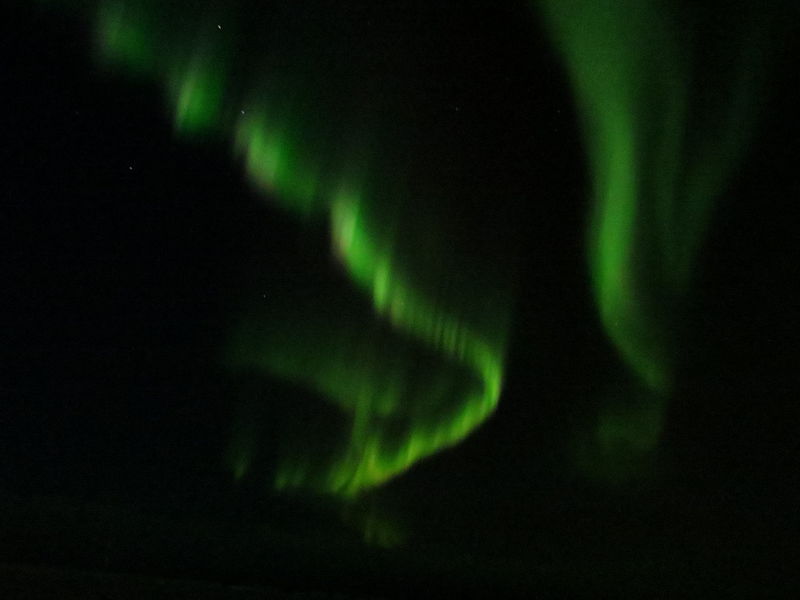
An aurora ( aurorae or auroras) is a natural light display in Earth’s upper atmosphere caused by charged particles from the Sun colliding with atoms in the atmosphere. These collisions excite oxygen and nitrogen, which then emit light of different colors such as green, red, and purple. When observed in high-latitude regions they are called polar lights and aurora polaris. In the Arctic they are called northern lights (aurora borealis); in the Antarctic, the terms southern lights (aurora australis) are used. Auroras display dynamic patterns of radiant light that appear as curtains, rays, spiral

Earth's magnetic field
magnetic field that extends from the Earth's inner core to where it meets the solar wind

magnetosphere
thumb|300 px|Artist's impression of a magnetosphere

Van Allen radiation belt
zone of energetic charged particles around the planet earth
geomagnetic storm
temporary disturbance of the Earth's magnetosphere caused by a disturbance in the interplanetary medium
magnetic declination
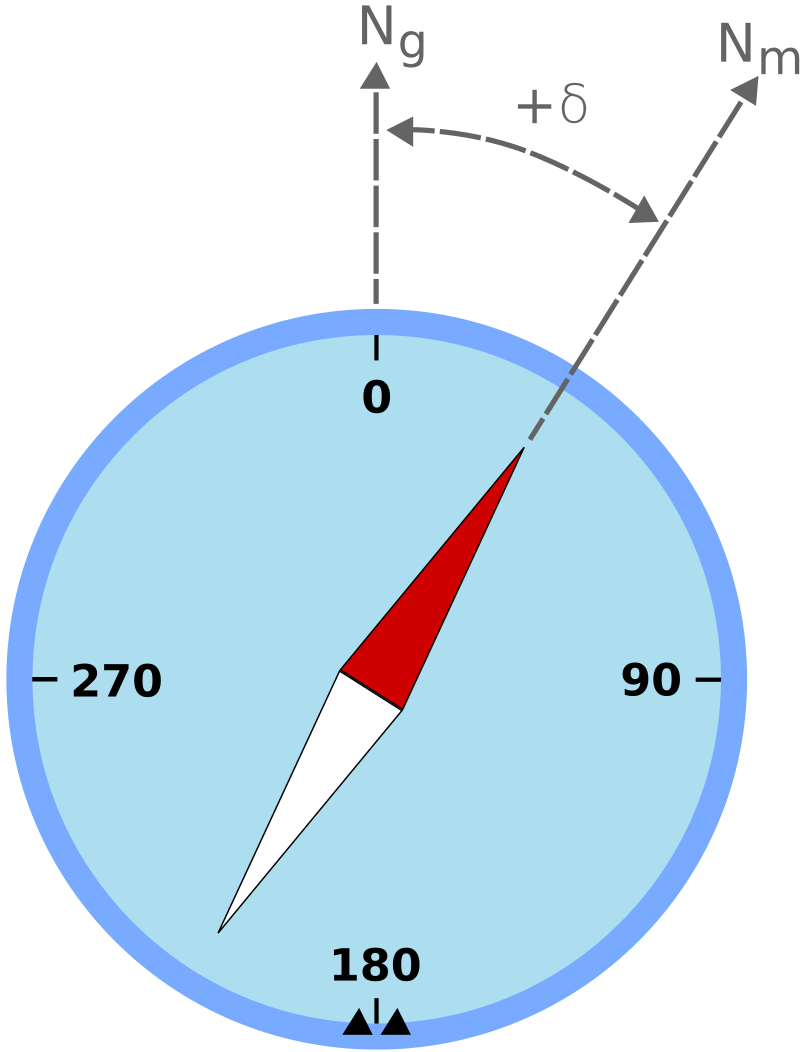
angle on the horizontal plane between magnetic north and true north

North Magnetic Pole
point in the Arctic at which Earth's magnetic field points vertically downwards, at 86°N 175°E in the Arctic Ocean as of 2019
outer core
fluid layer composed of mostly iron and nickel between Earth's solid inner core and its mantle
South Magnetic Pole
wandering point on the Earth where the geomagnetic field lines are directed vertically upwards, at 64°S 137°E as of 2015 in the Southern Ocean
magnetic dip
angle made with the horizontal by the Earth's magnetic field lines
dynamo theory
mechanism by which a celestial body generates a magnetic field
geomagnetism
REDIRECT Earth's magnetic field
magnetic anomaly
anomaly of the Earth's or other astronomical object's magnetic field
magnetic deviation
error of a magnetic compass caused by local magnetic fields
magnetic field of the Moon

plasmasphere
thumb

De Magnete
book by William Gilbert
aeromagnetics
detecting parameters of the magnetic field of the earth by flying over the earth's surface

indoor positioning system
network of devices used to wirelessly locate objects inside a building
Geomagnetically induced current
Ground level manifestation of space weather
geomagnetic pole
one of two antipodal points in the Arctic and in the Antarctic where the axis of a best-fitting dipole intersects the surface of Earth
secular variation
long-term non-periodic variation
Magnetotellurics
thumb|Magnetotelluric station
Kandilli Observatory
observatory, research institute and museum in Turkey
substorm
thumb|right|A series of images made by ultraviolet light imager on the Polar (satellite)|Polar spacecraft showing the aurora and Earth's upper atmosphere. The glowing side is the atmosphere lit up by the Sun's light energy and the oval of light is the aurora. During a substorm the auroral oval brightens in a localized area and then suddenly breaks into many different forms that expand both toward Earth's pole and equator. This is exactly what Shun-ichi Akasofu (1964) drew in his auroral substorm illustration.
thumb|Short video featuring commentary by David Sibeck, project scientist for the THE
proton magnetometer
instrument which measures very small variations in the Earth's magnetic field
International Geomagnetic Reference Field
standard model of the structure of Earth's magnetic field
Dip circle
used to measure the angle between magnetic dip and the horizon
Polar wander
the migration of the magnetic poles over a planetary surface
Dipole model of the Earth's magnetic field
simple approximation of Earth's magnetic field
rock magnetism
study of magnetism in rocks
International Real-time Magnetic Observatory Network
global network of observatories, monitoring the Earth's magnetic field
Curie depth
depth at which rocks in a specific geographical area encounter the Curie temperature
plasma sheet
sheetlike region of denser (0.3–0.5 cm⁻³) hot plasma and lower magnetic field near the equatorial plane, between the magnetosphere’s north and south lobes