Category
page 1Geophilomorpha

Geophilomorpha
Geophilomorpha is an order of centipedes commonly known as soil centipedes. The name "Geophilomorpha" comes from Ancient Greek γεω- (geo-), meaning "earth", φίλος (phílos), meaning "lover", and μορφή (morphḗ), meaning "form". This group is the most diverse centipede order, with 230 genera. These centipedes are found nearly worldwide but are absent in Antarctica and most Arctic regions.
.jpg)
Geophilidae
thumb|Geophilus sp. mother and brood.
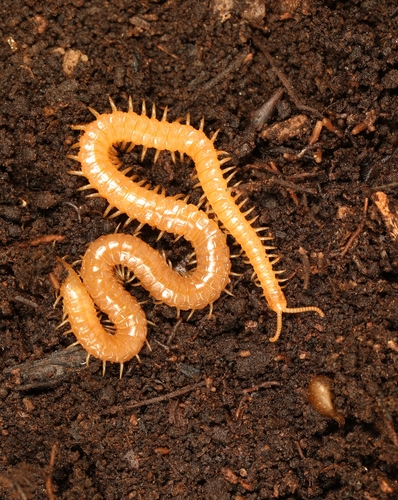
Stigmatogaster subterranea
species of arthropods
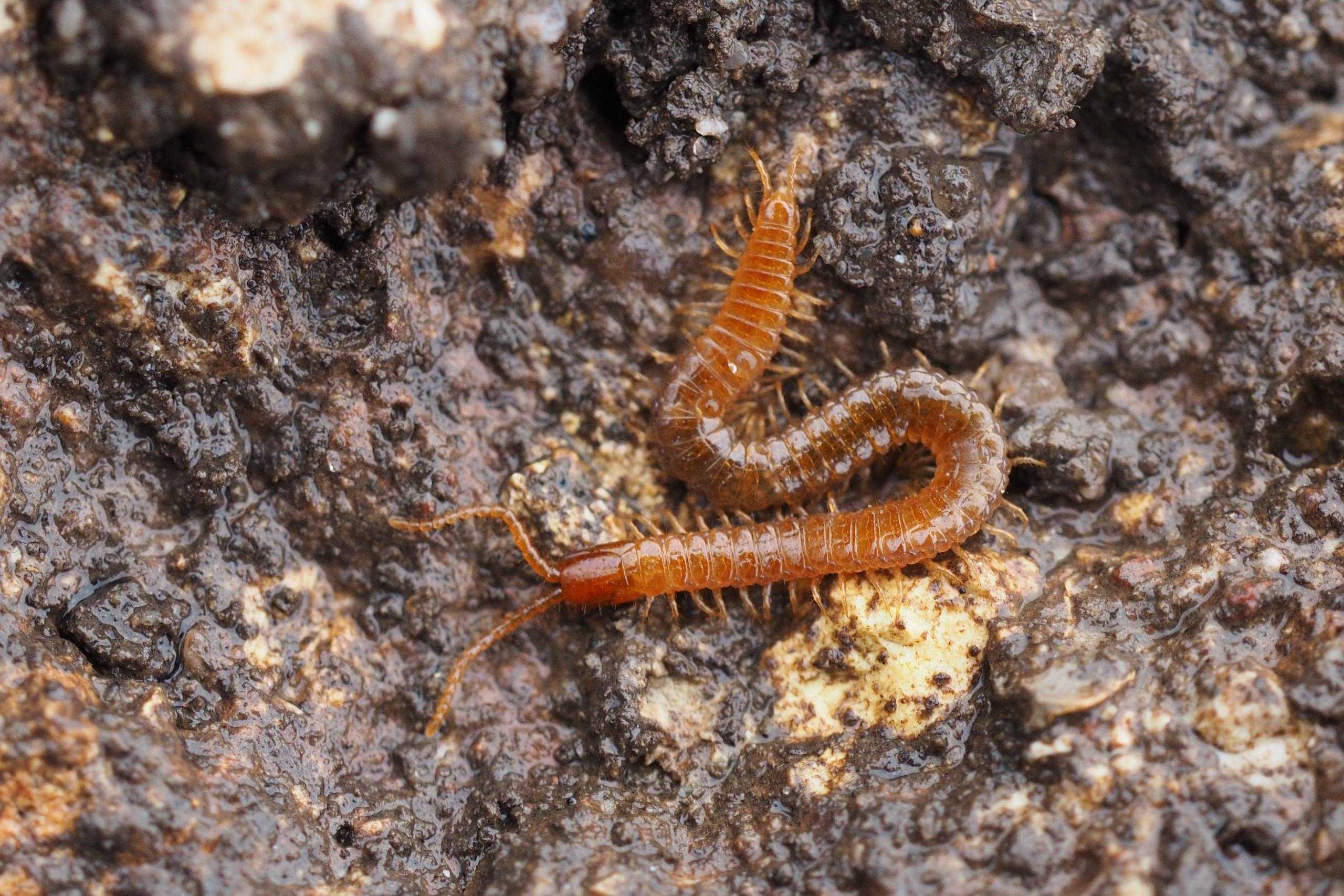
Pachymerium ferrugineum
species of myriapod

Mecistocephalidae
Mecistocephalidae is a monophyletic family of centipedes in the order Geophilomorpha. This family is the only family in the monotypic suborder Placodesmata. Most species in this family live in tropical or subtropical regions, but some occur in temperate regions. This family is the third most diverse in the order Geophiliomorpha (after Geophilidae and Schendylidae), with about 170 species, including about 130 species in the genus Mecistocephalus.
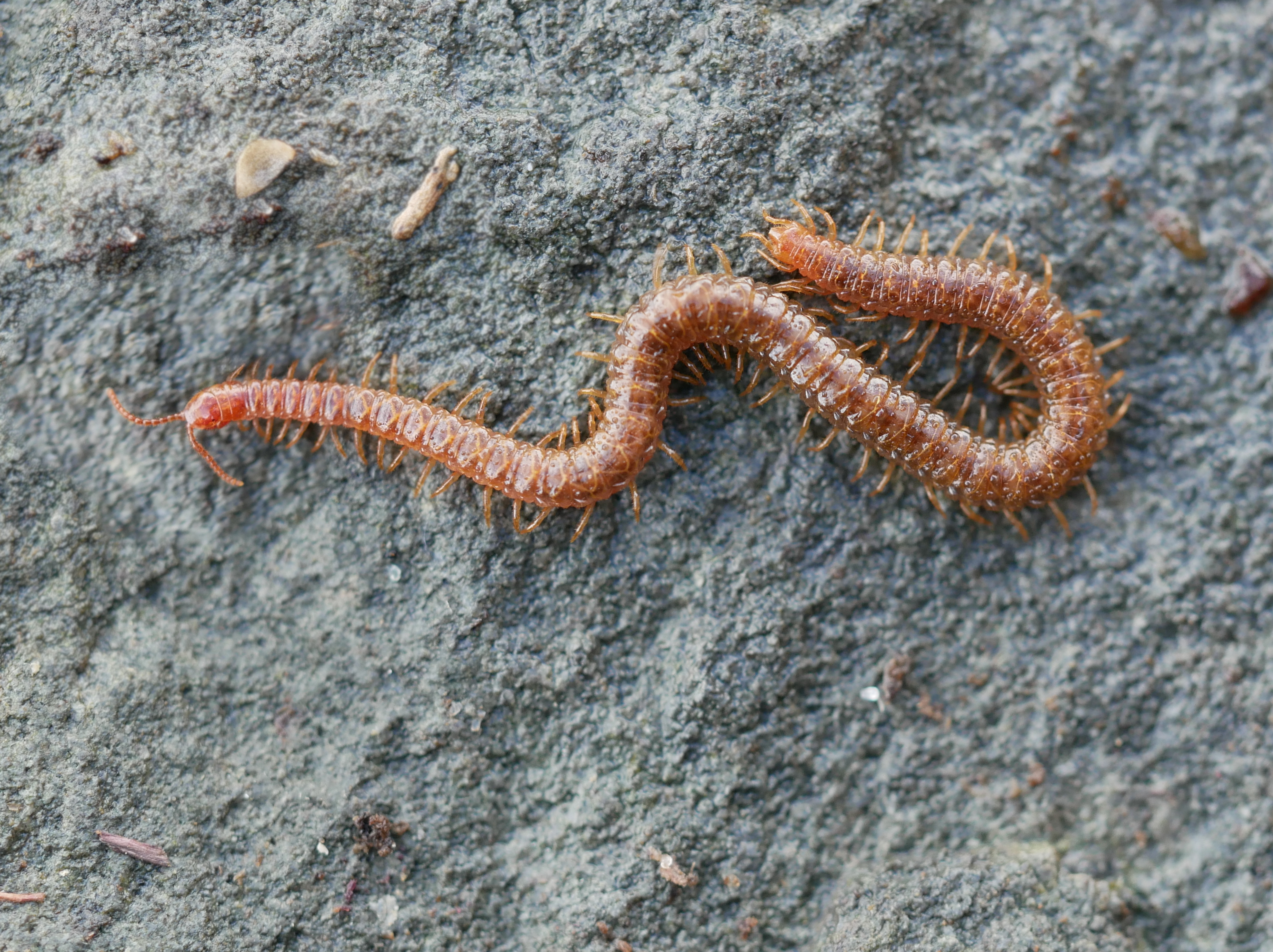
Himantarium gabrielis
species of centipede

Ballophilidae
Ballophilidae is a monophyletic group of centipedes belonging to the order Geophilomorpha and superfamily Himantarioidea. Authorities now dismiss Ballophilidae as a family and consider this clade to be a possible subfamily (Ballophilinae) within the family Schendylidae. This clade includes about 40 species in 12 genera. Centipedes in this clade are found in most tropical regions.
Strigamia maritima
species of arthropods
Neogeophilidae
Neogeophilidae is a family of centipedes belonging to the order Geophilomorpha.

Himantariidae
Himantariidae is a monophyletic family of centipedes in the order Geophilomorpha and superfamily Himantarioidea, found almost exclusively in the Northern Hemisphere. Centipedes in this family feature a short head with a concave labral margin bearing a row of denticles, a single dentate lamella and some pectinate lamellae on each mandible, second maxillae with strongly tapering telopodites and slightly spatulate claws, and a stout forcipular segment with short forcipules and a wide tergite; the ultimate legs usually have no pretarsus, and the female gonopods are distinct and biarticulate.
Oryidae
Oryidae is a monophyletic family of soil centipedes belonging to the superfamily Himantarioidea.
Pachymerium
Pachymerium is a genus of soil centipedes in the family Geophilidae. This genus contains more than 20 species. These centipedes are found mainly in the west Palearctic region and in south Africa.
Schendylidae
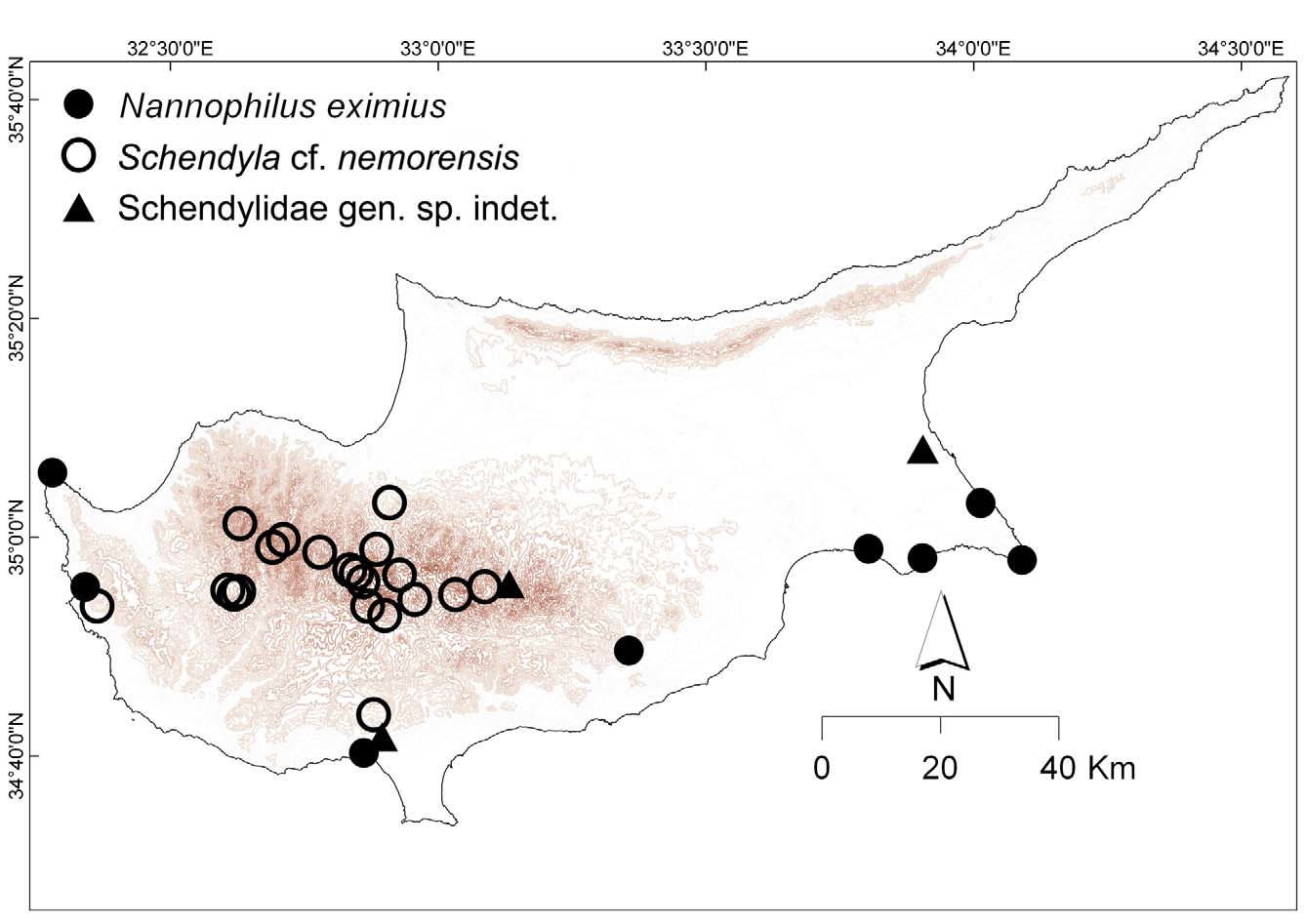
Schendylidae is a family of soil centipedes in the superfamily Himantarioidea and the order Geophilomorpha.
Himantarium
Himantarium is a genus of centipedes in the family Himantariidae. Centipedes in this genus feature a swollen trunk that is posteriorly stout, subcircular sternal pore-fields on almost all trunk segments, much inflated coxapleura completely covered with scattered pores, and a very small metasternite on the ultimate leg-bearing segment; each mandible has a robust dentate lamella and few pectinate lamellae. These centipedes range from 10 cm to 20 cm in length, have from 87 to 179 pairs of legs, and are found in the Mediterranean region. Both the minimum (87 pairs) and the maximum (179 p
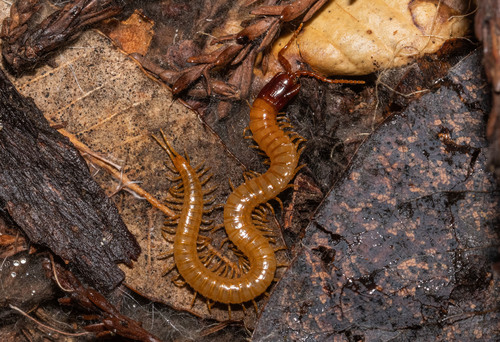
Dicellophilus limatus
species of arthropod
Dinogeophilus
Dinogeophilus is a genus of soil centipedes in the family Schendylidae. This genus contains only two species, Dinogeophilus pauropus and D. oligopodus, which range from in length. These species are notable as the smallest not only in the order Geophilomorpha but also in any epimorphic order of centipedes. The species D. oligopodus is also notable as one of only six species of soil centipedes to feature only 29 pairs of legs and one of only two species to include females with only 29 pairs, the minimum number recorded for females in the order Geophilomorpha.
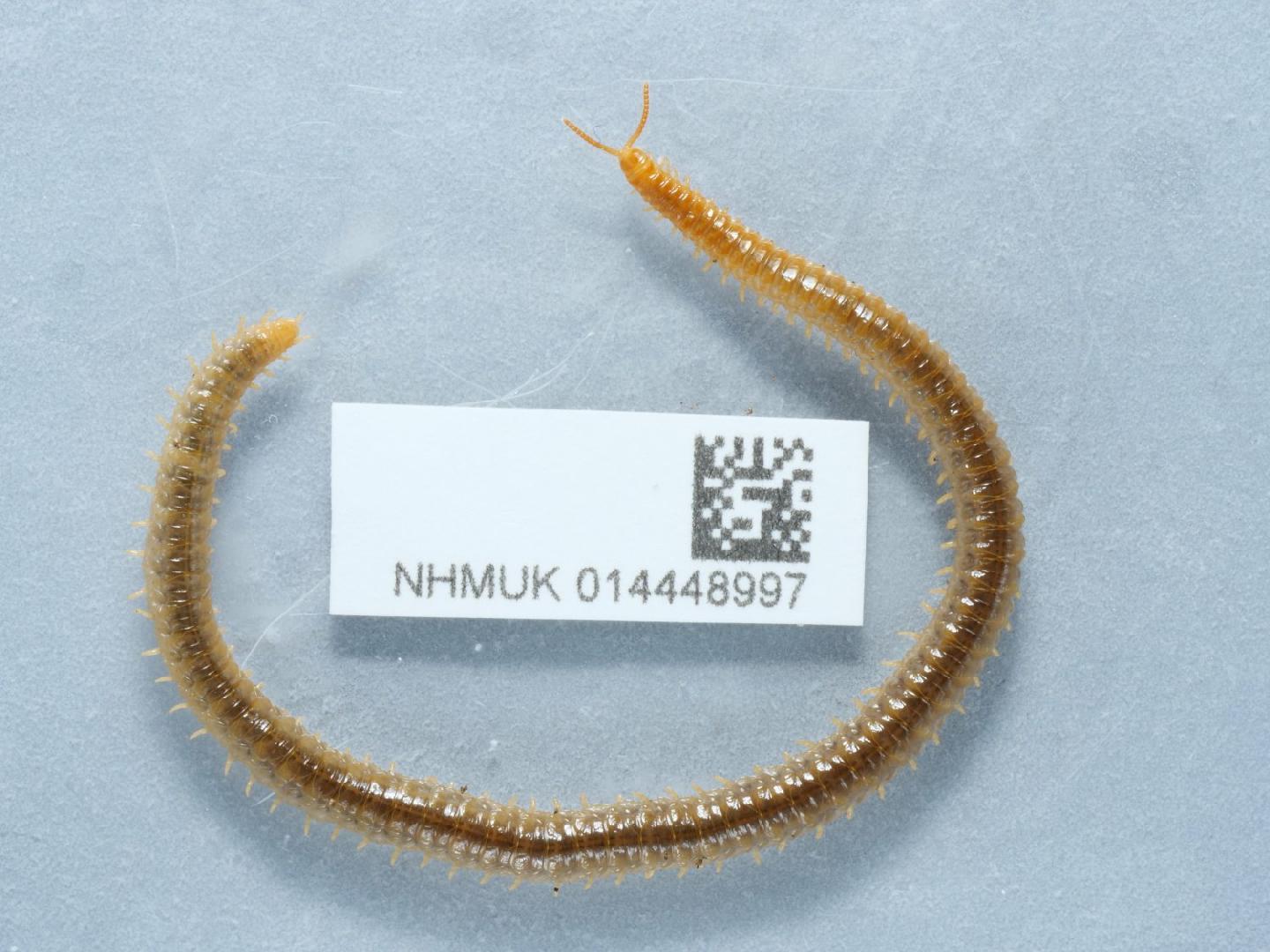
Henia vesuviana
species of arthropods
Linotaeniidae
Linotaeniidae is a monophyletic clade of soil centipedes in the family Geophilidae found mostly in the temperate regions of the Holarctic as well as the south Andes. Species in the clade Linotaeniidae are characterized by a body that usually tapers toward the anterior tip; mandibles with a single pectinate lamella; second maxillae with coxo-sternite usually undivided and claws without projections; forcipular segment short, with tergite remarkably wide, forcipules evidently tapering; coxal organs opening through distinct pores on the ventral surface of the coxo-pleura. The number of legs in thi
Dicellophilus
Dicellophilus is a genus of soil centipedes in the family Mecistocephalidae. This genus was introduced by the American biologist Orator F. Cook in 1896 to contain the species D. limatus, which he explicitly designated as the type species. This genus contains five species and is notable for their highly disjunct geographic distribution.

Strigamia acuminata
species of arthropods
Anarrup
Anarrup is a genus of centipedes in the family Mecistocephalidae. This genus includes only two species, A. nesiotes and A. flavipes. Each of these species is found in Indonesia: A. nesiotes is found in Sulawesi, and A. flavipes is found in the Lesser Sunda Islands. Both species in this genus have 41 pairs of legs.
Orya barbarica
species of myriapod
Proterotaiwanella
Proterotaiwanella is a genus of centipedes in the family Mecistocephalidae. This genus includes only two species, the type species P. tanabei and the species P. sculptulata. The species P. sculptulata features 49 pairs of legs and is found in Taiwan, whereas the species P. tanabei features 45 leg pairs and is found in the Ryukyu Islands of Japan.
Strigamia japonica
species of arthropod
Stigmatogaster
Stigmatogaster is a genus of centipedes in the family Himantariidae. Centipedes in this genus feature a relatively slender trunk, transversally slightly elongate sternal pore-fields on almost all trunk segments, and unusual lateral furrows on some trunk metasternites; most coxal organs open into a dorsal pouch covered by the metatergite. These centipedes range from 5 cm to 10 cm in length, have 83 to 111 pairs of legs, and are found in the Mediterranean region. This genus contains the following species:
Arrup
Arrup is a genus of soil centipedes in the family Mecistocephalidae. This genus contains sixteen species. These centipedes are found mainly in temperate regions of East Asia with some species found in Central Asia and California. Most species in this genus are soil-dwellers, but the Japanese species Arrup akiyoshiensis was discovered in a cave and might be a troglobiont.
Orya
genus of myriapods
Agnostrup
Agnostrup is a genus of soil centipedes in the family Mecistocephalidae. This genus contains at least three species. These centipedes are found in temperate regions of East Asia and the Russian Far East. Each species in this genus features 41 pairs of legs.
Pachymerium antipai
species of myriapod