Category
page 1Georgian words and phrases

Tavisupleba
"''''''" (, ; ) is the national anthem of Georgia. It was adopted as the Georgian national anthem in May 2004, along with a new national flag and coat of arms. The symbols' change was brought about upon the successful overthrow of the previous government in the bloodless Rose Revolution. The music, taken from the Georgian operas Abesalom da Eteri ("Abesalom and Eteri") and Daisi ("The Nightfall"), by the Georgian composer Zacharia Paliashvili (), was adapted by Ioseb Kechakmadze () to form the anthem. The lyrics were written by David Magradze ().
chacha
type of alcoholic beverage
Kartlis Deda
sculpture
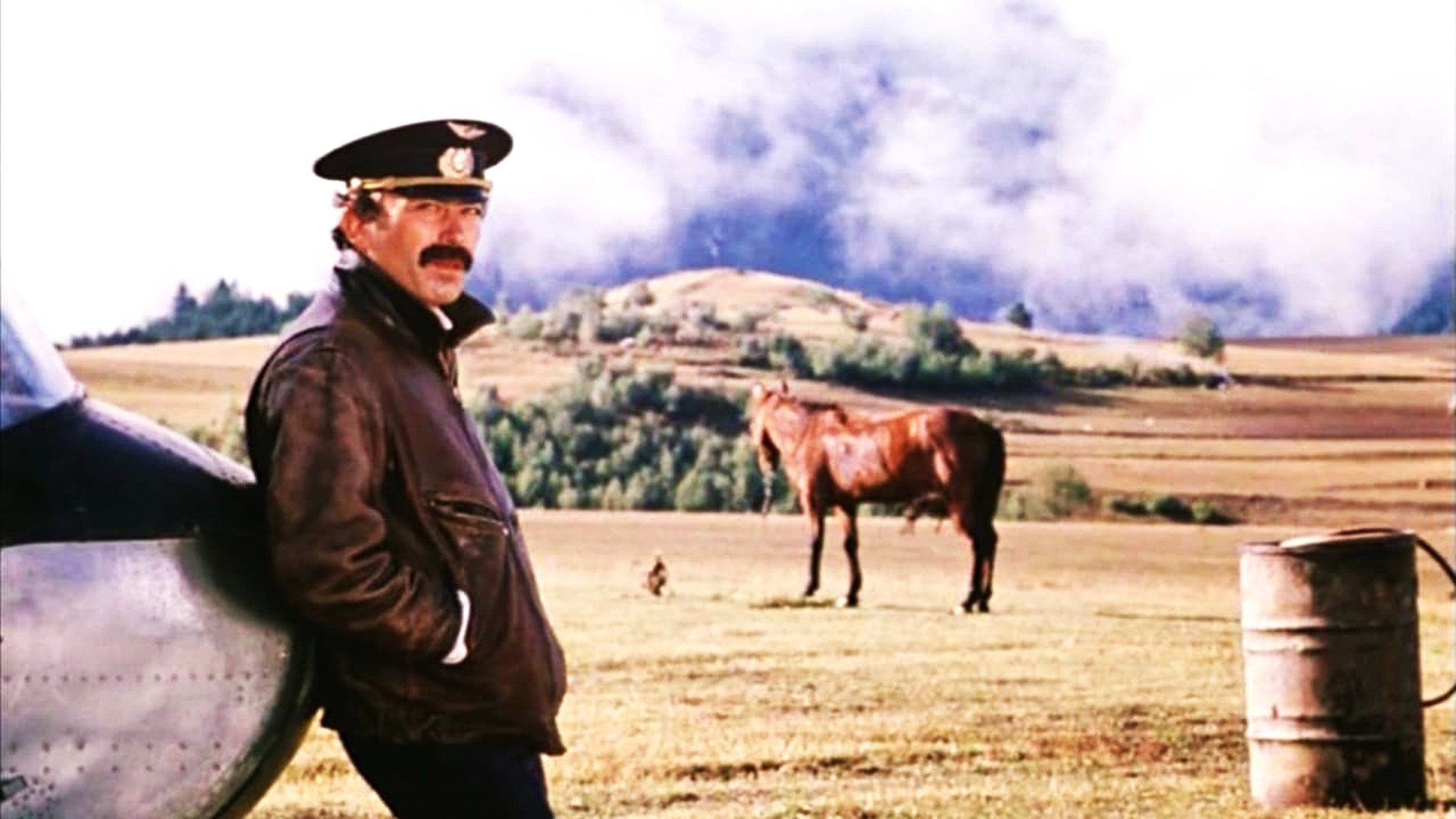
Mimino
Mimino (, , ) is a 1977 comedy-drama film by Soviet director Georgiy Daneliya produced by Mosfilm and Gruziya-film, starring Vakhtang Kikabidze and Frunzik Mkrtchyan. Anatoliy Petritskiy served as the film's Director of Photography. The Soviet era comedy won the 1977 Golden Prize at the 10th Moscow International Film Festival.

Qvevri
thumb|upright|250px|A large kvevri held at the Georgian National Museum of Tbilisi
Kvevri or qvevri ( ) - also known as '''ch'uri''' ( ) in Western Georgia - are large earthenware vessels used for the fermentation, storage and aging of traditional Georgian wine. Resembling large, egg-shaped amphorae without handles, they are either buried below ground or set into the floors of large wine cellars. Kvevris vary in size: volumes range from , with being typical.
==History==

Satsivi
Satsivi (, ; also known as chicken in walnut sauce) is a Georgian dish. It is made using poultry (such as chicken or turkey) put into a walnut sauce, typically seasoned with salt, pepper, garlic, fenugreek, coriander and cinnamon. The term satsivi is also used as a generic name for a variety of poultry made with the walnut sauce.
Mkhare
A mkhare (, mxare) is a type of administrative division in the country of Georgia. It is usually translated into English as "region".

Saperavi
Saperavi (; literally "paint, dye, give color") is an acidic, teinturier-type grape variety native to the country of Georgia, where it is used to make many of the region's most well-known wines. Saperavi spread from Georgia to other parts of the Black Sea region and is considered an important variety in countries such as Moldova, Ukraine, and Bulgaria. In recent decades, it has also made its way as far as the United States and Australia, where it began to gain foothold in the 1990s.
Rkatsiteli
Rkatsiteli (; ; literally "red stem" or "red horned") is a kind of grape used to produce white wine.
Suliko
Suliko (, ) is a Georgian unisex name meaning "soul". It is also the title of a love poem written in 1895 by Akaki Tsereteli, which became widely known throughout the Soviet Union as a song performed with music composed by Varinka Tsereteli (in 1895). In that form it was often performed on radio during Joseph Stalin's rule, reputedly because it was his favorite. It was translated to and performed in multiple languages including Russian, Ukrainian, Polish, Romanian, English, German, Basque, Chinese, and Hebrew.

Borjgali
A borjgali () is a Georgian symbol of the sun and eternity. The Borjgali is often represented with seven rotating wings over the tree of life which can be used to create various shapes and variations and is considered one of the main symbols of Georgian culture.
Dideba
"''''''" ( ; ) was the national anthem of Georgia from November 1990 to May 2004. It was previously the national anthem of Georgia from 1918 to 1921.
.jpg)
Rtveli
thumb|Rtveli in Kakhetia by [[Grigory Gagarin, 1847]]
Rtveli () is a traditional vintage and rural harvest holiday in Georgia accompanied by feasts, musical events and other celebrations. It normally takes place in late September in eastern Georgia and in mid-October in western Georgia.
Khmeli suneli
traditional Georgian spice mix

tamada
thumb|300px|The sculpture of a man holding a Drinking horn|horn in [[Tbilisi modeled on an ancient Colchian statuette affectionately monikered as "tamada".]]
Aznauri
Aznauri (, ; pl. aznaurni, აზნაურნი, or aznaurebi, აზნაურები) was a class of Georgian nobility.
chakhokhbili
Chakhokhbili (, ) is a traditional Georgian

Tetri
Tetri () is a fractional currency used in the country of Georgia. It was put into circulation in 1995.

Eristavi
thumb|Silver coin minted by erismtavari Stephen I of Iberia|Stephanoz I, 7th century.
thumb|An 11th-century fresco from Racha depicting the eristavi Kvariani.
thumb|Rati, eristavi of Duchy of Racha|Racha of the [[Kakhaberidze family, founder of the Mghvimevi monastery, 13th century.]]
Eristavi (; literally, "head of the nation") was a Georgian feudal office, roughly equivalent to the Byzantine strategos and normally translated into English as "prince" or less commonly as "duke". In the Georgian aristocratic hierarchy, it was the title of the third rank of prince and governor of a large provinc
Khelrtva
A '''''' (, ) is a Georgian calligraphic joined-up style signature, monogram or seal, originally used by the Georgian monarchs, queens consort, patriarchs, royalty and nobility, universally used since the early eleventh century.

Kartlos
thumb|150px|Kartlos from The Georgian Chronicles (King [[Vakhtang VI redaction), 1700s.]]
Kartlos () is the legendary progenitor and "father of all Georgians" in the Georgian mythology, more specifically of the nation of Kartli, known as the Kingdom of Iberia in the classical antiquity. He was a descendant of Japheth, second son of Targamos (i.e. Togarmah), the common ancestor of the Caucasians, and Kartlos, himself becoming the patriarch of the Georgians. According to the myth, he controlled a large territory in the Caucasus and participated, with his brothers, in a war to free himself from t
Supra
Traditional Georgian feast and a part of Georgian social culture

13 Tzameti
2005 film directed by Géla Babluani

Amirani
thumb|200px|Monument to Amirani in Georgia.
Amirani or Amiran () is the name of a culture hero of a Georgian epic who resembles the Classical Prometheus. Various versions of the myth reveal a process through which the myth was transformed over time, but the legend itself is traced between 3,000 and 2,000 years BC at the beginning of the first Iron Age. In the myth a Demiurge figure - Amirani - defies God by introducing the use of metal to humanity. Like Prometheus, he is punished and chained in the Caucasus Mountains with his cursed dog Q'ursha. Similar to the Prometheus myth, an eagle eats hi

Chichilaki
The chichilaki () is a Georgian traditional Christmas tree made from dried hazelnut or walnut branches that are shaved to form a small "tree". These pale-colored ornaments differ in height from 20 cm (8 in) to 3 meters (10 feet). Chichilakis are most common in the Guria and Samegrelo regions near the Black Sea, but they can also be found in some stores around the capital of Tbilisi.

mtavari
thumb|Mtavari Levan II Dadiani|Levan II.
Mtavari () was a feudal title in Georgia usually translated into English as Prince or Duke.

Kmara
thumb|The Kmara logo
Kmara (, ) was a civic youth resistance movement in Georgia, active in the protests prior to and during the November 2003 Rose Revolution, which toppled down the government of Eduard Shevardnadze. Consciously modeled on the Serbian nongovernmental organization (NGO) Otpor!, which had been instrumental in defeating Slobodan Milošević's regime in 2000, the Kmara members were trained and advised by the influential Georgian NGO Liberty Institute and funded by the United States–based Open Society Institute (OSI). The movement was a hybrid of social movement and virtual NGO, whi
chicken tabaka
chicken dish
Tetri Giorgi
deity

Tavadi
thumb|Tavadi Ilia Chavchavadze
Tavadi (, "prince", lit. "head/chief" [man], from tavi, "head", with the prefix of agent -di) was a feudal title in Georgia first applied in the Late Middle Ages usually translated in English as Prince (most commonly) and Duke (less commonly). The title was designated for dynastic princes who were heads of families, akin to mtavari who had a higher standing.
.jpg)
amirspasalar
thumb|Khutlubuga was Amirspasalar for Georgia from 1270 to 1293. Church of the Holy Sign. [[Haghpat Monastery, southern wall. Late 13th century.]]
Amirspasalar (, from , ) was the commander-in-chief of the medieval Georgian army and one of the highest officials of the Kingdom of Georgia, commonly rendered as "Lord High Constable" (and sometimes also as generalissimo) in English. It is composed of amir, an Arabic term meaning 'commander', 'governor', or 'prince'; and sipahsalar, from the Persian for 'army commander'.
Lelo burti
literally "field ball", a Georgian sport, somewhat similar to rugby union
Iavnana
thumb|300px|"Georgian woman singing an Iavnana", by Henryk Hryniewski.
Iavnana () is a genre of Georgian folk song, traditionally intended as a lullaby, but historically sung also as healing songs for the sick children. Some of the Iavnana lyrics are, however, of didactical or heroic character.
Mtsvane
Mtsvane () is a grape variety used to make Georgian wines. It is used to make white wine. It was so named to refer to the yellowish-green colouring of the ripened berries. It is often blended with Rkatsiteli to create a fruity, aromatic wine. In the Georgian language the word mtsvane means new, young and green.
Imeretian cheese
Chkinti (, ) is a traditional Georgian cheese from Imereti region of the country.
spaspet
Spaspet () was a feudal office in Georgia that originated in ancient Iberia. It is usually translated in English as High Constable.
Mouravi
thumb|Mouravi Mose Memarnishvili with his wife
Mouravi ( ) was an administrative and military officer in early modern Georgia, translated into English as seneschal, bailiff, or constable. A mouravi was an appointed royal official who had a jurisdiction over particular town or district. In towns, the mouravi was assisted by a police officer, natsvali. The best-known mouravi in Georgian history was Giorgi Saakadze, called "the Grand Mouravi."
Batoni
Georgian honorific
Tenili
Tenili (, ) is a traditional Georgian string cheese from Meskheti region of the country. Tenili cheese is known to be made with the most complicated production techniques of all Georgian cheeses and is enrolled in UNESCO's world heritage list.
Gamarjobat
Gamarjobat () is a comedy performance group consisting of the Japanese comedians HIRO-PON — who sports a yellow mohawk — and Ketch! — with a red mohawk. They perform a variety of sketches, including mimes and physical comedy. However, Ketch left the group in 2019.
Sadrosho
sadrosho (; literally, "of a banner") was an administrative division in medieval and early modern Georgia which supplied men for a subdivision of the army marked by its own banner. A tactical unit furnished by this territorial unit was also known as sadrosho, each under the command of a military official, sardali.
==United Kingdom of Georgia==
The origin of the sadrosho system traces its origin to the period of a united Georgian monarchy, the Bagratid kingdom of Georgia (1008–1491), which, according to the 18th-century historian Prince Vakhushti, was subdivided into four principal sadrosho:
Kinto
upright|thumb|A Tbilisian kinto, photo by Dmitri Yermakov
upright|thumb|A kinto in a photo by Alexander Roinashvili
A kinto () was a trader or an unemployed person mostly occupied in entertaining others in Georgian dukhans (restaurants), popular in Tbilisi in the 19th century and early in the 20th century.
Adgilis deda
deity in the pre-Christian Georgian pantheon
Shavnabada
Shavnabada () is a mountain and extinct volcano of height in southeastern Georgia, some from the nation’s capital Tbilisi.
Mepe
Mepe ( ; ) is a royal title used to designate the Georgian monarch, whether it is referring to a king or a queen regnant. The title was originally a male ruling title.
Bedi Kartlisa
Academic journal
Mampali
Mampali () was a dynastic title in medieval Georgia (late 8th-10th centuries), usually held by high-ranking Bagratid princes of Tao-Klarjeti who did not possess any Byzantine dignities. It is compound of the words მამა (mama, "father"), and უფალი (upali, "lord"). The following Bagratid princes held the title of mampali:
Mdivani
thumb|Simon Mdivani, politician and Georgian [[ambassador to the Ottoman Empire]]
The Mdivani family () is a Georgian noble family with the rank of aznauri (untitled nobility).