Category
page 1German-language operas

The Magic Flute
1791 opera by Wolfgang Amadeus Mozart
Tristan und Isolde
opera by Richard Wagner

Fidelio
Fidelio (; ), originally titled '''''''' (Leonore, or The Triumph of Marital Love''), Op. 72, is the sole opera by German composer Ludwig van Beethoven. The libretto was originally prepared by Joseph Sonnleithner from the French of Jean-Nicolas Bouilly. The opera premiered at Vienna's Theater an der Wien on 20 November 1805. The following year, Beethoven's friend Stephan von Breuning rewrote the libretto, shortening the work from three acts to two. After further work on the libretto by Georg Friedrich Treitschke, a final version was performed at the Kärntnertortheater on 23 May 1814. As these

Parsifal
Parsifal (WWV 111) is a music drama in three acts by the German composer Richard Wagner and his last composition. Wagner's own libretto for the work is freely based on the 13th-century Middle High German chivalric romance Parzival of the Minnesänger Wolfram von Eschenbach and the Old French chivalric romance Perceval ou le Conte du Graal by the 12th-century trouvère Chrétien de Troyes, recounting different accounts of the story of the Arthurian knight Parzival (Percival) and his spiritual quest for the Holy Grail.

The Threepenny Opera
1928 musical play by Bertolt Brecht; adapted from John Gay's 18th-century ballad opera The Beggar's Opera with music by Kurt Weill and insertion ballads by François Villon and Rudyard Kipling
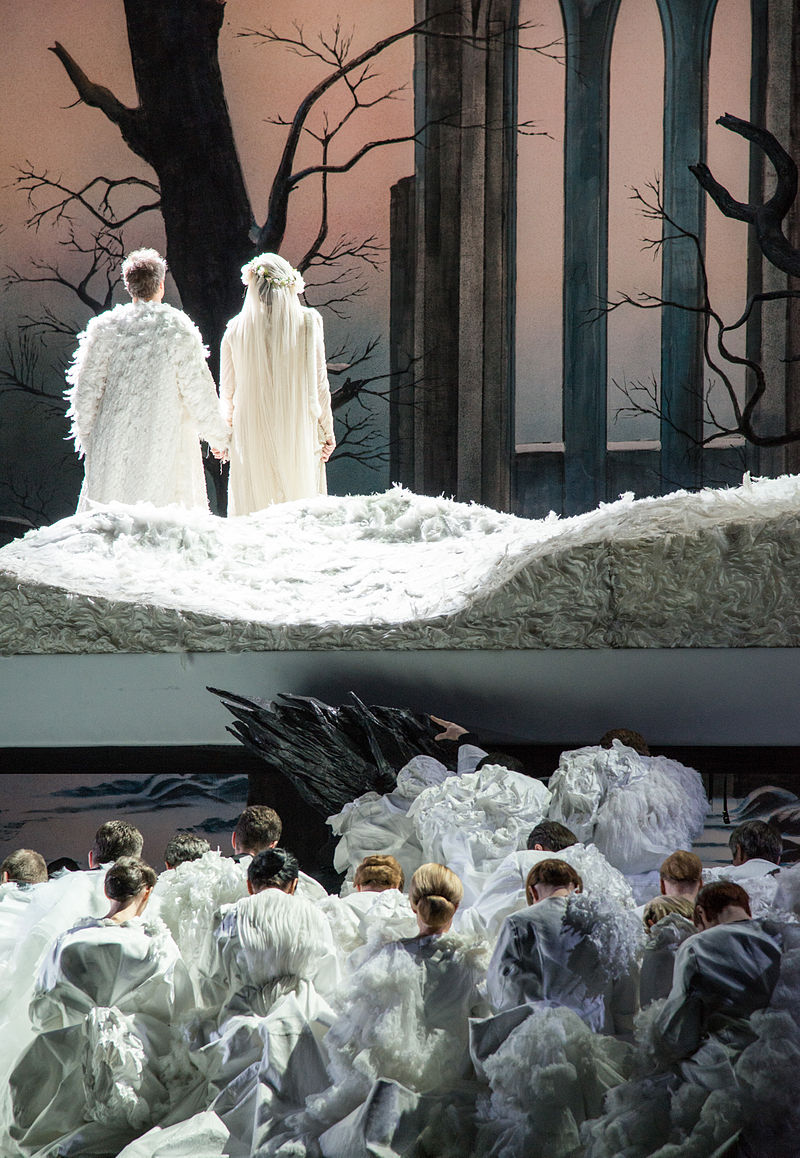
Lohengrin
opera by Richard Wagner

The Flying Dutchman
opera by Richard Wagner

Der Freischütz
German opera by Carl Maria von Weber
Tannhäuser
1845 opera by Richard Wagner
Die Entführung aus dem Serail
opera by Wolfgang Amadeus Mozart
Salome
opera by Richard Strauss
Der Rosenkavalier
comic opera in three acts by Richard Strauss
Die Meistersinger von Nürnberg
opera by Richard Wagner

Rienzi
'''''''' (Rienzi, the last of the tribunes''; WWV 49) is an 1842 opera by Richard Wagner in five acts, with the libretto written by the composer after Edward Bulwer-Lytton's novel of the same name (1835). The title is commonly shortened to Rienzi . Written between July 1838 and November 1840, it was first performed at the Königliches Hoftheater Dresden, on 20 October 1842, and was the composer's first success.
Elektra
opera by Richard Strauss

Wozzeck
Wozzeck () is the first opera by Austrian composer Alban Berg, created between 1914 and 1922 and premiered on 14 December 1925 at the Berlin State Opera. Based on Georg Büchner's play Woyzeck (1836), it depicts a soldier's tragic slide into madness and murder amid militarism and oppression.
Bastien und Bastienne
Comic opera by Wolfgang Amadeus Mozart
Hänsel und Gretel
1893 Opera by Engelbert Humperdinck
Der Schauspieldirektor
opera by Wolfgang Amadeus Mozart
Zaide
Zaide (originally, Das Serail) is an unfinished German-language opera, K. 344, written by Wolfgang Amadeus Mozart in 1780. Emperor Joseph II, in 1778, was in the process of setting up an opera company for the purpose of performing German opera. One condition required of the composer to join this company was that he should write a comic opera. At Salzburg in 1779 Mozart began work on a new opera (now known as Zaide although Mozart did not give it such a title). It contains spoken dialogue, which also classifies it as a Singspiel (literally, "singing play"). Only the arias and ensembles fro
Die Feen
opera by Richard Wagner
Lulu
unfinished opera by Alban Berg
Ariadne auf Naxos
opera by Richard Strauss
Arabella
Arabella, Op. 79, is a lyric comedy, or opera, in three acts by Richard Strauss to a German libretto by Hugo von Hofmannsthal, their sixth and last operatic collaboration.
The Merry Wives of Windsor
opera by Otto Nicolai

Almira
Almira, Königin von Castilien ("Almira, Queen of Castile", HWV 1; full title: Der in Krohnen erlangte Glücks-Wechsel, oder: Almira, Königin von Castilien) is Handel's first opera, composed when he was 19 years old. It was first performed in Hamburg in January 1705.
Capriccio
opera by Richard Strauss
Die Frau ohne Schatten
Opera in three acts by Richard Strauss
Martha
romantic comic opera by Friedrich von Flotow
Das Liebesverbot
opera by Richard Wagner
Euryanthe
Euryanthe (J. 291, Op. 81) is a German grand heroic-romantic opera by Carl Maria von Weber, first performed at the Theater am Kärntnertor in Vienna on 25 October 1823. Though acknowledged as one of Weber's most important operas, the work is rarely staged because of the weak libretto by Helmina von Chézy (who, incidentally, was also the author of the failed play Rosamunde, for which Franz Schubert wrote music). Euryanthe is based on the 13th-century French romance ''L'Histoire du très-noble et chevalereux prince Gérard, comte de Nevers et la très-virtueuse et très chaste princesse Euriant de Sa
Die Hochzeit
opera by Richard Wagner
Die Schuldigkeit des ersten Gebots
oratorio
Rise and Fall of the City of Mahagonny
political-satirical opera composed by Kurt Weill to a German libretto by Bertolt Brecht
Mathis der Maler
opera by Paul Hindemith
Guntram
opera by Richard Strauss
Intermezzo
opera by Richard Strauss
Thamos, King of Egypt
play by Tobias Philipp, baron von Gebler, for which, between 1773 and 1780, Wolfgang Amadeus Mozart wrote incidental music, K. 345/336a, of an operatic character
Die schweigsame Frau
opera by Richard Strauss
Die tote Stadt
opera by Erich Wolfgang Korngold
Die ägyptische Helena
opera by Richard Strauss
The Devils of Loudun
opera by Krzysztof Penderecki
Friedenstag
Friedenstag (Peace Day) is an opera in one act by Richard Strauss, his Opus 81 and TrV 271, to a German libretto by Joseph Gregor. The opera was premiered at the National Theatre Munich on 24 July 1938 and dedicated to the leading singer Viorica Ursuleac and her husband, conductor Clemens Krauss. Strauss had intended Friedenstag as part of a double-bill, to be conducted by Karl Böhm in Dresden, that would include as the second part his next collaboration with Gregor, Daphne. The opera thematically expresses anti-war sentiments, which William Mann has described as "a determined counter to the m
Der Mond
opera by Carl Orff
Daphne
opera by Richard Strauss

Cardillac
Cardillac, Op. 39, is an opera by Paul Hindemith in three acts and four scenes. Ferdinand Lion wrote the libretto based on characters from the short story Das Fräulein von Scuderi by E. T. A. Hoffmann.

Genoveva
thumb|right|The composer in an 1850 daguerreotype
Moses und Aron
opera by Arnold Schoenberg
Giuditta
Giuditta is an operatic '' (German for musical comedy'') in five scenes, with music by Franz Lehár and a German libretto, by and Fritz Löhner-Beda. Scored for a large orchestra, it was Lehár's last and most ambitious work, written on a larger scale than his previous operettas. Of all his works it is the one which most approaches true opera, the resemblances between the story and that of Bizet's Carmen and its unhappy ending heightening the resonances. Perhaps the best known song in the work is the soprano aria "", sung by Giuditta in the fourth scene. Another strong influence, especially for t
Il segreto di Susanna
opera by Ermanno Wolf-Ferrari
Der Kaiser von Atlantis
opera by Viktor Ullmann

Licht
thumb|275px|Karlheinz Stockhausens grave with the score to LICHT .
Licht (Light), subtitled "Die sieben Tage der Woche" (The Seven Days of the Week), is a cycle of seven operas composed by Karlheinz Stockhausen between 1977 and 2003. The composer described the work as an "eternal spiral" because "there is neither end nor beginning to the week." Licht consists of 29 hours of music.
Fierrabras
opera by Franz Schubert
Tiefland
opera in a prologue and two acts by Eugen d'Albert
.jpg)
Feuersnot
'''''''' (Need for (or lack of) fire), Op. 50, is a Singgedicht'' (sung poem) or opera in one act by Richard Strauss. The German libretto was written by Ernst von Wolzogen, based on J. Ketel's report "Das erloschene Feuer zu Audenaerde". It was Strauss' second opera.
Der Vampyr
opera by Heinrich Marschner
Zar und Zimmermann
opera by Albert Lortzing
Die Liebe der Danae
opera by Richard Strauss
Abu Hassan
opera by Carl Maria von Weber
Jonny spielt auf
opera by Ernst Křenek