Category
page 1Gilead

Jacob
Jacob, later given the name Israel, is a Hebrew patriarch of the Abrahamic religions. He first appears in the Torah, where he is described in the Book of Genesis as a son of Isaac and Rebecca. Accordingly, alongside his older fraternal twin brother Esau, Jacob's paternal grandparents are Abraham and Sarah and his maternal grandfather is Bethuel, whose wife is not mentioned. He is said to have bought Esau's birthright and, with his mother's help, deceived his aging father to bless him instead of Esau. Then, following a severe drought in his homeland Canaan, Jacob and his descendants migrated to
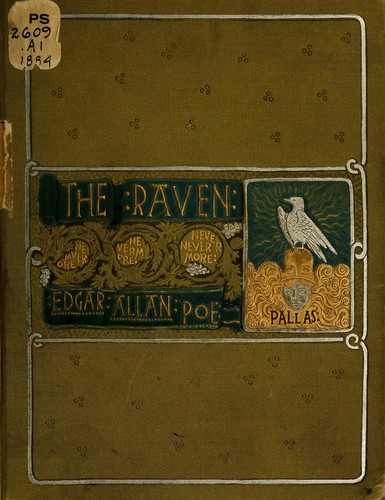
The Raven
narrative poem by Edgar Allan Poe

Irbid
Irbid (), known in ancient times as Arabella or Arbela (Άρβηλα in Ancient Greek), is the capital and largest city of Irbid Governorate. It has the second-largest metropolitan population in Jordan after Amman, with a population of around 2,003,800. As a city, Irbid is Jordan's third-largest, after Amman and Zarqa.

Nabataeans
The Nabataeans, also spelled Nabateans (; Nabataean Aramaic / , vocalized: ; ), were an ancient Arab people who inhabited northern Arabia and the southern Levant. Their settlements—most prominently the assumed capital city of Raqmu (present-day Petra, Jordan)—gave the name Nabatene () to the Arabian borderland that stretched from the Euphrates to the Red Sea. The Nabateans emerged as a distinct civilization and political entity between the 4th and 2nd centuries BC, with their kingdom centered around a loosely controlled trading network that brought considerable wealth and influence across the

Judah Maccabee
2nd century BCE Jewish priest and leader of Maccabean Revolt against the Seleucids

Ahaz
thumb|King Ahaz of Judah, from the Stained glass windows of Chartres Cathedral#Rose|north rose window of Chartres Cathedral
thumb|Uzziah, Jotham, and Ahaz, from the Sistine Chapel ceiling#Ancestors of Christ|Sistine Chapel ceiling
thumb|Ahaz, Hezekiah, and Manasseh, by Lucas van Leyden
thumb|After the prophet Oded rebukes the Israelite army for its mistreatment of the captives from Judah, the men of Ephraim care for the captives and return them to their kinsfolk at Jericho. (2 Chronicles 28:8–15)
Ahaz (; Akhaz; ) an abbreviation of Jehoahaz II (of Judah), "Yahweh has held" (; ''Ya'úḫazi [ia-ú-

Yarmouk River
river

Jehu
Jehu (; , meaning "Yah is He"; ; ) was the tenth king of the northern Kingdom of Israel since Jeroboam I, noted for exterminating the house of Ahab. He was the son of Jehoshaphat, grandson of Nimshi, and possibly great-grandson of Omri, although the latter notion is not supported by the biblical text. His reign lasted 28 years.

Pekah
Pekah (, Peqaḥ; Paqaḫa [pa-qa-ḫa]; ) was the eighteenth and penultimate king of Israel. He was a captain in the army of king Pekahiah of Israel, whom he killed to become king. Pekah was the son of Remaliah.
Nabataean kingdom
ancient Arab Kingdom (3rd century BC - 106 AD)
.jpg)
shibboleth
thumb|upright=1.3|A New Orleans resident challenges out-of-towners who had come to protest against the 2017 removal of the Robert E. Lee Monument. The out-of-towners' inability to pronounce "[[Tchoupitoulas Street" according to the local fashion would be a shibboleth marking them as outsiders.]]

Pekahiah
Pekahiah (; Pəqaḥyā; "YHWH has opened the eyes"; ) was the seventeenth and third-from-last king of Israel and the son of Menahem, whom he succeeded, and the second and last king of Israel from the House of Gadi. He ruled from the capital of Samaria.

Jephthah
Jephthah (pronounced ; , Yiftāḥ) appears in the Book of Judges as a judge who presided over Israel for a period of six years (). According to Judges, he lived in Gilead. His father's name is also given as Gilead, and, as his mother is described as a prostitute, this may indicate that his father might have been any of the men of that area. Jephthah led the Israelites in battle against Ammon and, in exchange for defeating the Ammonites, made a vow to sacrifice whatever would come out of the door of his house first. When his daughter was the first to come out of the house, he immediately regrette
Zarqa River
Jordanian river near Amman, tributary to the lower Jordan River

Gilead
Gilead or Gilad (, ; Gilʿāḏ, , Jalʻād) is the ancient, historic, biblical name of the mountainous northern part of the region of Transjordan, present-day Jordan. The region is bounded in the west by the Jordan River, in the north by the deep ravine of the river Yarmouk and the region of Bashan, and in the southwest by what were known during antiquity as the "plains of Moab", with no definite boundary to the east. In some cases, "Gilead" is used in the Bible to refer to all the region east of the Jordan River. Gilead is situated in modern-day Jordan, corresponding roughly to the Irbid, Ajloun,
Ten Lost Tribes
tribes of Israel that were said to have been deported from the Kingdom of Israel after its conquest by the Neo-Assyrian Empire circa 722 BCE
Tribe of Ephraim
Tribe of Israel
Jair
Seventh judge of Israel

Atargatis
Atargatis (known as Derceto by the Greeks) was the chief goddess of northern Syria in Classical antiquity. Primarily she was a fertility goddess, but, as the baalat ("mistress") of her city and people she was also responsible for their protection and well-being. Her chief sanctuary was at Hierapolis, modern Manbij, northeast of Aleppo, Syria.
Tribe of Manasseh
tribe of Israel
Thierry of Lorraine, Count of Flanders
Count of Flanders (1100-1168)
Tribe of Gad
tribes of Israel
Tribe of Joseph
one of the twelve tribes of Israel
Obodas I
Nabatean King
balm of Gilead
historical perfume used medicinally, of herbal origin

Iris atrofusca
species of plant

Iris bismarckiana
species of plant

Helichrysum sanguineum
species of plant

Tell Mar Elias
hill in Jordan
Bishops' Bible
English translation of the Bible authorized by the Church of England and published in 1568
Gesher
kibbutz in Israel
Busra al-Harir
village in Syria

Jazer
Jazer (or Jaazer) was a city east of the Jordan River, in or near Gilead, inhabited by the Amorites. It was taken by a special expedition sent by Moses to conquer it towards the end of the Israelites' Exodus journey from Egypt. From the Septuagint (which reads Ἰαζήρ for עז in Numbers xxi. 24) it appears that Jazer was on the border of Ammon. As an important city it gave its name to the whole of the surrounding territory—a "Sea of Jazer" is mentioned in Jeremiah xlviii. 32.
Jezreel Valley railway
former railway line in Israel
Huwwarah
Huwwarah (), also spelled Huwwara, Huwarrah or Hawwarah, is a village in northern Jordan. It is situated in the Governorate of Irbid, and is one of many agricultural villages in the fertile mud plains of Hauran. The mud plains of Hauran bridge the gap between the Golan Heights in the west and the Sham desert to the east. The southern part of Hauran is in North Jordan. Huwwarah if flanked by the ancient sites of Ramoth-Gilead (Ramtha, Jordan) in Gilead to the east and Arabella (Irbid) to the west. North, it is bordered by Sal and Bishra, and south and southeast it is bordered by Sareeh.
Lives of the Prophets
ancient account of the lives of the prophets from the Tanakh, surviving in Greek, Latin, Syriac, Armenian, and Arabic manuscripts
Tishbe
Tishbe, sometimes transliterated as Thisbe, is a town mentioned in the Hebrew Bible's First Book of Kings, , as the residence and possibly even birthplace of the prophet Elijah, known as the Tishbite (see that page for discussion of the term). It is placed by the biblical text in the historical region of Gilead, now in the western part of modern-day Jordan. However, the toponym may denominate another location, as discussed below.
Merarites
The Merarites were one of the four main divisions among the Levites in Biblical times. The Bible claims that the Merarites were all descended from the eponymous Merari, a son of Levi, although some biblical scholars regard this as a postdictional metaphor, providing an origin myth of the connectedness of the clan to others in the Israelite confederation.
Battle of the Wood of Ephraim
Biblical civil conflict among Israelites