Category
page 1Gold

gold
Gold is a chemical element; its chemical symbol is Au (from Latin ) and atomic number 79. In its pure form, it is a bright-metallic-yellow, dense, soft, malleable, and ductile metal. Chemically, gold is a transition metal, a group 11 element, and one of the noble metals. It is one of the least reactive chemical elements, being the second lowest in the reactivity series, with only platinum ranked as less reactive. Gold is solid under standard conditions.
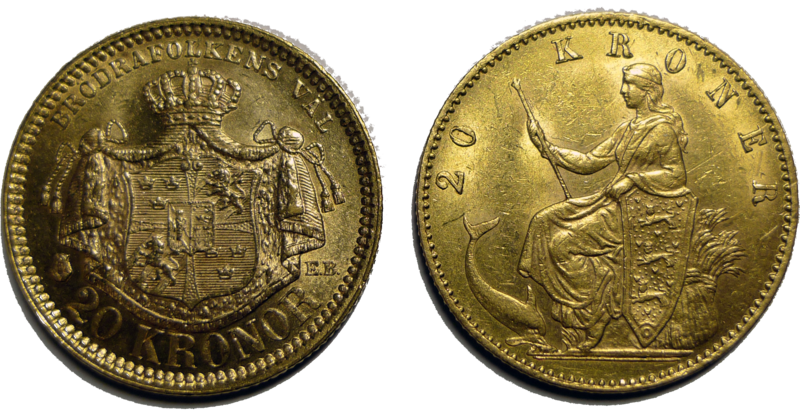
gold standard
monetary system based on the value of gold

aqua regia
mixture of nitric acid and hydrochloric acid, in a molar ratio of 1:3

Theia
In Greek mythology, Theia (; ) also called Thea, Thia, Euryphaessa, Aethra or Basileia, was one of the Titans, the children of Uranus (Sky) and Gaia (Earth).

El Dorado
South American myth

Midas
thumb|King Midas on a red-figure stamnos from Chiusi around 440 BC, British Museum

gold
color tone resembling the gold chemical element
.jpg)
electrum
thumb|Natural electrum "wires" on quartz, historic specimen from the old Smuggler-Union Mine, Telluride, Colorado, USA
thumb|The Pactolus river, from which [[Lydia obtained electrum for its early coinage]]
thumb|Electrum Phoenician metal bowls|Phoenician bowl with mythological scenes, a sphinx frieze and the repre­sentation of a king vanquishing his enemies, Cypro-Archaic I, from [[Idalion, 8th–7th centuries BC (Louvre, Paris)]]
thumb|Brooch with a griffin protome, from the necropolis of [[Kameiros, Rhodes, (Louvre)]]
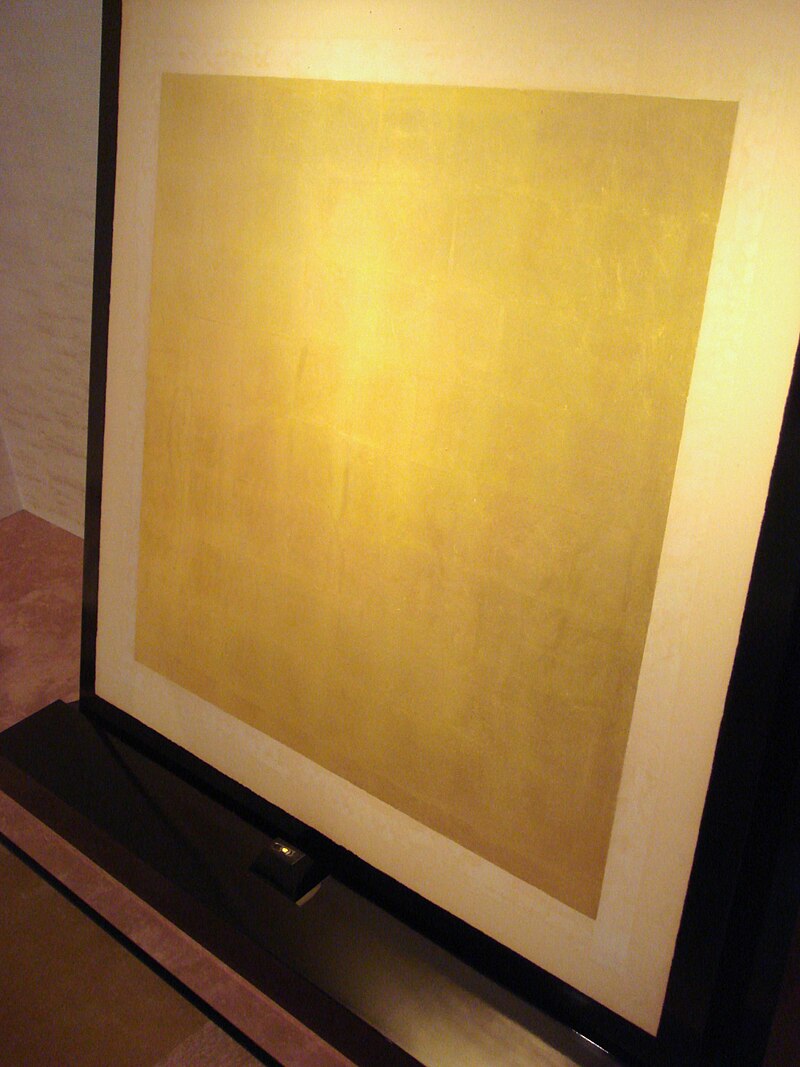
gold leaf
very thin gold used in art
gold reserve
financial concept

gilding
thumb|right|Gilded frame ready for burnishing (metal)|burnishing with an [[agate stone tool]]
thumb|right|Application of gold leaf to a reproduction of a 15th-century panel painting
Gilding is a decorative technique for applying a very thin coating of gold over solid surfaces such as metal (most common), wood, porcelain, or stone. A gilded object is also described as "gilt". Where metal is gilded, the metal below was traditionally silver in the West, to make silver-gilt (or vermeil) objects, but gilt-bronze is commonly used in China, and also called ormolu if it is Western. Methods of gilding

bimetallism
Bimetallism, also known as the bimetallic standard, is a monetary standard in which the value of the monetary unit is defined as equivalent to certain quantities of two metals, creating a fixed rate of exchange between them. In all known historical cases, the metals are gold and silver.
touchstone
small tablet of dark stone used for assaying precious metal alloys
white gold
alloy of gold and at least one white metal, usually nickel, manganese or palladium
.jpg)
hallmark
thumb|A hallmark is Punch (tool)|punched into a section of a silver chain by a [[silversmith.]]
A hallmark is an official mark or series of marks struck on items made of metal, mostly to certify the content of noble metals—such as platinum, gold, silver and in some nations, palladium. In a more general sense, the term hallmark is used to refer to any standard of quality. Not to be confused with responsibility marks that are the marks of the maker.

Pactolus
300px|thumb|Pactolus river
The Pactolus (), also called Chrysorrhoas (Χρυσορρόας), the modern Sart Çayı or "", is a river near the Aegean coast of Turkey. The river rises from Mount Tmolus, flows through the ruins of the ancient city of Sardis, and empties into the Gediz River, the ancient Hermus.
or
metal (tincture of gold) in heraldry
colored gold
various colours of gold obtained by alloying gold with other elements
colloidal gold
suspension of gold particles in another medium
isotope of gold
nuclides with atomic number of 79 but with different mass numbers
Nazi gold
conspiracy theory regarding gold smuggled out of Nazi Germany at end of World War II
Moscow Gold
510 tonnes of gold transferred from Republican Spain to the Soviet Union in 1936

aurophilicity
thumb|When the ligand on the left is treated with 3 equivalents of a gold(I) halide (with each [[phosphine group coordinating a separate gold center), the aurophilic interaction between gold atoms hinders free rotation around single bonds. The temperature required to restore free rotation on the NMR timescale is a measure of the strength of the aurophilic interaction.]]
Gold of Tolosa
hoard of "cursed" treasures pillaged from Greece and left in the Tolosa lakes
gold cyanidation
hydrometallurgical technique for extracting gold from low-grade ore

silver-gilt
thumb|The Burghley Nef, silver-gilt (with sections ungilded), and [[nautilus shell, 1527–1528, France, V&A Museum]]
gold certificate
certificate of ownership that gold owners held instead of storing the actual gold
edible gold
gold processed as a food additive

Chrysopoeia
thumb|Ouroboros (representation of a serpent eating its own tail) with the words , '' ("the all is one") from the Chrysopoeia of [[Cleopatra the Alchemist'' in the 3rd or 4th century]]
Gold Market
center for trading and buying gold and location for foreign exchange in Gaza city
vark
Vark (also varak, Waraq, or warq) is a fine filigree foil sheet of pure metal, typically silver but sometimes gold, used to decorate Indian sweets and food. The silver and gold are edible, though flavorless. Vark is made by pounding silver into sheets less than one micrometre (μm) thick, typically 0.2–0.8 μm. The silver sheets are typically packed between layers of paper for support; this paper is peeled away before use. It is fragile and breaks into smaller pieces if handled with direct skin contact. Leaf that is 0.2 μm thick tends to stick to skin if handled directly.
gold-digging ant
mythical insect
Gold extraction
Process of extracting gold from ore
purple of Cassius
inorganic pigment
Estofado
240px|thumb|Detail from the altarpiece of the church of San Benito el Real (Valladolid), c. 1530
metal leaf
very thin sheet of decorative metal
gold glass
type of glass with gold leaf between layers of glass
list of countries by gold exports
Wikimedia list article
millesimal fineness
dimensionless measure of fineness
Geumbak
Geumbak () is a Korean traditional art for applying extremely thin gold leaf on hanbok, or other fabrics for decoration. Artisans who specialize in the technique are called geumbakjang ().
Gold fixing
setting of the price of gold
Oro alla Patria
1935 Italian fascist campaign to donate gold to the state
gold compact disc
Gold clause
Contractual clause regarding payment
gold compound
class of chemical compounds
Flight of the Norwegian National Treasury
1940 WW2 transfer of Norway's gold reserves to the USA