Category
page 1Graphidaceae

Graphidaceae
The Graphidaceae are a family of lichen-forming fungi in the order Graphidales. The family contains nearly a hundred genera and more than 2000 species. Although the family has a cosmopolitan distribution, most Graphidaceae species occur in tropical regions, and typically grow on bark. These lichens are characterized by their crust-like growth form and typically partner with orange-pigmented Trentepohlia algae. Many species produce distinctive elongated, slit-like fruiting bodies, and some have unusually large ascospores that can begin germinating almost immediately upon release. The family ori

Phaeographis
Phaeographis is a genus of lichen-forming fungi in the family Graphidaceae. It has an estimated 180 species.
%20Lumbsch%20169507.jpg)
Diploschistes
Diploschistes is a genus of lichen-forming fungi in the family Graphidaceae. Commonly known as crater lichens, members of the genus are crustose lichens with a thick, cracked (areolate) body (thallus) with worldwide distribution. The fruiting part (apothecia) are immersed in the thick thallus so as to have the appearance of being small "craters". The widespread genus contains about 43 species.
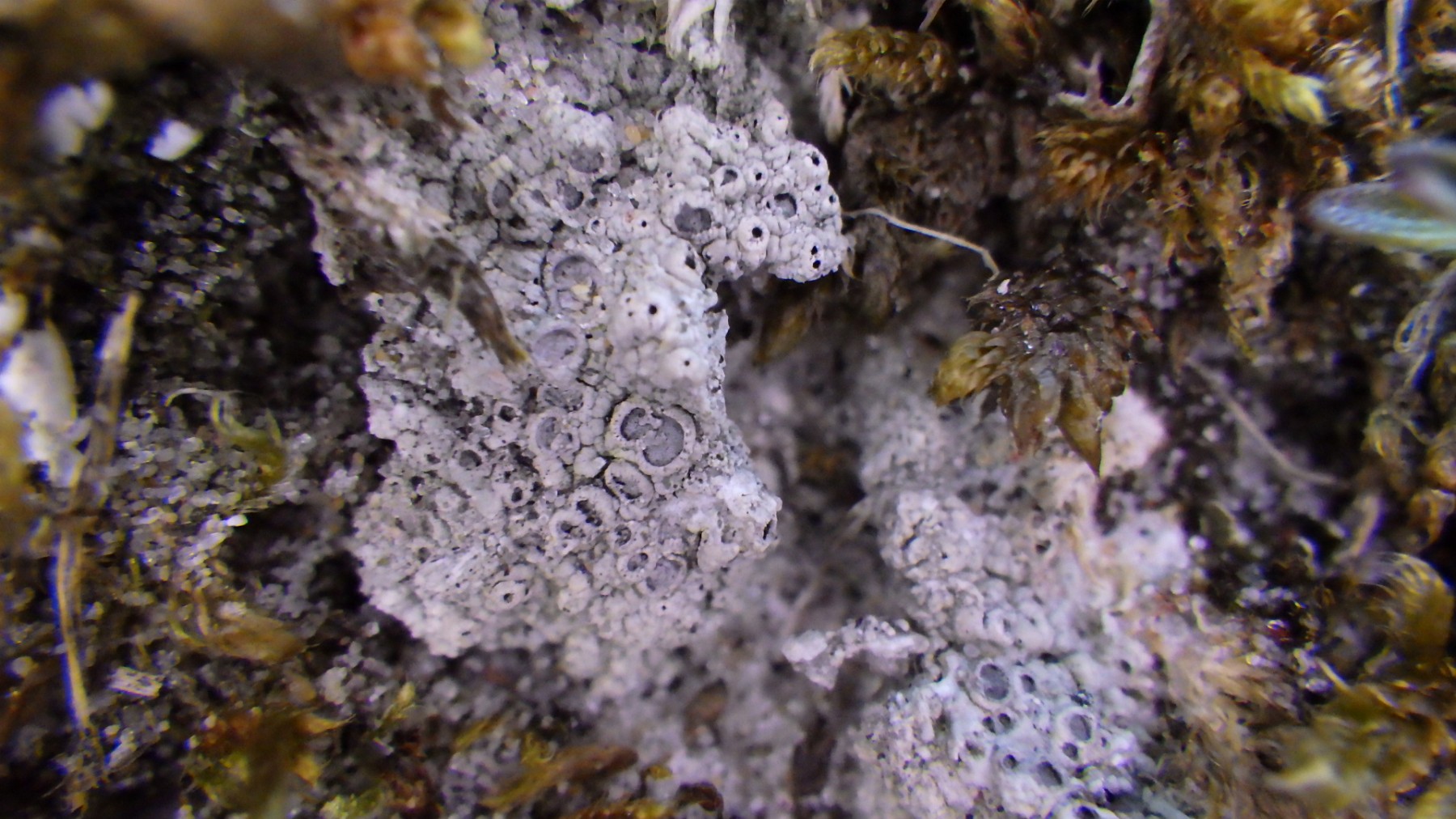
Diploschistes muscorum
species of fungus

Thelotrema
Thelotrema is a genus of lichen-forming fungi in the family Graphidaceae, the family to which all taxa in the former Thelotremataceae now belong.
Gymnographa
Gymnographa is a genus of lichen-forming fungi in the family Graphidaceae. It contains two species.

Phaeographina
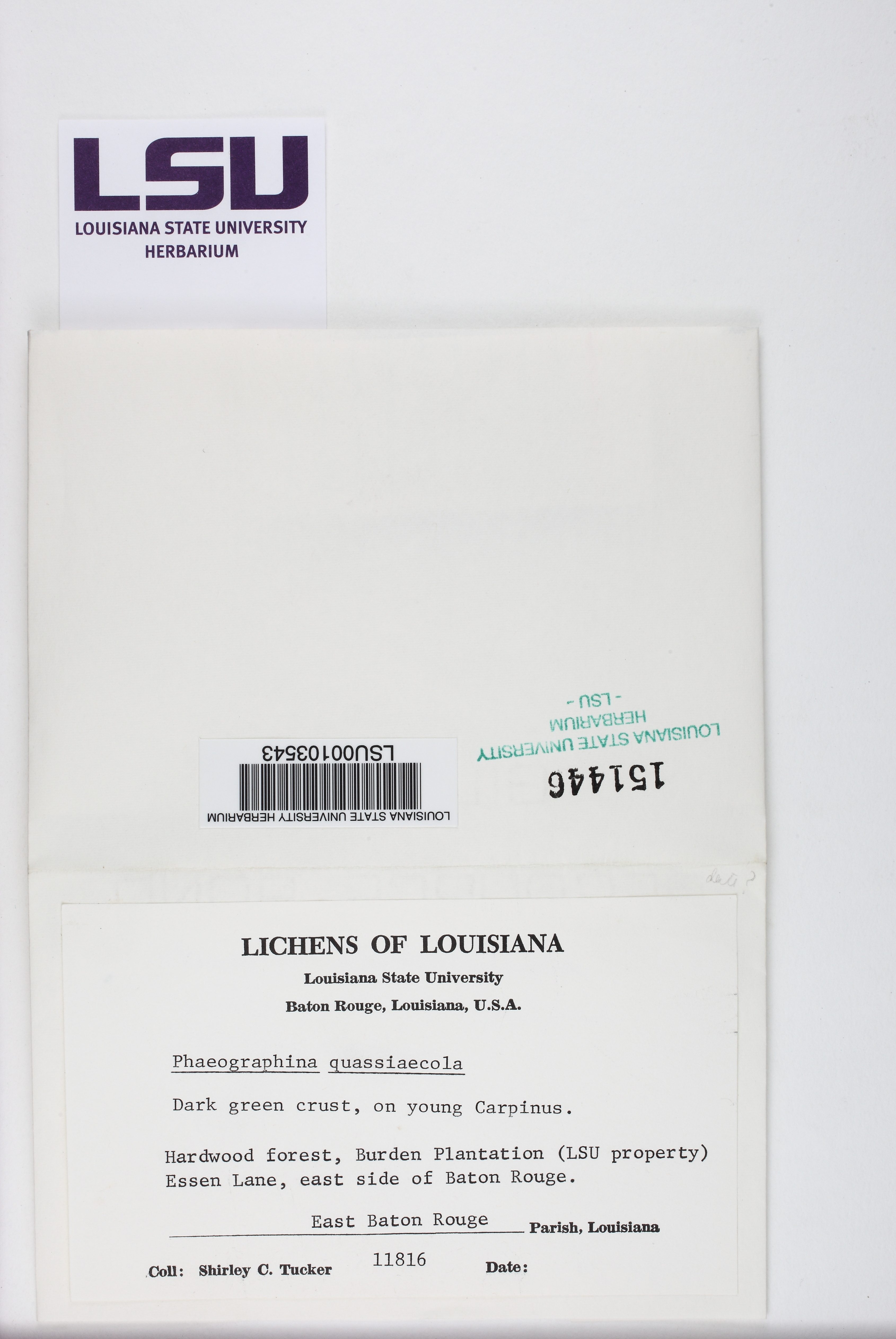
Phaeographina is a genus of lichen-forming fungi in the family Graphidaceae. The genus was circumscribed by Swiss lichenologist Johannes Müller Argoviensis in 1882.

Thelotrema lepadinum
species of fungus

Diploschistes diacapsis
species of fungus

Sarcographa
Sarcographa is a genus of lichen-forming fungi in the family Graphidaceae. Established in 1825 by the French botanist Antoine Laurent Apollinaire Fée, the genus contains 22 species that are recognised by their distinctive star-shaped colonies of radiating, script-like fruiting structures with black borders. These bark-dwelling lichens are found in humid tropical and warm temperate forests worldwide and serve as indicators of undisturbed woodland, as they quickly decline when forest canopy is opened or disturbed.

Platygramme
Platygramme is a genus of lichen-forming fungi in the family Graphidaceae consisting of about 27 species. The genus was circumscribed by Antoine Laurent Apollinaire Fée in 1874. The type species of the genus is P. caesiopruinosa. These bark-dwelling lichens are found in moist, shaded forests across tropical and warm temperate regions worldwide, where they form pale crusts that develop distinctive flattened, plate-like fruiting structures. A combination of several features characterizes Platygramme: the brown ascospores, a spore-producing layer (hymenium) speckled with granules, and elonga

Glyphis cicatricosa
species of fungus

Dyplolabia afzelii
species of fungus

Hemithecium
Hemithecium is a genus of lichen-forming fungi in the family Graphidaceae. These lichens form pale grey-white to yellow-olive crusts on tree bark and are characterized by straight to weakly curved fruiting bodies with charcoal-black walls that create sharp contrasts against the surface, along with distinctive spine-tipped filaments lining their interior chambers. The genus has a pantropical distribution, growing on shaded tree trunks and large branches in primary or lightly disturbed evergreen forests, where their marked sensitivity to canopy opening makes them practical indicators of intact,

Graphina
Graphina is a genus of script lichens in the family Graphidaceae. It has about 25 species. The genus was circumscribed in 1880 by Swiss lichenologist Johannes Müller Argoviensis. Müller Argoviensis did not indicate a type species for the genus in his original publication; David Hawksworth proposed to designate Graphina anguina as a lectotype in 1981.

Chroodiscus
Chroodiscus is a genus of leaf-dwelling lichens in the family Graphidaceae. These lichens form thin, smooth crusts directly on living leaves and are characterized by distinctive star-shaped fruiting bodies that split into triangular segments, with centres ranging from grey to bright scarlet-red depending on their chemical composition. The genus is found throughout tropical regions worldwide, growing in the shaded understory of rainforests from lowland areas to mountain cloud forests, where they serve as sensitive indicators of undisturbed forest conditions.

Glyphis scyphulifera
species of fungus
Thelotrema nostalgicum
species of fungus

Fibrillithecis
Fibrillithecis is a genus of lichen-forming fungi in the family Graphidaceae. The genus was circumscribed in 2006 by the German lichenologist Andreas Frisch, with Fibrillithecis vernicosa assigned as the type species.
Gyrotrema
Gyrotrema is a genus of lichen-forming fungi in the family Graphidaceae. There are six species assigned to the genus:
Gyrotrema album
Gyrotrema aurantiacum
Gyrotrema flavum
Gyrotrema papillatum
Gyrotrema sinuosum
Gyrotrema wirthii

Tremotylium
Tremotylium is a genus of lichen-forming fungi in the family Graphidaceae. The genus was circumscribed by Finnish lichenologist William Nylander in 1865, but it was not published validly. He validated the genus and assigned T. angolense as the type species in 1868.

Leiorreuma
Leiorreuma is a genus of script lichens in the family Graphidaceae. It has 18 species. The genus was circumscribed by Franz Gerhard Eschweiler in 1824, with Leiorreuma hepaticum assigned as the type species.

Thalloloma
Thalloloma is a genus of lichen-forming fungi in the family Graphidaceae. Established in 1853 by the Italian botanist Vittore Trevisan de Saint-Léon, the genus comprises 20 species distinguished by their narrow script-like slits immersed in a pale crusty surface, often with dark brown or occasionally crimson-dusted fruiting structures. Found throughout tropical regions from sea level to mountain forests above 3,000 metres, these bark-dwelling lichens are more tolerant of light and moisture variation than many related species, allowing them to colonise forest edges and moderately sun-exposed lo

Sarcographa labyrinthica
species of fungus
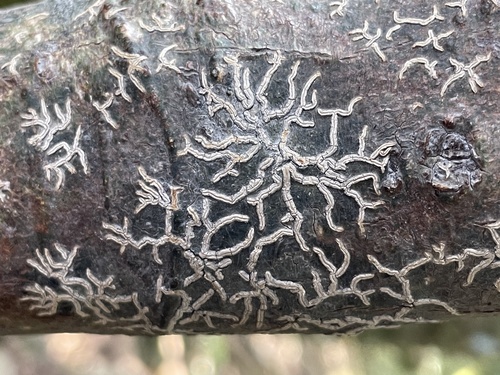
Pallidogramme
Pallidogramme is a genus of lichen-forming fungi in the family Graphidaceae. It has 8 species of corticolous (bark-dwelling), crustose lichens.
Anomalographis
Anomalographis is a genus of two species of lichen-forming fungi in the family Graphidaceae. These lichens form pale grey to yellow-brown crusts and are characterized by elongated, slit-like fruiting bodies containing very small spores divided by a single internal wall. One species grows on shaded volcanic rock faces in Madeira, while the other was discovered growing on tree bases in northeastern Queensland rainforest, showing the genus can colonize both rock and bark surfaces in humid, shaded environments.
Anomomorpha
Anomomorpha is a genus of lichens in the family Graphidaceae. The genus, described in 1891, has a pantropical distribution. These lichens form pale grey to dull olive crusts on tree bark that often develop low wart-like bumps covered with powdery particles, and produce narrow, usually wavy slit-like fruiting bodies. They are found in tropical rainforests worldwide, growing on shaded to semi-exposed bark in primary or lightly disturbed evergreen forests, with some species being narrowly restricted to specific mountain cloud forests.
Pseudoramonia
Pseudoramonia is a genus of lichen-forming fungi in the family Graphidaceae. The genus was circumscribed by lichenologists Gintaras Kantvilas and Antonín Vězda in 2000, with the type species designated as Pseudoramonia stipitata.

Stegobolus
Stegobolus is a genus of lichen-forming fungi in the family Graphidaceae. Established in 1845 by the French botanist Camille Montagne, the genus contains 16 species distinguished by their unique fruiting structures that initially appear drum-shaped and closed, later bursting open by shedding their roof-like covering. These bark-dwelling lichens are found in humid tropical and warm temperate forests worldwide, where they serve as indicators of undisturbed woodland habitats due to their sensitivity to canopy opening and drought.

Ampliotrema
Ampliotrema is a genus of lichen-forming fungi in the family Graphidaceae. The genus was originally described invalidly in 2004, and validly two years later.
Acanthotrema
Acanthotrema is a genus of lichens in the family Graphidaceae. The genus was circumscribed by German lichenologist Andreas Frisch in 2006, with Acanthotrema brasilianum assigned as the type species. Acanthotrema species are commonly found in rainforests ranging from lowland to montane environments.
Dyplolabia
Dyplolabia is a genus of lichen-forming fungi in the family Graphidaceae. These lichens form smooth, rather thick grey-yellow to olive-buff crusts on tree bark and are characterized by narrow, elongate fruiting bodies that are commonly hidden beneath a conspicuous white powdery coating. The genus has a pantropical distribution, growing on the smooth bark of trees and shrubs in both shaded rainforest understories and moderately exposed coastal woodlands, where they serve as indicators of long-established woodland habitat.

Topeliopsis acutispora
species of fungus

Topeliopsis
Topeliopsis is a genus of lichen-forming fungi in the family Graphidaceae.
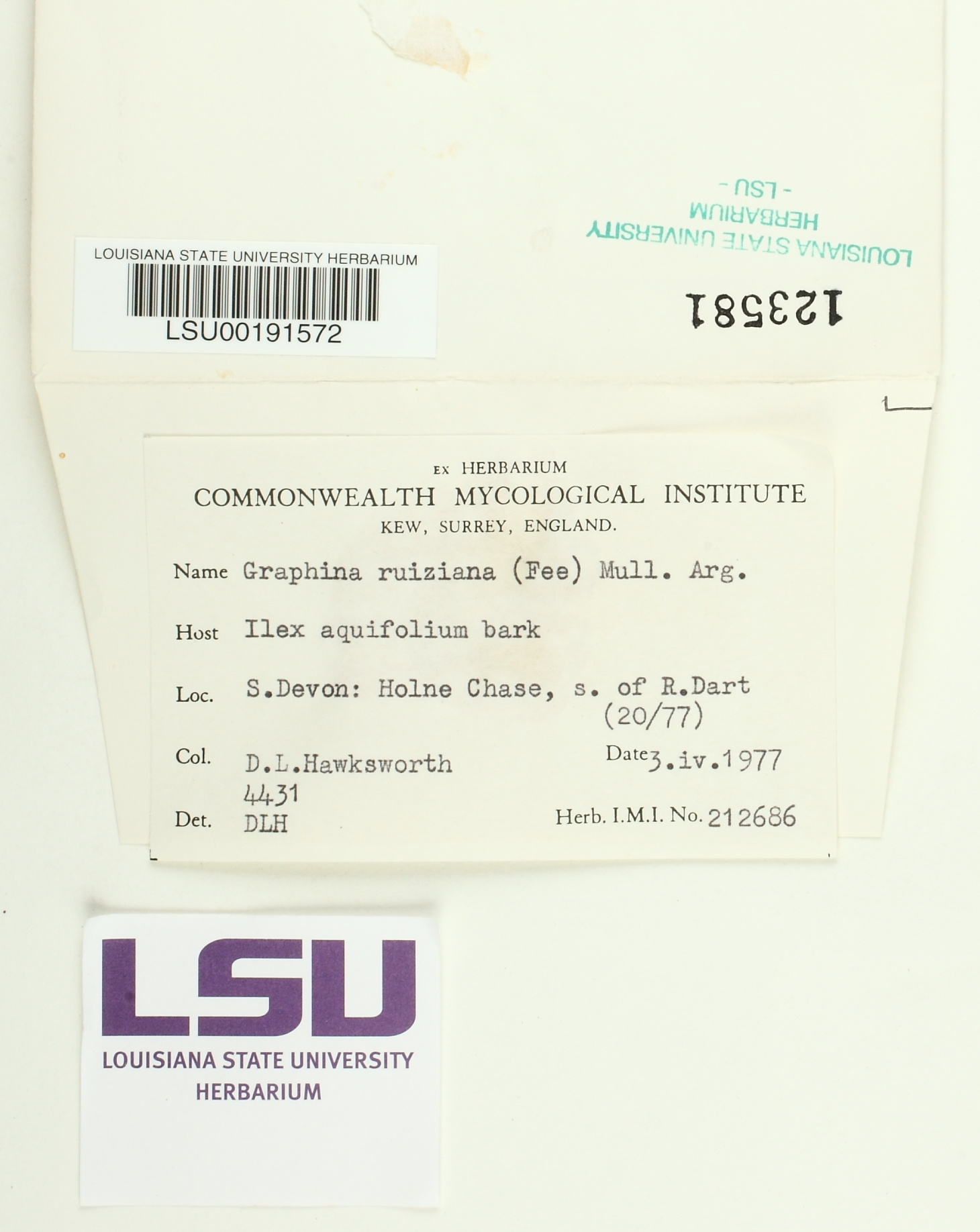
Graphina ruiziana
species of fungus
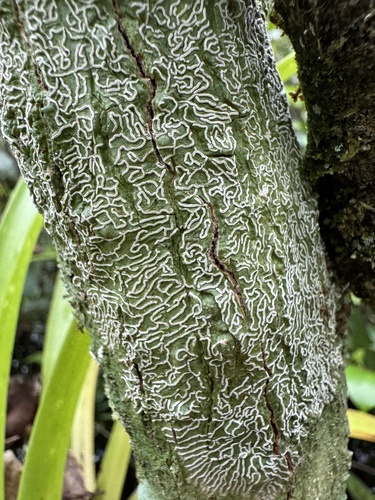
Platythecium
Platythecium is a genus of lichen-forming fungi in the family Graphidaceae. It comprises 25 species. Described in 2002 by the German lichenologist Bettina Staiger, these bark-dwelling lichens are found in humid, shaded forests across tropical and warm temperate regions worldwide. They are characterized by their flattened, plate-like fruiting structures with completely blackened walls and are sensitive to forest disturbance, making their presence an indicator of long-established woodland conditions.
Phaeographis tuberculifera
species of fungus

Glyphis
genus of fungi

Chapsa granulifera
species of fungus
Chapsa
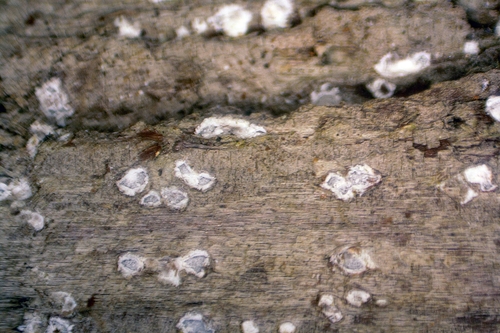
Chapsa is a genus of lichens in the family Graphidaceae. These lichens form thin, grey-whitish to pale olive crusts on tree bark and are characterized by fruiting bodies that start as slits but expand into round to angular discs level with the surface, each bordered by a pale rim. The genus has a pantropical to warm-temperate distribution, growing on shaded bark in humid lowland or foothill rainforests, with over 60 species that often serve as indicators of undisturbed forest habitats.

Melanotrema
Melanotrema is a genus of lichen-forming fungi in the family Graphidaceae. The genus was circumscribed by German lichenologist Andreas Frisch in 2006, with M. platystomum assigned as the type species.

Chapsa microspora
species of fungus
Wirthiotrema
Wirthiotrema is a genus of lichen-forming fungi in the family Graphidaceae. These tropical bark-dwelling lichens form yellow-green to light olive crusts with small, disc-like fruiting bodies that open through tiny circular pores. The genus contains six species found in lowland to mountain forests across tropical regions worldwide.

Diploschistes hensseniae
species of fungus
Melanotopelia
Melanotopelia is a genus of lichen-forming fungi in the family Graphidaceae. It has four species of corticolous (bark-dwelling), crustose lichens. This genus includes species characterised by dark pigmentation in their (a ring of tissue encircling their fruiting bodies), non-amyloid , and specific secondary metabolites.
Thecaria
Thecaria is a genus of lichen-forming fungi in the family Graphidaceae.
Redingeria
Redingeria is a genus of lichen-forming fungi in the family Graphidaceae. Established in 2006 and named after the Austrian botanist Karl Martin Redinger, the genus contains ten species that grow as bark-dwelling lichens in tropical forests worldwide. These lichens are distinguished by their script-like, elongated fruiting structures with thick black borders and are sensitive to forest disturbance, serving as indicators of undisturbed woodland habitats.
Phaeographis nardiensis
species of fungus

Phaeotrema
Phaeotrema is a genus of lichen-forming fungi in the family Graphidaceae. The genus was circumscribed in 1887 by Johannes Müller Argoviensis, with P. subfarinosum assigned as the type species.

Leucodecton
Leucodecton is a genus of lichen-forming fungi in the family Graphidaceae. These lichens form thin, cream to pale brown crusts on bark or rock surfaces and reproduce through flask-shaped fruiting bodies that often appear in small, wart-like clusters. The genus currently includes more than 30 species found worldwide, with many recently described from tropical regions such as Sri Lanka and Costa Rica.