Category
page 1Great Recession

2007–2008 financial crisis
global financial crisis triggered by bursting of the United States housing bubble and the devaluation of housing-related securities
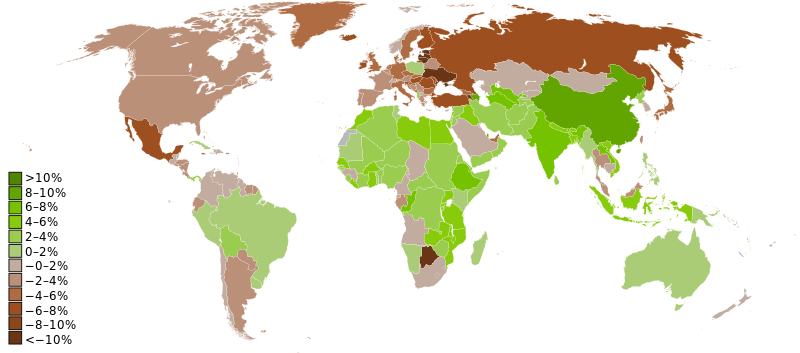
Great Recession
2007–2009 international economic decline

Timothy Geithner
American central banker and politician
2007–2008 world food price crisis
world food prices increased dramatically in 2007 and the 1st and 2nd quarter of 2008
too big to fail
a concept that certain corporations or financial institutions are so large and interconnected that their failure would be disastrous to the greater economic system, and that they therefore must be supported by government when facing potential failure
international monetary systems
internationally agreed rules, conventions and supporting institutions that facilitate international trade
New Normal
a state to which an economy, society, etc. settles following a crisis, when this differs from the situation that prevailed prior to the start of the crisis
2008 G20 Washington summit
annual G20 conference

Chimerica
right|300px
Chimerica is a neologism and portmanteau coined by Niall Ferguson and Moritz Schularick describing the symbiotic relationship between China and the United States, with incidental reference to the legendary chimera. Although the term is largely in reference to economics, there is also a political element.
Madoff investment scandal
investment scandal discovered in 2008
China–Japan–South Korea trilateral summit
annual diplomatic meeting
bankruptcy of Lehman Brothers
financial collapse and Chapter 11 bankruptcy filing of American investment bank Lehman Brothers Holdings Inc. and related entities during subprime mortgage crisis and great recession
2000s energy crisis
sixfold rise in oil prices, peaking in 2008

Richard S. Fuld
American Banker
Automotive industry crisis of 2008–10
part of the financial crisis of 2007–2008
Thomas Herndon
American economist

Sanford I. Weill
American banker and philanthropist (born 1933)
bankocracy
Bankocracy (from the English word bank and Ancient Greek κράτος - kratos, "power, rule") or trapezocracy (from Greek τράπεζα - trapeza, "bank") is a polemic term referring to the excessive power or influence of banks on public policy-making. It can also refer to a form of government where financial institutions rule society.
James Cayne
American businessman (1934–2021)

Growth in a Time of Debt
scientific article
Stanford Financial Group
financial services group and defunct Ponzi scheme
2008–2009 Keynesian resurgence
great Recession-era revival of interest in aggregate demand-side economics
2008–2009 Russian financial crisis
overview of the impact of the Great Recession in Russia
Comparisons between the Great Recession and the Great Depression
haigui
250px|thumb|right|"Sea turtle" in Chinese () is a [[homophone of the term for a student returned from study overseas]]
IFRS 9
Accounting standard
Kareem Serageldin
banker, former employee of Credit Suisse
Angelo Mozilo
American banker
APEC Peru 2008
Economic meeting in Lima
SoFFin
200px|right|SoFFin logo
The SoFFin (Sonderfonds Finanzmarktstabilisierung - Special Financial Market Stabilization Funds) is a program of the German government with the purpose to stabilize and restore confidence in the financial system. It was created during the 2008 financial crisis on October 17, 2008 by the German Parliament and enacted on October 20, 2008. As of December 31, 2010, it stopped offering new services but continued managing existing guarantees.