File:GDP_Real_Growth_in_2009.svg · Wikimedia Commons · See Wikimedia Commons
Great Recession
Sign in to saveAlso known as Lesser Depression, global recession of 2007–2009, Second Great Depression
2007–2009 international economic decline
The Great Recession was a severe worldwide economic downturn that occurred from 2007 to 2009, during which many countries experienced significant declines in economic activity, employment, and wealth. It matters because it was one of the most serious economic crises in modern history, affecting millions of people globally through job losses, falling home values, and reduced savings.
AI-generated from the Wikipedia summary — may contain errors.
Wikidata facts
- Instance of
- recession
Show 6 more facts
- topic has template
- Template:Great Recession
- different from
- Long Depression
- Commons category
- Economic crisis from 2007
- topic's main category
- Category:Great Recession
- has cause
- 2007–2008 financial crisis
- point in time
- 2010-00-00
via Wikidata · CC0
~40 min read
Encyclopedic overview
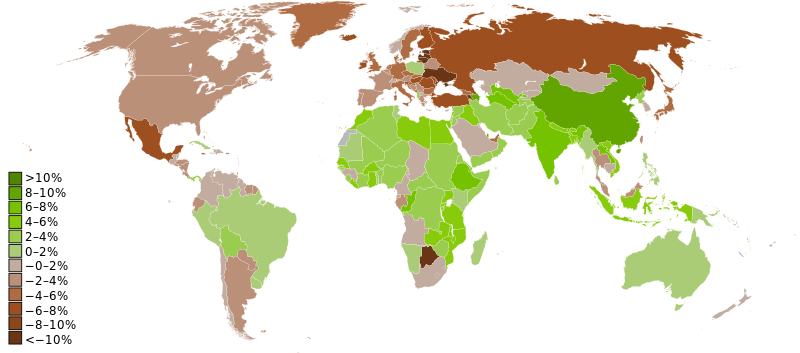
The Great Recession was a period of market decline in economies around the world (particularly in the western world and associated countries) that occurred from late 2007 to mid-2009, overlapping with the closely related 2008 financial crisis. The scale and timing of the recession varied from country to country (see map). At the time, the International Monetary Fund (IMF) concluded that it was the most severe economic and financial meltdown since the Great Depression of the 1930s.
The Great Recession was caused by many weaknesses that slowly developed in the global financial system, along with a series of triggering events that began with the bursting of the United States housing bubble in 2005–2012. When housing prices fell and homeowners began to abandon their mortgages, the value of mortgage-backed securities held by investment banks declined in 2007–2008, causing several banks to collapse or be bailed out in September 2008. This 2007–2008 phase became known as the subprime mortgage crisis.
Excerpted from Wikipedia’s “Great Recession” article, available under the CC BY-SA 4.0 licence.