Category
page 1Gut flora bacteria

Escherichia coli
enteric, rod shaped, gram-negative bacterium

Streptococcus
Streptococcus, from Ancient Greek στρεπτός (streptós), meaning "twisted", and κόκκος (kókkos), meaning "grain", is a genus of gram-positive spherical bacteria that belongs to the family Streptococcaceae, within the order Lactobacillales (lactic acid bacteria), in the phylum Bacillota. Cell division in streptococci occurs along a single axis, thus when growing they tend to form pairs or chains, which may appear bent or twisted. This differs from staphylococci, which divide along multiple axes, thereby generating irregular, grape-like clusters of cells. Most streptococci are oxidase-negative and

Clostridium
Clostridium is a genus of anaerobic, Gram-positive bacteria. Species of Clostridium inhabit soils and the intestinal tracts of animals, including humans. This genus includes several significant human pathogens, including the causative agents of botulism and tetanus. It also formerly included an important cause of diarrhea, Clostridioides difficile, which was reclassified into the Clostridioides genus in 2016.

Lactobacillus
Lactobacillus is a genus of gram-positive bacteria within the Lactobacillaceae family. Members of the genus are aerotolerant anaerobes or microaerophilic, rod-shaped, and do not form endospores. Until 2020, the genus Lactobacillus comprised 261 phylogenetically, ecologically, and metabolically diverse species; a taxonomic revision of the genus reassigned many former Lactobacillus species to 25 genera (see below).

Bifidobacterium
Bifidobacterium is a genus of gram-positive, nonmotile, often branched anaerobic bacteria. They are ubiquitous inhabitants of the gastrointestinal tract though strains have been isolated from the vagina and mouth (B. dentium) of mammals, including humans. Bifidobacteria are one of the major genera of bacteria that make up the gastrointestinal tract microbiota in mammals. Some bifidobacteria are used as probiotics.
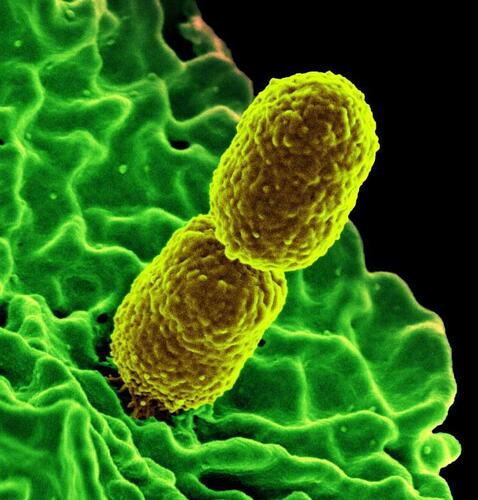
Klebsiella
Klebsiella is a genus of Gram-negative, oxidase-negative, rod-shaped bacteria with a prominent polysaccharide-based capsule.
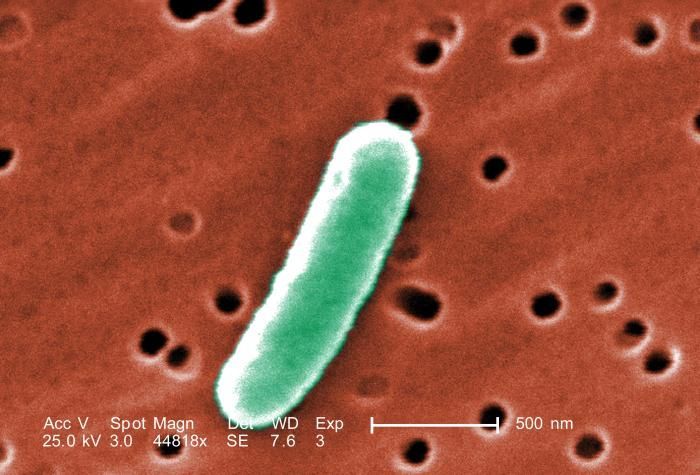
Escherichia
Escherichia ( ) is a genus of Gram-negative, non-spore-forming, facultatively anaerobic, rod-shaped bacteria from the family Enterobacteriaceae. In those species which are inhabitants of the gastrointestinal tracts of warm-blooded animals, Escherichia species provide a portion of the microbially derived vitamin K for their host. A number of the species of Escherichia are pathogenic. The genus is named after Theodor Escherich, the discoverer of Escherichia coli. Escherichia are facultative aerobes, with both aerobic and anaerobic growth, and an optimum temperature of 37 °C. Escherichia are
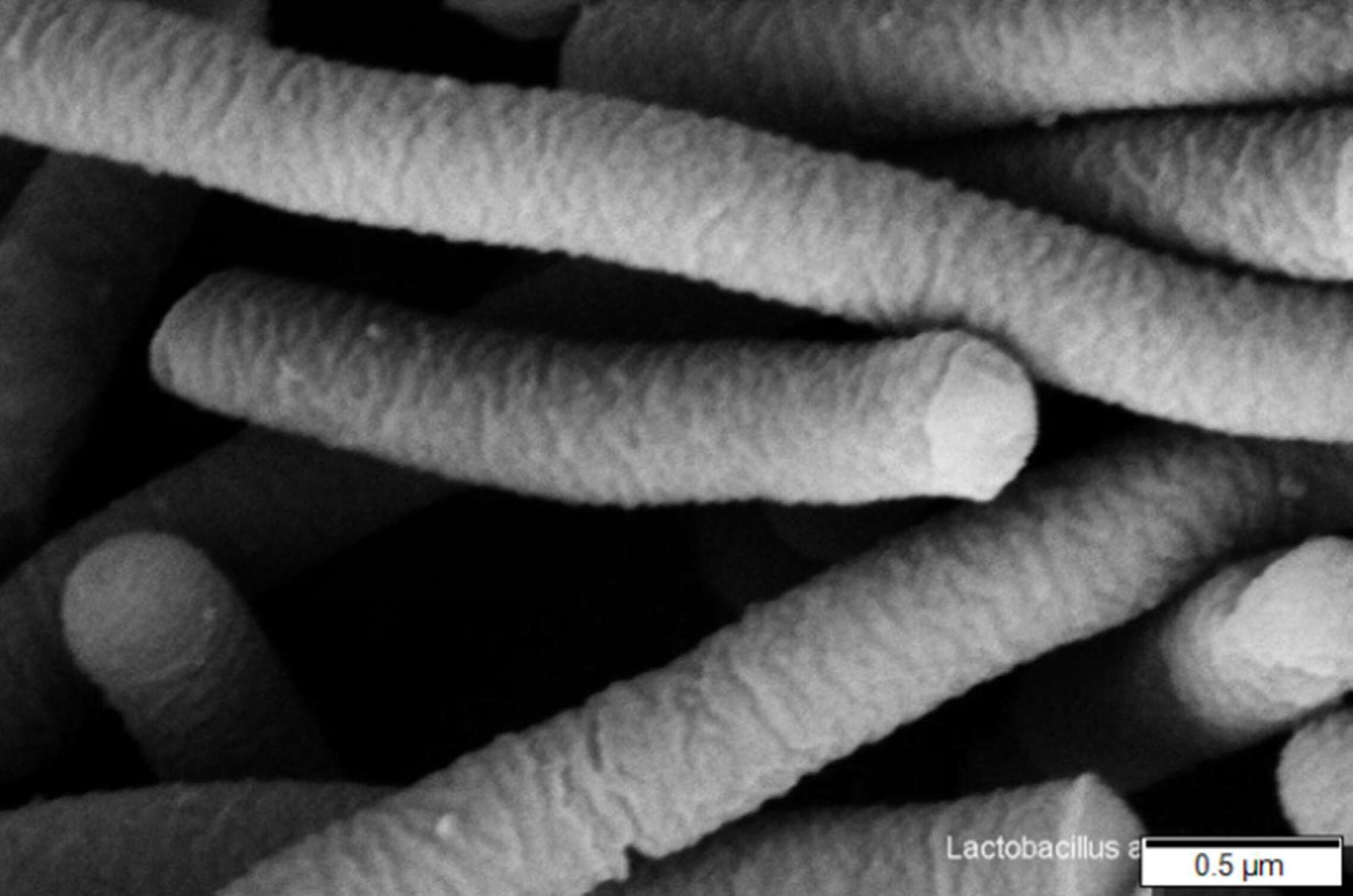
Lactobacillus acidophilus
species of bacterium
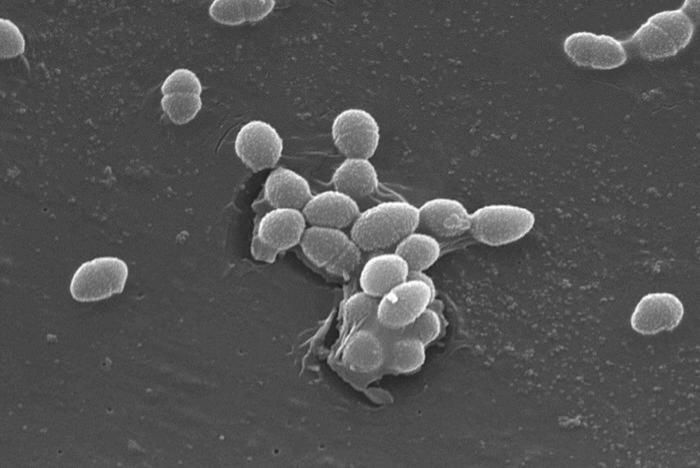
Enterococcus faecalis
species of bacterium
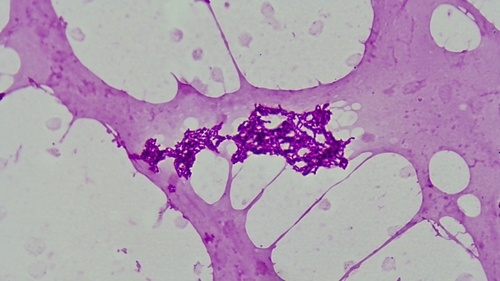
Fusobacterium
Fusobacterium is a genus of obligate anaerobic, Gram-negative, non-sporeforming bacteria belonging to Gracilicutes. Individual cells are slender, rod-shaped bacilli with pointed ends. Fusobacterium was discovered in 1900 by Courmont and Cade and is common in the flora of humans.
Citrobacter
Citrobacter is a genus of Gram-negative, aerobic, rod-shaped coliform bacteria of the Enterobacteriaceae family.
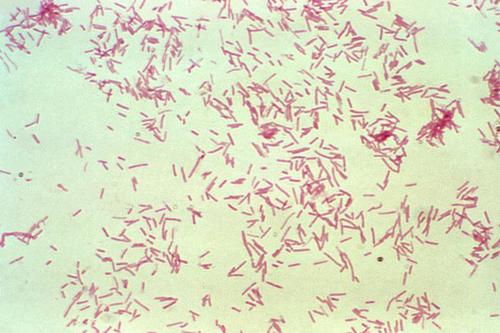
Bacteroides
Bacteroides is a genus of Gram-negative, obligate anaerobic bacteria. Bacteroides species are non endospore–forming bacilli, and may be either motile or nonmotile, depending on the species. The DNA base composition is 40–48% GC. Unusual in bacterial organisms, Bacteroides membranes contain sphingolipids. They also contain meso-diaminopimelic acid in their peptidoglycan layer.

Lacticaseibacillus casei
species of bacterium
Enterococcus faecium
species of bacterium

Bacteroides fragilis
species of bacterium
Lactobacillus reuteri
species of bacterium

Peptostreptococcus
Peptostreptococcus is a genus of anaerobic, Gram-positive, non-spore forming bacteria. The cells are small, spherical, and can occur in short chains, in pairs or individually. They typically move using cilia. Peptostreptococcus are slow-growing bacteria with increasing resistance to antimicrobial drugs. Peptostreptococcus is a normal inhabitant of the healthy lower reproductive tract of women.
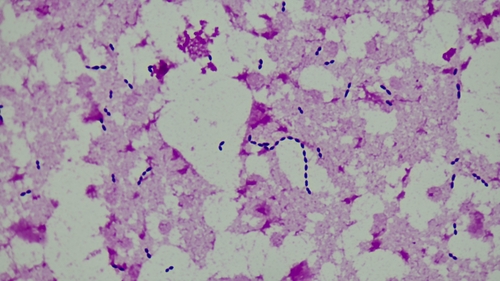
Ruminococcus
Ruminococcus is a genus of bacteria in the class Clostridia. They are anaerobic, Gram-positive gut microbes. One or more species in this genus are found in significant numbers in the human gut microbiota. The type species is R. flavefaciens. As usual, bacteria taxonomy is in flux, with Clostridia being paraphyletic, and some erroneous members of Ruminococcus being reassigned to a new genus Blautia on the basis of 16S rRNA gene sequences.
Bifidobacterium longum
species of bacterium
Prevotella
Prevotella is a genus of anaerobic Gram-negative bacteria. The type species is Prevotella melaninogenica.
Klebsiella oxytoca
species of bacterium
Klebsiella aerogenes
species of bacterium
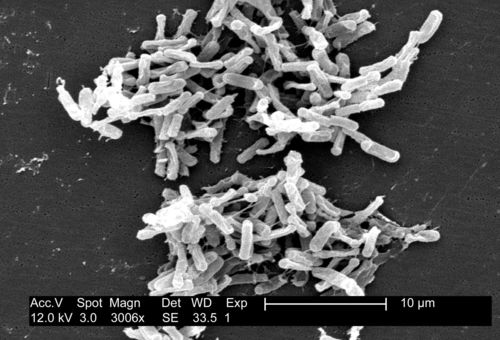
Clostridioides
Clostridioides is a genus of Gram-positive bacteria, which includes Clostridioides difficile, a human pathogen causing an infectious diarrhea.
Fusobacteriota
Fusobacteriota are obligately anaerobic non-sporeforming Gram-negative bacilli. Since the first reports in the late nineteenth century, various names have been applied to these organisms, sometimes with the same name being applied to different species. More recently, not only have there been changes to the nomenclature, but also attempts to differentiate between species which are believed to be either pathogenic or commensal or both. Because of their asaccharolytic nature, and a general paucity of positive results in routine biochemical tests, laboratory identification of the Fusobacteriota ha
Coprococcus
Coprococcus is a genus of obligately anaerobic, nonmotile, Gram-positive cocci that are part of the human and animal gut microbiota.
Cytophaga
Cytophaga is a genus of Gram-negative, gliding, rod-shaped bacteria. This bacterium is commonly found in soil, and rapidly digests crystalline cellulose. C. hutchinsonii is able to use its gliding motility to move quickly over surfaces. Although the mechanism for this is not known, there is a belief that the flagellum is not used.
Roseburia
Roseburia is a genus of butyrate-producing, Gram-positive anaerobic bacteria that inhabit the human colon. With a cell morphology of a curved-rod shape, this bacterium uses its flagella to move around. The bacterium is named in honor of Theodor Rosebury who has contributed vastly to the oral microbiome field. First isolated in human fecal samples, Roseburia has been found to provide several health benefits pertaining to the human gut microbiome. Belonging to the Bacillota phylum (previously known as Firmicutes), Clostridia class, Clostridiales order, and Lachnospiraceae family, the Roseburia g
Clostridium novyi
species of bacterium
Bacteroides thetaiotaomicron
species of bacterium
Bifidobacterium adolescentis
species of bacterium
Clostridioides difficile infection
disease caused by C. difficile bacteria
Thomasclavelia ramosa
species of bacterium
Clostridium leptum
species of bacterium
Butyrivibrio
Butyrivibrio is a genus of bacteria in Class Clostridia. Bacteria of this genus are common in the gastrointestinal systems of many animals. Genus Butyrivibrio was first described by Bryant and Small (1956) as anaerobic, butyric acid-producing, curved rods (or vibroids). Butyrivibrio cells are small, typically 0.4 – 0.6 μm by 2 – 5 μm. They are motile, using a single polar or subpolar monotrichous flagellum. They are commonly found singly or in short chains but it is not unusual for them to form long chains. Despite historically being described as Gram-negative, their cell walls contain de

Limosilactobacillus
Limosilactobacillus is a thermophilic and heterofermentative genus of lactic acid bacteria created in 2020 by splitting from Lactobacillus. The name is derived from the Latin "slimy", referring to the property of most strains in the genus to produce exopolysaccharides from sucrose. The genus currently includes 31 species or subspecies, most of these were isolated from the intestinal tract of humans or animals. Limosilactobacillus reuteri has been used as a model organism to evaluate the host-adaptation of lactobacilli to the human and animal intestine and for the recruitment of intestinal lact