Category
page 1Hand fans
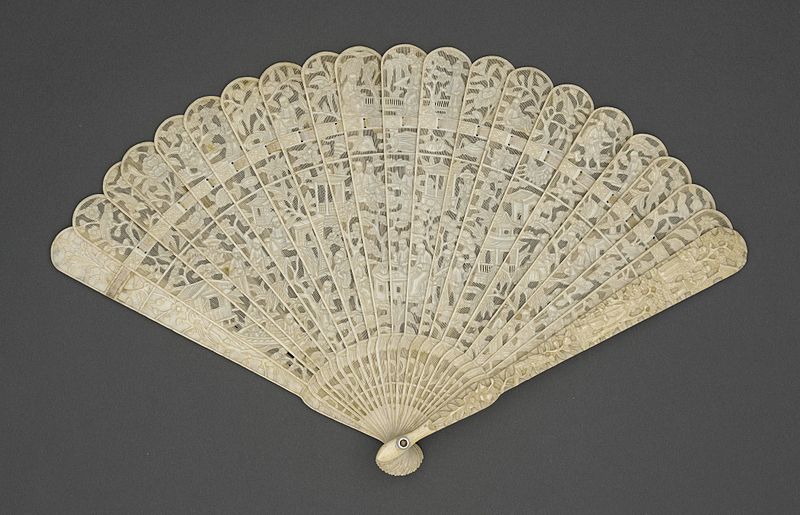
hand fan
device used to cool oneself, usually made of folded paper
Japanese war fan
military use of fans in feudal Japan

flabellum
thumb|Ancient Egyptian flabella (top center) and lotus motifs. 1868, New York Public Library|NYPL picture collection
A flabellum (plural flabella), in Christian liturgical use, is a fan made of metal, leather, silk, parchment or feathers, intended to keep away insects from the consecrated Body and Blood of Christ and from the priest, as well as to show honour. The ceremonial use of such fans dates back to Ancient Egypt, and an example was found in the tomb of Tutankhamun. A flabellum is also a fan-shaped structure on the fifth legs of horseshoe crabs (Xiphosura).

nihon-buyō
thumb|alt=A colourised photograph of an actor in a long-sleeved, trailing kimono, wearing a traditionally-styled wig and holding a lion's head prop|Nakamura Shikan VII in September 1955 in the play
refers to the classical Japanese performing art of dance.

Gunbai
thumb|A gunbai
The is a type of signal baton and Japanese war fan. Once held by military leaders (such as ) and priests in the past, it is used in the modern day by umpires in sumo wrestling.
Buchaechum
Buchaechum () is a Korean fan dance originating from various traditional and religious Korean dances. It is usually performed by groups of female dancers.
Princess Iron Fan
character from the Chinese classic novel Journey to the West
uchiwa-e
are a genre of Japanese woodblock print, which appear on rigid, paddle-shaped hand fans known as . Ovoid images matching the outline of were printed on rectangular sheets of rice paper, then cut along the margins and pasted onto a skeletal bamboo frame.
thumb|Late Edo period print of dancers
harisen
thumb|Keiichi Yamamoto of Gokuraku Tombo being hit with a
The is a giant paper fan, usually made in a closed fashion. It is most traditionally used as part of a act, in which the straight man () smacks the funny man () in response to their jokes or idiocy.
Abaniko
thumb|right|150px|A Sangley|Mestiza Sangley-Filipina holding a folded abaniko
An abaniko (from the Spanish word abanico, "fan") is a type of hand fan from the Philippines.
Singkil
Singkil is a Maranao royal dance from the Philippines.
tessenjutsu
thumb|250px|A solid iron tessen fan on display in Iwakuni Castle, Japan
Tessenjutsu () is the martial art of the Japanese war fan (tessen). It is based on the use of the solid iron fan or the folding iron fan, which usually had eight or ten wood or iron ribs.
Fan Museum
museum in London, England, United Kingdom