Category
page 1Hardness tests

Mohs scale of mineral hardness
qualitative ordinal scale characterizing scratch resistance of various minerals

hardness
In materials science, hardness (antonym: softness) is a measure of the resistance to plastic deformation, such as an indentation (over an area) or a scratch (linear), induced mechanically either by pressing or abrasion. In general, different materials differ in their hardness; for example hard metals such as titanium and beryllium are harder than soft metals such as sodium and metallic tin, or wood and common plastics. Macroscopic hardness is generally characterized by strong intermolecular bonds, but the behavior of solid materials under force is complex; therefore, hardness can be measured i
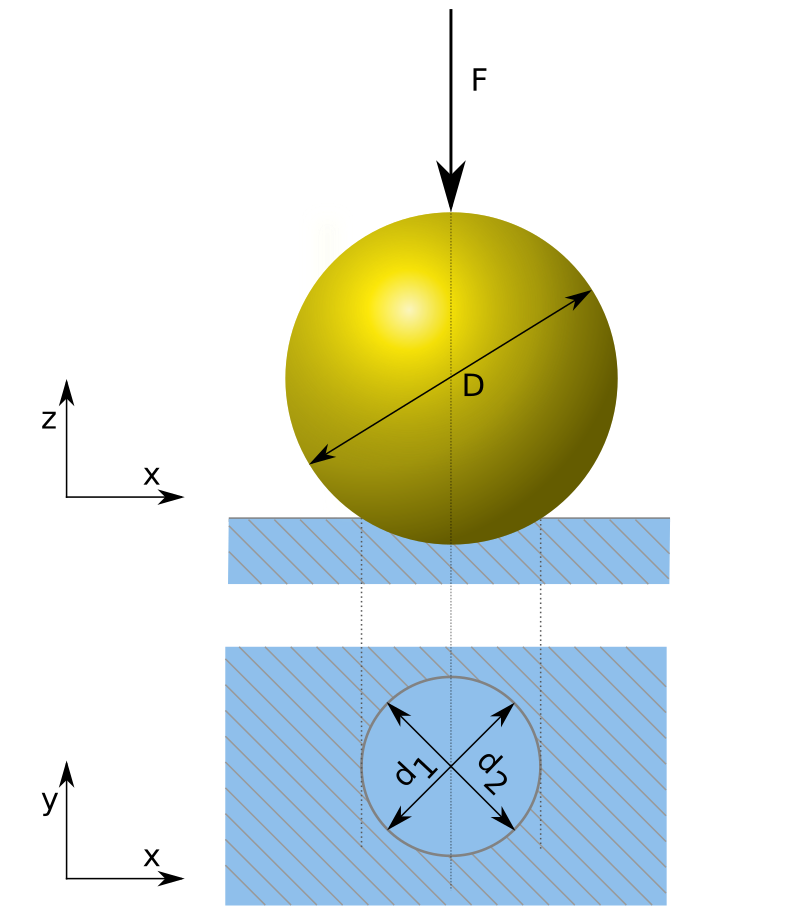
Brinell hardness test
The way to measure the hardness of a material is with a special tool called an indenter, which is pressed into the material and the larger the cavity, the harder the material.

Vickers hardness
hardness test
Rockwell scale
Rockwell hardness scale based on indentation hardness of a material with a 120° diamond spheroconical under 150 kgf
Knoop hardness test
micro-hardening test

nanoindentation
Nanoindentation, also called instrumented indentation testing, is a variety of indentation hardness tests applied to small volumes. Indentation is perhaps the most commonly applied means of testing the mechanical properties of materials. The nanoindentation technique was developed in the mid-1970s to measure the hardness of small volumes of material.
Janka hardness test
test to measure the resistance of a sample of wood to denting and wear
Shore durometer
hardness testing machine
EN 62262
European impact protection standard
Bloom
test to measure the strength of a gel or gelatin
Rosiwal scale
hardness scale in mineralogy
indentation hardness
any measure of hardness based on indentation resistance
nanoindenter
thumb|right|A nanoindenter