Category
page 1Hasidic Judaism
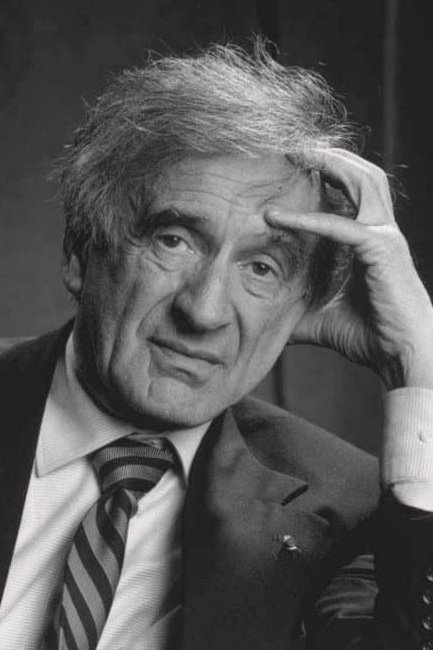
Elie Wiesel
Romanian-born American writer, professor, political activist, Nobel laureate, and Holocaust survivor (1928-2016)

Martin Buber
German Jewish Existentialist philosopher and theologian (1878–1965)

Hasidism
religious subgroup of modern Judaism

Bernard Madoff
American fraudster and financier (1938–2021)
Gershom Scholem
German-Israeli philosopher (1897–1982)

payot
Sidelocks, often anglicized as () or (), are sidelocks or sideburns. ''Pe'ot'' are worn by some male adherents of Orthodox Judaism based on an interpretation of the Tanakhic injunction—in Leviticus 19:27—against shaving the "sides" of one's head. The singular form of the Hebrew ''pe'ot, pe'a'' (), means 'corner', 'side', or 'edge'. There are different styles of ''pe'ot among adherents of Haredi Judaism and Hasidic Judaism, as well as among Yemenite Jews, and Chardal Jews. Yemenite Jews call their sidelocks simanim'' () because their long, curled sidelocks serve as a distinguishing feature in Y

Medzhybizh
Medzhybizh (; ; ; ), formerly Mezhybozhe, is a rural settlement in Khmelnytskyi Oblast, western Ukraine. It is located in Khmelnytskyi Raion, 25 kilometres from Khmelnytskyi on the main highway between Khmelnytskyi and Vinnytsia at the confluence of the Southern Buh and Buzhok rivers. Medzhybizh was once a prominent town in the former Podolia Province. Its name is derived from "mezhbuzhye", which means "between the Buzhenka (and the Buh) Rivers". It is known as the birthplace of the Jewish Hasidic mystical religious movement. Medzhybizh hosts the administration of Medzhybizh settlement hromada
nigun
A nigun (, 'tune' or 'melody'; pl. nigunim) or niggun (pl. niggunim) is a form of Ashkenazi Jewish vocal music sung in group settings. Nigunim are melodic tunes, often using repetitive non-lexical vocables such as "bim-bim-bam", "lai-lai-lai", "yai-yai-yai", or "ai-ai-ai" rather than with formal lyrics. Sometimes, a nigun is expressed as a mystical musical form of Jewish prayer or glossolalia. Hebrew Biblical verses or quotes from other classical Jewish texts are sometimes sung repetitively to form a nigun. Some nigunim are sung as prayers of lament, while others may be joyous or victorious in

Ger
Polish Hasidic dynasty
Friedrich Weinreb
Dutch writer (1910-1988)
Baal Shem
rabbi who uses practical kabbalah for healing, miracles, exorcism and blessing
Tish (Hasidic celebration)
hasidic celebration
Tikkun Chatzot
Jewish ritual prayer recited each night after midnight
Haviva Pedaya
Hebrew Poet and academic

Menashe Klein
Rabbi of Ungvar community in Brooklyn, moved to Jerusalem at end of his life
kvitel
200px|right|thumb|The graves of Rabbi Yosef Yitzchok Schneersohn (right) and Rabbi [[Menachem Mendel Schneerson (left), the sixth and seventh Lubavitcher Rebbes, are piled with kvitelach left by visitors.]]
Kvitel or Kvitl ( kvitl, "little note"; plural: קוויטלעך kvitlekh, kvitels, kvitelech, kvitelach / kvitls, kvitlech, kvitlach) refers to a practice developed by Hasidic Judaism in which a Hasid (a follower of Hasidic Judaism) writes a note with a petitionary prayer and gives it to a Rebbe (Hasidic Jewish leader) in order to receive the latter's blessing. This prayer may be a general request
Nusach Sefard
Forms of the Jewish siddurim
Sanz
thumb|Rabbi Chaim Halberstam, founder of the Sanz dynasty
Sanz (or Tsanz, ) is a Hasidic dynasty originating in the city of Sanz (Nowy Sącz) in Galicia. The dynasty was founded by the rebbe Rabbi Chaim Halberstam (1793–1876) who was the rabbi of Nowy Sącz and the author of the work Divrei Chaim by which name he is known as well.
Mesirah
Mesirah (or mesira, ) is the action in which one Jew reports the conduct of another Jew to a non-rabbinic authority in a manner and under the circumstances forbidden by rabbinic law. In any case, "excessive" punishment by non-Jews may be permissible if a precept of the Torah has been violated.
Mitzvah tantz
Hasidic Jewish custom
Neo-Hasidism
Neo-Hasidism, also Neochassidut or Neo-Chassidus, is an approach to Judaism in which aspects of Hasidic Judaism are incorporated into non-Hasidic religious Jewish practice. Over the 20th century, neo-Hasidism was popularized by the works of writers such as Hillel Zeitlin, Martin Buber, Abraham Joshua Heschel, Zalman Schachter-Shalomi, and Arthur Green.