Category
page 1Heat transfer

heat
In thermodynamics, heat is defined as the form of energy crossing the boundary of a thermodynamic system by virtue of a temperature difference across the boundary. A thermodynamic system does not contain heat. Nevertheless, the term is also often used to refer to the thermal energy contained in a system as a component of its internal energy and that is reflected in the temperature of the system.

small calorie
The calorie is a unit of energy that originated from the caloric theory of heat. The small calorie or gram calorie is defined as the amount of heat needed to raise the temperature of one milliliter of water by one degree Celsius (or one kelvin). In the US, "large calorie" is also used to mean kilocalorie (1 kcal = 1000 cal) .

boiling
thumb|right|Rolling boil of water in an electric kettle

burn

heat transfer
transport of thermal energy in physical systems

black body
idealized physical body that absorbs all incident electromagnetic radiation

hypothermia

thermal conductivity
capacity of a material to conduct heat

thermal radiation
electromagnetic radiation generated by the thermal motion of charged particles in matter
thermal conduction
transfer of internal energy within a body due to particle collisions & electron movements
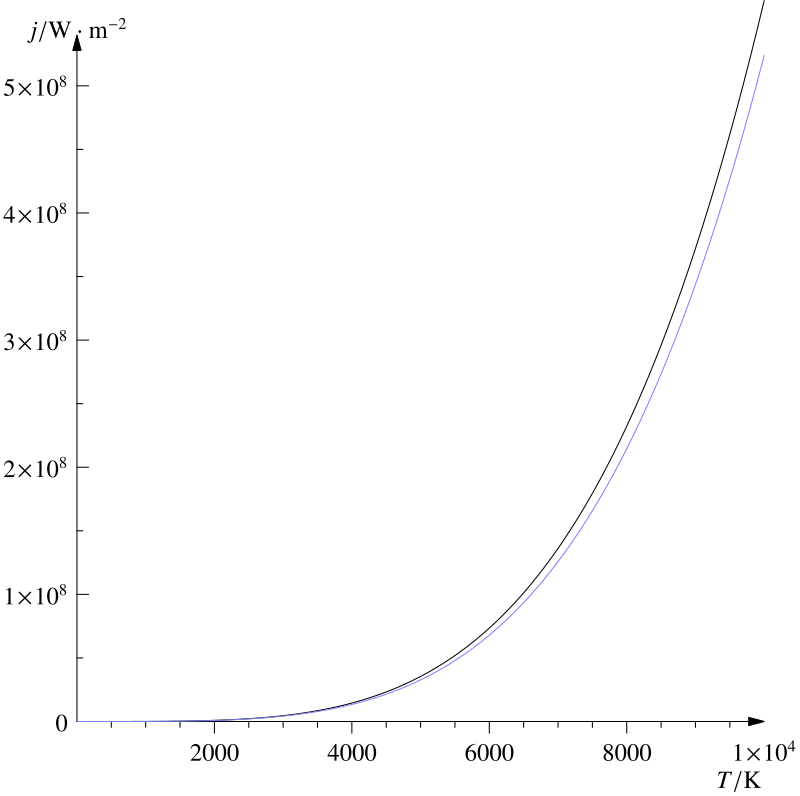
Stefan-Boltzmann law
physical law on the emissive power of black body

thermal expansion
tendency of matter to change volume in response to a change in temperature

thermoregulation
Thermoregulation is the ability of an organism to keep its body temperature within certain boundaries, even when the surrounding temperature is very different. A thermoconforming organism, by contrast, simply adopts the surrounding temperature as its own body temperature, thus avoiding the need for internal thermoregulation. The internal thermoregulation process is one aspect of homeostasis: a state of dynamic stability in an organism's internal conditions, maintained far from thermal equilibrium with its environment (the study of such processes in zoology has been called physiological ecology

heat exchanger
piece of equipment built for efficient heat transfer from one medium to another

calorimetry
upright=1.2|thumb|The world's first ice-calorimeter, used in the winter of 1782–83, by Antoine Lavoisier and [[Pierre-Simon Laplace, to determine the heat involved in various chemical changes; calculations which were based on Joseph Black's prior discovery of latent heat. These experiments mark the foundation of thermochemistry.]]
thumb|upright|Snellen direct calorimetry chamber, University of Ottawa
thumb|Indirect calorimetry metabolic cart measuring oxygen uptake and production of a spontaneously breathing subject (dilution method with canopy hood).
thermal insulation
insulation against heat transfer

advection
In the fields of physics, engineering, and earth sciences, advection is the transport of a substance or quantity by bulk motion of a fluid. The properties of that substance are carried with it. Generally the majority of the advected substance is also a fluid. The properties that are carried with the advected substance are conserved properties such as energy. An example of advection is the transport of pollutants or silt in a river by bulk water flow downstream. Another commonly advected quantity is energy or enthalpy. Here the fluid may be any material that contains thermal energy, such as wat

black-body radiation
thermal electromagnetic radiation

condenser
device used to condense a substance from its gaseous to its liquid state
Leidenfrost effect
physical phenomenon in which a liquid close to a very hot surface produces an insulating vapor layer keeping the liquid from boiling rapidly
heat sink
hardware component
heat equation
partial differential equation for distribution of heat in a given region over time
properties of water
overview about physical and chemical properties of pure water
boundary layer
layer of fluid in the immediate vicinity of a bounding surface
efficiency
Efficiency is the often measurable ability to avoid making mistakes or wasting materials, energy, efforts, money, and time while performing a task. In a more general sense, it is the ability to do things well, successfully, and without waste.

emissivity
thumb|right|Blacksmiths work [[iron when it is hot enough to emit plainly visible thermal radiation.]]
The emissivity of the surface of a material is its effectiveness in emitting energy as thermal radiation. Thermal radiation is electromagnetic radiation that most commonly includes both visible radiation (light) and infrared radiation, which is not visible to human eyes. A portion of the thermal radiation from very hot objects (see photograph) is easily visible to the eye.
Kirchhoff's law of thermal radiation
law of wavelength-specific emission and absorption

effectiveness
Effectiveness or effectivity is the capability of producing a desired result or the ability to produce desired output. When something is deemed effective, it means it has an intended or expected outcome, or produces a deep, vivid impression.
thermal equilibrium
state of no net thermal energy flow between two connected systems
insulated glazing
construction element consisting of at least two glass plates for windows and other glazing
Grashof number
characteristic number in fluid dynamics
thermal grease
fluid material squeezed between parts to keep them in close thermal contact
thermal diffusivity
physical quantity that measures the rate of transfer of heat of a material from the hot side to the cold side
heat pipe
device containing volatile liquid in a sealed chamber to transfer heat by conduction and phase transition
heat transfer coefficient
measure of heat transfer on a surface
Crookes radiometer
device that rotates under influence of light
thermal analysis
analysis of material by examining how it responds to heat
Newton's law of cooling
physical law
waste heat
Waste heat is by necessity produced both by machines that do work and in other processes that use energy, for example in a refrigerator warming the room air or a combustion engine releasing heat into the environment.
Nusselt number for heat transfer
characteristic number for heat transfer into a body
building insulation
protection of buildings against heat transfers
non-ionizing radiation
electromagnetic radiation that does not carry enough energy per quantum to ionize atoms or molecules
thermal design power
specified amount of heat a computer component generates under normal conditions that the cooling system must dissipate
thermal comfort
satisfaction with the thermal environment
hydraulic diameter
measure of a channel flow efficiency
radiosity
computer graphics rendering method using diffuse reflection
thermochromism
thumb|A video showing how to make thermochromatic thermal cards based on Cholesteric liquid crystal|cholesteric liquid crystals
Thermochromism is the property of substances to change color due to a change in temperature. A mood ring is an example of this property used in a consumer product, although thermochromism also has more practical uses, such as for baby bottles that change to a different color when cool enough to drink, or kettles that change color when water is at or near boiling point. Thermochromism is one of several types of chromism.
thermal energy storage
achieved with greatly differing technologies that collectively accommodate a wide range of needs; allows excess thermal energy to be collected for later use

thermogenesis
Thermogenesis is the process of heat production in the metabolism of organisms. It occurs in all warm-blooded animals, and also in a few species of thermogenic plants such as the Eastern skunk cabbage, the Voodoo lily (Sauromatum venosum), and the giant water lilies of the genus Victoria. The lodgepole pine dwarf mistletoe, Arceuthobium americanum, disperses its seeds explosively through thermogenesis. Thermoregulation is an important component of a homeothermic animal's resting metabolic rate (RMR) and serves to defend body temperature within narrow limits at low or high ambient temperature.

hempcrete
thumb|right|Construction block made from hempcrete
thumb|Illustration of hemp concrete carbon emission and sequestration, with a net emissions balance indicating carbon negativity
convective heat transfer
Heat transfer due to combined effects of advection and diffusion
countercurrent exchange
mechanism occurring in nature and mimicked in industry and engineering
decay heat
heat released as a result of radioactive decay
heat spreader
device that tends to equalize temperature over its surface
passive cooling
any cooling method that facilitates heat dissipation without additional energy input
aerodynamic heating
higher temperatures due to movement through air
pit organ
sensory organ in snakes for heat sensing
Earth's internal heat budget
accounting of the energy flows at and below the planet's crust
thermal shock
physical process in which a thermal gradient causes different parts of an object to expand by different amounts
volumetric heat capacity
thermal quality