Category
page 1Hemiptera families

Aphididae
The Aphididae are a very large insect family in the aphid superfamily (Aphidoidea), of the order Hemiptera. These insects suck the sap from plant leaves. Several thousand species are placed in this family, many of which are considered plant/crop pests. They are the family of insects containing most plant virus vectors (around 200 known) with the green peach aphid (Myzus persicae) being one of the most prevalent and indiscriminate carriers.

Coccidae
thumb|Wax scale, Ceroplastes cirripediformis
Coccidae, from Ancient Greek (kókkos), meaning "kernel" or "Kermes", are a family of scale insects belonging to the superfamily Coccoidea. They are commonly known as soft scales, wax scales or tortoise scales. The females are flat with elongated oval bodies and a smooth integument which may be covered with wax. In some genera they possess legs but in others, they do not, and the antennae may be shortened or missing. The males may be winged or wingless.
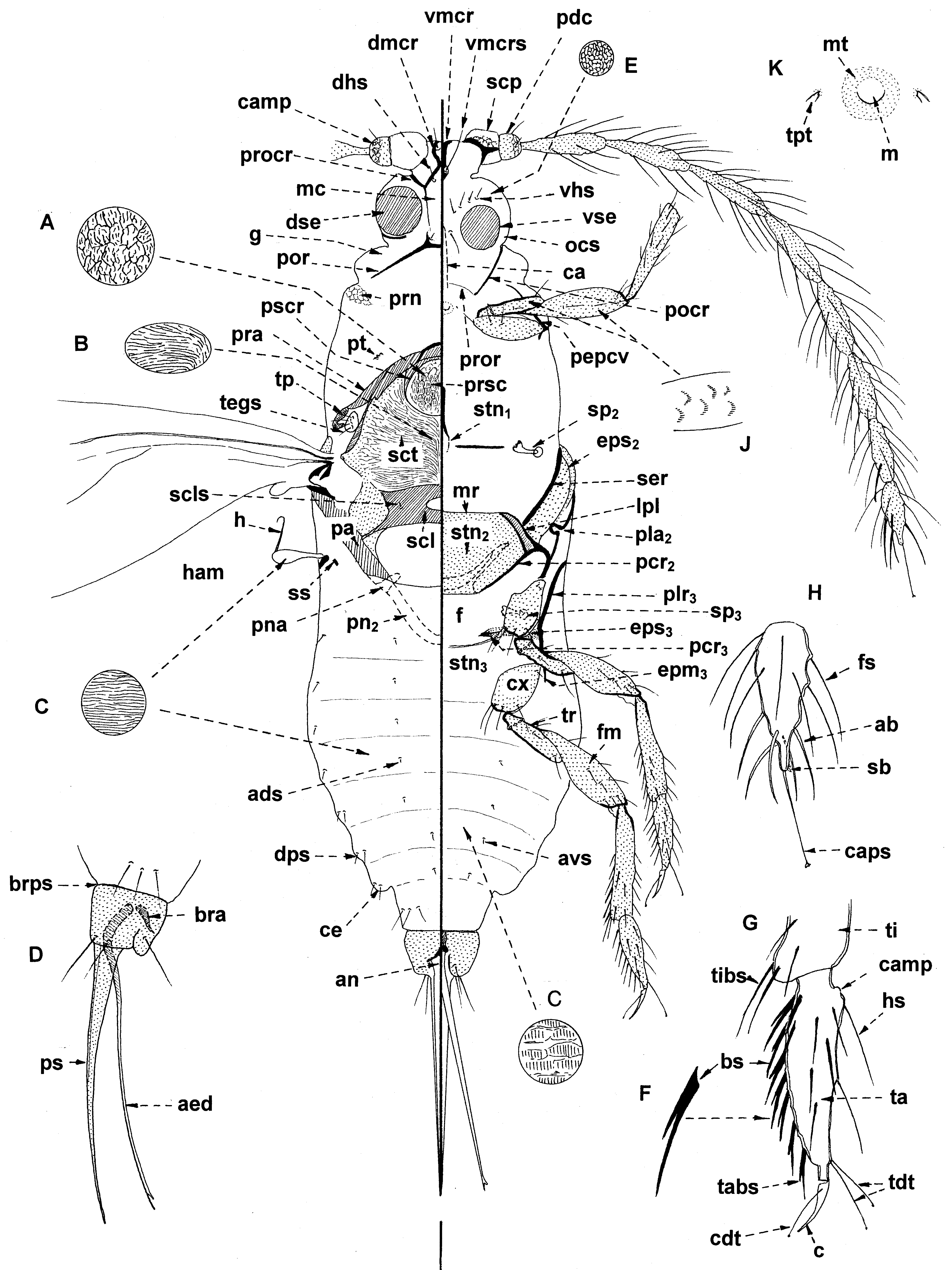
Diaspididae
Diaspididae is the largest family of scale insects with over 2650 described species in around 400 genera. As with all scale insects, the female produces a waxy protective scale beneath which it feeds on its host plant. Diaspidid scales are far more substantial than those of most other families, incorporating the exuviae from the first two nymphal instars and sometimes faecal matter and fragments of the host plant. These can be complex and extremely waterproof structures rather resembling a suit of armor. For this reason these insects are commonly referred to as armored scale insects. As it is

Psyllidae
Psyllidae, the jumping plant lice or psyllids, are a family of small plant-feeding insects that tend to be very host-specific, i.e. each plant-louse species only feeds on one plant species (monophagous) or feeds on a few closely related plants (oligophagous). Together with aphids, phylloxerans, scale insects and whiteflies, they form the group called Sternorrhyncha, which is considered to be the most "primitive" group within the true bugs (Hemiptera). They have traditionally been considered a single family, Psyllidae, but recent classifications divide the group into a total of seven families;

Adelgidae
The Adelgidae are a small family of the Hemiptera closely related to the aphids, and often included in the Aphidoidea with the Phylloxeridae or placed within the superfamily Phylloxeroidea as a sister of the Aphidoidea within the infraorder Aphidomorpha. The family is composed of species associated with pine, spruce, or other conifers, known respectively as "pine aphids" or "spruce aphids". This family includes the former family Chermesidae, or "Chermidae", the name of which was declared invalid by the ICZN in 1955. There is still considerable debate as to the number of genera within the famil

Phylloxeridae
thumb|Phylloxera perniciosa winged adult
thumb|Galls made by Phylloxera perniciosa on hickory (Carya)
thumb|Galls made by Daktulosphaira vitifoliae on leaf of [[Vitis sp.]]

Kerriidae
Kerriidae is a family of scale insects, commonly known as lac insects or lac scales, erected by Karl Lindinger in 1937.

Peloridiidae
The Peloridiidae or moss bugs are a family of true bugs, comprising eighteen genera and thirty-four species. They are small, ranging in length from 2 to 4 mm, rarely seen, peculiarly lumpy, flattened bugs found in Patagonia (Argentina and Chile), New Zealand, eastern Australia, Lord Howe Island, and New Caledonia. Peloridiids are found amongst mosses and liverworts, commonly in association with southern beech forests. They have become known as moss bugs for their habit of feeding on mosses. They mostly feed on moss rhizoids, and also on wood-destroying fungi and lichens. Except for Pelori
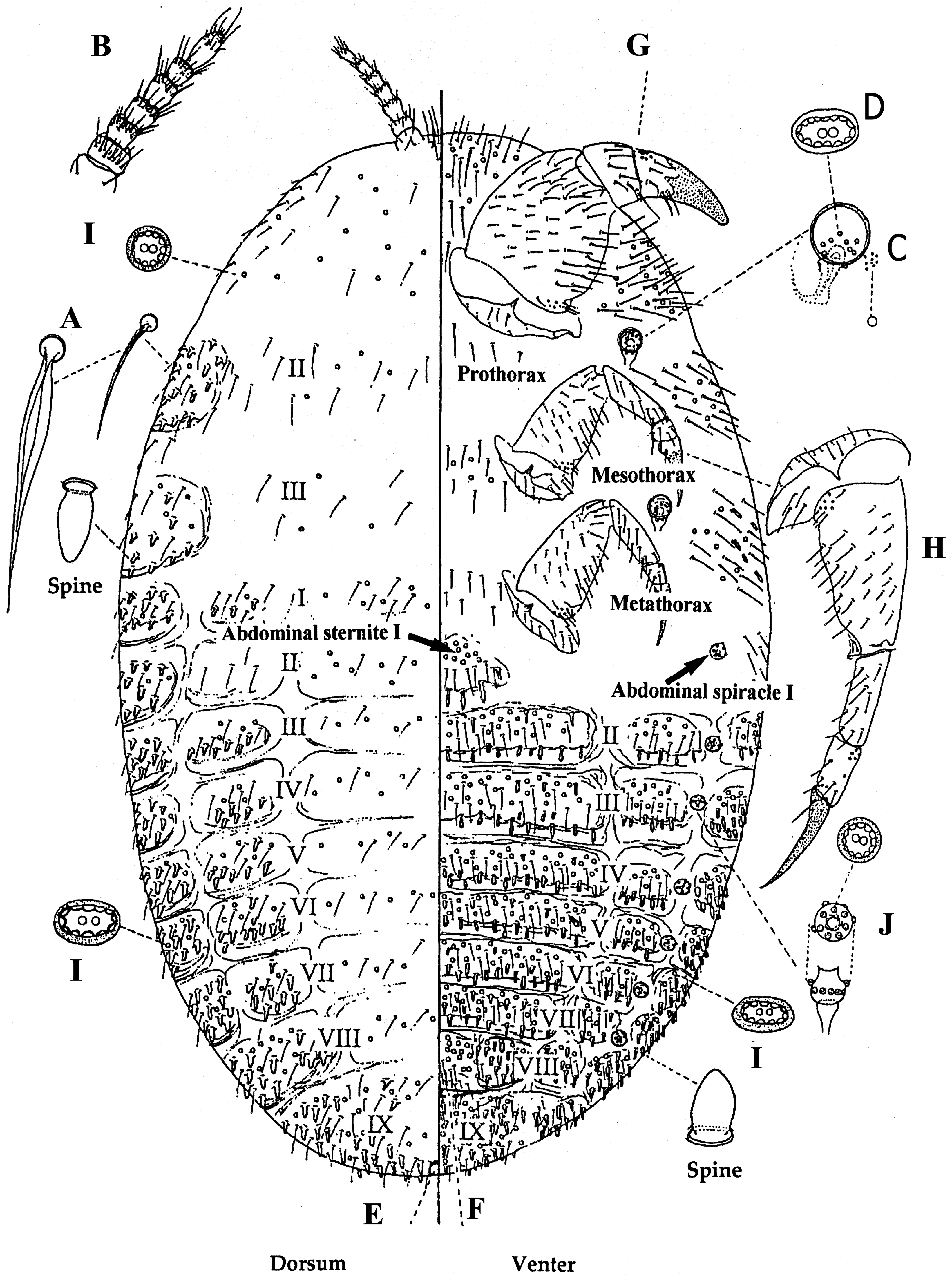
Margarodidae
The Margarodidae (illegitimately as Margodidae) or ground pearls are a family of scale insects within the superfamily Coccoidea. Members of the family include the Polish cochineal and Armenian cochineal (genus Porphyrophora) and the original ground pearl genus, Margarodes. Beginning in 1880, a number of distinct subfamilies were recognized, with the giant coccids (the Monophlebidae) being the first. Although Maskell proposed a new family, many continued to regard the monophlebids as a mere subfamily for many years, and the Margarodidae classification continued to be polyphyletic through the 20
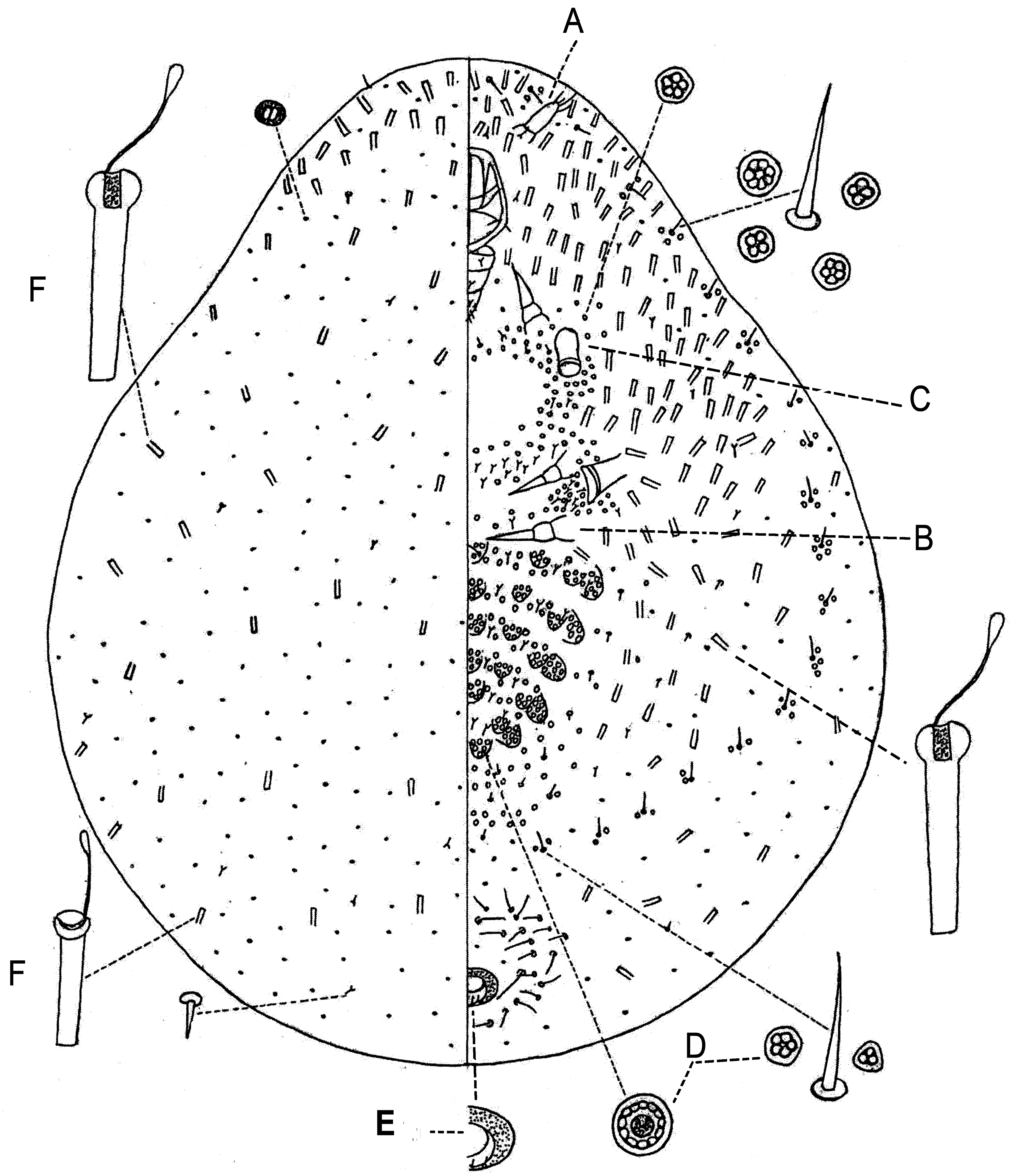
Kermesidae
The Kermesidae, or gall-like scales, are a family of scale insects belonging to the superfamily Coccoidea. The type genus, Kermes, includes the kermes scale insects, from which a red dye, also called kermes (a.k.a. crimson), is obtained. The family includes about 100 species in 10 genera found in the Nearctic, Indomalayan and Palaearctic realms.

Eriococcidae
thumb|Galls formed by Apiomorpha conica
thumb|Adult female of Callococcus pulchellus
Eriococcidae is a family of scale insects in the order Hemiptera. They are commonly known as felt scales or eriococcids. As of 2023, there are 109 genera and 681 species. Each species is usually specific to a different plant host, or closely related group of hosts.

Triozidae
thumb|Phylloplecta tripunctata nymphs on underside of leaf of Rubus
Triozidae is one of seven families, collectively referred to as plant lice, based on the type genus Trioza. They had traditionally been considered part of a single family, Psyllidae, but recent classifications divide the superfamily into a total of seven families; most of the genera remain in the Psyllidae, but Triozidae is the third-largest family in the group.

Aclerdidae
Aclerdidae are a family of Coccoidea, the scale insects. They are usually found on grasses, sucking sap from the stem, inside the leaf sheaths.

Asterolecaniidae
thumb | right | alt=Asterodiaspis variolosa | Asterodiaspis variolosa
Asterolecaniidae is a family of scale insects commonly known as pit scales or asterolecaniids. They typically cause a depression in the host plant's tissues and often cause distortion of the shoots. They are found on a range of hosts but are especially common on oaks, bamboos and a number of ornamental plants. Members of this family occur in most regions of the world but are most abundant in the northern hemisphere. There are about 25 genera and 243 recorded species.
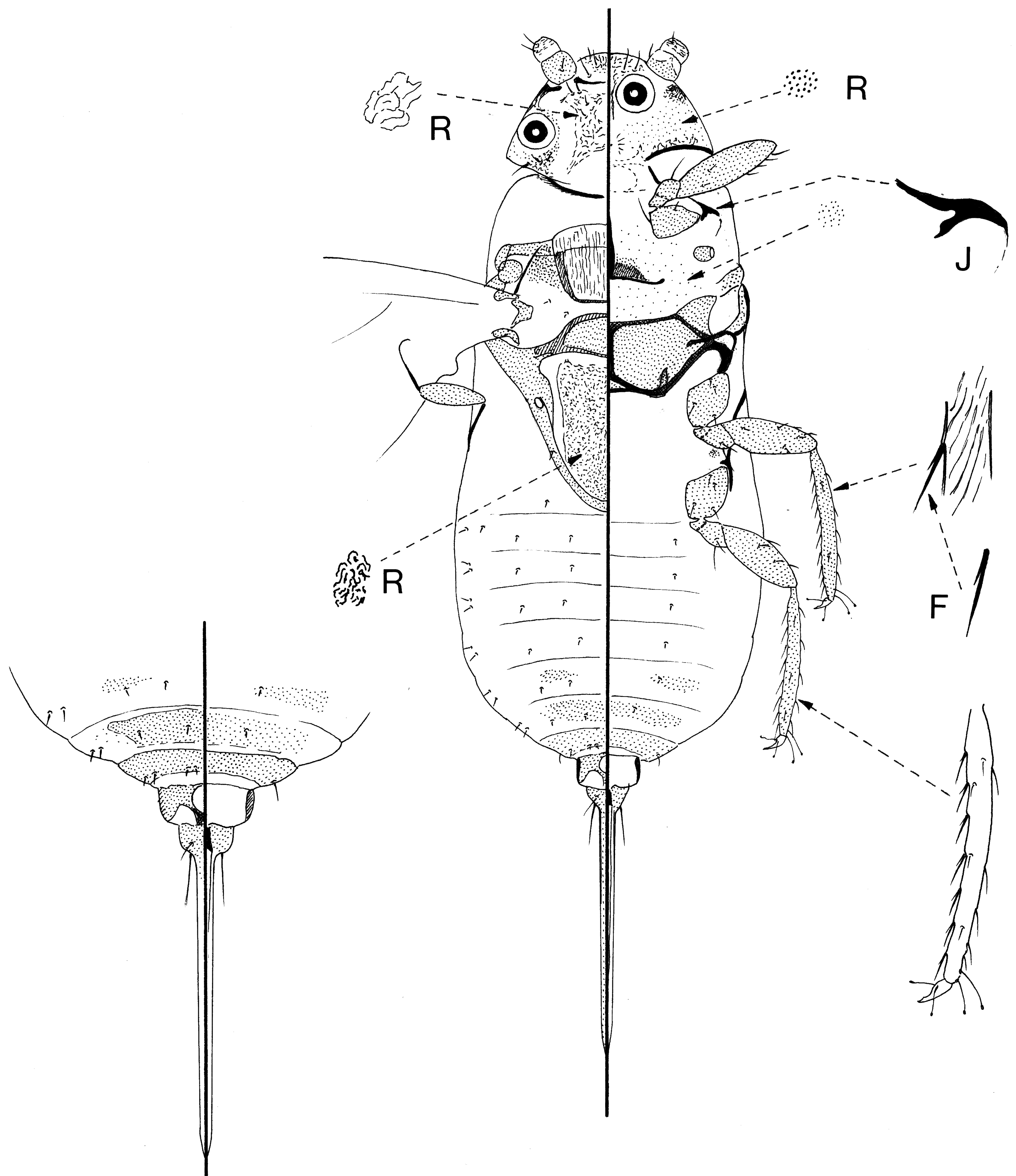
Conchaspididae
Conchaspididae is a small family of scale insects known as false armoured scales because of their resemblance to Diaspididae (but not incorporating exuviae on their body).

Cerococcidae
Cerococcidae is a family of scale insects commonly known as ornate pit scales or cerococcids. There are 83 species in 5 genera. Members of this family occur in all regions of the world.
Carayonemidae
Carayonemidae is a family of scale insects commonly known as carayonemids. They typically live among mosses and leaf litter which is unusual for scale insects. Members of this family come from Neotropical areas of South and Central America.
Beesoniidae
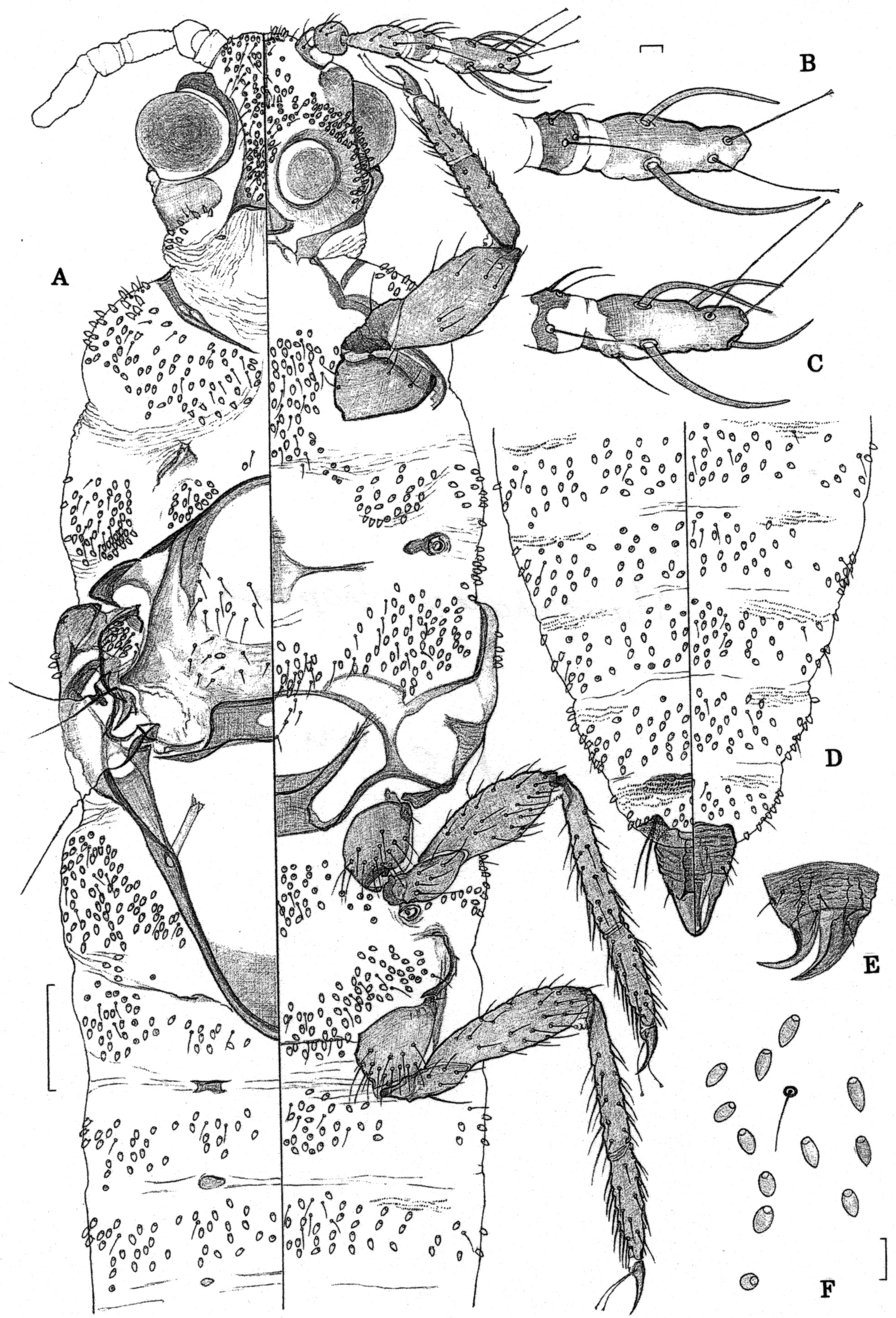
Beesoniidae is a family of scale insects commonly known as beesoniids. They typically cause galls on their plant hosts. Members of this family mostly come from southern Asia. The family name comes from the type genus Beesonia which is named after the entomologist C.F.C. Beeson who obtained the specimens from which they were described and named.
Homotomidae
Homotomidae was a family of small phloem-feeding bugs in the superfamily of jumping plantlice, but recently (2021) subsumed to the subfamily Homotominae in the family Carsidaridae.
Calophyidae
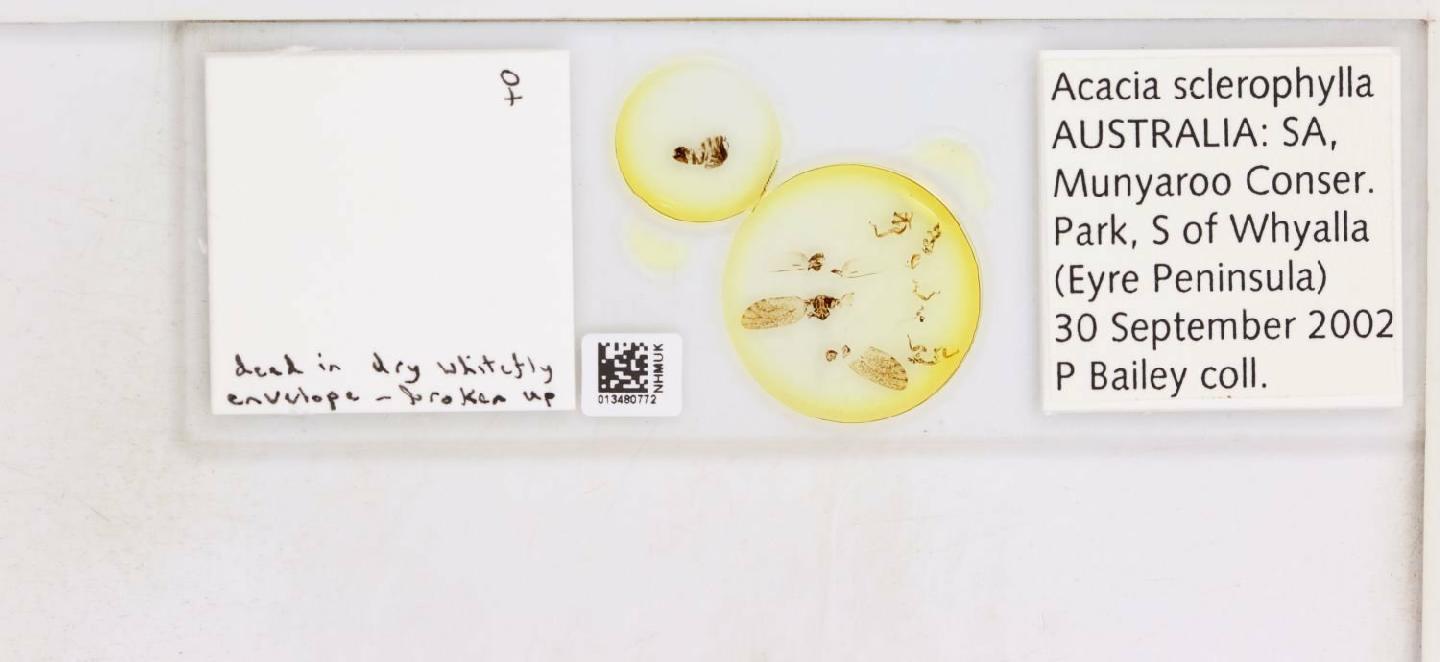
Calophyidae is a bug family in the superfamily Psylloidea.

Ortheziidae
Ortheziidae is a family of scale insects commonly known as the ensign scales or ortheziids. They occur in most parts of the world but the majority of the species are found in the Neotropical and Nearctic regions while there are not many species in Australasia and the Far East. There are twenty valid genera and 198 species.
Carsidaridae
Carsidaridae is a bug family in the superfamily Psylloidea, with a world-wide (more southern hemisphere) distribution; the type genus Carsidara is from eastern Asia. Species of Allocarsidara are considered to be durian pests.

Lecanodiaspididae
Lecanodiaspididae is a family of scale insects commonly known as false pit scales or lecanodiaspidids. Members of this family come from all parts of the world but are most numerous in the Far East.

Aphalaridae
Aphalaridae is a family of insects in the superfamily Psylloidea, commonly known as jumping plant lice or psyllids with a worldwide distribution. It was first described in 1879 by Austrian Entomologist, Franz Löw along with the tribe Aphalarini. Like other psyllids, aphalarids are small, sap-sucking insects, and they are often highly host-specific.

Myerslopiidae
Myerslopiidae is a family of tree-hoppers which consist of about 20 species in three genera with a distribution limited to New Zealand and Chile. Adult hoppers have a strongly sclerotized body with elytra-like tegmina meeting along the median. The hindwing is undeveloped. Based on observations on Mapuchea chilensis, they are thought to feed on phloem sap. They were formerly mistakenly placed as a tribe within the Ulopinae (Cicadellidae) by Evans and then raised to subfamily rank before being moved to a different suborder.
== References ==
Velocipedidae
Velocipedidae is a family of bugs with three genera and about 30 species in the Indomalayan and Australasian realms. Their behaviour and biology are largely unknown but are known from decaying and fallen wood or on the forest floor close to water. They are active runners and fliers, thought to be predators. Their bodies are often covered in phoretic mites. Many specimens have been taken at lights. Some fossil species have been assigned to the family.
Micrococcidae
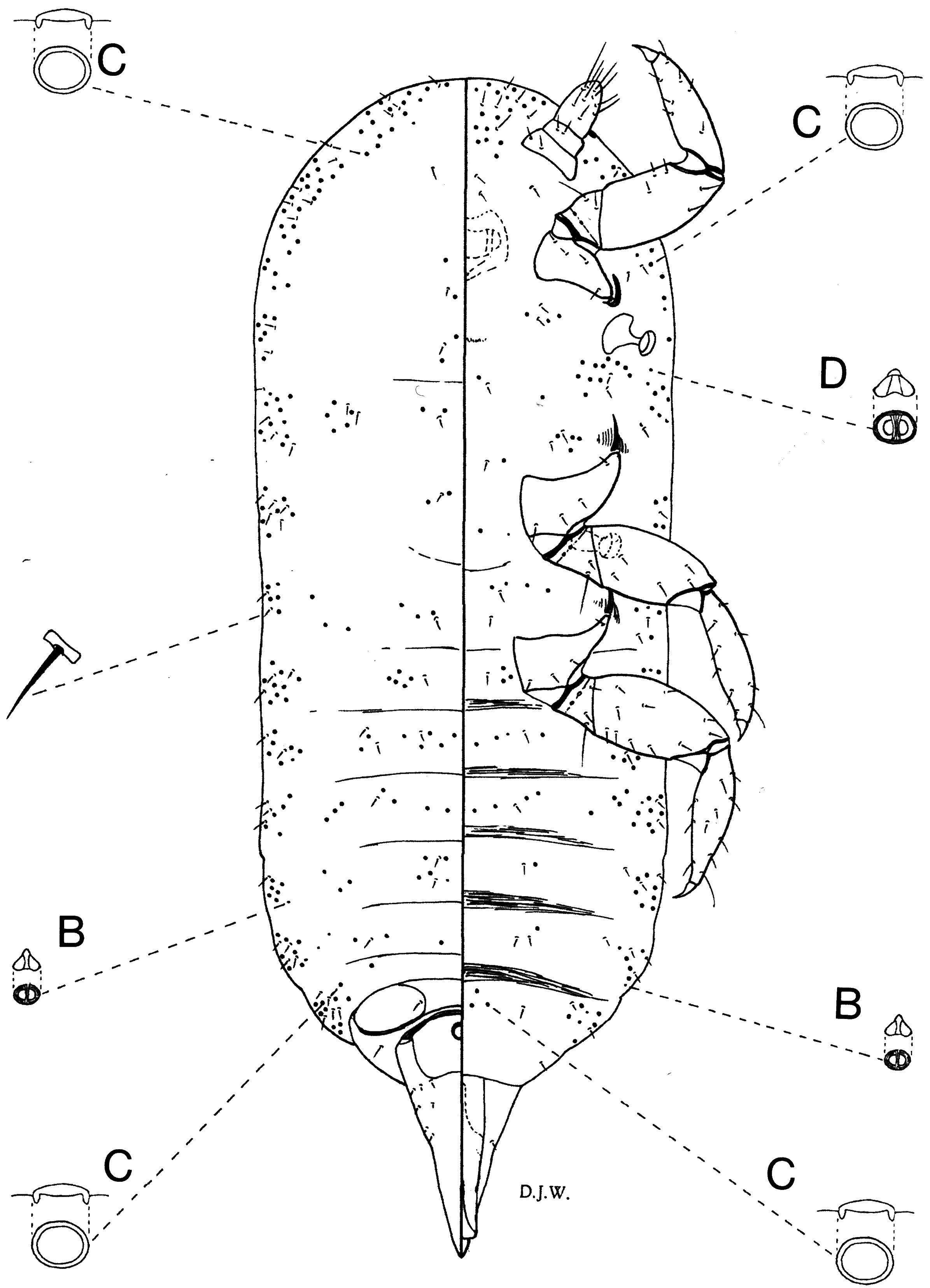
Micrococcidae is a family of scale insects commonly known as the Mediterranean scales. There are two genera and eight species. Members of this family are found in Cyprus, Italy and other Mediterranean countries including Egypt, France, Greece, Israel, Lebanon, Libya, Syria and Turkey.
Halimococcidae
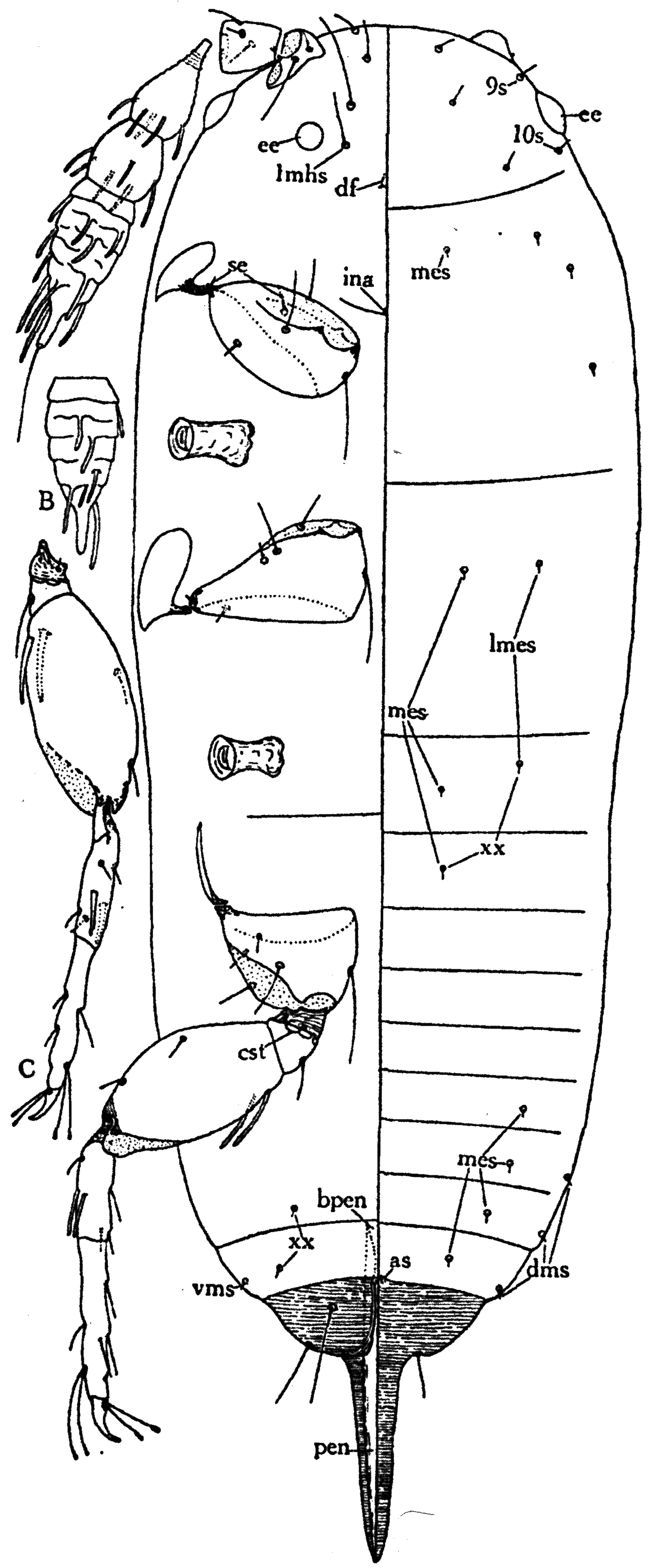
Halimococcidae is a family of scale insects in the order Hemiptera. Members of the family are commonly known as pupillarial palm scales or halimococcids. Most species are found on the leaves of palm trees where they suck sap, but some species occur on Pandanus. The family was named by Brown and McKenzie in 1962 and includes five known genera and twenty one species.
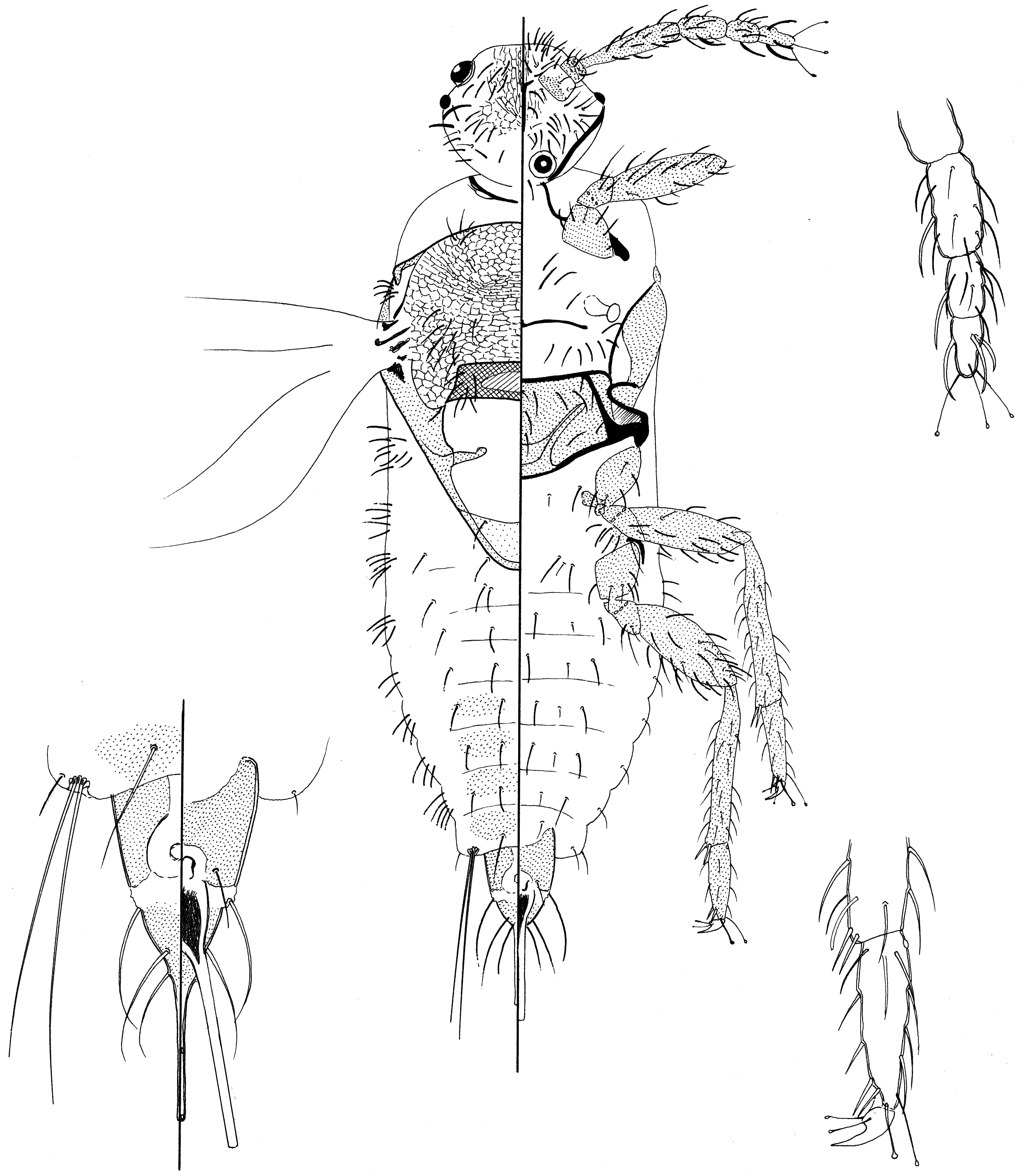
Stictococcidae
Stictococcidae is a family of scale insects commonly known as stictococcids. There are three genera containing about seventeen species and members of this family are found only in Afrotropical regions.
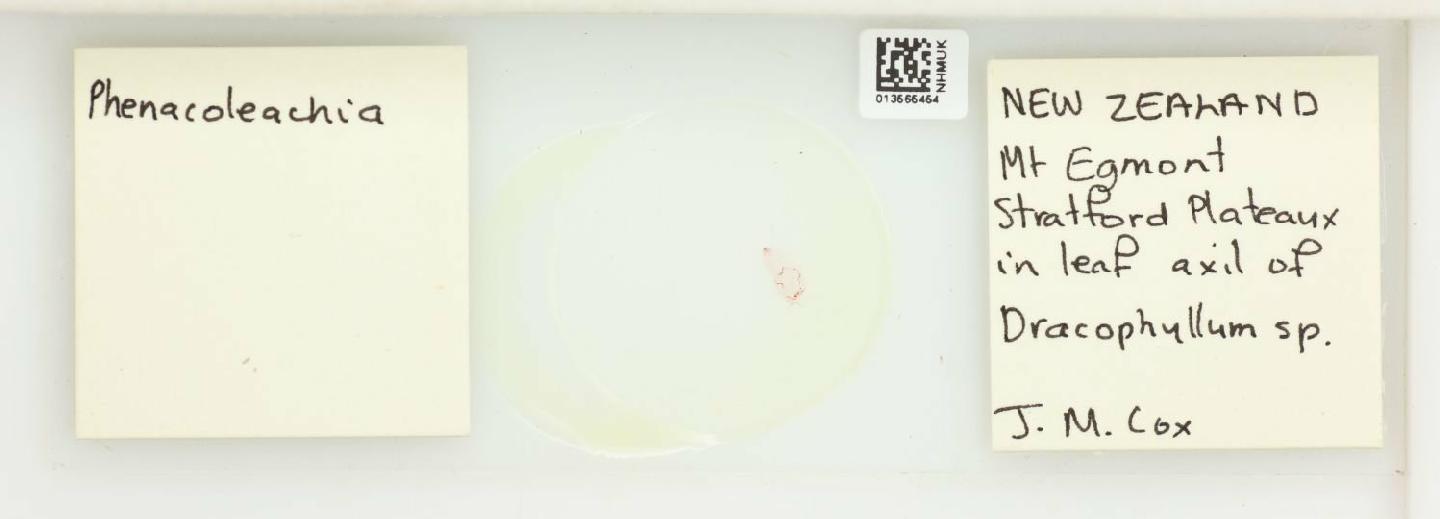
Phenacoleachia
Phenacoleachiidae is a family of scale insects commonly known as the phenacoleachiids. They are found only in the South Island of New Zealand, and on certain offshore islands. There are two species in a single genus.

Micronectidae
Micronectidae is a family of water boatmen often referred to as pygmy water boatmen. They were originally classified as a subfamily under Corixidae but were raised to family level by Nieser (2002).
Coelostomidiidae
Coelostomidiidae is a family of scales and mealybugs in the order Hemiptera. There are about 5 genera and 11 described species in Coelostomidiidae.
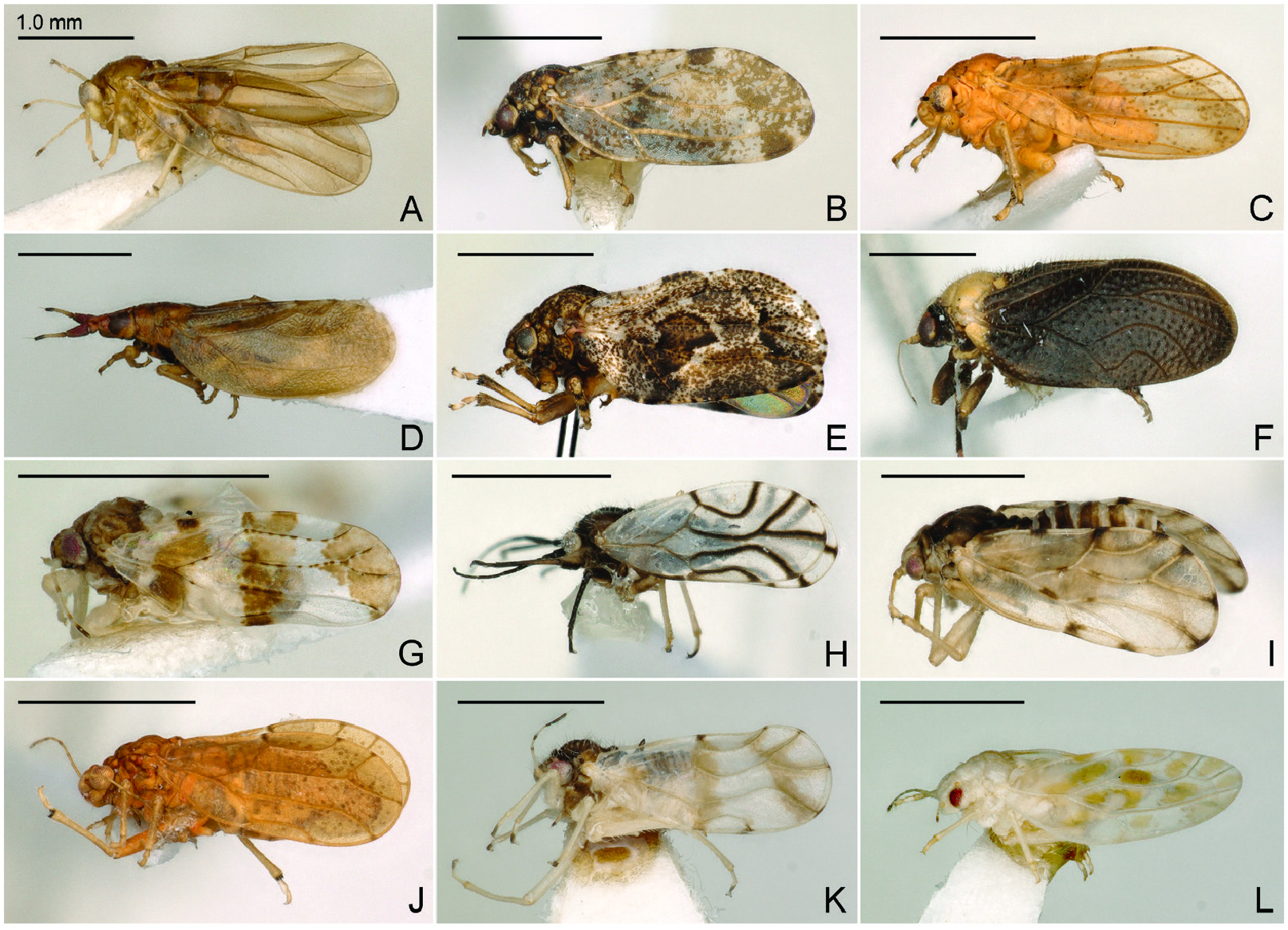
Liviidae
Liviidae is a family of plant lice (order Hemiptera), with about 19 genera.
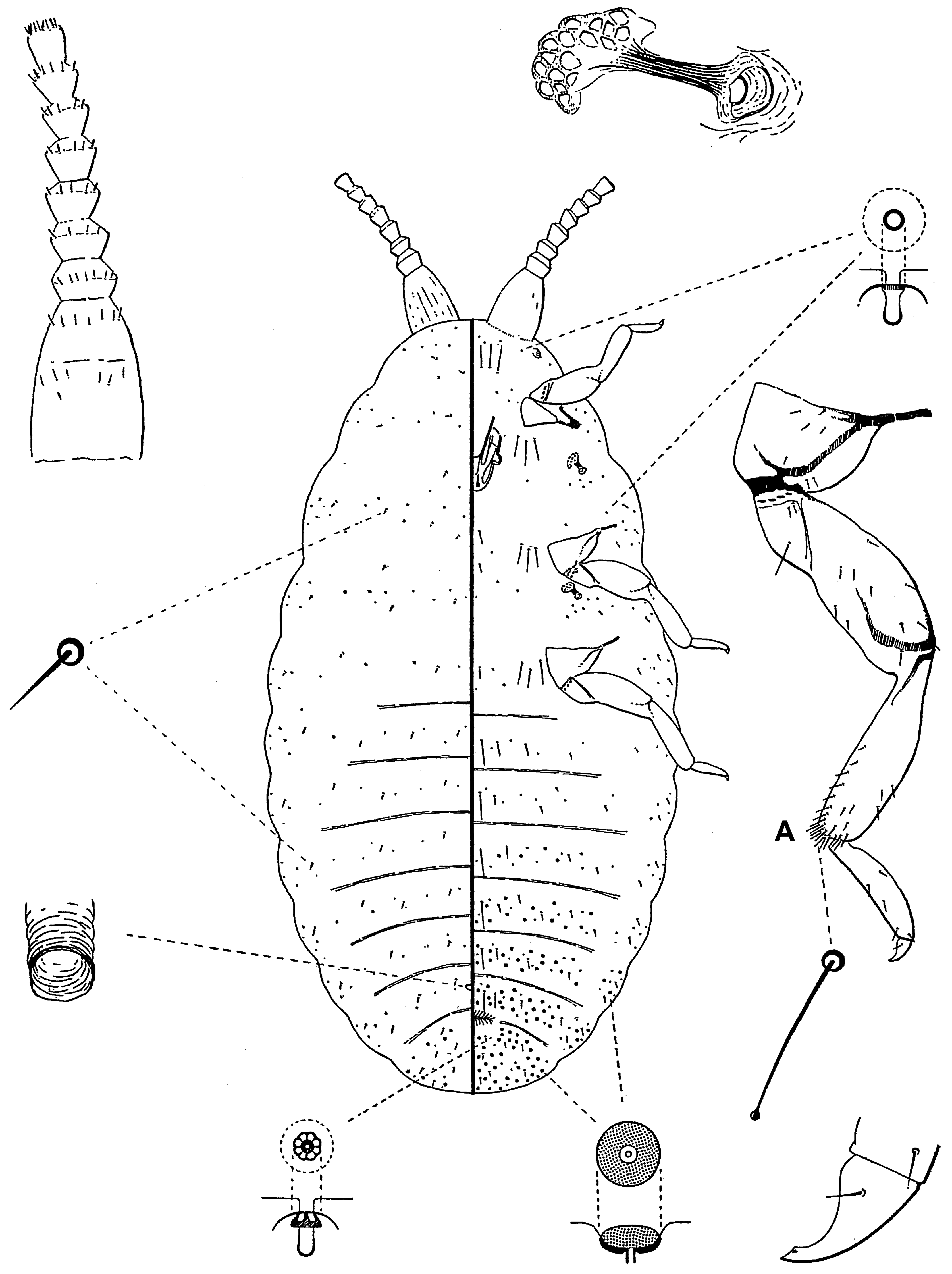
Kuwaniidae
Kuwaniidae is a family of scales and mealybugs in the order Hemiptera. There are at least 4 genera and about 14 described species in Kuwaniidae.
Melizoderidae
Melizoderidae is a family of treehoppers restricted to South America with only two genera, Melizoderes and Llanquihuea. The nymphs of melizoderids have the tergum of the 9th segment concealing the anal opening from above. The frontoclypeus (forehead) is convex and extended forward and below. The pronotum extends forward and above but not backward over the scutellum which is keeled posteriorly.

Monophlebidae
Monophlebidae is a family of scale insects commonly known as the giant scales or monophlebids. They occur in most parts of the world but more genera are found in the tropics than elsewhere.
Paraphrynoveliidae
REDIRECT Paraphrynovelia