Category
page 1Hexacorallia genera

Actinia
Actinia is a genus of sea anemones in the family Actiniidae. Actinia display a rare form of heteromorphosis in which a cut inflicted on a specimen can develop into a second mouth.
-APiazza.JPG)
Stichodactyla
240px|thumb|Amphiprion polymnus in S. Haddoni
240px|thumb|Amphiprion sandaracinos in [[Stichodactyla mertensii]]
thumb|240px|Stichodactyla tapetum
thumb|240px|Stichodactyla gigantea
Aiptasia
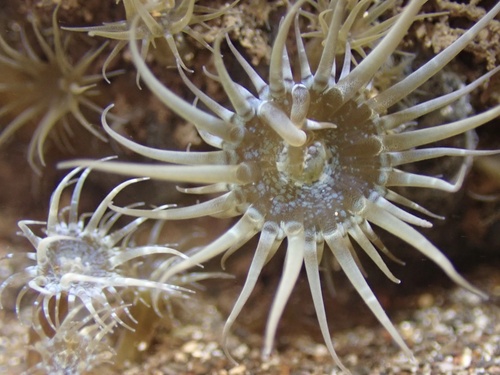
Aiptasia is a genus of a symbiotic cnidarian belonging to the subphylum Anthozoa (sea anemones, corals). Aiptasia is a widely distributed genus of temperate and tropical sea anemones of benthic lifestyle typically found living on mangrove roots and hard substrates. These anemones, as well as many other cnidarian species, often contain symbiotic dinoflagellate unicellular algae of the genus Symbiodinium living inside nutritive cells. The symbionts provide food mainly in the form of lipids and sugars produced from photosynthesis to the host while the hosts provides inorganic nutrients and a cons

Zoanthus
Zoanthus is a genus of anthozoans in the family Zoanthidae. It is the type genus for its family and order.
Anemonia
Anemonia is a genus of sea anemones belonging to the family Actiniidae.

Antipathes
Antipathes is a genus of coral in the order Antipatharia, composed of black coral (so named for its black skeleton). Distinct features vary greatly within this genus: it contains symmetrically aligned as well as irregularly shaped corals, a range of different colors, and colonies that can be either sparsely branched or closely packed. polyps for these corals have six tentacles that are each lined with stinging cells. Unlike their reef-building cousins, these coral lack photosynthesizing algae and are not restricted to the lighter surface regions. They prefer to live in deeper waters near curre

Anthopleura
Anthopleura is a genus of sea anemones, of the family Actiniidae.

Parazoanthus
Parazoanthus is a genus of anemone-like anthozoans in the order Zoantharia.

Discosoma
thumb|right|Discosoma nummiforme
Discosoma is a genus of cnidarians in the order Corallimorpharia. Common names for the genus include mushroom anemone, disc anemone and elephant ear mushroom.
Condylactis
Condylactis is a genus of cnidarians belonging to the family Actiniidae.

Urticina
Urticina is a genus of relatively large and often colorful sea anemones in the family Actiniidae from the North Pacific, North Atlantic and Arctic Oceans.
Epizoanthus
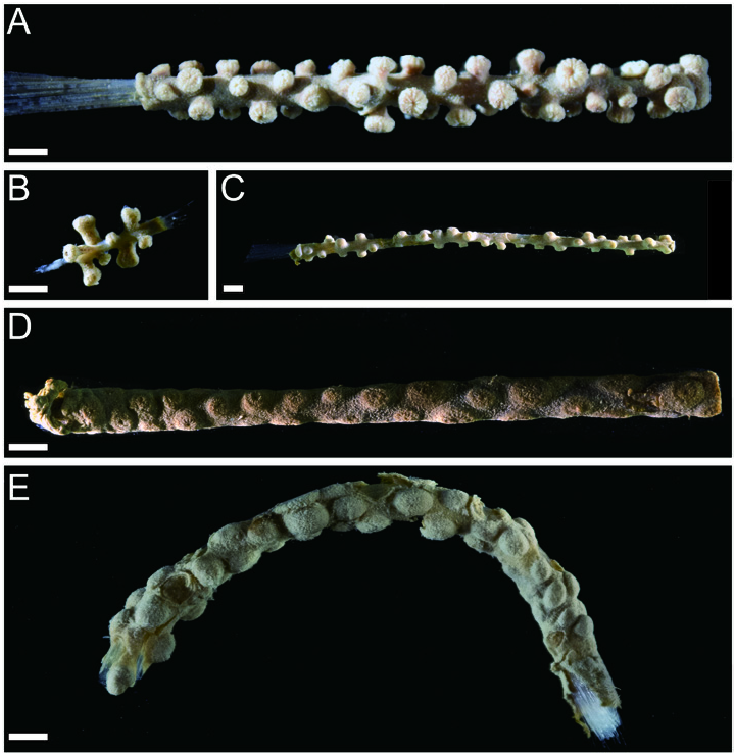
Epizoanthus is a genus of corals belonging to the family Epizoanthidae.

Cribrinopsis
Cribrinopsis is a genus of cnidarians belonging to the family Actiniidae.
Cirrhipathes
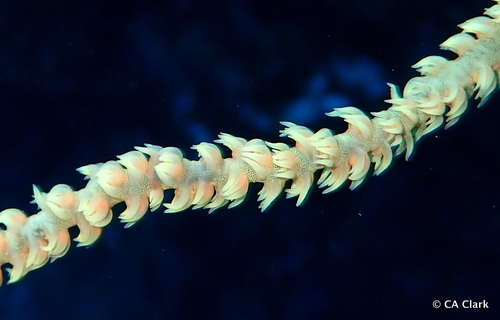
Cirrhipathes is a genus of black coral from the family Antipathidae. Coral species in this genus are commonly known as whip or wire corals because they often exhibit a twisted or coiled morphology. In addition to their colorful appearance, with colors ranging from yellow to red passing through blue and green, these species possess a dark skeleton that is characteristic to every black coral.
Sagartia
Sagartia is a genus of sea anemones in the family Sagartiidae. The genus was first described by Philip Henry Gosse in 1855 and the image is his painting of several species found in British waters included in his book, A history of the British sea-anemones and corals.
Palythoa
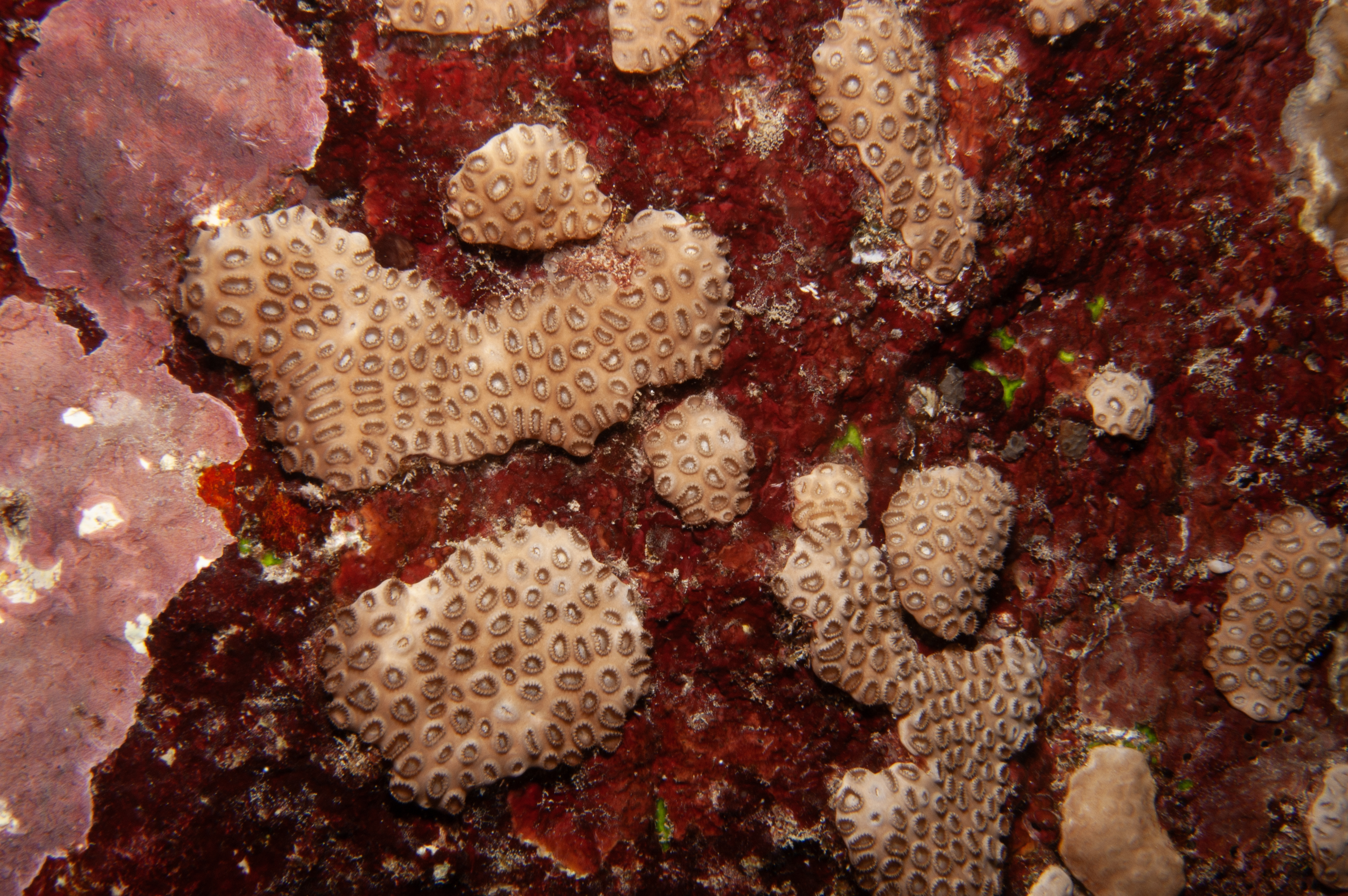
Palythoa is a genus of anthozoans in the order Zoantharia.
Actinostola
Actinostola is a genus of sea anemones in the order Actiniaria. All members of this genus are deep-sea species, with some occurring at hydrothermal vents.
Corynactis
Corynactis is a genus of colonial anthozoans similar in appearance to sea anemones and in body format to scleractinian stony corals. These animals are cnidarians in the family Corallimorphidae. A species thought to belong to this genus feed on the crown-of-thorns seastar Acanthaster planci and may help control the crown-of-thorns population, but these are now known as Paracorynactis hoplites.
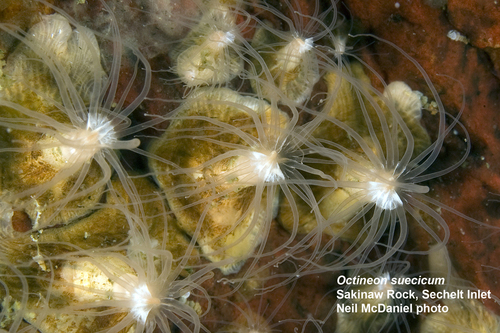
Octineon
Octineon is the sole genus of sea anemones in the monotypic family Octineonidae.
Leiopathes
Leiopathes is a genus of hexacorallians belonging to the anthozoan clade Antipatharia. It is the only genus in the Leiopathidae family. The genus name means "smooth disease".

Metridium
Members of the genus Metridium, also known as plumose anemones, are sea anemones found mostly in the cooler waters of the northern Pacific and Atlantic oceans. They are characterized by their numerous threadlike tentacles extending from atop a smooth cylindrical column, and can vary from a few centimeters in height up to one meter or more. In larger specimens, the oral disk becomes densely curved and frilly.

Adamsia
Adamsia is a genus of sea anemones in the family Hormathiidae. Species in this genus are mutually symbiotic with hermit crabs. The anemone gets a place to live and discarded scraps of the crab's food in exchange for its help in the crab's defence. As these anemones grow, they secrete a horny membrane, known as a carcinoecium, which overlies the crab's original snail shell and expands the living space of the crab. This means the anemone does not have to change substrate and the crab does not have to seek a larger shell as they both grow.

Edwardsia
Edwardsia is a genus of sea anemones, the type of the family Edwardsiidae. They have eight mesenteries and live in tubes in the sand. The name, in Neo-Latin, commemorates the French zoologist Henri Milne-Edwards.
Halcurias
Halcurias is a genus of cnidarians belonging to the family Halcuriidae.
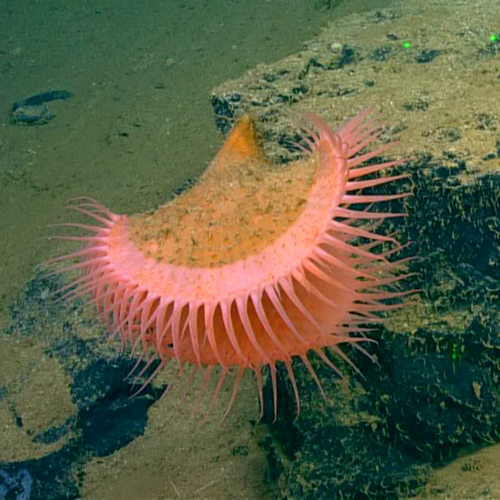
Actinoscyphia
Actinoscyphia is a genus of sea anemones of the family Actinoscyphiidae.
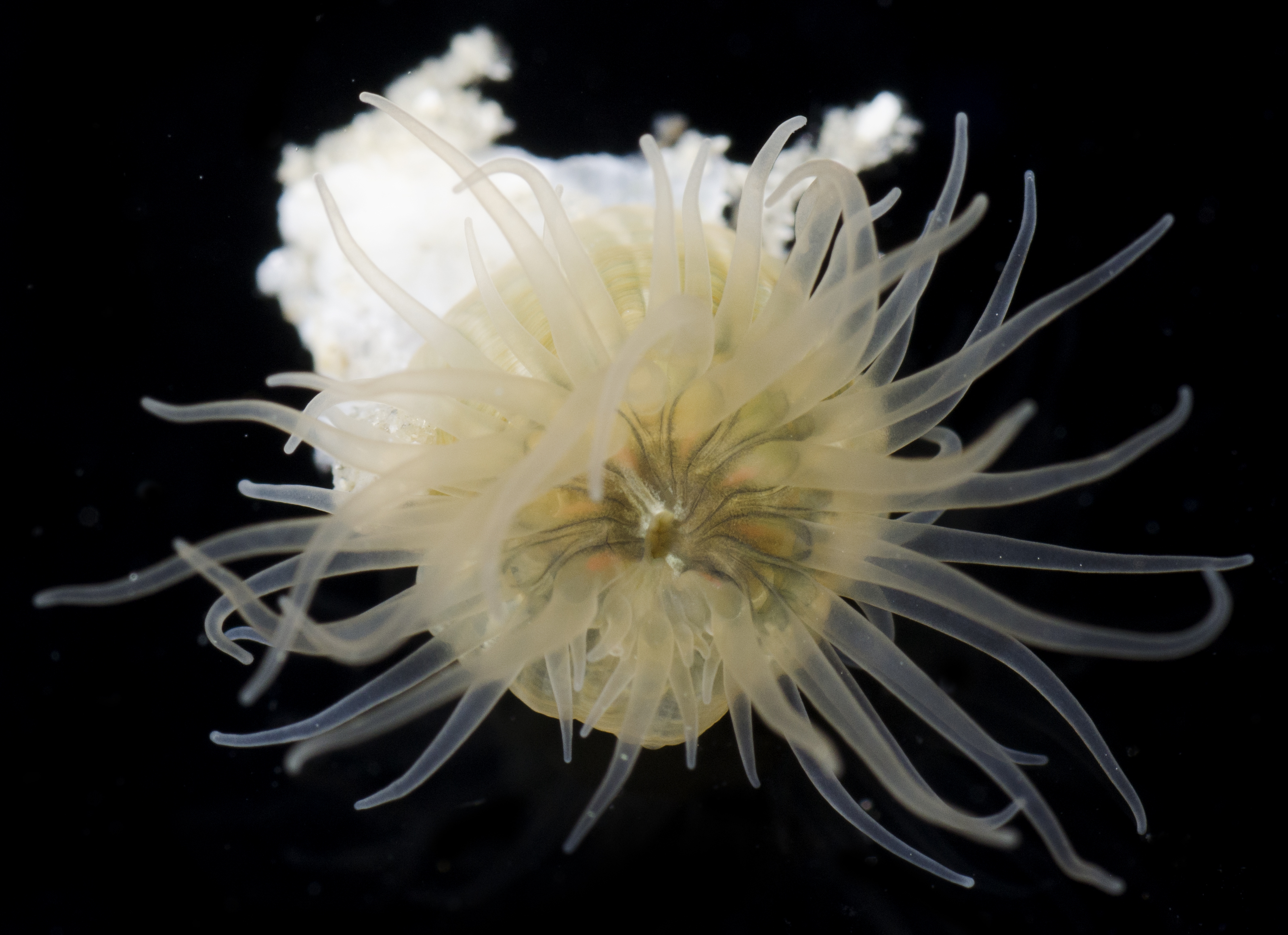
Diadumene
Diadumene is a genus of sea anemones. It is the only genus in the monotypic family
Diadumenidae.
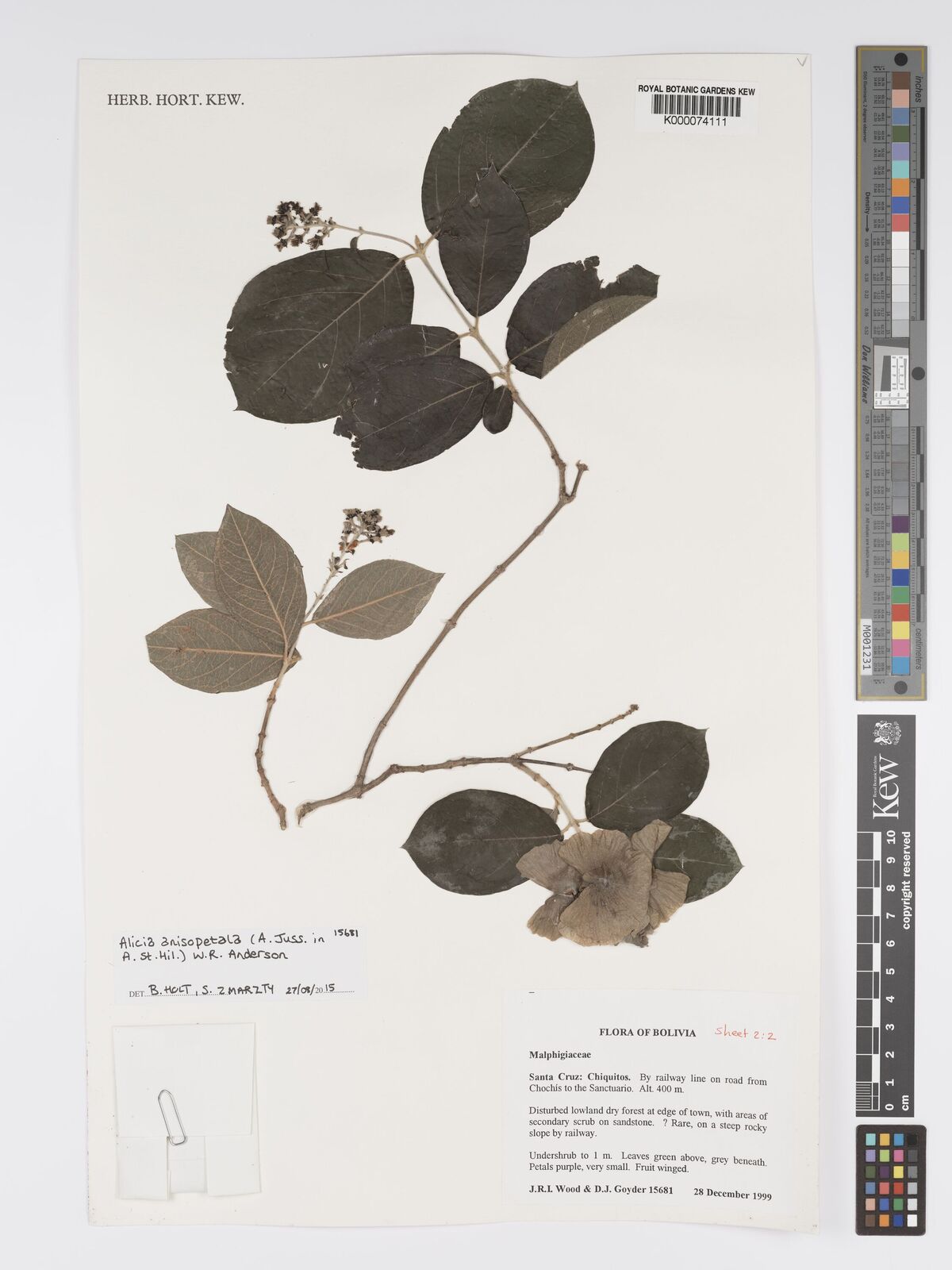
Alicia
sea anemone genus

Nemanthus
Nemanthus is a genus of sea anemones. It is the only genus in the monotypic family Nemanthidae.
== Species ==
The following species are recognized:
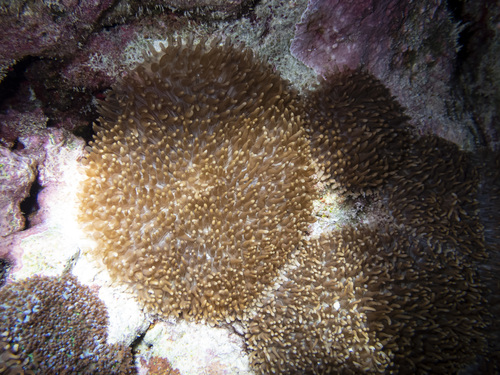
Rhodactis
Rhodactis is the genus of Corallimorpharia which is characterized by large individual polyps that are often reminiscent of a mushroom. Rhodactis are related to stony corals but do not produce a stony skeleton.

Aphanipathes
Aphanipathes is a diverse genus of black corals in the family Aphanipathidae, typified by large polypar spines. However, there are some disagreement in the correct taxonomic classification of this genus. The Global Biodiversity Information Facility (GBIF) classifies Aphanipathes as being a genus of the family Aphanipathidae while the Integrated Taxonomic Information System (ITIS) classifies it as a genus of the family Antipathidae.
Entacmaea
Entacmaea is a genus of sea anemone in the family Actiniidae.

Nematostella
Nematostella is a genus of sea anemones in the family Edwardsiidae. Of the three species in the genus, the best known is the starlet sea anemone (N. vectensis), which has been extensively studied as a model organism in fields such as genetics, evolution, and ecology. The defining morphological apomorphy of Nematostella is the presence of nematosomes. Nematostella are able to reproduce asexually and regenerate from small fragments due to their simple body structure, pluripotent cells, specific genetic mechanisms, and evolutionary adaptations.
Heterodactyla
Heterodactyla is a genus of sea anemones of the family Thalassianthidae. The genus was first described in 1834 by Wilhelm Hemprich and Christian Gottfried Ehrenberg.
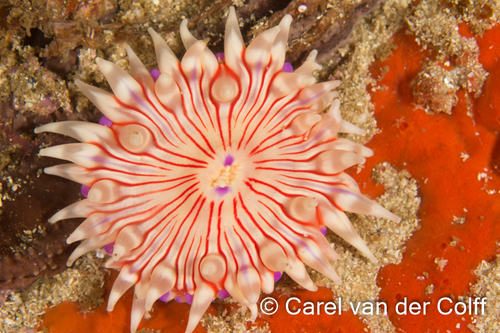
Anthostella
Anthostella is a genus of sea anemones in the family Actiniidae. It has two described species.

Antipathella
Antipathella is a genus of cnidarians belonging to the family Myriopathidae.
Ricordea
Ricordea is genus of corals. It is the only genus in the monotypic family Ricordeidae.

Isaurus
Isaurus is a genus of the cnidarian phylum within the family of Zoanthidae.
Ophiodiscus
Ophiodiscus is a genus of cnidarians belonging to the family Actinostolidae.
Bunodosoma
Bunodosoma is a genus of sea anemones in the family Actiniidae.
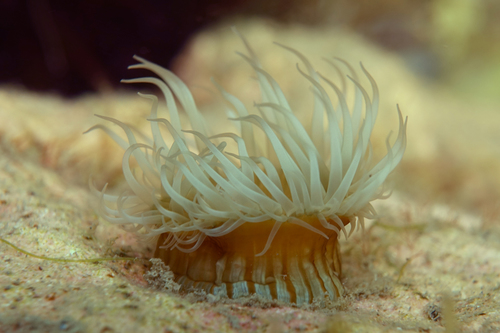
Anthothoe
Anthothoe is a genus of sea anemones in the family Sagartiidae.
Mesacmaea
Mesacmaea is a genus of sea anemone in the family Haloclavidae. Members of this genus typically burrow into soft substrates. The only part of the animal that is normally visible is the oral disc and tentacles which lie flat on the sand in a star shape.
Isozoanthus
Isozoanthus is a genus of anemone-like anthozoans in the order Zoantharia.
Haloclava
Haloclava is a genus of sea anemones in the family Haloclavidae. Members of this genus typically burrow into soft sediment.
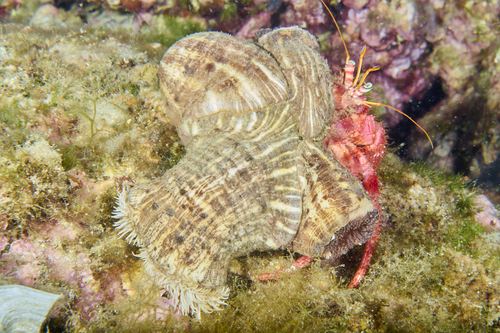
Calliactis
thumb|Calliactis parasitica on the hermit crab [[Dardanus calidus]]
Calliactis is a genus of sea anemones. Species in this genus are mutually symbiotic with hermit crabs. The anemone gets a place to live and discarded scraps of the crab's food in exchange for its help in defending the crab.
Amphianthus
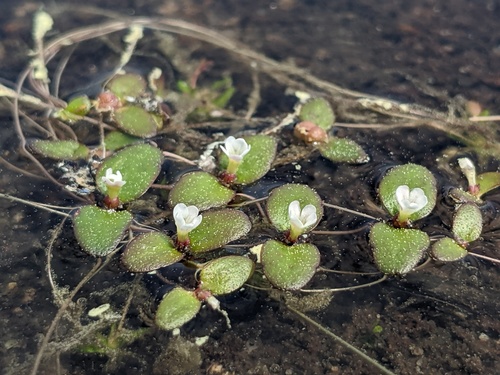
Amphianthus is a genus of sea anemones. It is the only genus in the monotypic family Amphianthidae.
Acanthopathes
Acanothopathes is a genus of coral in the family Aphanipathidae that contains five species. Species in this genus are found in the Caribbean Sea, Indian Ocean, and Pacific Ocean in temperatures ranging from about 10 to 30 degrees celsius at depths from 50 to 400 meters.

Aulactinia
Aulactinia is a genus of sea anemones in the family Actiniidae.
Abyssoanthus
Abyssoanthus is a genus of cnidarians, the only genus in the family Abyssoanthidae.
Acontiophorum
Acontiophorum is a genus of sea anemones of the family Acontiophoridae.

Liponema
Liponema is a genus of sea anemones, in the family Liponematidae.
Stylobates
genus of cnidarians
Thalassianthus
Thalassianthus is a genus of sea anemones of the family Thalassianthidae.
Actinoporus
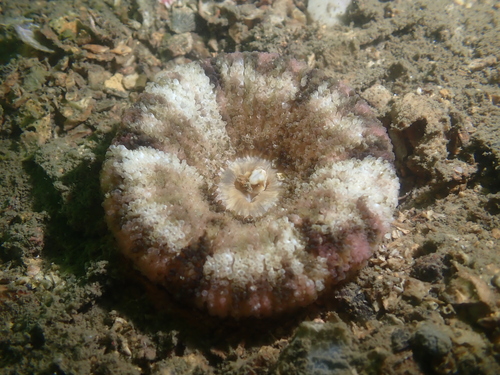
Actinoporus is a genus of sea anemones of family Aurelianidae. It comprises the following species:
Actinoporus elegans
Actinoporus elongatus
Gonactinia
Gonactinia is a monotypic genus of sea anemones, and G. prolifera is the only species in the genus. It is sometimes called the storey anemone and is found on either side of the northern Atlantic Ocean.
Neozoanthus
Neozoanthus is a genus of corals belonging to the monotypic family Neozoanthidae.
Cereus
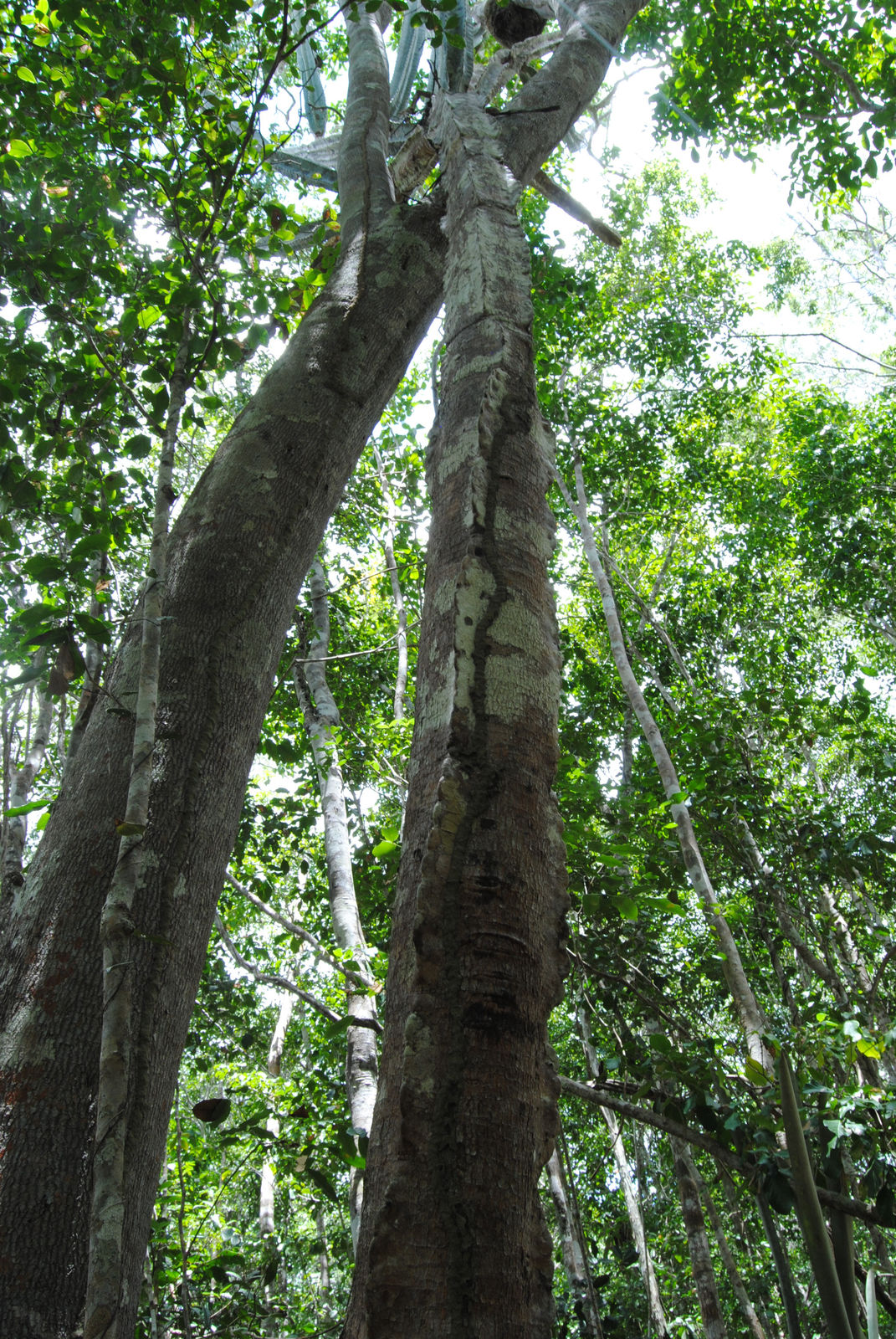
genus of cnidarians

Sagartiogeton
Sagartiogeton is a genus of sea anemones in the family Sagartiidae.
Bolocera
Bolocera is a genus of sea anemone in the family Actiniidae.
Actinodendron
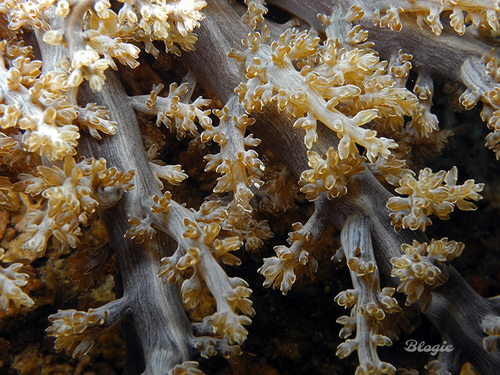
Actinodendron is a genus of cnidarians belonging to the family Actinodendridae. Species in this genus—often called “tree anemones”—feature striking tentacles that branch fractally like miniature trees, a structure that enhances their predatory reach. These fascinating anemones inhabit sandy or rubble substrates across the Indo-Pacific, and some species, notably Actinodendron arboreum (the “hell’s fire anemone”), are highly venomous—their stings can inflict severe skin lesions.
Allantactis parasitica
Allantactis is a monotypic genus of sea anemones, and Allantactis parasitica is the only species in the genus. This sea anemone lives at bathyal depths in the North Atlantic Ocean and has a symbiotic relationship with a gastropod mollusc.