Category
page 1Hindu communities

Rajput
Rājpūt (, from Sanskrit rājaputra meaning "son of a king"), also called Thākur (), is a large multi-component cluster of castes, kin bodies, and local groups, sharing social status and ideology of genealogical descent originating from the northern part of the Indian subcontinent. However, the derivation from rājaputra is misleading because although many Rajputs belonged to some ruling clans, the majority of the Rajput community were common agricultural laborers whose main source of income was farming. The term Rajput covers various patrilineal clans historically associated with warriorhood: se

Jats

Boudhanath
Buddhist stupa in Kathmandu, Nepal
Balinese
indigenous ethnic group native to Bali Islands
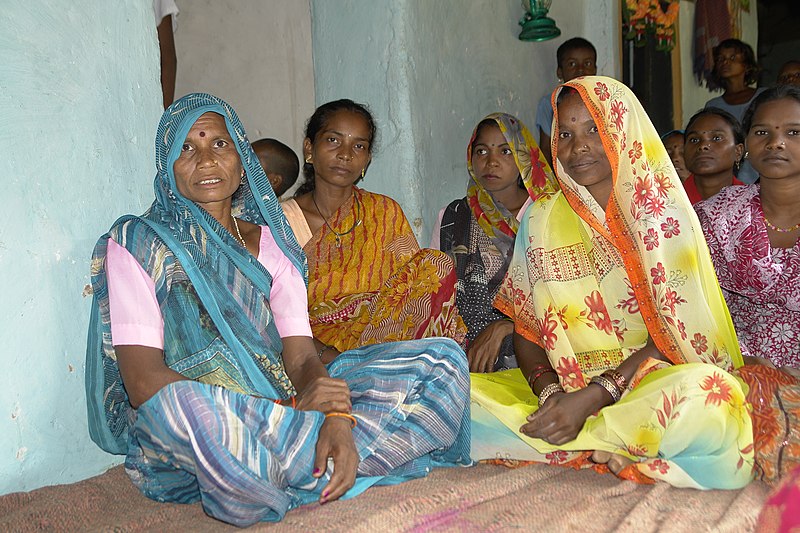
Gondi people
indigenous (Scheduled) tribe from India

Bhil
Bhil or Bheel are various indigenous groups inhabiting western India, including parts of Rajasthan and Madhya Pradesh and in Sindh, Pakistan. Additionally they are also found in distant places such as Bengal and Tripura. Though they now speak the Bhili language, an Indo-Aryan language, the aboriginal language that the Bhil originally spoke is lost. Bhils are divided into a number of endogamous territorial divisions, which in turn have a number of clans and lineages.
Newar people
Indigenous native ethnic group of Nepal
Baduy
Indonesian ethnic group

Nambudiri
thumb|A traditional Nambudiri Mana
thumb|1883 sketch depicting a Nambūdiri man with the traditional sikha|pūrvaśikhā, or forelock
Tipra People
ethnic group of North-East India and Bangladesh
Bahun
Bahun (), also known as Hill Brahmins, are a Brahmin varna among the Khas of Nepal. They are a sub-caste of the Kanyakubja Brahmin while their origins are from Kannauj and the Himalayan belt of South Asia. According to the 2011 Nepal census, Bahun is the second most populous group after Chhetri.
Punjabi Hindus
Indian ethno-linguistic group
Hussaini Brahmin
mohyal Brahmin community of the Punjab-region
Charan
Charan (IAST: Cāraṇ; Sanskrit: चारण; Gujarati: ચારણ; Sindhi: چارڻ; IPA: cɑːrəɳə) is a caste natively residing in the Rajasthan and Gujarat states of India, as well as the Sindh and Balochistan provinces of Pakistan. Historically, Charans have been engaged in diverse occupations like bards, poets, historians, pastoralists, agriculturalists and also administrators, jagirdars and warriors and some even as traders.

Bengali Hindus
ethno-linguistic and religious population from India and Bangladesh

Shetty
Shetty () is a surname originating from coastal Karnataka state of India. It is a found among Hindu and Jain Bunts of the coastal Karnataka.
Bunt (RAJPUT)
Indian community in the state of Karanataka
Valmiki
caste of India
Tulu Gowda
10 Kutumba 18 Bari
Bhumihar
Vokkaliga
thumb|Manjerabad Landholders
Vokkaliga (, also transliterated as Vokkaligar, Vakkaliga, Wakkaliga, Okkaligar, Okkiliyan) is a community of closely related castes, from the Indian states of Karnataka and Tamil Nadu.
Sabar people
indigenous (Scheduled) tribe from India
Krishna valley
largest European eco-friendly farm
Nijanand Sampraday
monotheistic Hindu sect
Noniya
The Lonia are a Hindu other backward caste, found in Uttar Pradesh and Bihar adjoining areas, who were traditionally involved in salt-digging and salt-making activities. The Lonia are listed as extremely backward caste, along with the Mallaah, Bind and Beldar communities, by state governments. The community leaders have been seeking Scheduled Tribe status for the socially deprived community. It is also spelled as Lunia, or Nonia.
Chakyar
Chakyar (also spelled Cakyar, Chakkiar, Chakiar, etc.) is a priestly caste within the Ambalavasi community of Hindus in the Kerala state of India.
Koeri
The Koeri (spelt as Koiry or Koiri), also referred to as Kushwaha and more recently self-described as Maurya in several parts of northern India are an Indian non-elite caste, found largely in Bihar and Uttar Pradesh, whose traditional occupation was agriculture. According to Arvind Narayan Das, they were horticulturists rather than agriculturists. They are also recorded as performing the work of Mahajan (rural moneylenders) in credit market of rural parts of Bihar and Bengal in the 1880s. Koeris have attempted Sanskritisation— as part of social resurgence. During the British rule in India