Category
page 1Hindu philosophical concepts

yoga
thumb |upright=1.2 |Statue of Shiva performing yoga in the [[lotus position ]]

reincarnation
thumb|Illustration of reincarnation in Hindu art
right|thumb|In Jainism, a [[soul travels to any one of the four states of existence after death depending on its karmas.]]
.png)
Upanishads
The Upanishads (; , , ) are Sanskrit texts of the late Vedic and post-Vedic periods that "document the transition from the archaic ritualism of the Veda into new religious ideas and institutions" and the emergence of the central religious concepts of Hinduism. They are the most recent addition to the Vedas, the oldest scriptures of Hinduism, and deal with meditation, philosophy, consciousness, and ontological knowledge. Earlier parts of the Vedas dealt with mantras, benedictions, rituals, ceremonies, and sacrifices.

karma
Karma (, from , ; ) is an ancient Indian concept that refers to an action, work, or deed, and its effect or consequences. In Indian religions, the term more specifically refers to a principle of cause and effect, often descriptively called the principle of karma, wherein individuals' intent and actions (cause) influence their future (effect): Good intent and good deeds contribute to good karma and happier rebirths, while bad intent and bad deeds contribute to bad karma and worse rebirths. In some scriptures, however, there is no link between rebirth and karma.

nirvana
Nirvana, in the Indian religions (Jainism, Hinduism, Buddhism, and Sikhism), is the concept of an individual's passions being extinguished as the ultimate state of salvation, release, or liberation from suffering (duḥkha) and from the cycle of birth and rebirth (saṃsāra).

dharma
Dharma (; , ) is a key concept in various Indian religions. The term dharma does not have a single, clear translation and conveys a multifaceted idea. Etymologically, it comes from the Sanskrit dhr-, meaning to hold or to support, thus referring to the law that sustains things—from one's life to society, and to the Universe at large. In its most commonly used sense, dharma refers to an individual's moral responsibilities or duties; the dharma of a farmer differs from the dharma of a soldier, thus making the concept of dharma dynamic. As with the other components of the Puruṣārtha, the concept

mantra
A mantra ( ; Pali: mantra) or mantram (Devanagari: मन्त्रम्) is a sacred utterance, a numinous sound, a syllable, word or phonemes, or group of words (most often in an Indo-Iranian language like Sanskrit or Avestan) believed by practitioners to have religious, magical or spiritual powers. Some mantras have a syntactic structure and a literal meaning, while others do not.

avatar
thumb|Hindu god Vishnu's ten major avatars (Balarama-Krishna version) [[Dasavatara shrine, 18th century ivory, National Museum, New Delhi]]

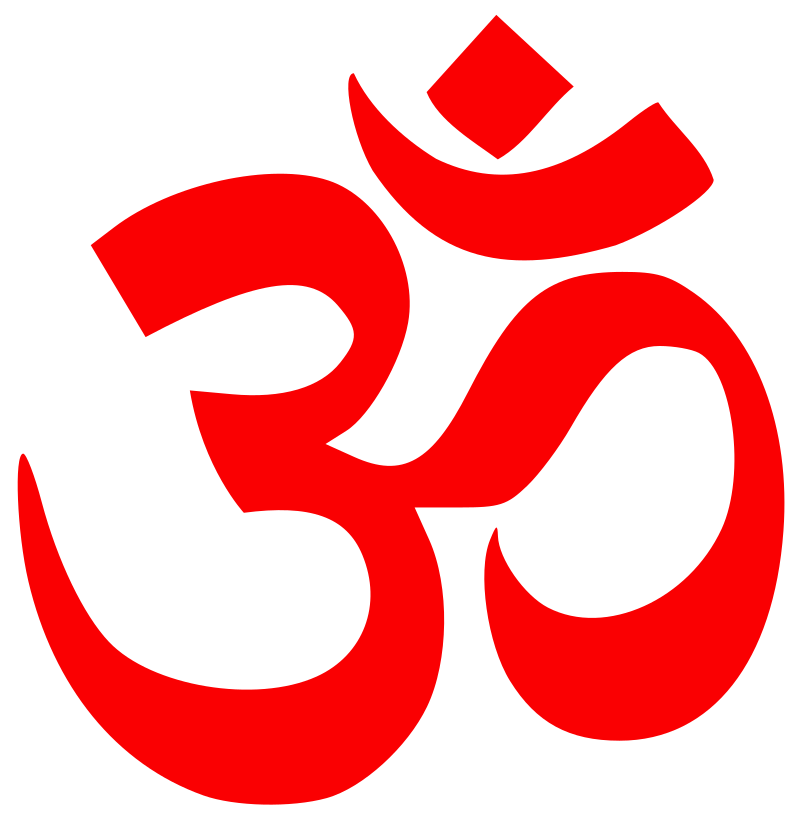
om
thumb|Om Ligature (writing)|ligature in [[Devanagari script]]
thumb|Om () in Tamil script with a [[trishula at Sri Veeramakaliamman Temple, Singapore; Om appears frequently as an icon in temples (kovils) and spiritual retreats]]
thumb|A rangoli featuring Om surrounded by stylised peacocks; Om often features prominently in the religious art and iconography of [[Indian religions]]
thumb|A Raksha Bandhan|rakhi in the shape of Om

Brahman
thumb|Om signifies the essence of Brahman, the ultimate reality.

Tantra
Tantra (; ) is an esoteric yogic tradition that developed in the Indian subcontinent, beginning in the middle of the 1st millennium CE, initially within Shaivism and Shaktism, and subsequently in Mahayana Buddhism and Vaishnavism. Tantra presents complex cosmologies, viewing the body as divine and typically reflecting the union of Shiva and Shakti. Tantric goals include Siddhi (supernatural accomplishment), bhoga, and Kundalini ascent; while also addressing states of possession (āveśa) and exorcism.

Samsara
thumb|According to the Rebirth (Buddhism)|rebirth doctrine of Buddhism, a sentient being can reincarnate into six realms of existence. The [[bhavachakra depicts this cycle of saṃsāra in a wheel. Yama, the god of death, is at the top of the outer rim. The outer rim shows the Twelve Nidānas doctrine.]]

Vedanta
Vedanta (; , ), also known as Uttara Mīmāṃsā, is one of the six orthodox (āstika) schools of Hindu philosophy and textual exegesis. The word Vedanta means 'conclusion of the Vedas,' and encompasses the ideas that emerged from, or aligned and reinterpreted, the speculations and enumerations contained in the Upanishads, focusing, with varying emphasis, on devotion, knowledge, and liberation. Vedanta developed into many traditions, all of which give their specific interpretations of a common group of texts called the Prasthānatrayī, translated as 'the three sources': the Upanishads, the Brahma Su

moksha
Moksha (, ; , '), also called vimoksha, vimukti, and mukti', is a term in Jainism, Buddhism, Hinduism, and Sikhism for various forms of emancipation, liberation, nirvana, or release. In its soteriological and eschatological senses, it refers to freedom from saṃsāra, the cycle of death and rebirth. In its epistemological and psychological senses, moksha'' is freedom from ignorance: self-realization, self-actualization and self-knowledge.

Ahimsa
thumb|Lord Mahavira, the twenty-fourth tirthankara of Jainism, and "torch-bearer" of ahimsa

chakra
thumb|In meditation, chakras are often visualised in different ways, such as a lotus flower, or a disc containing a particular deity.

mandala
upright=1.35|thumb|Thangka painting of Manjuvajra mandala
upright=1.35|thumb|The Womb Realm mandala. The center square represents the young stage of Vairocana. He is surrounded by eight Buddhas and [[bodhisattvas (clockwise from top: Ratnasambhava, Samantabhadra, Saṅkusumitarāja, Manjushri, Amitābha, Avalokiteśvara, Amoghasiddhi and Maitreya)]]

Shakti
thumb|Shakti, the feminine power, is often personified as an aspect of Devi

mudra
thumb|A 10th century Chola dynasty bronze sculpture of the Hindu god [[Nataraja (Shiva) posing various mudras]]
thumb|Indian Buddha Shakyamuni statue making the bhūmisparśa or "earth witness" mudra,
thumb|12th-century Japanese scroll showing different mudra gestures

linga
thumb|right|A lingam with tripundra, projected on a [[yoni base]]

Advaita Vedanta
school of Hindu philosophy; a classic path to spiritual realization

Samkhya
Samkhya or Sankhya (; ) is a dualistic orthodox school of Hindu philosophy. It views reality as composed of two independent principles, Puruṣa ('consciousness' or spirit) and Prakṛti (nature or matter, including the human mind and emotions).
maya
concept in Indian religions; illusion, that which changes, unreal, temporary

bhakti
Bhakti (; Pali: bhatti) is a concept common in Indian religions which means attachment, fondness for, devotion to, trust, homage, worship, piety, faith, or love. In Indian religions, it may refer to loving devotion for a personal God (like Krishna or Devi), a formless ultimate reality (like Nirguna Brahman or the Sikh God) or an enlightened being (like a Buddha, a bodhisattva, or a guru). Bhakti is often a deeply emotional devotion based on a relationship between a devotee and the object of devotion. A devotee is a bhakta or bhakt.
Mimamsa
Mīmāṁsā (Sanskrit: मीमांसा; IAST: Mīmāṁsā) is a Sanskrit word that means "reflection" or "critical investigation" and thus refers to a tradition of contemplation which reflected on the meanings of certain Vedic texts. This tradition is also known as Pūrva-Mīmāṁsā because of its focus on the earlier (pūrva) Vedic texts dealing with ritual actions, and similarly as Karma-Mīmāṁsā due to its focus on ritual action (karma). It is one of six Vedic "affirming" (āstika) schools of Hindu philosophy. This particular school is known for its philosophical theories on the nature of Dharma, based on hermene

Samadhi
thumb|An image of the Buddha in samadhi from Gal Vihara, [[Sri Lanka]]
thumb|Statue of a meditating Shiva, [[Rishikesh]]

duḥkha
Duḥkha (; , ) "suffering", "pain", "unease", or "unsatisfactoriness", is an important concept in Buddhism, Jainism and Hinduism. Its meaning is context-dependent: it may refer more specifically to the "unsatisfactoriness" or "unease" of craving for and grasping after transient 'things' (i.e. sensory objects, including thoughts), or expecting pleasure from them while ignorant of this transientness. In Buddhism, dukkha is part of the first of the Four Noble Truths and one of the three marks of existence. The term also appears in scriptures of Hinduism, such as the Upanishads, in discussions of m
Ātman
Hindu concept for inner self or essence as mere consciousness

Kundalini
thumb|Kundalini, chakras, and nadis

Śūnyatā
Śūnyatā ( ; ; "emptiness", "voidness", "vacuity") is an Indian philosophical concept In Buddhism, Jainism, Hinduism, and other Indian philosophical traditions. The concept has multiple meanings depending on its doctrinal context; an ontological feature of reality, a meditative state, or a phenomenological analysis of experience.
Yuga
A yuga, in Hinduism, is generally used to indicate an age of time.
.jpg)
Kama
Kama (Sanskrit: काम, ) is the concept of pleasure, enjoyment and desire in Hinduism, Buddhism, Jainism, and Sikhism. It can also refer to "desire, wish, longing" in Hindu, Buddhist, Jain, and Sikh literature. However, the term is also used in a technical sense to refer to any sensory enjoyment, emotional attraction or aesthetic pleasure experienced in connection with the arts, dance, music, painting, sculpture, and nature.

Yantra
thumb|Sri Yantra by [[Harish Johari using traditional colors]]
thumb|Unalome is the sacred Yantra used widely in Southeast Asian Buddhism

prana
In yoga, Ayurveda, and Indian martial arts, prana (, ; the Sanskrit word for breath, "life force", or "vital principle") permeates reality on all levels including inanimate objects. In Hindu literature, prāṇa is sometimes described as originating from the Sun and connecting the elements.
kalpa
Cyclic day of Brahma in Hindu cosmology lasting 1,000 Yuga Cycles containing 14 Manvantaras and 15 Sandhyās. It is followed by a night (pralaya) of equal length, forming one 24-hour day of Brahma's 100 360-day years.

Ishvara
thumb|Vishnu and [[Shiva, the primary bearers of the epithet Ishvara, seated on mounts with consorts Lakshmi and Parvati, accompanied by Vinayaka]]
Rāja yoga
one of the four major yogic paths of Hinduism
temperance
cardinal virtue of control over excess

darśana
auspicious sight of a deity or holy person in Indian religions

Brahmacharya
Brahmacharya (; Sanskrit: Devanagari: ब्रह्मचर्य) is the concept within Indian religions that literally means "conduct consistent with Brahman" or "on the path of Brahman". Brahmacharya, a discipline of controlling the senses, is seen as a way to liberation. Though sexual restraint is a part of brahmacharya, brahmacharya encompasses all striving toward a passionless state.

Prakṛti
Prakriti ( ) is "the original or natural form or condition of anything, original or primary substance". It is a key concept in Hinduism, formulated by the Samkhya school, where it does not refer merely to matter or nature, but includes all cognitive, moral, psychological, emotional, sensorial and physical aspects of reality. Prakriti has three different innate qualities (guṇas), whose equilibrium is the basis of all empirical reality, which is in the form of the pancha bhutas (five basic elements) – Akasha, Vayu, Agni, Jala, and Prithvi. Prakriti contrasts with Puruṣa, which is pure awareness
Purusha
Purusha (, ) is a concept in Vedic theology and Indian philosophy, variously referring the cosmic being or self, awareness, and universal principle.
Āstika and nāstika
religious term
maitrī
' (Pali: ') is a Sanskrit term that refers to benevolence, loving-kindness, friendliness, amity, good will, and active interest in others. The term appears in various ancient and medieval Indian texts, such as the Upanishads, Jain Sutras and Buddhist Suttas. Within Buddhism, it is notably the first of the four sublime states (), one of the ten of Theravāda Buddhism, and expounded upon in the Metta Sutta.

Dashavatara
thumb|Hindu god [[Vishnu (centre) surrounded by his ten major avatars (Krishna-Buddha version). Anticlockwise from top left: Matsya; Kurma; Varaha; Narasimha; Vamana; Parashurama; Rama; Krishna; Buddha and Kalki]]
.jpg)
dāna
thumb|170px| is any form of giving.
alt=Buddhist Dana|thumb|In Buddhist culture, (donation) is any relinquishing of ownership to a recipient without expecting anything in return.
alt=Dana|thumb|The Buddha and a monk are shown in a relief from Borobudur, Indonesia, making an alms round.
'''''' (Devanagari: , IAST: ) is a Sanskrit and Pali word that connotes the virtue of generosity, charity or giving of alms, in Indian religions and philosophies.

Bhagavan
thumb|Statue of Vishnu, Bhagavan in Vaishnavism
The word Bhagavan (; ), also spelled as Bhagwan (sometimes translated in English as "Lord", "God"), is an epithet within Indian religions used to denote figures of religious worship. In Hinduism it is used to signify a deity or an avatar, particularly for Krishna and Vishnu in Vaishnavism, Shiva in Shaivism and Durga or Adi Shakti in Shaktism. In Jainism the term refers to the Tirthankaras, and in Buddhism to the Buddha.

Tridevi
thumb|Sarasvati (left), [[Lakshmi (middle) and Parvati (right)]]
tapas
heat, spiritual concept, asceticism in Indian religions
Third eye
mystical and esoteric concept of a speculative invisible eye which provides perception beyond ordinary sight
Artha
Artha (; ; Pali: Attha, Tamil: பொருள், poruḷ) is one of the four goals or objectives of human life in Hindu traditions. It includes career, skills, health, wealth, prosperity and the means or resources needed for a fulfilling life. The word artha literally translates as "meaning, sense, goal, purpose or essence" depending on the context. Artha is also a broader concept in the scriptures of Hinduism, Buddhism and Jainism. As a concept, it has multiple meanings, all of which imply "means of life", activities and resources that enable one to be in a state one wants to be in.
omnipresence
Omnipresence or ubiquity is the attribute of being present anywhere and everywhere. The term omnipresence is most often used in a religious context as an attribute of a deity or supreme being, while the term ubiquity is generally used to describe something "existing or being everywhere at the same time, constantly encountered, widespread, common". Ubiquitous is also used synonymously with other words, including: worldwide, universal, global, pervasive, and all over the place.

Harihara
Harihara (Sanskrit: हरिहर) is the dual representation of the Hindu deities Vishnu (Hari) and Shiva (Hara). Harihara is also known as Shankaranarayana ("Shankara" is Shiva, and "Narayana" is Vishnu).
karuṇā
'''''' () is generally translated as compassion or mercy and sometimes as self-compassion or spiritual longing. It is a significant spiritual concept in the Indic religions of Hinduism, Buddhism, Sikhism, and Jainism.
Karma yoga
one of four spiritual paths in Hinduism

Siddhi
In Indian religions, ''' (Sanskrit: '; fulfillment, accomplishment) are material, paranormal, supernatural, or otherwise magical powers, abilities, and attainments that are the products of yogic advancement through sādhanās such as meditation and yoga. The term ṛddhi (Pali: iddhi, "psychic powers") is often used interchangeably in Buddhism.

Ashtamangala
thumb|Ashtamangala: first row (left to right): parasol, pair of golden fish, conch; second row: treasure vase, lotus; Last row: infinite knot, victory banner and wheel.
Dvaita
Duality, one of many schools of Vedanta
jñāna
In Indian philosophy and religions, '''''''''' (, ) is "knowledge".

Rta
In the Vedic religion, Ṛta (/ɹ̩t̪ɐ/; Sanskrit '' "order, rhythm, rule; truth; logos") is the principle of natural order which regulates and coordinates the operation of the universe and everything within it. In the hymns of the Vedas, Ṛta is described as that which is ultimately responsible for the proper functioning of the natural, moral and sacrificial orders. Conceptually, it is closely allied to the injunctions and ordinances thought to uphold it, collectively referred to as Dharma, and the action of the individual in relation to those ordinances, referred to as Karma – two terms which eve