Category
page 1History of computing hardware
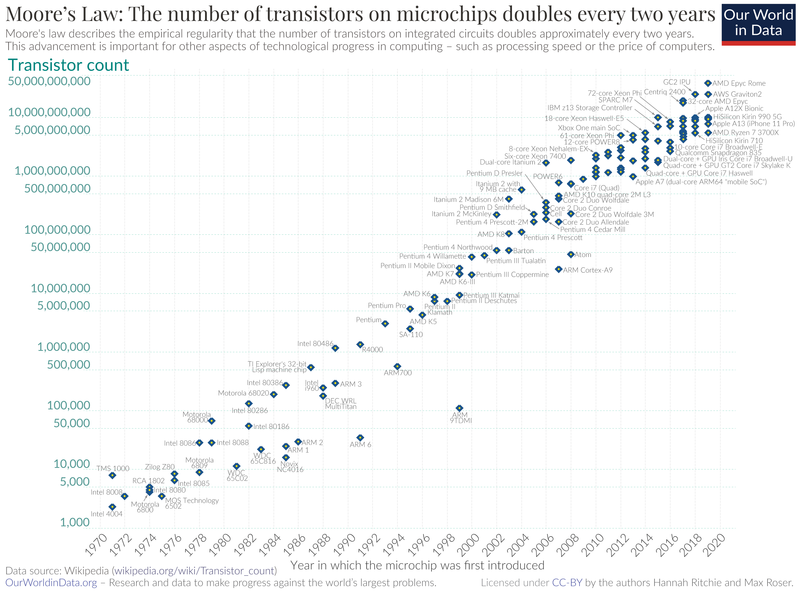
Moore's law
observation on the growth of integrated circuit capacity

punched card
paper-based recording medium

history of computing hardware
Wikimedia history article

analog computer
machine for calculating dynamic behavior by analog electronics or mechanic analogies
magnetic-core memory
predominant form of random-access computer memory for 20 years between about 1955 and 1975
Williams tube
traitorous eight
group of 8 PhDs employed at Shockley Semiconductor that left to form Fairchild Semiconductor
The Mother of All Demos
1968 computer demonstration by Douglas Engelbart
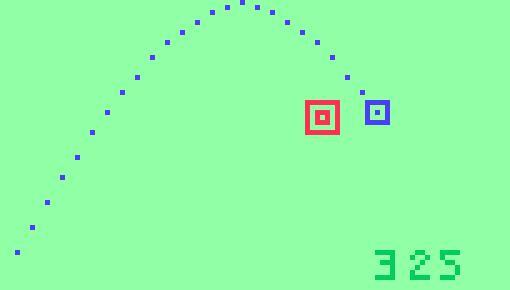
Cathode ray tube amusement device
1947 video game
optical storage
storage of data on a medium using marks in a pattern, which can be read back with the aid of light
.jpg)
Dynabook
The KiddiComp concept, envisioned by Alan Kay on January 1, 1968 while a PhD candidate, and later developed and described as the Dynabook in his 1972 proposal "A personal computer for children of all ages", outlines the requirements for a conceptual portable educational device that would offer similar functionality to that now supplied via a laptop computer or (in some of its other incarnations) a tablet or slate computer with the exception of the requirement for any Dynabook device offering near eternal battery life. Adults could also use a Dynabook, but the target audience was children.
history of Apple Inc.
aspect of history
BUNCH
The BUNCH was the nickname for the group of mainframe computer competitors of IBM in the 1970s. The name is derived from the names of the five companies: Burroughs, UNIVAC, NCR, Control Data Corporation (CDC), and Honeywell. These companies were grouped together because the market share of IBM was much higher than all of its competitors put together.
history of the personal computer
history of the consumer personal computer
74181
7400 Series TTL Arithmetic Logic Unit IC
noisy intermediate-scale quantum era
era of technology characterized by quantum processors with <1000 qubits sensitive to noise, prone to quantum decoherence, and incapable of continuous quantum error correction
history of computing hardware from 1960s to present
aspect of history
Koomey's law
trend in the history of computing that the number of computations per unit energy dissipated doubles every 1.57 years
First Draft of a Report on the EDVAC
incomplete document containing the first published description of the logical design of a computer using the stored-program concept
coincidence circuit
device that can detect simultaneous electric signals
unit record equipment
electromechanical data processing machine
Cromemco Cyclops Camera
Digital Camera
history of general purpose CPUs
aspect of history
influence of the IBM PC on the personal computer market
overview about the influence of the IBM PC on the personal computer market
Huang's law
observation by the head of Nvidia Jensen Huang about the advancement of artificial intelligence technology
disk pack
removable assembly of disk platters used in early hard disk drives
invention of the integrated circuit
aspect of history relating to the invention of integrated circuits