Category
page 1History of the Internet

email
thumb|right|This screenshot shows the "Inbox" page of an email client; users can see new emails and take actions, such as reading, deleting, saving, or responding to these messages.
thumb|When a "robot" on Wikipedia makes changes to image files, the uploader receives an email about the changes made.
Electronic mail (usually shortened to email; alternatively hyphenated e-mail) is a method of transmitting and receiving digital messages using electronic devices over a computer network. It was conceived in the late–20th century as the digital version of, or counterpart to, mail (hence e- + mail).

Q698
Mozilla Firefox, or simply Firefox, is a free and open-source web browser developed by the Mozilla Foundation and its subsidiary, the Mozilla Corporation. It uses the Gecko rendering engine to display web pages, which implements current and anticipated web standards. The software is available for Windows, macOS, and Linux systems, with unofficial ports for other platforms, as well as a mobile version for Android (see Firefox for Android) and iOS.

Wayback Machine
digital archive founded by the Internet Archive

Internet Explorer
discontinued web browser by Microsoft

Internet protocol suite
framework for communication protocols used in IP networking

File Transfer Protocol
standard protocol for transferring files over TCP/IP networks

search engine
software system that is designed to search for information on the World Wide Web

Q177524
thumb|upright=1.35|ARPANET access points in the 1970s

Telnet
Telnet (sometimes stylized TELNET) is a client-server application protocol that provides access to virtual terminals of remote systems on local area networks or the Internet. It is a protocol for bidirectional 8-bit communications. Its main goal was to connect terminal devices and terminal-oriented processes.

ICANN
thumb|right|ICANN headquarters in the Playa Vista, Los Angeles|Playa Vista neighborhood of Los Angeles.

cyberspace
thumb|Nightscape in Chongqing, China. Artificial landscapes and "city lights at night" were some of the first metaphors used by the genre for cyberspace (in [[Neuromancer, by William Gibson).]]

Mozilla Foundation
American non-profit organization

Q9661
Mozilla is a free software community founded in 1998 by members of Netscape. The Mozilla community uses, develops, publishes, and supports Mozilla products, thereby promoting free software and open standards. The community is supported institutionally by the non-profit Mozilla Foundation and its tax-paying subsidiary, the Mozilla Corporation.

Usenet
thumb|upright=1.3|A 2004 discussion in the Usenet group comp.text.tex
thumb|A diagram of Usenet servers and clients. The coloured dots on the servers represent the newsgroups they carry. Coloured arrows between servers indicate newsgroup content exchanges (news feeds). Arrows between clients and servers indicate that a user is subscribed to a certain newsgroup and reads or submits articles there.Notably, clients never connect with each other, but still have access to each other's posts even when they also never connect to the same server.

history of the Internet
history of the Internet, a global system of interconnected computer networks

Internet Engineering Task Force
Open Internet standards organization

packet switching
method for transmitting data over a computer network

Q13515725
archive.today (formerly archive.is) is a web archiving website that saves snapshots on demand. It has support for JavaScript-heavy sites such as Google Maps and X. archive.today records two snapshots: one replicates the original webpage including any functional live links; the other is a screenshot of the page.

Mosaic
popular early web browser

Internet Assigned Numbers Authority
standards organization overseeing IP addresses
Internet Society
Internet development organization
Gopher
TCP/IP application layer protocol
Digital Millennium Copyright Act
copyright law in the United States of America
protests against SOPA and PIPA
Series of protests from 2011 to 2012
%206%20-%20Flickr%20-%20gruntzooki.jpg)
enshittification
Enshittification, also known as platform decay, is a process in which two-sided online products and services decline in quality over time. Initially, vendors create high-quality offerings to attract users, then they degrade those offerings to better serve business customers, and finally degrade their services to both users and business customers to maximize short-term profits for shareholders.

AltaVista
AltaVista was a web search engine established in 1995. It became one of the most-used early search engines, but lost ground to Google and was purchased by Yahoo! in 2003, which retained the brand, but based all AltaVista searches on its own search engine. On July 8, 2013, the service was shut down by Yahoo!, and since then the domain has redirected to Yahoo!'s own search site.
Yandex Browser
web browser
surveillance capitalism
monetization of personal information

Ask.com
Ask.com (known originally as Ask Jeeves) is an answer engine, e-magazine, and former web search engine, operated by Ask Media Group. It was conceptualized and developed in 1996 by Garrett Gruener and David Warthen, based in Berkeley, California.
Internet2
Internet2 is a not-for-profit United States computer networking consortium led by members from the research and education communities, industry, and government. The Internet2 consortium administrative headquarters are located in Ann Arbor, Michigan, with offices in Washington, D.C., and Denver, Colorado.

Memex
thumb|Interpretation of the MEMEX at German Museum of Technology
thumb|Vannevar Bush

ALOHAnet
ALOHAnet, also known as the ALOHA System, or simply ALOHA, was a pioneering computer networking system developed at the University of Hawaiʻi. ALOHAnet became operational in June 1971, providing the first public demonstration of a wireless packet data network.
Eternal September
event

Mundaneum
thumb|Drawers of the Mundaneum's Universal Bibliographical System bibliographic index cards
The Mundaneum was an institution which aimed to gather together all the world's knowledge and classify it according to a system known as the Universal Decimal Classification. It was developed at the turn of the 20th century by Belgian lawyers Paul Otlet and Henri La Fontaine. The Mundaneum has been identified as a milestone in the history of data collection and management, and, albeit more tenuously, as a precursor to the Internet.
Winsock
In computing, the Windows Sockets API (WSA), later shortened to Winsock, is an application programming interface (API) that defines how Windows network application software should access network services, especially TCP/IP. It defines a standard interface between a Windows TCP/IP client application (such as an FTP client or a web browser) and the underlying TCP/IP protocol stack. The nomenclature is based on the Berkeley sockets API used in BSD for communications between programs.
National Center for Supercomputing Applications
Illinois-based applied supercomputing research organization

videotex
thumb|Videotex example screen showing its graphics capabilities, 1978. As in teletext, predefined, fixed-width graphics characters in multiple colors could be used to create an image.
thumb|Minitel was perhaps the most successful videotex service worldwide, using this terminal, .
information superhighway
term used in the 1990s to refer to the Internet
Presto
web browser engine
Internet governance
development and application of shared principles, norms, rules, decision-making procedures, and programs that shape the evolution and use of the Internet
CYCLADES
The CYCLADES computer network () was a French research network created in the early 1970s. It was one of the pioneering networks experimenting with the concept of packet switching and, unlike the ARPANET, was explicitly designed to facilitate internetworking.

As We May Think
influential 1945 essay anticipating information society
National Science Foundation Network
program of coordinated, evolving projects
history of YouTube
overview about the history of YouTube and its posting of online videos
Archie
FTP search engine
list of Internet phenomena
Wikimedia list article

NeXTcube
The NeXTcube is a high-end workstation computer developed, manufactured, and sold by NeXT from 1990 to 1993. It superseded the original NeXT Computer workstation and is housed in a similar cube-shaped magnesium enclosure, designed by frog design. The workstation runs the NeXTSTEP operating system and was launched with a list price.

splinternet
thumb|HTTP 403|HTTP 403 Forbidden server response to a geo-blocked website https://sss.gov ([[Selective Service System) accessed from a Russian internet provider.]]
The splinternet (also referred to as cyber-balkanization or internet balkanization) is a characterization of the Internet as splintering and dividing due to various factors, such as technology, commerce, politics, nationalism, religion, and divergent national interests. "Powerful forces are threatening to balkanise it", wrote the Economist weekly in 2010, arguing it could soon splinter along geographic and commercial boundaries. Th
ENQUIRE
ENQUIRE was a software project written in 1980 by Tim Berners-Lee at CERN, which was the predecessor to the World Wide Web. It was a simple hypertext program that had some of the same ideas as the Web and the Semantic Web but was different in several important ways.
history of Google
Les Horribles Cernettes
rock band composed of people at CERN

CSNET
thumb | right | A diagram for CSNET members in the USA in 1983.

GÉANT
GÉANT (Gigabit European Academic Network) is the pan-European data network for the research and education community. It interconnects national research and education networks (NRENs) across Europe, enabling collaboration on projects ranging from biological science, to earth observation, to arts and culture. The GÉANT project combines a high-bandwidth, high-capacity 50,000 km network with a growing range of services. These allow researchers to collaborate, working together wherever they are located. Services include identity and trust, multi-domain monitoring perfSONAR MDM, dynamic circuit
NeXT Computer
High-end workstation computer, 1990 used to develop the www
CERN httpd
early web server

Interface Message Processor
packet switching node used to interconnect participant networks to the ARPANET from the late 1960s to 1989

history of the World Wide Web
aspect of history
history of Microsoft
Wikimedia history article
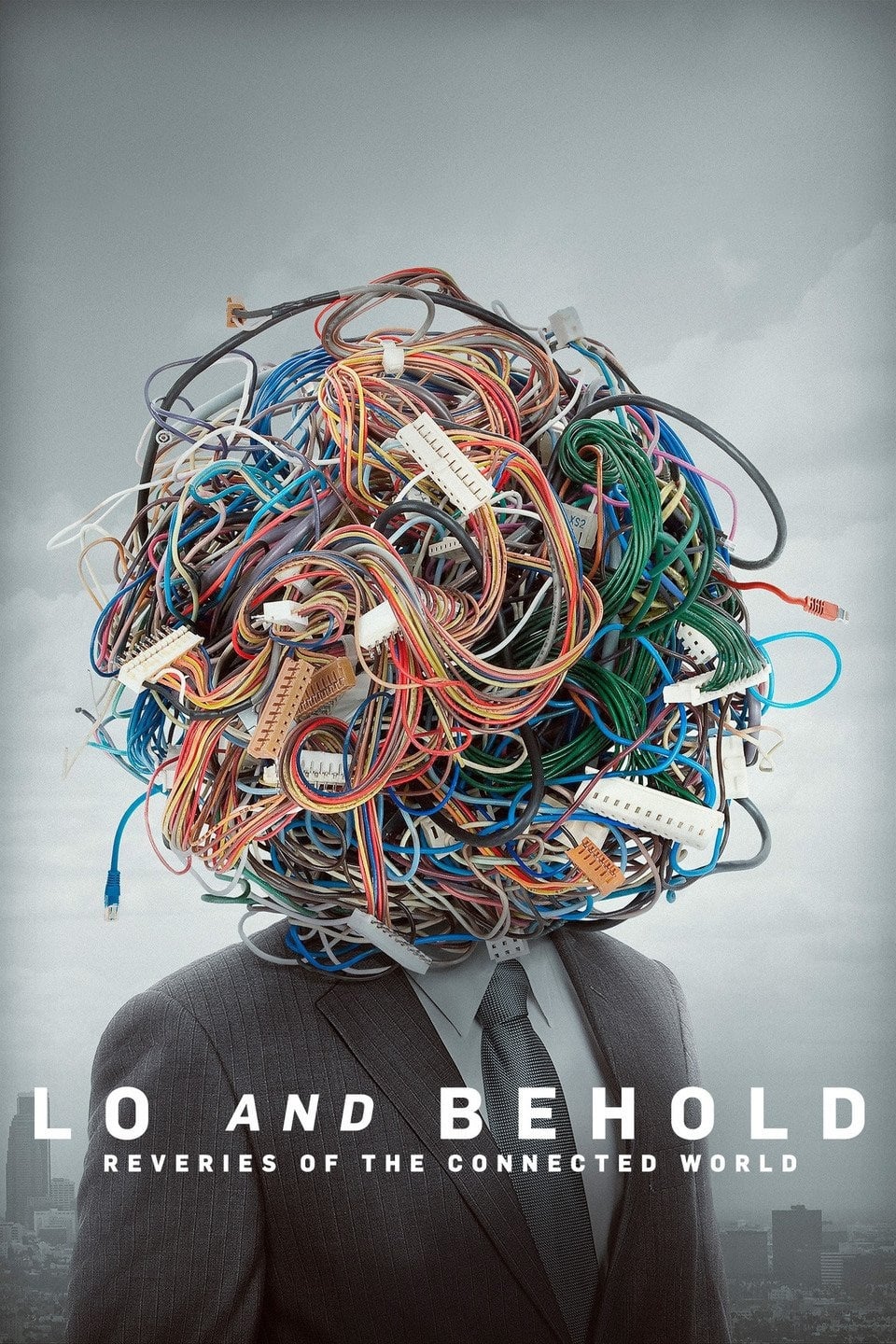
Lo & Behold, Reveries of the Connected World
2016 film by Werner Herzog
Persistent Uniform Resource Locator
OCLC-designed persistent identifier scheme