Category
page 1Holocene extinctions

Mammuthus
A mammoth is a member of the extinct elephantid genus Mammuthus. They lived from the late Miocene epoch (from around 6.2 million years ago) into the Holocene until about 4,000 years ago, with mammoth species at various times inhabiting Africa, Asia, Europe, and North America. Mammoths are distinguished from living elephants by their (typically large) spirally twisted tusks and in some later species, the development of numerous adaptions to living in cold environments, including a thick layer of fur.

thylacine
The thylacine (; binomial name Thylacinus cynocephalus), also commonly known as the Tasmanian tiger or Tasmanian wolf, is an extinct species of carnivorous marsupial that was native to the Australian mainland and the islands of Tasmania and New Guinea. The thylacine died out in New Guinea and mainland Australia around 3,600–3,200 years ago, possibly because of the introduction of the dingo, whose earliest record dates to around the same time, but which never reached Tasmania. Prior to European settlement, around 5,000 remained in the wild on the island of Tasmania. Beginning in the nineteenth
aurochs
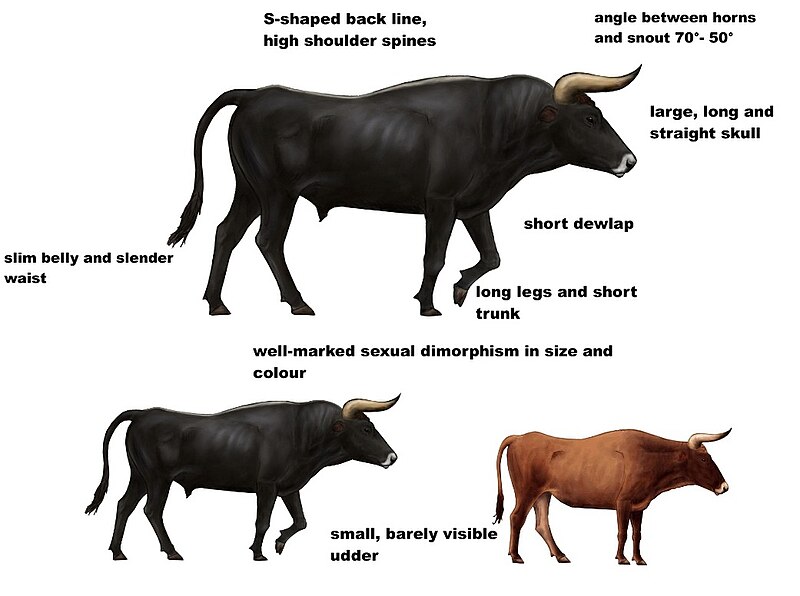
The aurochs (Bos primigenius; or ; pl.: aurochs or aurochsen; also ure or urus) is an extinct species of bovine, considered to be the wild ancestor of modern domestic cattle. With a shoulder height of up to in bulls and in cows, it was one of the largest herbivores in the Holocene; it had massive elongated and broad horns that reached in length.

Dinornithiformes
Moa (order Dinornithiformes) are an extinct group of flightless birds formerly endemic to New Zealand. During the Late Pleistocene-Holocene, there were nine species, in six genera. The two largest species, Dinornis robustus and Dinornis novaezelandiae, reached about in height with neck outstretched, and weighed about ; the smallest, the bush moa (Anomalopteryx didiformis), was about the size of a turkey. Estimates of the moa population when Polynesians settled New Zealand circa 1300 C.E. range from 58,000 to 2.5 million.

Smilodon
Smilodon is a genus of extinct felids. It is one of the best-known saber-toothed predators and prehistoric mammals. Although commonly known as the saber-toothed tiger, it was not closely related to the tiger or other modern cats, belonging to the extinct subfamily Machairodontinae, with an estimated date of divergence from the ancestor of living cats around 20 million years ago. Smilodon was one of the last surviving machairodonts alongside Homotherium. Smilodon lived in the Americas during the Pleistocene to early Holocene epoch (2.5 mya – at latest 8,200 years ago). The genus was named in 18

Woolly Mammoth
extinct species of mammoth (Mammuthus)

elephant bird
family of birds (subfossil)

dire wolf
extinct species of canids (Canidae)

Haast's Eagle
extinct species of eagle

Megaloceros giganteus
extinct species of cervid (deer)

Raphidae
The Raphina are a clade of extinct flightless birds formerly called didines or didine birds. They inhabited the Mascarene Islands of Mauritius and Rodrigues, but became extinct through hunting by humans and predation by introduced non-native mammals following human colonisation in the 17th century. Historically, many different groups have been named for both the dodo and the Rodrigues solitaire, not all grouping them together. Most recently, it is considered that the two birds can be classified in Columbidae, often under the subfamily Raphinae. The first person to suggest a close affinity to t

Megatherium
Megatherium ( ; from Greek () 'great' + () 'beast') is an extinct genus of large ground sloths endemic to South America that lived from the Early Pliocene through the end of the Late Pleistocene. It is best known for the elephant-sized, type species Megatherium americanum, primarily known from the Pampas, but ranging southwards to northernmost Patagonia and northwards to southern Bolivia during the late Middle Pleistocene and Late Pleistocene. Various other species have been described, including those belonging to the Andean subgenus Pseudomegatherium, which range in size from comparable to M.
Holocene extinction
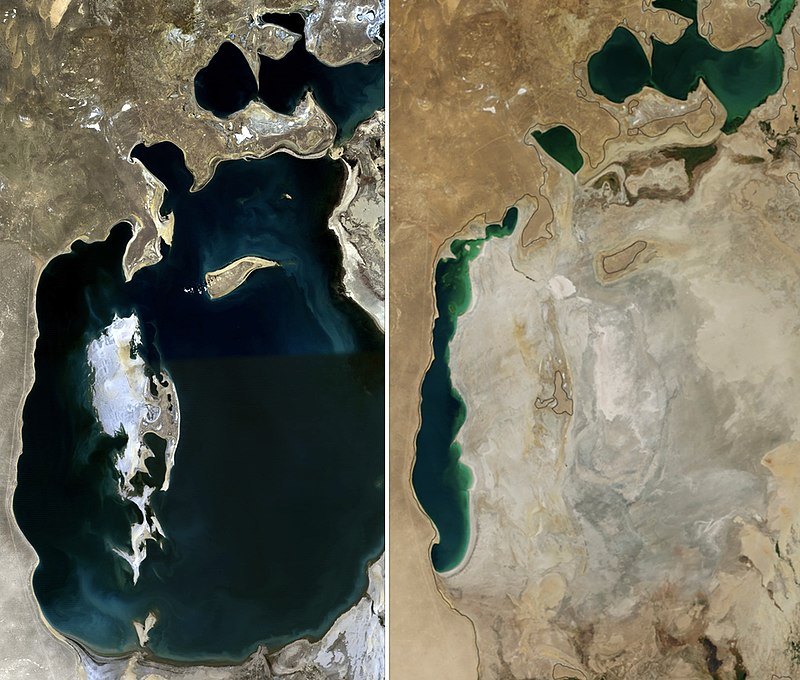
massive extinction event during the current Holocene geological epoch
effects of climate change
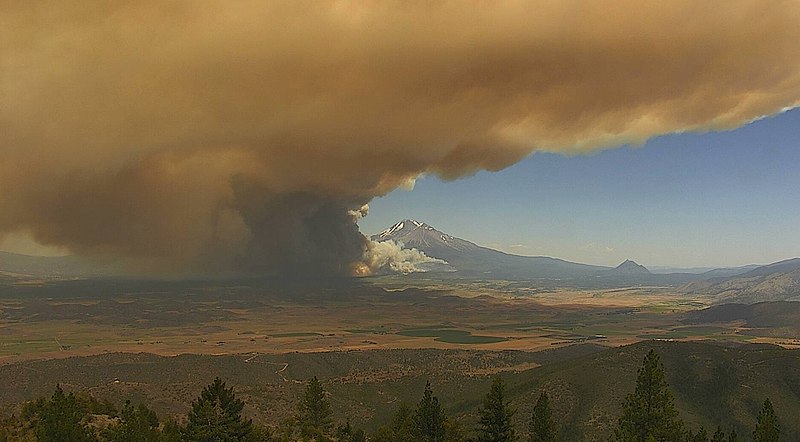
describes the effects created by human caused climate change
Columbian mammoth
extinct species of mammoth (Mammuthus)
steppe bison
species of mammal (fossil)
Thylacinus
Thylacinus is a genus of extinct carnivorous marsupials in the family Thylacinidae. The only recent member was the thylacine (Thylacinus cynocephalus), commonly also known as the Tasmanian tiger or Tasmanian wolf. The last known Tasmanian tiger was in the Beaumaris Zoo in Tasmania, eventually dying in 1936. The earliest known member of the genus, Thylacinus macknessi appeared during the Early Miocene, around 16 million years ago, and was smaller than the modern thylacine, with a body mass of about . Thylacinus represented the only extant genus of the family after the beginning of the Pliocene

Macrauchenia
Macrauchenia ("long llama", based on the now-invalid llama genus, Auchenia, from Greek "big neck") is an extinct genus of large ungulate native to South America from the Pliocene or Middle Pleistocene to the end of the Late Pleistocene. It was one of the last surviving members of the extinct order Litopterna, a group of South American native ungulates distinct from the two orders which contain all living ungulates which had been present in South America since the early Cenozoic, over 60 million years ago, prior to the arrival of living ungulates in South America around 2.5 million years ago as

Megalonychidae
Megalonychidae is an extinct family of sloths including the extinct Megalonyx. Megalonychids first appeared in the early Oligocene, about 35 million years (Ma) ago, in southern Argentina (Patagonia). There is, however, one possible find dating to the Eocene, about 40 Ma ago, on Seymour Island in Antarctica (which was then still connected to South America). They first reached North America by island-hopping across the Central American Seaway, about 9 million years ago, prior to formation of the Isthmus of Panama about 2.7 million years ago (which led to the main pulse of the Great American Inte
Mohoidae
Mohoidae, also known as the Hawaiian honeyeaters, is a family of Hawaiian species of now recently extinct, nectarivorous songbirds in the genera Moho (ōō) and Chaetoptila (kioea). These now extinct birds form their own family, representing the only complete extinction of an entire avian family in modern times, when the disputed family Turnagridae is regarded as invalid. The last surviving species in the family, the Kauaʻi ʻōʻō (Moho braccatus), became extinct after 1987.

silphium
thumb|right|Ancient silver coin from Cyrene depicting a stalk of silphium
Silphium (also known as laserwort or laser; Ancient Greek: , ) is an unidentified plant that was used in classical antiquity as a seasoning, perfume, aphrodisiac, and medicine.

Gomphothere
Gomphotheres are an extinct group of proboscideans related to modern elephants. First appearing in Africa during the Oligocene, they dispersed into Eurasia and North America during the Miocene and arrived in South America during the Pleistocene as part of the Great American Interchange. Gomphotheres are a paraphyletic group ancestral to Elephantidae, which contains modern elephants, as well as Stegodontidae.
North African elephant
subspecies of mammal

Camelops
Camelops is an extinct genus of camel that lived in North and Central America from the middle Pliocene (from around 4-3.2 million years ago) to the end of the Pleistocene (around 13-12,000 years ago). It is more closely related to living camels than to lamines (llamas, alpacas, vicuñas, and guanacos), making it a true camel of the Camelini tribe. Its name is derived from the Ancient Greek (, "camel") and (, "face"), i.e. "camel-face". Camelops lived across Western North America, ranging from the Pacific Coast to the Great Plains, southwards to Honduras and northwards to Alaska. Camelops became

Toxodon
Toxodon (from Ancient Greek τόξον (tóxon), meaning "bow", and ὀδούς (odoús), meaning "tooth", in reference to the curvature of the teeth) is an extinct genus of large ungulate native to South America from the Pliocene to the end of the Late Pleistocene. Toxodon is a member of Notoungulata, an order of extinct South American native ungulates distinct from the two living ungulate orders that had been indigenous to the continent for over 60 million years since the early Cenozoic, prior to the arrival of living ungulates into South America around 2.5 million years ago during the Great American Int

Megaladapis
Megaladapis, informally known as the koala lemur, is an extinct genus of lemurs belonging to the family Megaladapidae, consisting of three species that once inhabited the island of Madagascar. The largest measured between in length.
Nesophontes
Nesophontes, sometimes called West Indies shrews, is the sole genus of the extinct, monotypic mammal family Nesophontidae in the order Eulipotyphla. These animals were small insectivores, about 5 to 15 cm long, with a long, slender snout, head and long tail. They were endemic to the Greater Antilles (except Jamaica), Cuba, Hispaniola (now the Dominican Republic and Haiti), Puerto Rico, the United States Virgin Islands, and the Cayman Islands.
==Extinction==
Although reliable estimates are unavailable, these animals are confirmed to have survived the Pleistocene extinction, since remains h

Dinornis
Dinornis (from Ancient Greek δεινός (deinós), meaning "terrible", and ὄρνις (órnis), meaning "bird"), also known as the giant moa, is an extinct genus of birds belonging to the moa family. As with other moa, it is a member of the order Dinornithiformes. It was endemic to New Zealand. Two species of Dinornis are considered valid, the North Island giant moa (Dinornis novaezealandiae) and the South Island giant moa (Dinornis robustus). In addition, two further species (new lineage A and lineage B) have been suggested based on distinct DNA lineages.

Meiolania
Meiolania is an extinct genus of meiolaniid stem-turtle native to Australasia throughout much of the Cenozoic. Meiolania was a large turtle, with the shell alone ranging from in length. Four species are currently recognized, although the validity of two of them is disputed. Meiolania was first described as a species of lizard related to Megalania by Richard Owen towards the end of the 19th century, before the continued discovery of additional fossils solidified its placement as a kind of turtle.
Moho
genus of birds
Pygmy mammoth
species of mammal (fossil)
Dinornis novaezealandiae
species of bird
History of lions in Europe
lions in prehistoric and historic Europe
Dinornis robustus
One of two extinct moa in the genus Dinornis
Syrian elephant
extinct subspecies of the Asian elephant
%20(14749571352).jpg)
Litopterna
Litopterna (from "smooth heel") is an extinct order of South American native ungulates that lived from the Paleocene to the Pleistocene-Holocene around 62.5 million to 12,000 years ago (or possibly as late as 3,500 years ago), and were also present in West Antarctica during the Eocene. They represent the second most diverse group of South American ungulates after Notoungulata. It is divided into nine families, with Proterotheriidae and Macraucheniidae being the most diverse and last surviving families.
European ass
species of mammal
Asian Ostrich
species of bird (fossil)
giant fossa
species of mammal

Mylodon
Mylodon is an extinct genus of ground sloth belonging to the family Mylodontidae, known from southern South America. With a total length of 3 to 4 m and a body mass of 1-2 tonnes, it is one of the largest mylodontids (though it was considerably exceeded in size by the mylodontid Lestodon).
Megalomys
Megalomys is a genus of rodent in the family Cricetidae, part of the tribe Oryzomyini. The genus contains five large rodents from various Caribbean islands, of which two are known to have survived into modern times, but all of which are now extinct. The last species to survive was M. desmarestii from Martinique, which became extinct after the Mount Pelée eruption in 1902. Ancient DNA analysis places Megalomys forming a clade with Pennatomys, sister to the clade containing Aegialomys, Nesoryzomys, Melanomys and Sigmodontomys, having diverged from the mainland clade around 7 million years ago.

Eremotherium
Eremotherium (from Greek for "steppe" or "desert" "beast": ἔρημος "steppe or desert" and θηρίον "beast") is an extinct genus of giant ground sloth in the family Megatheriidae. Eremotherium lived in southern North America, Central America, and northern South America. It was one of the largest sloths, with a body size comparable to elephants, weighing around and measuring about long, slightly larger than its close relative Megatherium.
Cyprus dwarf hippopotamus
species of mammal (fossil)
Heptaxodontidae
Heptaxodontidae, rarely called giant hutia, is an extinct family of large rodents known from fossil and subfossil material found in the West Indies. One species, Amblyrhiza inundata, is estimated to have weighed between , reaching the weight of an eastern gorilla. This is twice as large as the capybara, the largest rodent living today, but still much smaller than Josephoartigasia monesi, the largest rodent known. These animals were probably used as a food source by the pre-Columbian peoples of the Caribbean.
Prolagus
Prolagus is an extinct genus of lagomorph. Over 20 species have been named, and the genus was abundant and widespread in Europe during the Neogene. However, by the end of the Middle Pleistocene, it was confined to a single species, the Sardinian pika (P. sardus), on Corsica, Sardinia, and their surrounding islands, where it survived into historical times. In North Africa and Western Asia, the genus is known from the Miocene and Pliocene. The scientific name may mean "before hares" or "primitive hares" (pro- meaning "before" and lagos meaning "hare"). Its taxonomy is disputed, with it either be
Piopio
genus of birds

Archaeoindris
Archaeoindris fontoynontii is an extinct giant lemur and the largest primate known to have evolved on Madagascar, comparable in size to a male gorilla. It belonged to a family of extinct lemurs known as "sloth lemurs" (Palaeopropithecidae), and because of its extremely large size, it has been compared to the ground sloths that once roamed North and South America. It was most closely related to Palaeopropithecus, the second-largest type of sloth lemur. Along with the other sloth lemurs, Archaeoindris was related to the living indri, sifakas, and woolly lemurs, as well as the recently extinct mo
.jpg)
Megatheriidae
thumb|right|Closeup of hand, showing claws
thumb|right|Closeup of skull

St. Croix Macaw
species of bird
Waitaha Penguin
species of bird (fossil)
Réunion Owl
species of bird (fossil)

Giant solenodon
species of mammal

Mullerornis
Mullerornis modestus is an extinct species of elephant bird, and the only member of the genus Mullerornis.
dwarf elephant
prehistoric species of small elephants descended from large ancestors
Mascarenotus
genus of birds (fossil)

Cylindraspis
Cylindraspis is a genus of recently extinct giant tortoises. All of its species lived in the Mascarene Islands (Mauritius, Rodrigues and Réunion) in the Indian Ocean and all are now extinct due to hunting and introduction of non-native predators.
left|thumb|Skull
They are not closely related to any extant group of tortoises, having diverged from the largely African clade including Chelonoidis, Geochelone, and Astrochelys around 40 million years ago during the Eocene, most likely in Africa. The split between species within the genus is also deep, with the split between C. triserrata and all oth
Emeus crassus
species of bird
Dusicyon
Dusicyon is an extinct genus of South American canids.
Anomalopteryx
genus of birds (extinct)
Western Cuban Nesophontes
species of mammal