Category
page 1Holomycota

Holomycota
Holomycota or Nucletmycea are a basal Opisthokont clade as sister of the Holozoa. It consists of the Cristidiscoidea, also called Nucleariidae, as well as the kingdom Fungi. Nucleariids are unicellular free-living phagotrophic amoebae, and are considered the earliest lineage of Holomycota. This suggests that animals and fungi independently acquired complex multicellularity from a common unicellular ancestor and that the osmotrophic lifestyle (one of the fungal hallmarks) was originated later in the divergence of this eukaryotic lineage. Opisthosporidians is a recently proposed taxonomic group
Cryptomycota
Cryptomycota ('hidden fungi'), Rozellida, or Rozellomycota are a clade of micro-organisms that are either fungi or a sister group to fungi. They differ from classical fungi in that they lack chitinous cell walls at any trophic stage in their lifecycle, as reported by Jones and colleagues in 2011. Despite their unconventional phagocytic feeding habits (typical fungi are osmotrophic), chitin has been observed in the inner layer of resting spores, and in immature resting spores for some species of Rozella, as indicated with calcofluor-white stain as well as the presence of a fungal-specific chiti

Cristidiscoidea
The nucleariids, or nucleariid amoebae, are a group of amoebae that comprise the sister clade of the fungi. Together, they form the clade Holomycota. They are aquatic organisms found in freshwater and marine habitats, as well as in faeces. They are free-living phagotrophic predators that mostly consume algae and bacteria.
Rozella
Rozella is a fungal genus of obligate endoparasites of a variety of hosts, including Oomycota, Chytridiomycota, and Blastocladiomycota. Rozella was circumscribed by French mycologist Marie Maxime Cornu in 1872. Considered one of the earliest diverging lineages of fungi, the widespread genus contains 27 species, with the most well studied being Rozella allomycis. Rozella is a member of a large clade of fungi referred to as the Cryptomycota/Rozellomycota. While some can be maintained in dual culture with the host, most have not been cultured, but they have been detected, using molecular techniqu
Opisthosporidia
Opisthosporidia is a superphylum of intracellular parasites with amoeboid vegetative stage, defined as a common group of eukaryotic groups Microsporidia, Cryptomycota (also known as Rozellida, Rozellomycota, or
Rozellosporidia) and Aphelidea. They have been considered to represent a monophyletic lineage with shared ecological and structural features, being a sister clade of the Fungi. Together with the Fungi they represent a sister clade of the Cristidiscoidea, together forming the Holomycota.
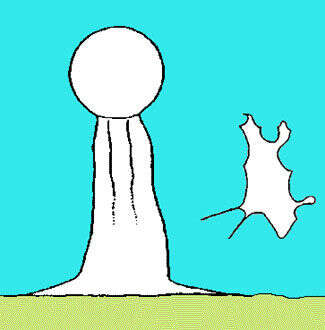
Fonticula
Fonticula is a genus of cellular slime mold which forms a fruiting body in a volcano shape. As long ago as 1979 it has been known to not have a close relationship with either the Dictyosteliida or the Acrasidae, the two well-established groups of cellular slime molds. In 1979, Fonticula was made a new genus of its own due to the unique characteristics of its fruiting body, with only one species: Fonticula alba.
Nucleophaga
Nucleophaga is a genus of eukaryotic microorganisms that are internal parasites of amoeba, flagellates, and ciliates.
Pompholyxophrys
Pompholyxophrys is a genus of Opisthokonta appearing as a scale-bearing filose amoeba.