Category
page 1Hubble Space Telescope

Hubble Space Telescope
NASA and ESA space telescope (launched 1990)
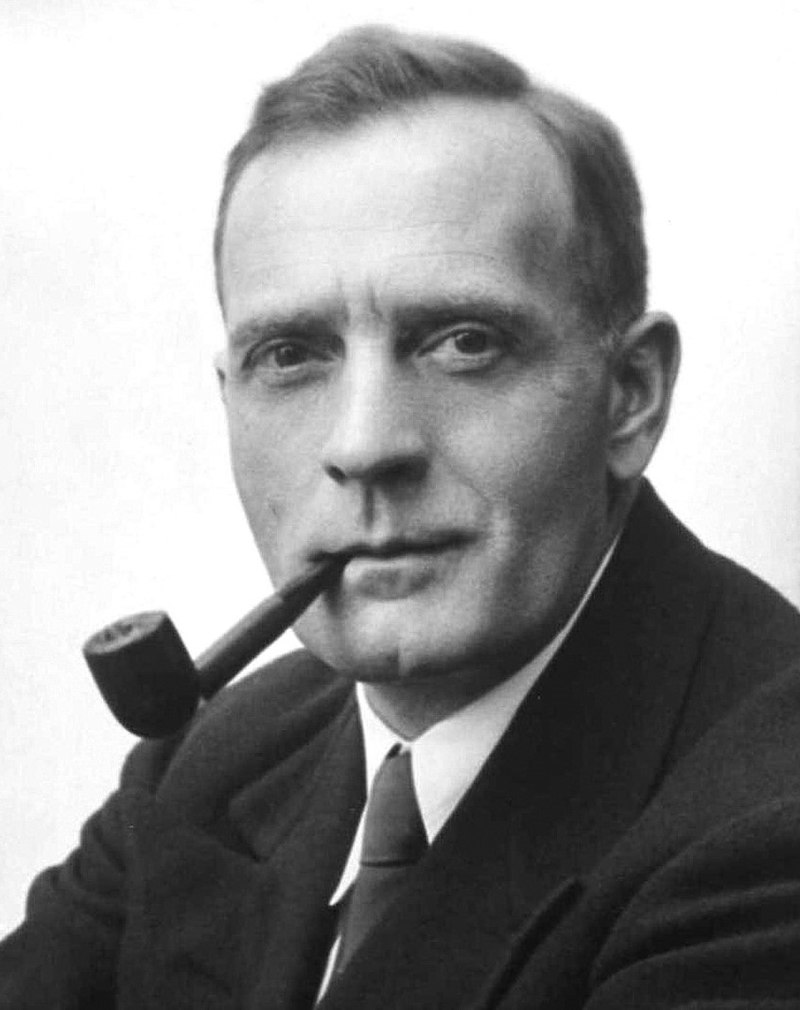
Edwin Hubble
American astronomer (1889–1953)
Nancy Roman
American astronomer and principal in the Hubble Space Telescope project (1925-2018)

STS-31
STS-31 was the 35th mission of NASA's Space Shuttle program and the tenth flight of the Space Shuttle Discovery. The primary purpose of this mission was the deployment of the Hubble Space Telescope (HST) into low Earth orbit. Discovery lifted off from Launch Complex 39B on April 24, 1990, from Kennedy Space Center, Florida.
.jpg)
Earendel
WHL0137-LS, also known as Earendel, is a star cluster or a star located in the constellation of Cetus. Discovered in 2022 with the Hubble Space Telescope, it has a comoving distance of 28 billion light-years (8.6 billion parsecs), making it the most distant known star if it is a single object. The previous farthest known star, MACS J1149 Lensed Star 1, also known as Icarus, at a comoving distance of , was discovered by Hubble in 2018. However, further observations from the James Webb Space Telescope (JWST) in the 2020s revealed that Earendel is more likely a star cluster. Objects like Earendel
Great Observatories program
series of space telescopes
MACS J1149 Lensed Star 1
blue supergiant, the most distant star detected at 9 billion light years from Earth
UDFj-39546284
__NOTOC__

UDFy-38135539
thumb|upright|250px|UDFy-38135539 is within the annotated red circle
thumb|right|250px|Location of UDFy-38135539 (HUDF.YD3)
Space Telescope Science Institute
research institute in Baltimore, Maryland, United States
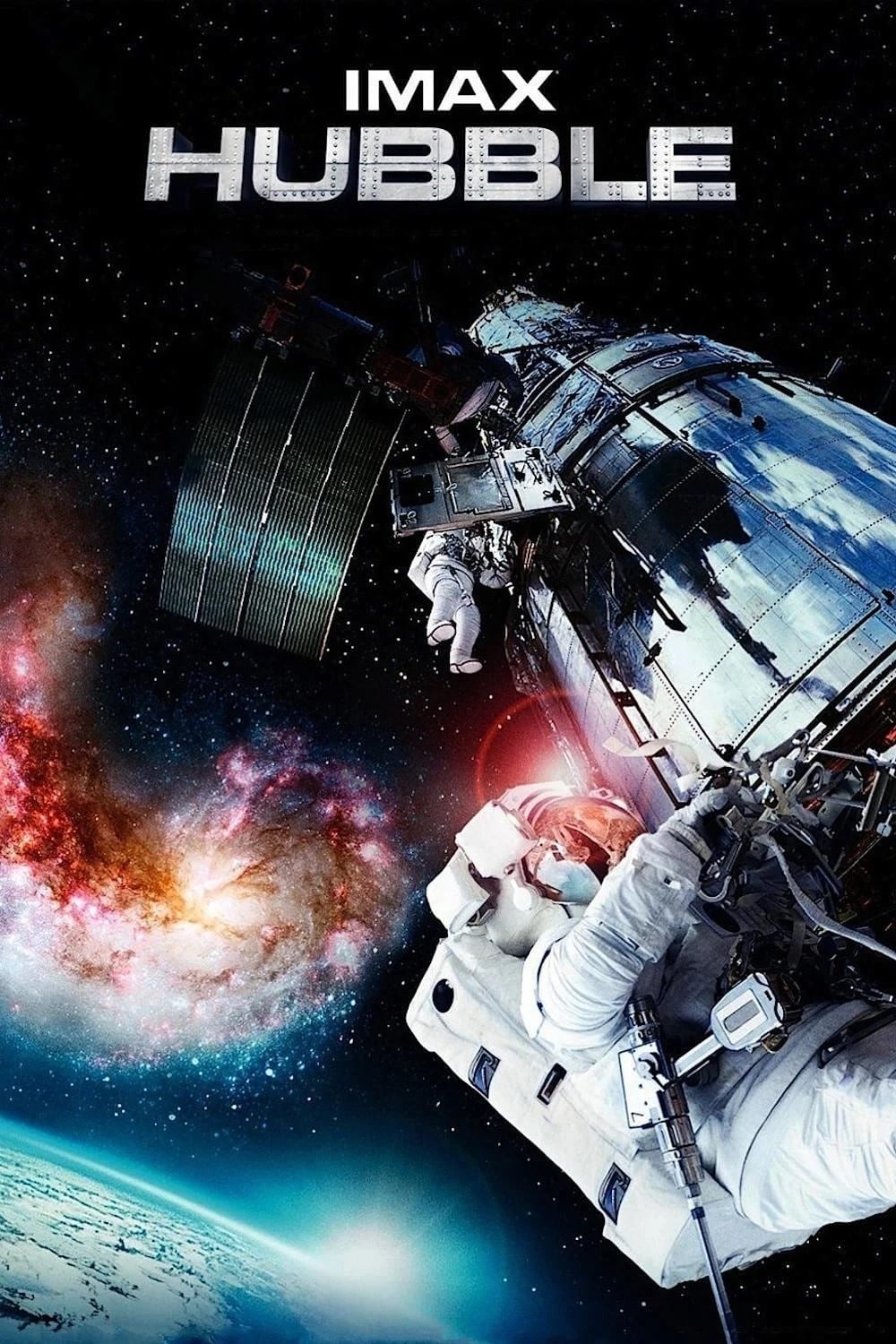
Hubble
2010 film by Toni Myers
Civilization V: Gods & Kings
expansion pack of Civilization V video game
Guide Star Catalog
star catalog compiled to support the Hubble Space Telescope with targeting off-axis stars
UDF 423
galaxy
WASP-107b
WASP-107b is a super-Neptune exoplanet that orbits the K-type star WASP-107. It lies 200 light-years away from Earth in the constellation of Virgo. Its discovery was announced in 2017 by a team led by D. R. Anderson via the WASP-South.
UDF 2457
star
Sagittarius Window Eclipsing Extrasolar Planet Search
2006 astronomical survey
Hubble Heritage Project

Godzilla Star
variable star
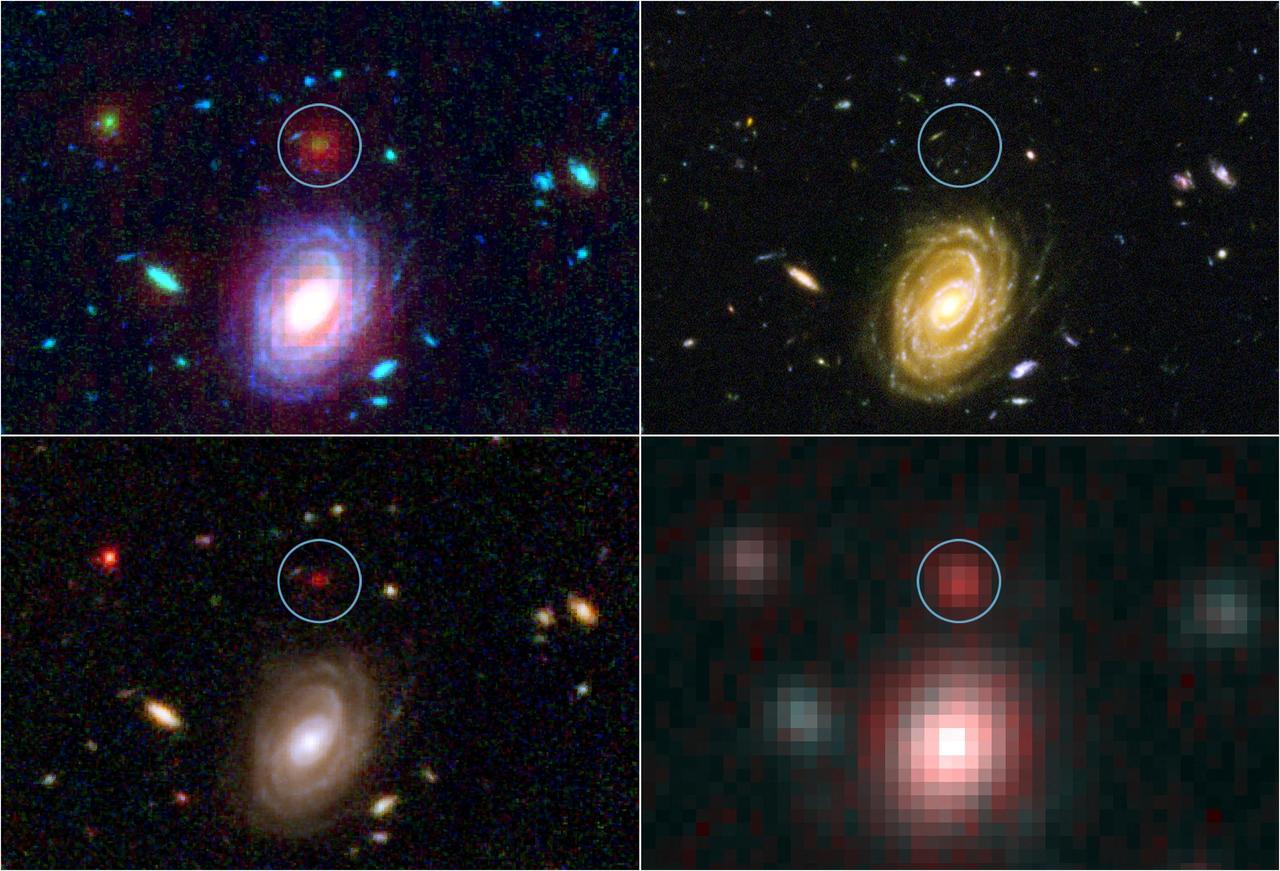
HUDF-JD2
HUDF-JD2 (UDF 033238.7 -274839.8 or BBG 3179) is a distant, massive, post-starburst galaxy
that was discovered with the Hubble Ultra Deep Field (HUDF) image. It was the most distant galaxy identified in the HUDF, in 2005. It is located at in the constellation of Fornax.
DF-224
thumb|300px|DF-224 in the Hubble Space Telescope
The DF-224 is a space-qualified computer used in space missions from the 1980s. It was built by Rockwell Autonetics. As with many spacecraft computers, the design is very redundant, since servicing in space is at best difficult and often impossible. The configuration had three CPUs, one active and two spares. The main memory consisted of six memory units, each with 8K 24-bit words of plated wire memory, with up to 48K words total. Four memory modules could be powered up at one time, resulting in a maximum of 32K words of available memory, though