Category
page 1Human-based computation games
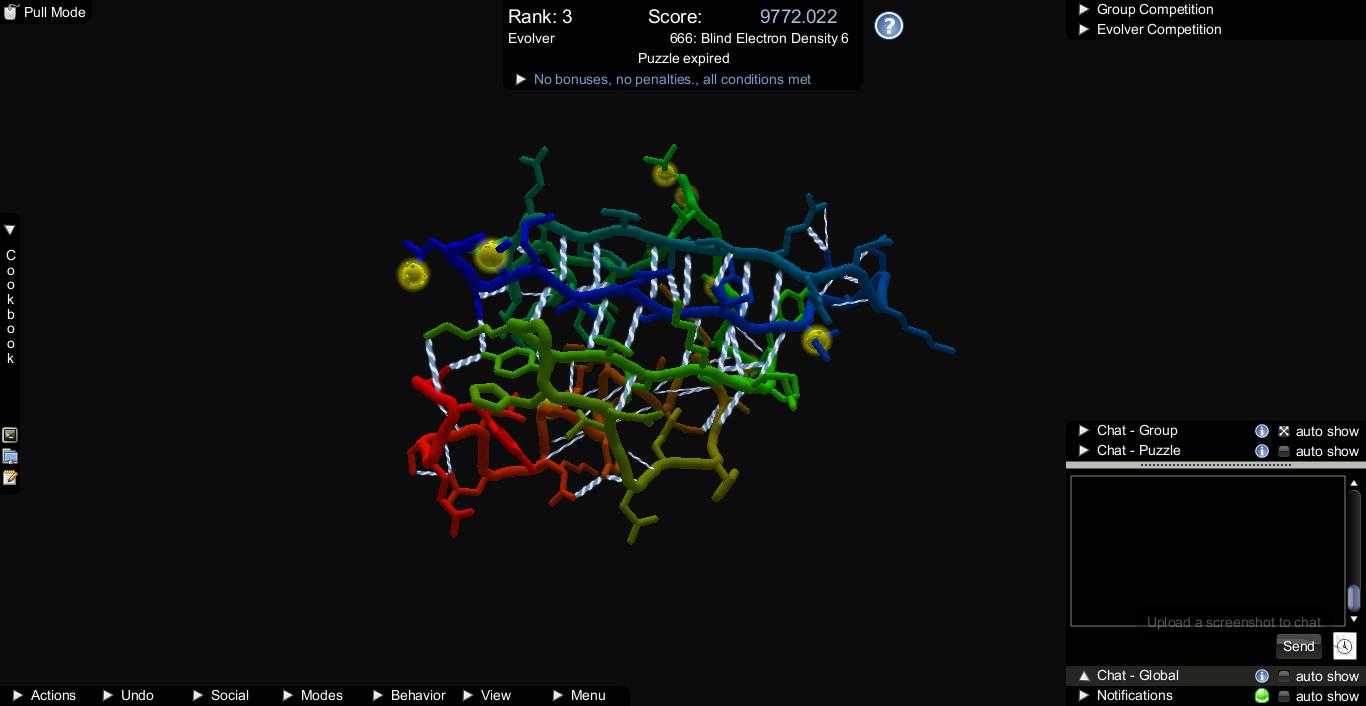
Foldit
Foldit is an online puzzle video game about protein folding. It is part of an experimental research project developed by the University of Washington, Center for Game Science, in collaboration with the UW Department of Biochemistry. The objective of Foldit is to fold the structures of selected proteins as perfectly as possible, using tools provided in the game. The highest scoring solutions are analyzed by researchers, who determine whether or not there is a native structural configuration (native state) that can be applied to relevant proteins in the real world. Scientists can then use these
EyeWire
Eyewire is a citizen science game from Sebastian Seung's Lab at Princeton University. It is a human-based computation game that uses players to map retinal neurons. Eyewire launched on December 10, 2012. The game utilizes data generated by the Max Planck Institute for Medical Research. As of March 2025, Eyewire has had around 350,000 players and resulted in the tracing of 6,000 neurons.''''''

EteRNA
Eterna is a browser-based "game with a purpose", developed by scientists at Carnegie Mellon University and Stanford University, that engages users to solve puzzles related to the folding of RNA molecules. The project is supported by the Bill and Melinda Gates Foundation, Stanford University, and the National Institutes of Health. Prior funders include the National Science Foundation.