Category
page 1Human female reproductive system

vagina
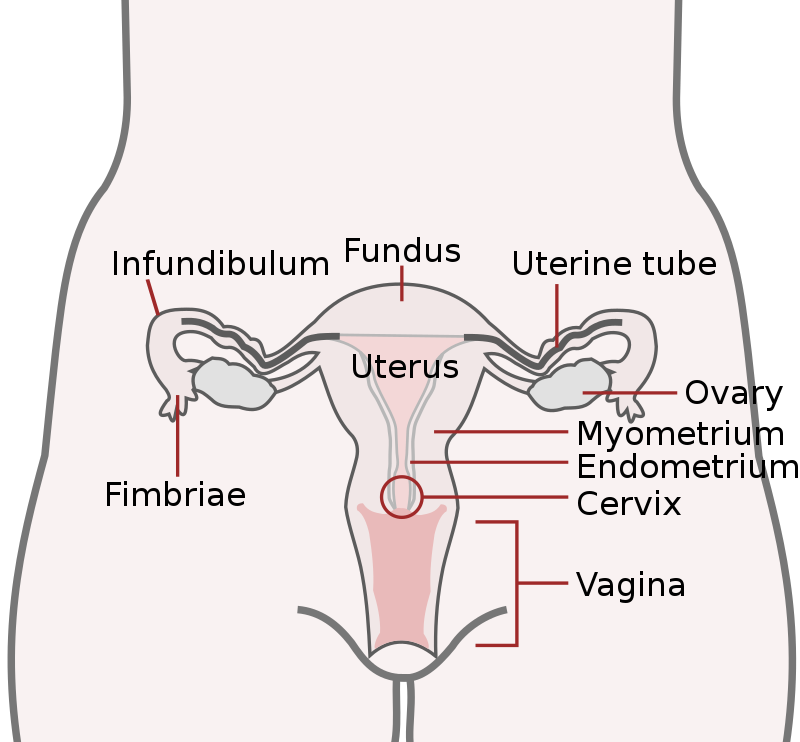
The vagina (: vaginas or vaginae) is the elastic, muscular reproductive organ of the female genital tract through which mammals copulate and give birth. In humans, it extends from the vulval vestibule to the cervix (neck of the uterus). The vaginal introitus is normally partly covered by a thin layer of mucosal tissue called the hymen. The vagina also channels menstrual flow, which occurs in humans and closely related primates as part of the menstrual cycle.

uterus
The uterus (from Latin uterus, : uteri or uteruses) or womb () is the organ in the reproductive system of most female mammals, including humans, that accommodates the embryonic and fetal development of one or more fertilized eggs until birth. The uterus is a hormone-responsive sex organ that contains glands in its lining that secrete uterine milk for embryonic nourishment. (The term uterus is also applied to analogous structures in some non-mammalian animals.)

Vulva
In mammals, the vulva (: vulvas or vulvae) comprises mostly external, visible structures of the female genitalia leading into the interior of the female reproductive tract. For humans, it includes the mons pubis, labia majora, labia minora, clitoris, vestibule, urinary meatus, vaginal introitus, hymen, and openings of the vestibular glands (Bartholin's and Skene's). The folds of the outer and inner labia provide a double layer of protection for the vagina (which leads to the uterus). While the vagina is a separate part of the anatomy, colloquially the term has often been used synonymously with
.jpg)
ovary
The ovary () is a gonad in the female reproductive system that produces ova; when released, an ovum travels through the fallopian tube/oviduct into the uterus. There is an ovary on the left and the right side of the body. The ovaries are endocrine glands, secreting various hormones that play a role in the menstrual cycle and fertility. The ovary progresses through many stages beginning in the prenatal period through menopause.

egg cell
haploid female reproductive cell or gamete
fallopian tube
part of the female reproductive organs

menstrual cycle
a type of ovulation cycle where the endometrium is shed if pregnancy does not occur

female human reproductive system
reproductive system of the human female, made up of internal and external organs

cervix
The cervix (: cervices) or uterine cervix () is a dynamic fibromuscular sexual organ of the female reproductive system that connects the vagina with the uterine cavity. The human female cervix has been documented anatomically since at least the time of Hippocrates, over 2,000 years ago. The cervix is approximately long with a diameter of approximately and tends to be described as a cylindrical shape, although the front and back walls of the cervix are contiguous. The size of the cervix changes throughout a female's life cycle. For example, females in the fertile years of their reproductive cyc

Bartholin's gland
two glands located slightly posterior and to the left and right of the opening of the vagina
Skene's gland
glands located on the anterior wall of the vagina
female sexual arousal disorder
persistent or recurrent inability to attain sexual arousal or to maintain arousal until the completion of a sexual activity
postcoital bleeding
medical condition
Perineal sponge
spongy cushion of tissue and blood vessels found in the lower genital area of women
vaginal cyst
Benign growths of the vaginal epithelium
Vaginal epithelium
inner lining of the vagina
Pinopode
Pinopodes (also known as pinopods and uterodomes) are protrusions on the apical cellular membrane of uterine epithelial cells.
list of vaginal tumors
Wikimedia list article
Adnexal mass
medical condition
salpingitis isthmica nodosa
Human disease
vaginal rugae
the internal, transverse structures that line the vagina