Category
page 1Hydrogen physics

proton
A proton is a stable subatomic particle, symbol , H+, or 1H+ with a positive electric charge of +1 e (elementary charge). Its mass is slightly less than the mass of a neutron and approximately times the mass of an electron (the proton-to-electron mass ratio). Protons and neutrons, each with a mass of approximately one dalton, are jointly referred to as nucleons (particles present in atomic nuclei).

Bohr model
atomic model introduced by Niels Bohr in 1913
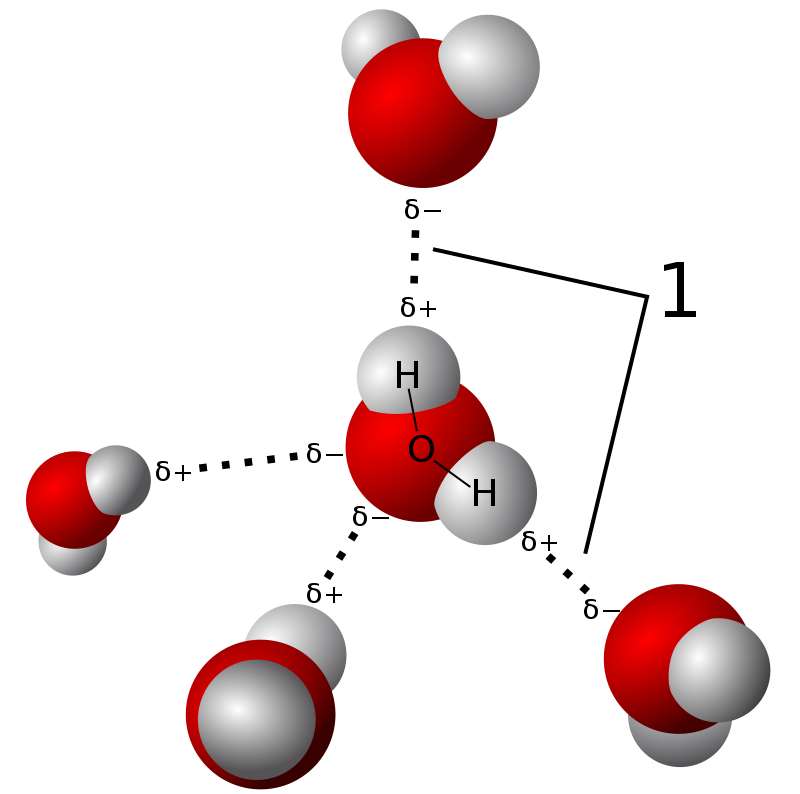
hydrogen bond
form of association between an electronegative atom and a hydrogen atom attached to a second, relatively electronegative atom

antihydrogen
thumb|right|upright=1.2|Antihydrogen consists of an antiproton and a [[positron]]
thumb|right|upright=1.2|Simplified model of an antihydrogen atom in ground state
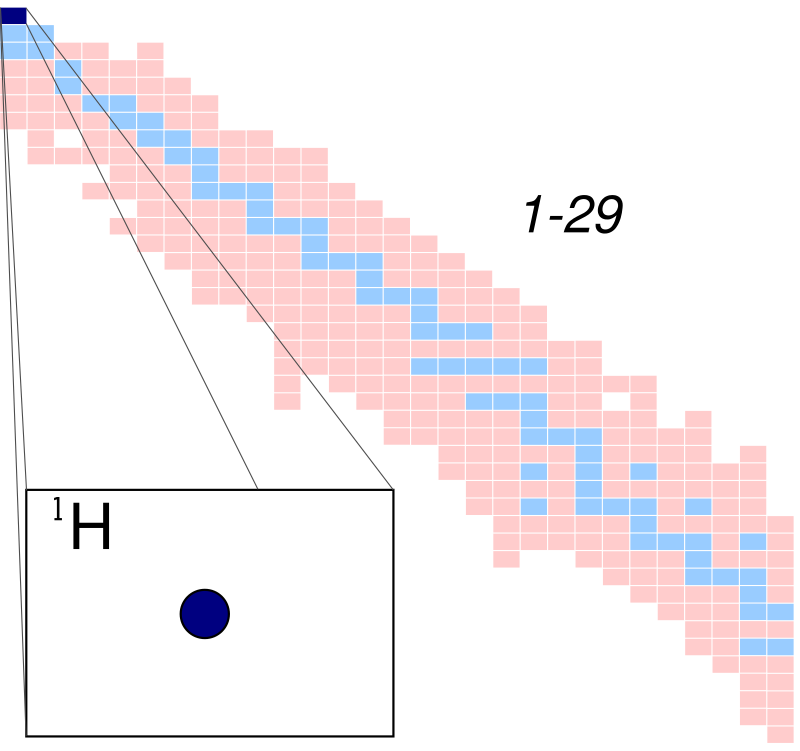
hydrogen atom
atom of element hydrogen
metallic hydrogen
phase of hydrogen
Balmer series
hydrogen spectral series
liquid hydrogen
liquid state of the element hydrogen
Hydrogen Line Spectrum
important atomic emission spectra
Rydberg formula
formula for spectral line wavelengths in alkali metals
Lyman series
hydrogen spectral series of transitions
hydrogen line
spectral line of hydrogen state transitions
hydrogen-like atom
atomic nucleus with one electron that behaves like hydrogen

H-alpha
thumb|In the Bohr model of the hydrogen atom, the electron transition from energy level n = 3 to n = 2 results in the emission of an H-alpha photon.
hydrogen ion
hydrogen atom that has gained or lost an electron
trihydrogen cation
chemical compound
hydrogen anion
negative ion of hydrogen
dihydrogen cation
molecular ion
solid hydrogen
hydrogen in a solid state
dihydrogen bond

Lyman-alpha line
thumb|upright|The All-sky New Horizons Alice Lyα maps in ecliptic coordinates centered on the anti-Sun direction, and the lower map is in Galactic coordinates. The c. 90,000 stars in the M. A. Velez et al. (2024) catalog are overlaid as black dots, where the size of the dot is proportional to the logarithm of the expected Alice count rate from each star. The map in Galactic coordinates indicates the outlines of four of the important LISM clouds ("LIC", in red; "Aql" in green; "Blue", in blue; and "G", in tan).
Lyman-alpha, typically denoted by Ly-α or Lyα, is a spectral line of hydrogen (
Bohr-Sommerfeld atom model
extension of the Bohr model to allow elliptical orbits of electrons around an atomic nucleus
compressed hydrogen
gaseous state of the element hydrogen kept under pressure
Balmer jump
difference of intensity of the stellar continuum spectrum
Slush hydrogen
combination of liquid hydrogen and solid hydrogen
Spin isomers of hydrogen
spin states of hydrogen
kaonic hydrogen
exotic atom consisting of a negatively charged kaon orbiting a proton