Category
page 1Hymenoptera genera

Vespula
Vespula is a small genus of social wasps, widely distributed in the Northern Hemisphere. Along with members of their sister genus Dolichovespula, they are collectively known by the common name yellowjackets (or yellow jackets) in North America. Vespula species have a shorter oculomalar space (shown in the figure below right) and a more pronounced tendency to nest underground than Dolichovespula.
.jpg)
Polistes
thumb|P. metricus, female
Trichogramma
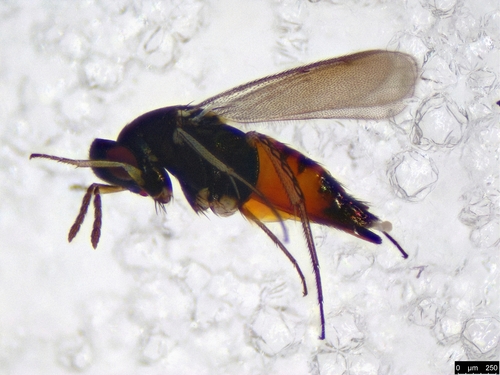
Trichogramma is a genus of minute polyphagous wasps that are endoparasitoids of insect eggs. Trichogramma is one of around 80 genera from the family Trichogrammatidae, with over 200 species worldwide.

Eumenes
genus of insects
Elasmus
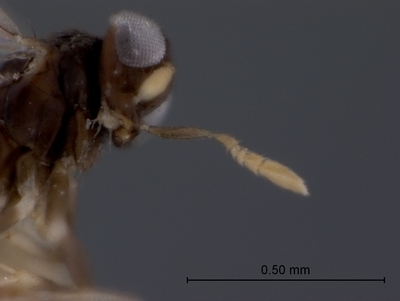
The genus Elasmus is the only member of the hymenopteran subfamily Elasminae (formerly classified as a separate family, Elasmidae), and contains over 200 species worldwide. They are mostly parasitoids or hyperparasitoids of lepidopteran larvae, though several species are parasitoids of Polistes paper wasp larvae. Some authorities now place Elasmus in the subfamily Eulophinae.

Polybia
Polybia is a genus of eusocial wasps ranging from Central to South America (Mexico to Brazil, Argentina). Some produce enough honey to be collected and eaten by local people.

Cynips
Cynips is a genus of gall wasps in the tribe Cynipini, the oak gall wasps. One of the best known is the common oak gall wasp (Cynips quercusfolii), which induces characteristic spherical galls about two centimeters wide on the undersides of oak leaves.

Diplolepis
genus of insects
Abispa
Abispa is a genus of large Australasian potter wasps belonging to the subfamily Eumeninae. The genus was first described in 1838 by Thomas Livingstone Mitchell.

Delta
genus of hymenopterans
Aphelinus
Aphelinus is a genus of parasitoid wasps. Several species in the genus (including A. albipodus, A. asychis and A. varipes) parasitize agricultural pests, such as the soybean aphid (Aphis glycines) or the Russian wheat aphid (Diuraphis noxia).
Blastophaga
Blastophaga is a genus of wasps in the family Agaonidae (fig wasps) which pollinate figs or are otherwise associated with figs, a coevolutional relationship that has been developing for at least 80 million years. Pollinating fig wasps are specific to specific figs. The common fig Ficus carica is pollinated by Blastophaga psenes.
%20(7-19-10)%20yard%2C%20near%20patagonia%2C%20az%20-01%20(4812518790).jpg)
Pepsis
thumb|Pepsis versus tarantula in Arizona

Trissolcus
thumb|Trissolcus edessae female
thumb|Trissolcus euschisti

Anastatus
Anastatus is a large genus of parasitic wasps belonging to the family Eupelmidae.

Ancistrocerus
thumb|200px|Ancistrocerus campestris on goldenrod
thumb|200px|Ancistrocerus nigricornis in copula (video, 1m 50s)

Anoplius
Anoplius is a genus of spider wasps in the family Pompilidae called the blue-black spider wasps. It is one of two genera within the tribe Anopliini of subfamily Pompilinae.

Chrysis
genus of insects
Eupelmus
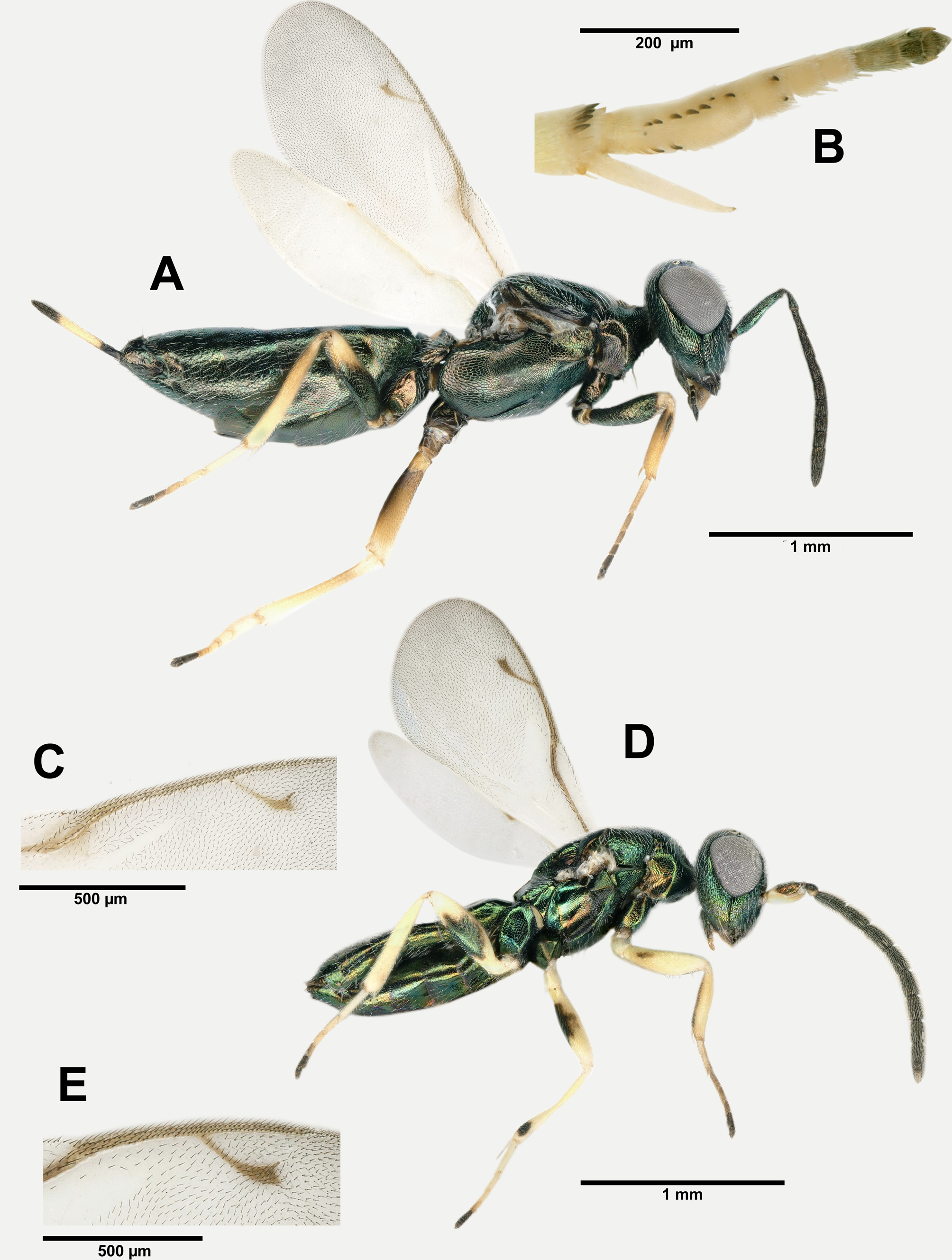
Eupelmus is a genus of wasps belonging to the family Eupelmidae. Species are parasitic, being either parasitoids attacking a wide variety of insects, or phytophagous with larvae feeding on different species of plants.

Platygaster
thumb|Platygaster sp. in copula. Filmed on a fallen beech in a forest near Marburg, Hesse, Germany
Platygaster is a genus of parasitoid wasps in the family Platygastridae. There are more than 560 described species in Platygaster.

Cryptocheilus
Cryptocheilus is a genus of spider wasps of the subfamily Pepsinae, found in the world's warmer regions. They vary in size from medium to large and are often strikingly coloured. The females construct multicellular nests in cavities, once built each cell is stocked with a spider, captured by the female. They are found in open habitats such as heaths, meadows and forest edges.

Macromesus
Macromesus is a genus of parasitic wasps. It is the only genus belonging to the family Macromesidae.

Andricus
Andricus is a genus of oak gall wasps in the family Cynipidae.
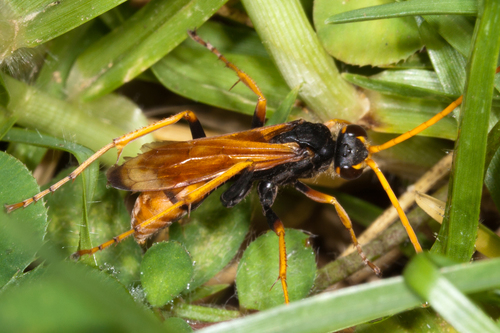
Pompilus
genus of insects

Ablerus
thumb|226px|Female Ablerus atomon, wing detail

Antepipona
Antepipona is a palearctic, afrotropical and indomalayan genus of potter wasps.
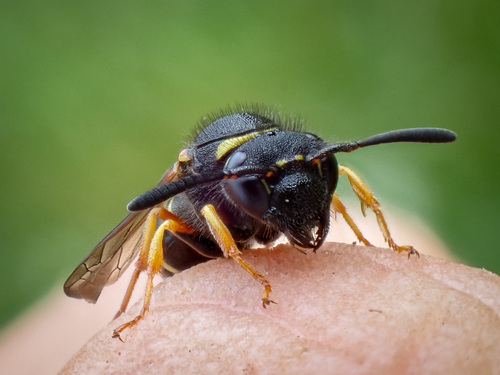
Odynerus
Odynerus is a primarily Holarctic genus of potter wasps.

Nasonia
Nasonia are a genus of small pteromalid parasitoid wasps that sting and lay eggs in the pupae of various flies. The fly species that Nasonia usually parasitize are primarily blow flies and flesh flies, making Nasonia a useful tool for biocontrol of these pest flies. The small match-head sized wasps are also referred to as jewel wasps based on the emerald sheen of their exoskeleton (visible in the adjacent image).

Torymus
Torymus is a genus of chalcid wasps from the family Torymidae, and there are more than 400 spp. worldwide. It was named by the Swedish naturalist Johan Wilhelm Dalman in 1820. Most species are ectoparasitoids of gall forming insects, usually gall wasps and gall midges.
thumb|left|Torymus sp., female

Pegoscapus
Pegoscapus is a genus of fig wasp native to the Americas. They range from Florida and Mexico in the north to Argentina in the south. Fig wasps have an obligate mutualism with the fig species they pollinate. Pegoscapus pollinates species in section Americana of the subgenus Urostigma.
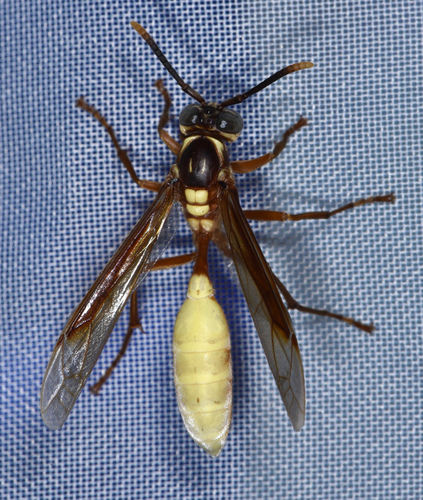
Apoica
Apoica is a genus of eusocial paper wasp found throughout the Central and South American tropics. These wasps are truly nocturnal, carrying out their foraging activities after the setting of the sun. They prefer to construct their nests, which have an open comb like many paper wasps, under large leaves, or in shrubs. During the day, wasps covering the comb fan their wings to cool the nest, keeping it at a suitable temperature for larval development.
Dipogon
genus of insects
Ceropales
Ceropales is a genus of kleptoparasitic spider wasps from the sub-family Ceropalinae of the family Pompilidae. They are characterised by the taking of the spider prey of other solitary wasps, mainly Pompilidae but members of the Sphecidae that provision with spider prey are sometimes also hosts. In some languages their name translates into English as "cuckoo spider wasp".

Coccophagus
Coccophagus is a large genus of chalcid wasps belonging to the family Aphelinidae.
Dendrocerus
Dendrocerus is a large genus of ceraphronoid wasps in the family Megaspilidae. There are more than 100 described species in Dendrocerus.

Evania
Evania is a genus of ensign wasps in the family Evaniidae. Like all members of the family, they are cockroach egg parasitoids. There are more than 60 described species in Evania. Evania appendigaster, the blue-eyed ensign wasp, is a common wasp found through most of the world.
Agenioideus
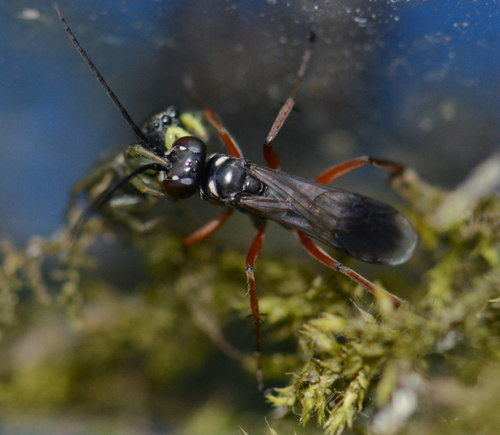
Agenioideus is a genus of spider wasps from the subfamily Pompilinae; the genus occurs in Europe, where 21 species are recorded, eastwards to Japan, in North America, South America, and Australia.

Aporinellus
Aporinellus is a genus of insects belonging to the family Pompilidae.

Telenomus
Telenomus is a genus of parasitoid wasps belonging to the subfamily Telenominae. The genus was first described by Alexander Henry Haliday in 1833. Species in this genus parasitise the eggs or immature stages of other insects.
Sparasion
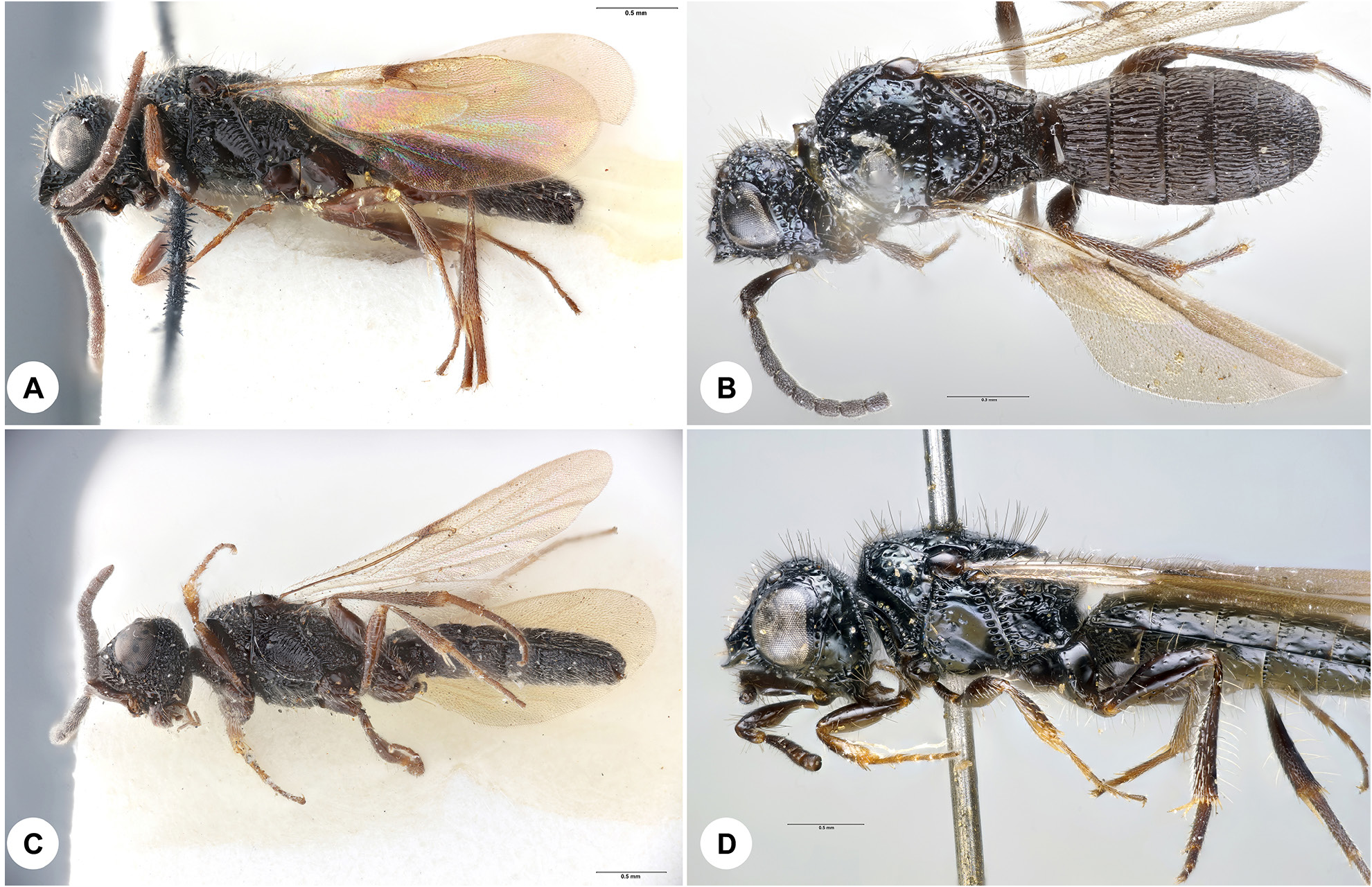
Sparasion is a genus of wasps belonging to the family Sparasionidae, within the superfamily Platygastroidea. The genus has specimens widespread in Eurasia, Africa, and temperate North America.

Pleistodontes
Pleistodontes is a genus of fig wasps native to Australia and New Guinea, with one species (P. claviger) from Java. Fig wasps have an obligate mutualism with the fig species they pollinate. Pleistodontes pollinates species in section Malvanthera of the Ficus subgenus Urostigma.

Ropalidia
Ropalidia is a large genus of eusocial paper wasps (Polistinae) in the tribe Ropalidiini distributed throughout the Afrotropical, Indomalayan and Australasian biogeographical regions. The genus Ropalidia is unusual because it contains both independent and swarm-founding species. Ropalidia romandi is one of the swarm founding species, meaning that new nests are founded by a large group of workers with a smaller number of inseminated females (egg-laying foundresses), while Ropalidia revolutionalis is independent-founding, meaning that each nest is founded by a single foundress.
Leucospis
thumb|Leucospis gigas
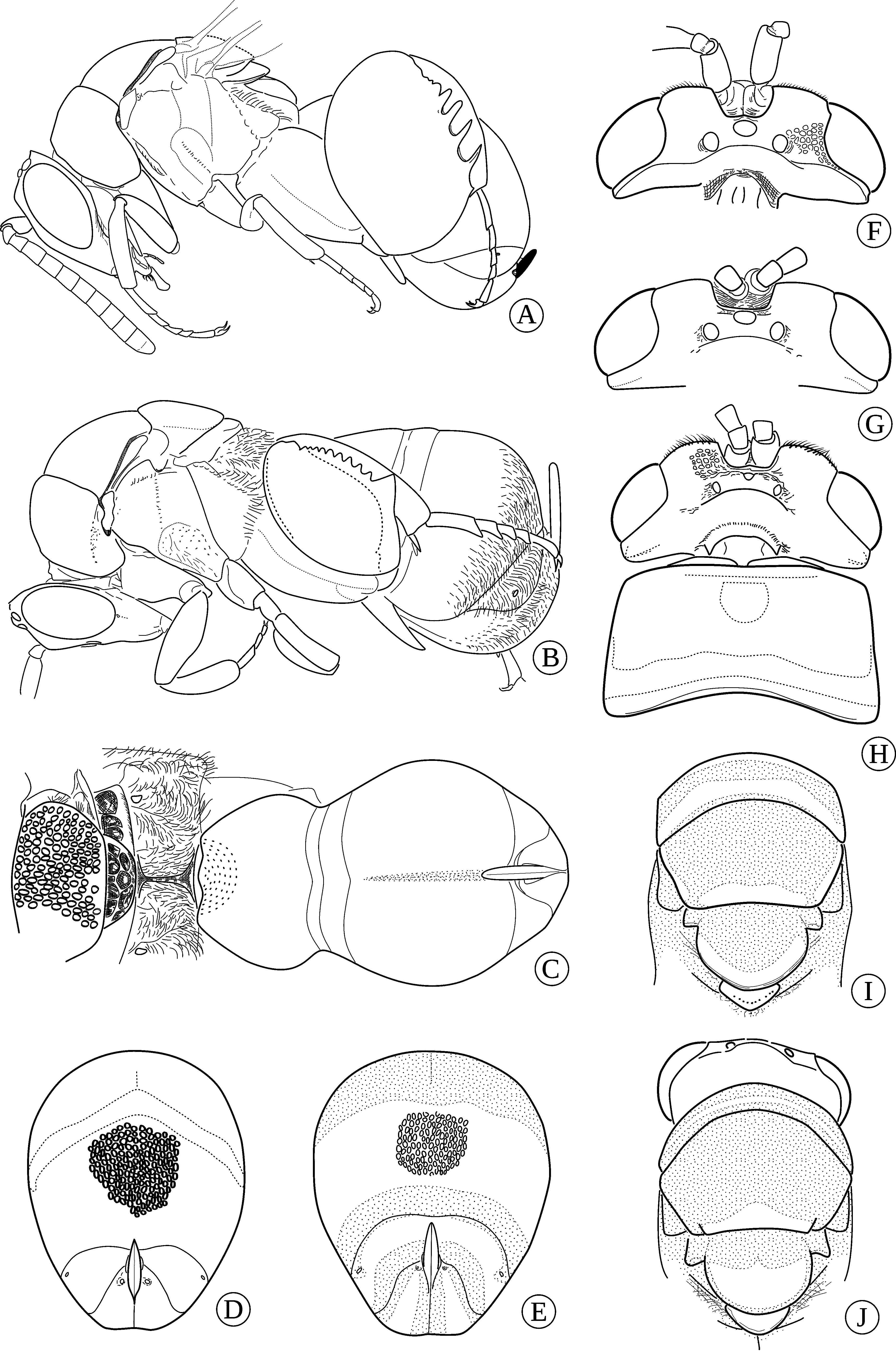
Leucospis is a genus of wasps belonging to the family Leucospidae. Most species are brightly coloured with yellow and black patterning and about 2 cm long. They have characteristically enlarged femurs on the hind leg, with the lower margin toothed. The wings have a longitudinal fold and the long ovipositor is bent over their backs above the abdomen or metasoma. They are parasitic on wasps and solitary bees that construct cells and provision food for their offspring. The Leucospis larvae live and grow as ectoparasites of the host larvae. Usually, only one parasite emerges
Pteromalus
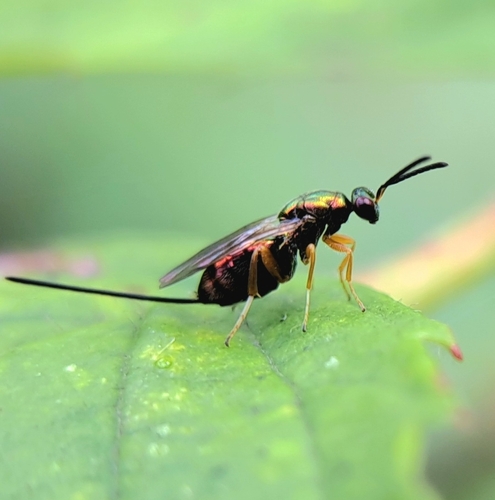
Pteromalus is a genus of pteromalid wasps in the family Pteromalidae. There are at least 430 described species in the genus Pteromalus.
Priocnemis
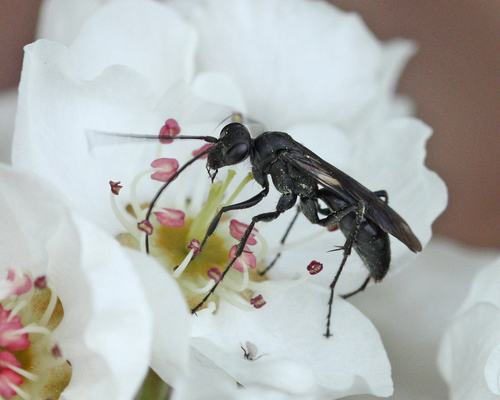
Priocnemis is a genus of pepsine spider wasp containing around 30 species.
Nixonia
Nixonia is a genus of wasps. It is the only member of the family Nixoniidae in the superfamily Platygastroidea. They are amongst the largest of the platygastroids at up to 9 mm in length. Members of the genus are known from Africa, the Indian subcontinent and Southeast Asia. The biology of only one species is known, which parasitizes orthopteran eggs.
Psyllaephagus
Psyllaephagus is a genus of chalcid wasps. It was named and circumscribed by William Harris Ashmead in 1900. , Psyllaephagus contains approximately 245 species. They are found worldwide: Australia has 100 described species; the Palaearctic region has about 57 species, India has about 20, and Africa about 30.
Paridris
Paridris is a genus of wasps belonging to the family Platygastridae.
Brachymeria
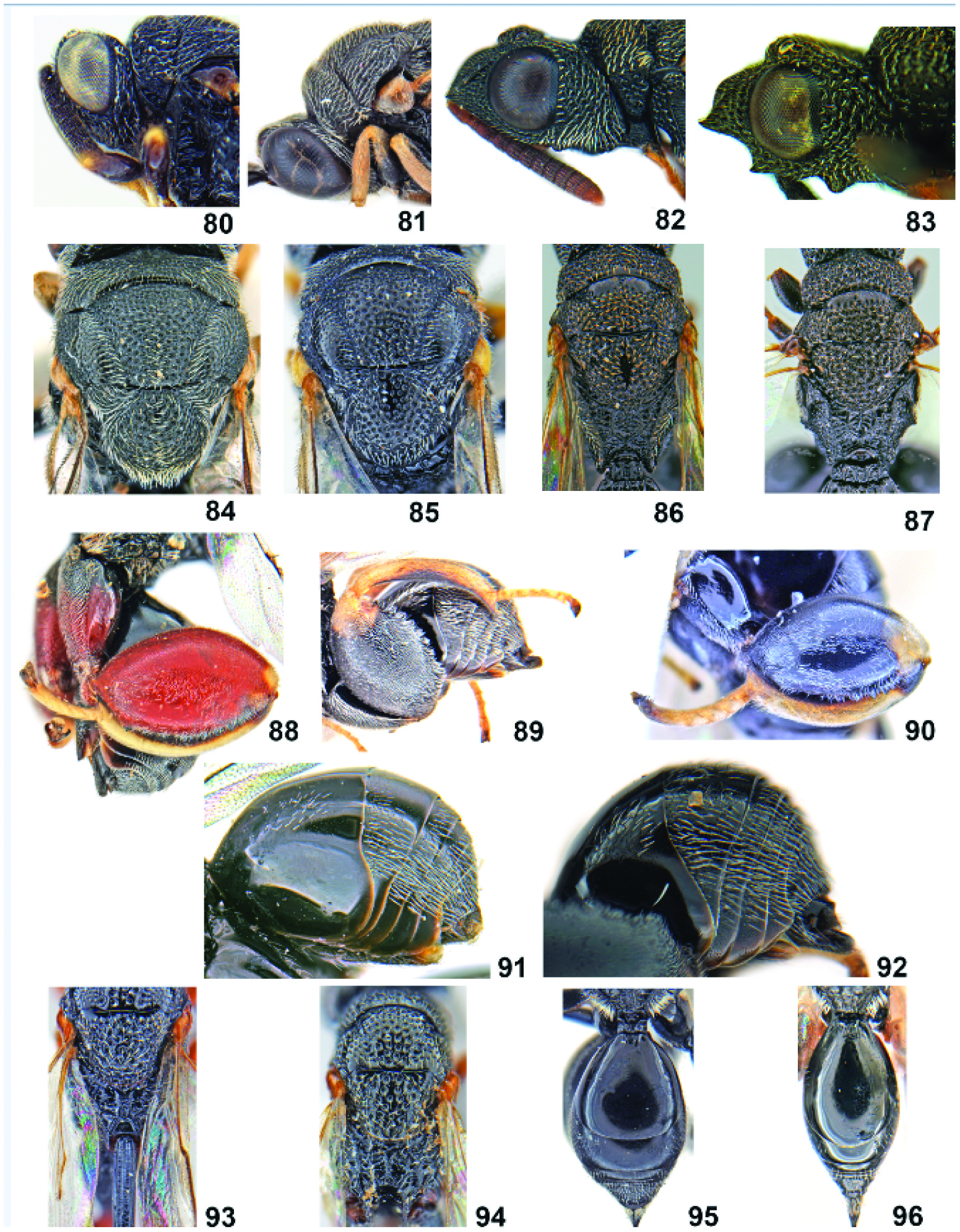
Brachymeria is a genus of parasitic wasps in the family Chalcididae. Over 300 species are known worldwide, all of them parasites of insect pupae. Most species are black with limited yellow markings, and like most chalcidid wasps, they have enlarged hind femora. The female typically lays eggs inside the pupae of a lepidopteran using its ovipositor. Although mostly parasitic on Lepidoptera, a few are hyperparasites (parasites of parasitic Hymenoptera and Diptera), or attack other types of insect larvae (such as Polistes erythrocephalus). The adult parasites emerge typically from the host pupa. S
Ceratosolen
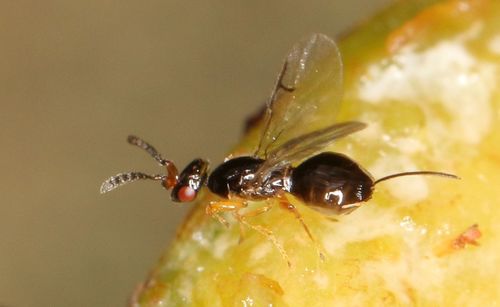
Ceratosolen is an Old World wasp genus in the family Agaonidae (fig wasps). They are pollinators of the monoecious fig subsections Sycomorus and Sycocarpus, and the section Neomorphe, all belonging to the subgenus Sycomorus. The genus is native to the Palearctic, Afrotropical, Indomalayan and Australasian realms.
Eremnophila
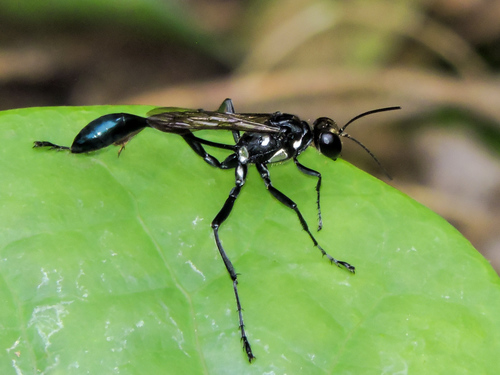
Eremnophila is a genus of thread-waisted wasps in the family Sphecidae, found mainly in North and South America. There are about nine described species in Eremnophila.
thumb|Eremnophila aureonotata

Encarsia
Encarsia is a large genus of minute parasitic wasps of the family Aphelinidae. The genus is very diverse with currently about 400 described species and worldwide distribution. The number of existing species is expected to be several times higher because many species are still undescribed. Encarsia is a very complex genus, with specimens showing both inter- and intra-specific variations, making morphological classification difficult.
Tetramesa
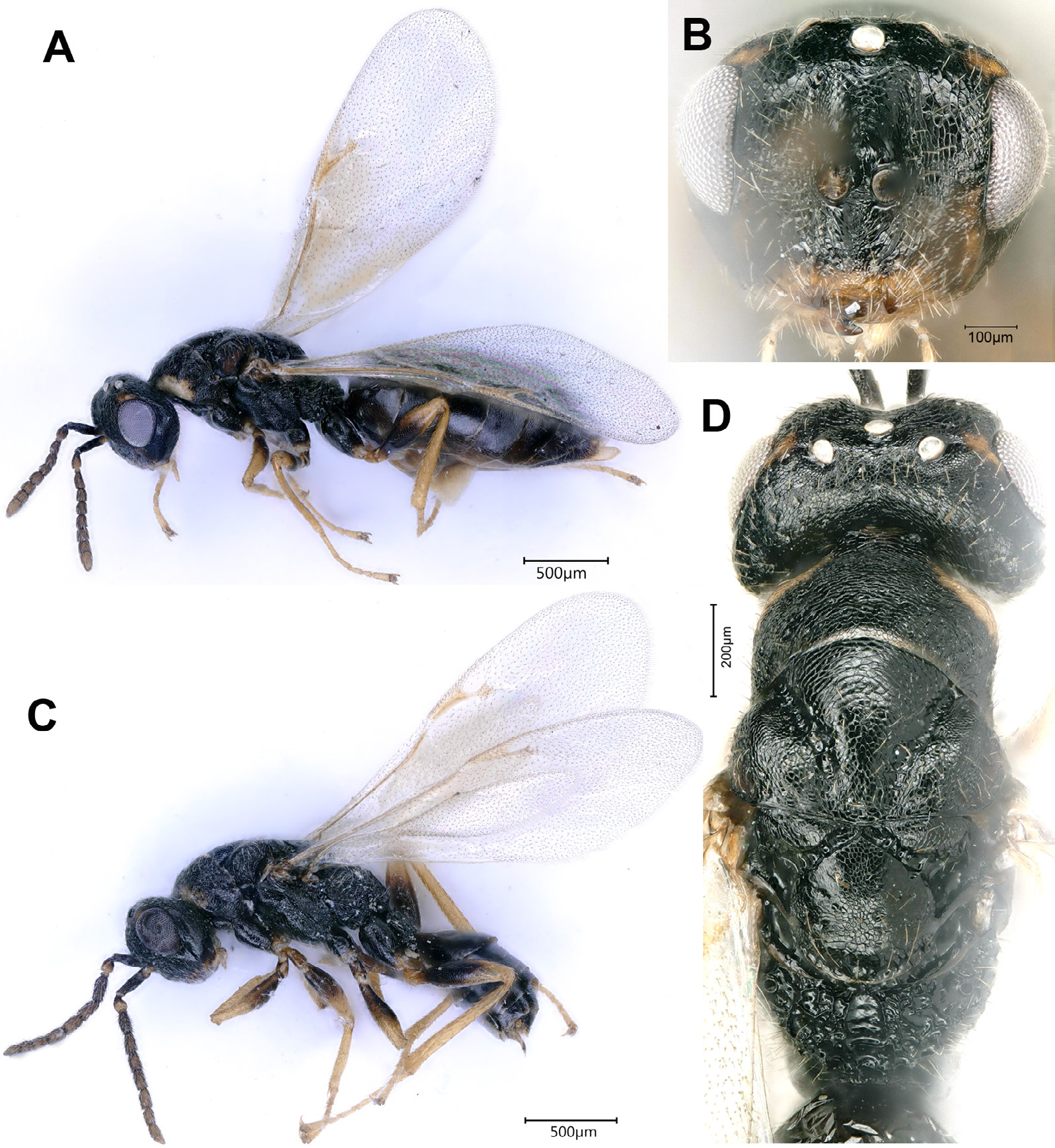
thumb | right | Figure 1.
Tetramesa amica Lotfalizadeh, sp. nov. A female habitus in lateral view B head of female in frontal view C female antenna D male antenna.
Tetramesa is a genus of phytophagous wasps. The genus has over 200 described species , and recently the genera Aiolomorphus and Cathilaria have also been synonymized within Tetramesa in light of phylogenomic evidence. They are generally species-specific gall inducers and can be used as biological control for invasive grasses. Adults feed on nectar.
Discoelius
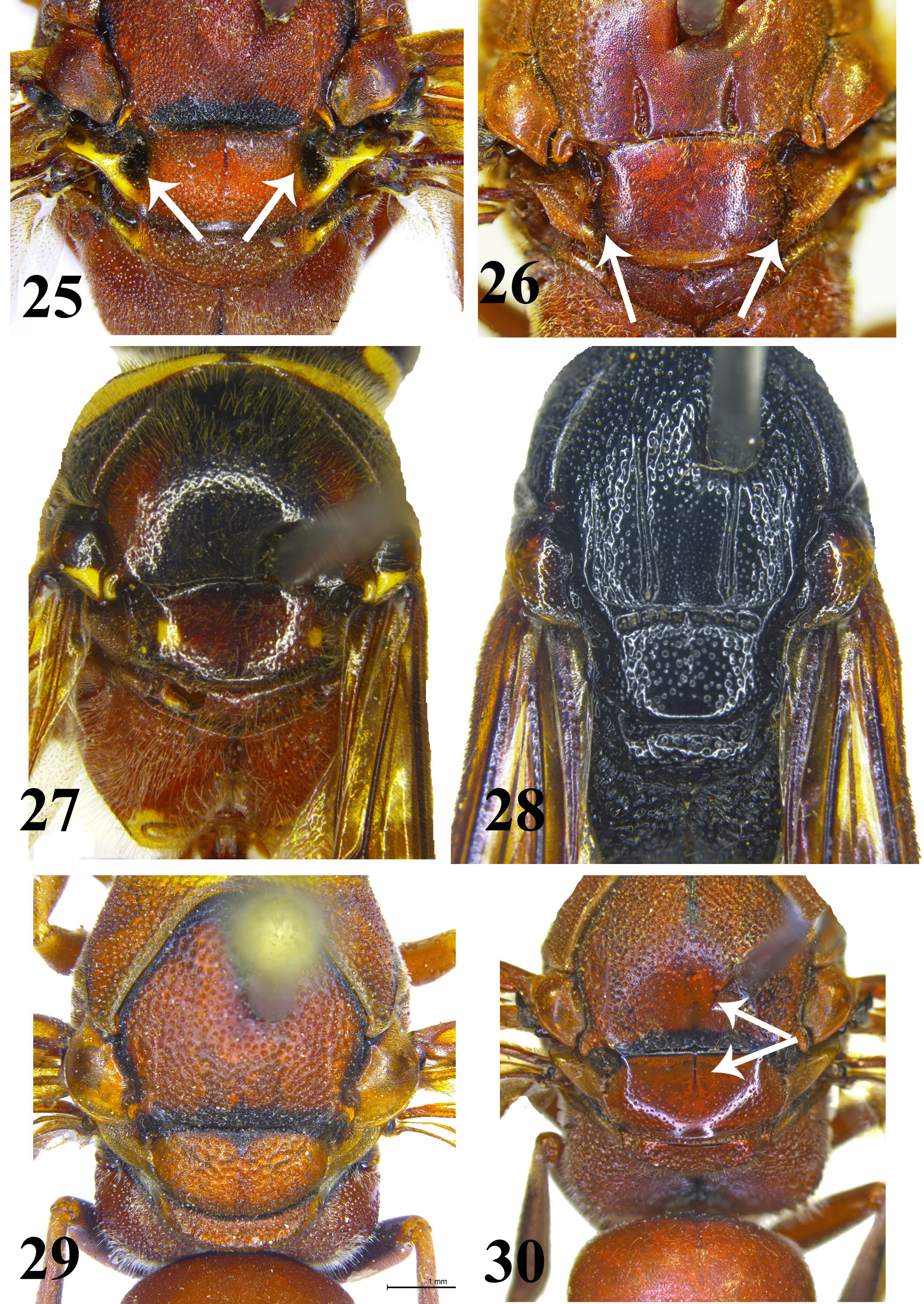
Discoelius is a palearctic genus of potter wasps with seven currently known species. It contains the following species:
Macroteleia
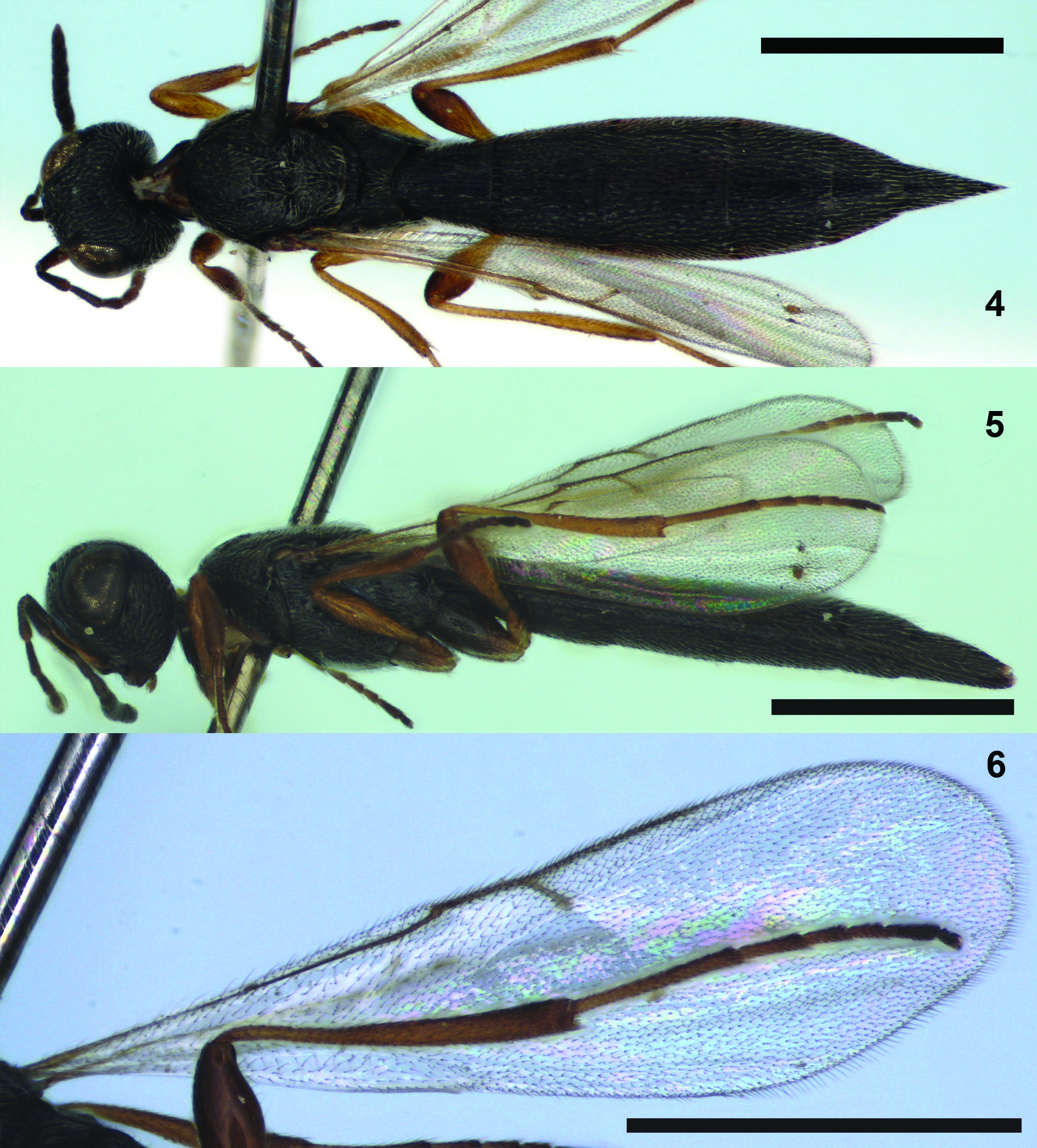
Macroteleia is a genus of parasitoid wasps in the family Platygastridae. There are more than 140 described species in Macroteleia.
Aradophagus
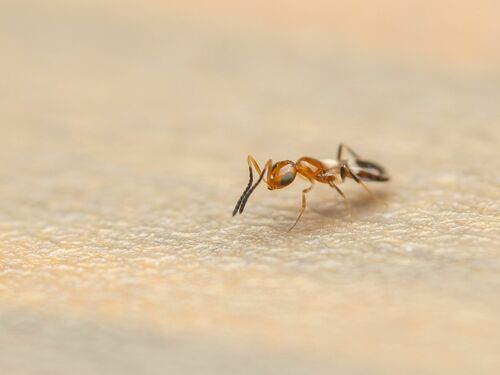
Aradophagus is a genus of wasps belonging to the family Platygastridae.
Sycophila
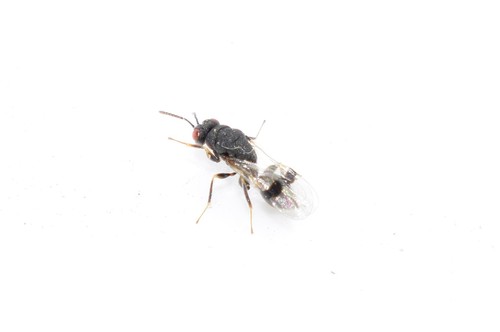
Sycophila is a genus of wasps in the family Eurytomidae. Species of the genus associate with figs and galls of various insects such as gall wasps and gall midges. It can be distinguished from other eurytomid genera by the elongate petiole, the gaster often being laterally compressed, and the forewing having a broadened marginal vein and dark brown maculae. Sycophila has a cosmopolitan distribution.
Nitela
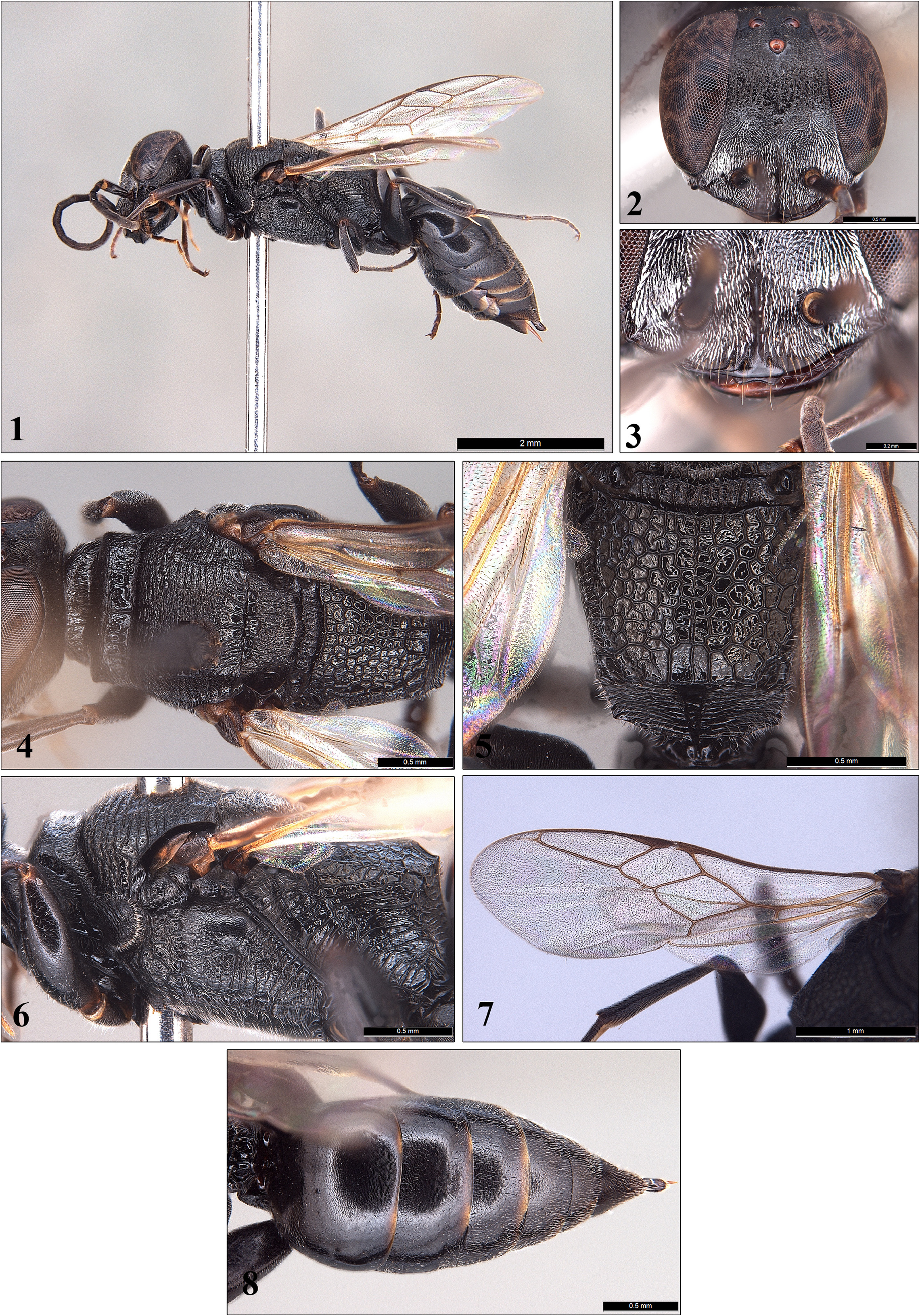
Nitela is a genus of wasps belonging to the family Crabronidae.

Aprostocetus
Aprostocetus is a genus of hymenopteran insects of the family Eulophidae. The genus was erected by John O. Westwood in 1833. This very large group (about 800 described species) of parasitoid wasps has a global distribution.

Aphelinoidea
Aphelinoidea is a genus of wasps belonging to the family Trichogrammatidae.