Category
page 1Hypothetical elementary particles

graviton
In theories of quantum gravity, the graviton is the hypothetical elementary particle that mediates the force of gravitational interaction. It is a quantum of gravitational wave energy. There is no complete quantum field theory of gravitons due to the unsolved mathematical problem of renormalization in general relativity. This problem is avoided in string theory, which has the graviton as a massless state of a fundamental string, but that theory has not made sufficient progress.
magnetic monopole
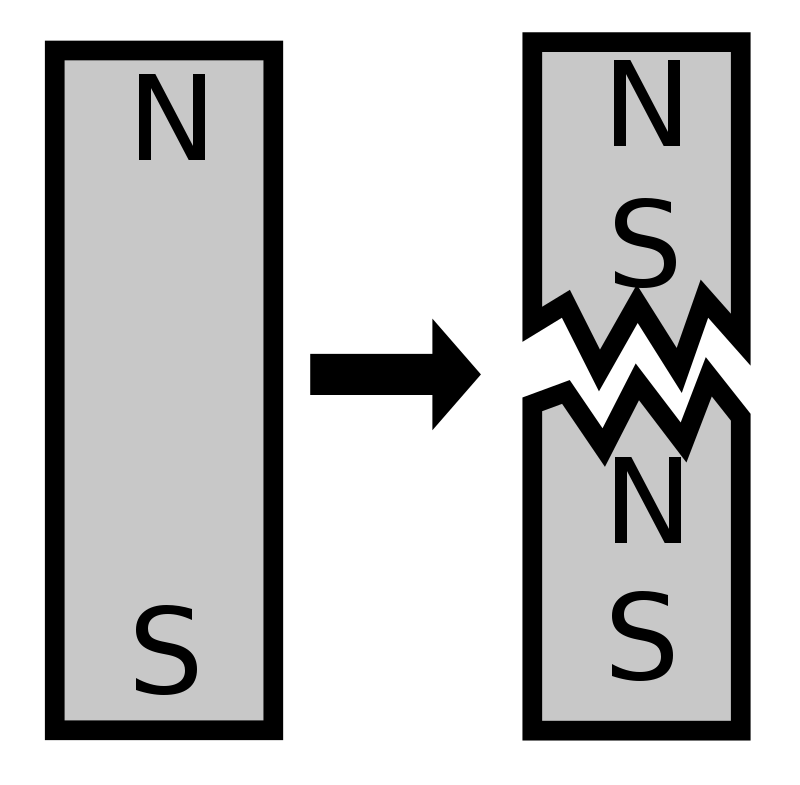
hypothetical particle with one magnetic pole
axion
An axion () is a hypothetical elementary particle originally theorized in 1978 independently by Frank Wilczek and Steven Weinberg as the Goldstone boson of Peccei–Quinn theory, which had been proposed in 1977 to solve the strong CP problem in quantum chromodynamics (QCD). If axions exist and have low mass within a specific range, they are of interest as a possible component of cold dark matter.
neutralino
In supersymmetry, the neutralino is a hypothetical particle. In the Minimal Supersymmetric Standard Model (MSSM), a popular model of realization of supersymmetry at a low energy, there are four neutralinos that are fermions and are electrically neutral, the lightest of which is stable in an R-parity conserved scenario of MSSM. They are typically labeled (the lightest), , and (the heaviest) although sometimes \tilde{\chi}_1^0, \ldots, \tilde{\chi}_4^0 is also used when \tilde{\chi}_i^\pm is used to refer to charginos.
gaugino
In supersymmetry theories of particle physics, a gaugino is the hypothetical fermionic supersymmetric field quantum (superpartner) of a gauge field, as predicted by gauge theory combined with supersymmetry. All gauginos have a spin of , except for the gravitino, which has a spin of .
gluino
In the particle physics theory of supersymmetry, a gluino (symbol ) is the hypothetical supersymmetric partner of a gluon.
gravitino
In supergravity theories combining general relativity and supersymmetry, the gravitino () is the gauge fermion supersymmetric partner of the hypothesized graviton. It has been suggested as a candidate for dark matter.
X and Y bosons
charged massive gauge bosons in the SU(5) Georgi–Glashow grand unified model mediating proton decay, filling out the adjoint representation of SU(5) together with the gluon, the photon and the W and Z bosons
sterile neutrino
hypothetical neutral right-handed lepton that interacts only via gravity and not via any of the other fundamental interactions of the Standard Model
preon
In particle physics, preons are hypothetical point particles, conceived of as sub-components of quarks and leptons. The word 'preon' was coined by Jogesh Pati and Abdus Salam, in 1974. Interest in preon models peaked in the 1980s but has slowed, as the Standard Model of particle physics continues to describe physics mostly successfully, and no direct experimental evidence for lepton and quark compositeness has been found.
dilaton
In particle physics, the hypothetical dilaton is a particle of a scalar field \varphi that appears in theories with extra dimensions when the volume of the compactified dimensions varies. It appears as a radion in Kaluza–Klein theory's compactifications of extra dimensions. In Brans–Dicke theory of gravity, Newton's constant is not presumed to be constant but instead 1/G is replaced by a scalar field \varphi and the associated particle is the dilaton.
axino
The axino is a hypothetical elementary particle predicted by some theories of particle physics. Peccei–Quinn theory attempts to explain the observed phenomenon known as the strong CP problem by introducing a hypothetical real scalar particle called the axion. Adding supersymmetry to the model predicts the existence of a fermionic superpartner for the axion, the axino, and a bosonic superpartner, the saxion. They are all bundled up in a chiral superfield.
chargino
In particle physics, the chargino is a hypothetical particle which refers to the mass eigenstates of a charged superpartner, i.e. any new electrically charged fermion (with spin 1/2) predicted by supersymmetry. They are linear combinations of the charged wino and charged higgsinos. There are two charginos that are fermions and are electrically charged, which are typically labeled (the lightest) and (the heaviest), although sometimes \tilde{\chi}_1^\pm and \tilde{\chi}_2^\pm are also used to refer to charginos, when \tilde{\chi}_i^0 is used to refer to neutralinos. The heavier chargino can deca
sfermion
In supersymmetric extension to the Standard Model (SM) of physics, a sfermion is a hypothetical spin-0 superpartner particle (sparticle) of its associated fermion. Each particle has a superpartner with spin that differs by . Fermions in the SM have spin- and, therefore, sfermions have spin 0.
photino
A photino is a hypothetical subatomic particle, the fermion WIMP superpartner of the photon predicted by supersymmetry. It is an example of a gaugino. Even though no photino has ever been observed so far, it is one of the candidates for the lightest supersymmetric particle in the universe. It is proposed that photinos are produced by sources of ultra-high-energy cosmic rays.
higgsino
In particle physics, for models with N = 1 supersymmetry, a higgsino, symbol , is the superpartner of the Higgs field. A higgsino is a Dirac fermionic field with spin and it refers to a weak isodoublet with hypercharge half under the Standard Model gauge symmetries. After electroweak symmetry breaking higgsino fields linearly mix with U(1) and SU(2) gauginos leading to four neutralinos and two charginos that refer to physical particles. While the two charginos are charged Dirac fermions (plus and minus each), the neutralinos are electrically neutral Majorana fermions. In an R-parity-conserving
X17 particle
hypothetical subatomic particle as the cause of anomalous measurement results near 17 MeV
dark photon
theoretical elementary particle
majoron
In particle physics, majorons (named after Ettore Majorana) are a hypothetical type of Goldstone boson that are conjectured to mediate the neutrino mass violation of lepton number or B − L in certain high energy collisions such as
leptoquark
Leptoquarks are hypothetical particles that would interact with quarks and leptons. Leptoquarks are color-triplet bosons that carry both lepton and baryon numbers. Their other quantum numbers, like spin, (fractional) electric charge and weak isospin vary among models. Leptoquarks are encountered in various extensions of the Standard Model, such as technicolor theories, theories of quark–lepton unification (e.g., Pati–Salam model), or Grand Unified Theories based on SU(5), SO(10), E6, etc. Leptoquarks are currently searched for in experiments ATLAS and CMS at the Large Hadron Collider in CERN.
An Exceptionally Simple Theory of Everything
preprint
diquark
In particle physics, a diquark, or diquark correlation/clustering, is a hypothetical state of two quarks grouped inside a baryon (that consists of three quarks). Corresponding models of baryons are referred to as quark–diquark models. The diquark is often treated as a single subatomic particle with which the third quark interacts via the strong interaction. The existence of diquarks inside the nucleons is a disputed issue, but it helps to explain some nucleon properties and to reproduce experimental data sensitive to the nucleon structure. Diquark–antidiquark pairs have also been advanced for
graviphoton
In theoretical physics and quantum physics, a graviphoton or gravivector is a hypothetical particle which emerges as an excitation of the metric tensor (i.e. gravitational field) in spacetime dimensions higher than four, as described in Kaluza–Klein theory.
W' and Z' bosons
hypothetical gauge bosons that arise from extensions of the electroweak symmetry of the Standard Model
Harari-Schupe preon model
preonic model of sub-quark particle physics
graviscalar
In theoretical physics, the hypothetical particle called the graviscalar or radion emerges as an excitation of general relativity's metric tensor, i.e. gravitational field, but is indistinguishable from a scalar in four dimensions, as shown in Kaluza–Klein theory. The scalar field \phi comes from a component of the metric tensor g_{55} where the figure 5 labels an additional fifth dimension. The only variations in the scalar field represent variations in the size of the extra dimension. Also, in models with multiple extra dimensions, there exist several such particles. Moreover, in theories wi
Magnetic photon
ia hypothetical particle
goldstino
The goldstino is the Nambu–Goldstone fermion emerging in the spontaneous breaking of supersymmetry. It is the close fermionic analog of the Nambu–Goldstone bosons controlling the spontaneous breakdown of ordinary bosonic symmetries.
Saxion
The saxion is the scalar superpartner of the axion, and part of a chiral superfield. The axion represents the CP violating theory of the Standard Model. The axion and saxion are examples of the scalar boson class of particles with a very small mass, and a charge of 0.
chameleon
hypothetical scalar particle
curvaton
The curvaton is a hypothetical elementary particle which mediates a scalar field in early universe cosmology. It can generate fluctuations during inflation, but does not itself drive inflation, instead it generates curvature perturbations at late times after the inflaton field has decayed and the decay products have redshifted away, when the curvaton is the dominant component of the energy density. It is used to generate a flat spectrum of CMB perturbations in models of inflation where the potential is otherwise too steep or in alternatives to inflation like the pre-Big Bang scenario.