Category
page 1Hypothetical particles

tachyon
A tachyon () or tachyonic particle is a hypothetical particle that always travels faster than light. Physicists posit that faster-than-light particles cannot exist because they are inconsistent with the known laws of physics. If such particles did exist they perhaps could be used to send signals faster than light and into the past. According to the theory of relativity this would violate causality, leading to logical paradoxes such as the grandfather paradox. Tachyons would exhibit the unusual property of increasing in speed as their energy decreases, and would require infinite energy to slow
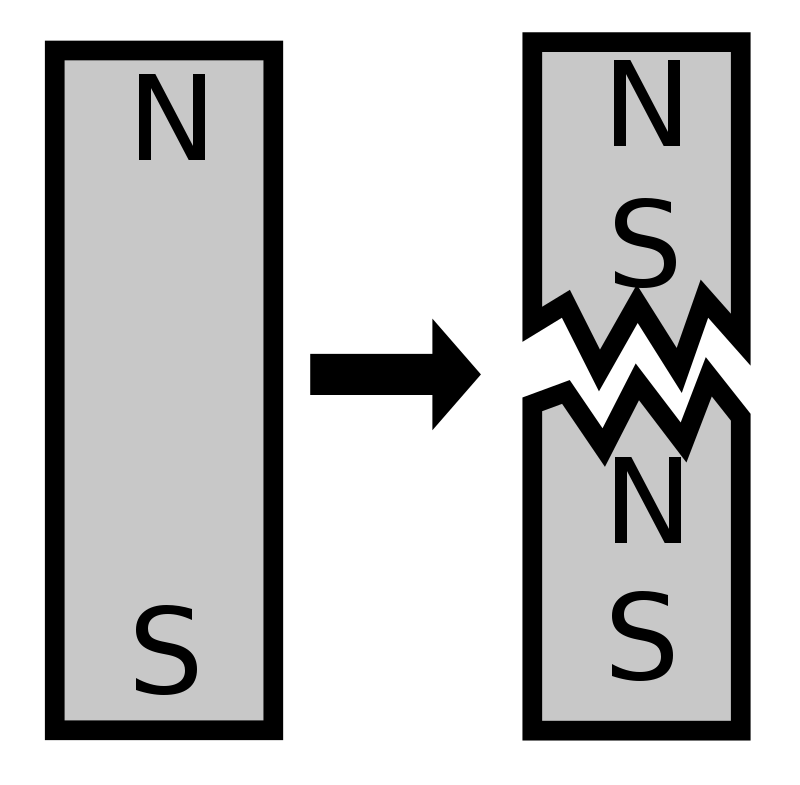
magnetic monopole
hypothetical particle with one magnetic pole
proton decay
hypothetical decay process of a nucleon (proton or neutron) into non-nucleons (anything else)
micro black hole
black hole on a quantum level or with quantum effects
weakly interacting massive particle
dark matter candidate
exotic matter
unusual or hypothetical physical substance or state

inflaton
The inflaton field is a hypothetical scalar field that is conjectured to have driven cosmic inflation in the very early universe.
skyrmion
In particle theory, the skyrmion () is a topologically stable field configuration of a certain class of non-linear sigma models. The term was first used in 1979 to name a model of the nucleon by proposed in 1961 by Tony Skyrme. As a topological soliton in the pion field, it has the remarkable property of being able to model, with reasonable accuracy, multiple low-energy properties of the nucleon, simply by fixing the nucleon radius. It has since found application in solid-state physics, as well as having ties to certain areas of string theory.
Pomeron
In physics, the pomeron is a Regge trajectory — a family of particles with increasing spin — postulated in 1961 to explain the slowly rising cross section of hadronic collisions at high energies. It is named after Isaak Pomeranchuk.

mirror matter
hypothetical counterpart to ordinary matter
lightest supersymmetric particle
generic name given to the lightest of the additional hypothetical particles found in supersymmetric models
SIMP
hypothetical particles that interact strongly with ordinary matter, but could form the inferred dark matter despite this