Category
page 1Idealists

Plato
Plato ( ; Greek: , ; born BC, died 348/347 BC) was an ancient Greek philosopher of Classical Athens who is most commonly considered the foundational thinker of the Western philosophical tradition. An innovator of the literary dialogue and dialectic forms, Plato influenced all the major areas of theoretical philosophy and practical philosophy, and was the founder of the Academy, a philosophical school in Athens where Plato taught the collection of philosophical theories that would later become known as Platonism.

Immanuel Kant
German philosopher (1724-1804)

Arthur Schopenhauer
German philosopher (1788-1860)
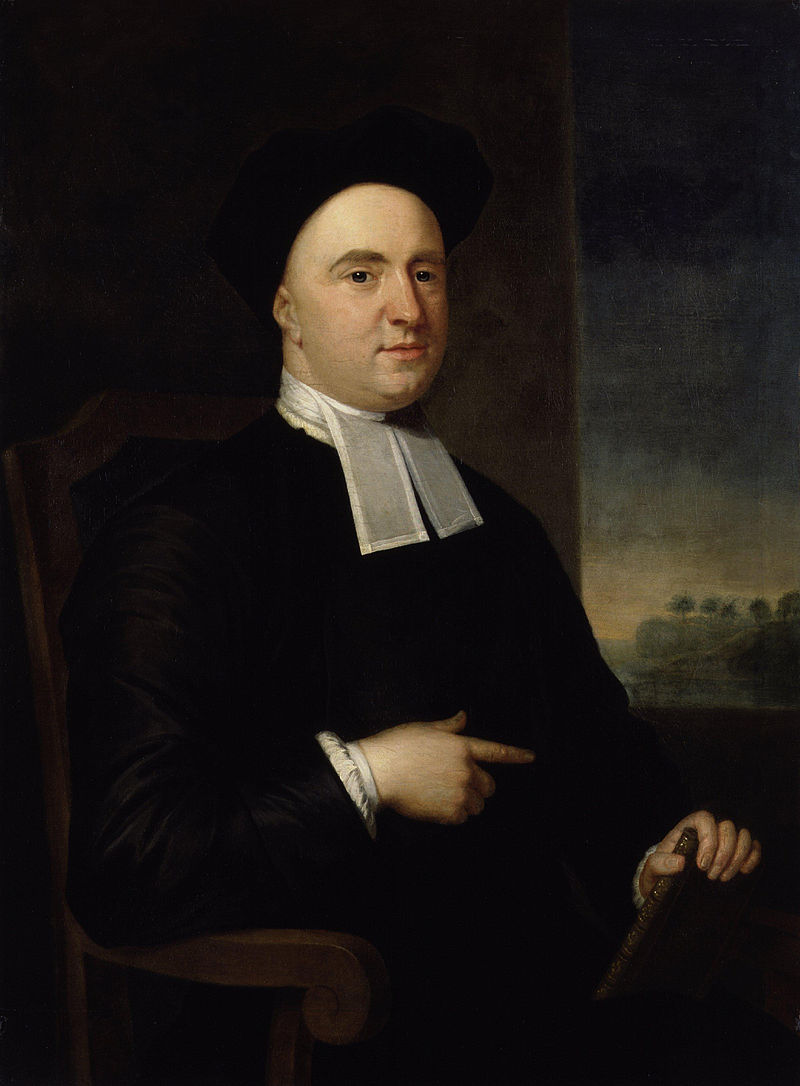
George Berkeley
Irish idealist philosopher and Anglican bishop (1685–1753)

Farabi
thumbnail|200px|Postage stamp of the USSR, issued on the 1100th anniversary of the birth of Al-Farabi (1975)
Abu Nasr Muhammad al-Farabi (; – 14 December 950–12 January 951), known in the Latin West as Alpharabius, was an early Islamic philosopher and music theorist. He has been designated as "Father of Islamic Neoplatonism", and the "Founder of Islamic Political Philosophy".

Ādi Shankara
8th-century Hindu philosopher and theologian- Restorer of “Dashanami Sampradaya”.

Benedetto Croce
Italian philosopher (1866-1952)

Charles Sanders Peirce
American philosopher, logician, mathematician, and scientist (1839-1914)

Julius Evola
Italian philosopher and esotericist (1898-1974)

Ernst Cassirer
German philosopher (1874–1945)

James Hopwood Jeans
British mathematician and astronomer (1877 – 1946)
.jpg)
Sadhguru
Jagadish "Jaggi" Vasudev (born 3 September 1957), also known as Sadhguru, is an Indian guru and founder of the Isha Foundation, based in Coimbatore, India. The foundation, established in 1992, operates an ashram and yoga centre that carries out educational and spiritual activities. Sadhguru has been teaching yoga since 1982. He is the author of the New York Times bestsellers ''Inner Engineering: A Yogi's Guide to Joy and Karma: A Yogi's Guide to Crafting Your Destiny'', and a frequent speaker at international forums.

Giovanni Gentile
Italian philosopher, educator, fascist theoretician and politician (1875-1944)

Vasubandhu
Vasubandhu (; Tibetan: དབྱིག་གཉེན་ ; fl. 4th to 5th century CE) was an influential Indian Buddhist monk and scholar. He was a philosopher who wrote commentary on the Abhidharma, from the perspectives of the Sarvastivada and Sautrāntika schools. After his conversion to Mahayana Buddhism, along with his brother, Asanga, he was also one of the main founders of the Yogacara school.

Wang Yangming
Chinese philosopher and general (1472–1529)

Rudolf Otto
German theologian, philosopher, and comparative religionist (1869-1937)

Thomas Hill Green
British philosopher (1836-1882)
R. G. Collingwood
British historian and philosopher (1889–1943)

Abhinavagupta
Abhinavagupta (Devanāgarī अभिनवगुप्तः; c. 950 – 1016 CE) was a philosopher, mystic and aesthetician from Kashmir. He was also considered an influential musician, poet, dramatist, exegete, theologian, and logician – a polymathic personality who exercised strong influences on Indian culture.

F. H. Bradley
British philosopher (1846–1924)

Gaudapada
Gauḍapāda (Sanskrit: गौडपाद; ), also referred as Gauḍapādācārya (Sanskrit: गौडपादाचार्य; "Gauḍapāda the Teacher"), was an early medieval era Hindu philosopher and scholar of the Advaita Vedanta school of Hindu philosophy. While details of his biography are uncertain, his ideas inspired others such as Adi Shankara who called him a Paramaguru (highest teacher).
Michael Oakeshott
British philosopher (1901-1990)

Dharmakirti
Dharmakīrti (fl. ) was an influential Indian Buddhist philosopher who worked at Nālandā. He was one of the key scholars of epistemology (pramāṇa) in Buddhist philosophy, and is associated with the Yogācāra and Sautrāntika schools. He was also one of the primary theorists of Buddhist atomism. His works influenced the scholars of Mīmāṃsā, Nyaya and Shaivism schools of Hindu philosophy as well as scholars of Jainism.

Charles Bernard Renouvier
French philosopher

Josiah Royce
American philosopher (1855–1916)
Samuel Alexander
Australian-born British philosopher (1859-1938)
J. M. E. McTaggart
British philosopher (1866-1925)

Śāntarakṣita
'''''' (Sanskrit: शान्तरक्षित; , 725–788), whose name translates into English as "protected by the One who is at peace" was an important and influential Indian Buddhist philosopher, particularly for the Tibetan Buddhist tradition. Śāntarakṣita was a philosopher of the Madhyamaka school who studied at Nalanda monastery under Jñānagarbha, and became the founder of Samye, the first Buddhist monastery in Tibet.
Dignāga
Dignāga (also known as Diṅnāga, ) was an Indian Buddhist philosopher and logician. He is credited as one of the Buddhist founders of Indian logic (hetu vidyā) and atomism. Dignāga's work laid the groundwork for the development of deductive logic in India and created the first system of Buddhist logic and epistemology (pramāṇa).
Eugen Fink
German philosopher (1905-1975)
Bernard Bosanquet
English philosopher (1848–1923)
May Sinclair
British novelist 1863-1946
Ladislav Klíma
Czech philosopher and bookwriter (1878–1928)

Edward Caird
British philosopher (1835–1908)
Bertrando Spaventa
Italian philosopher (1817-1883)
Paul Brunton
British philosopher (1898-1981)
William Ernest Hocking
American philosopher (1873-1966)
Jules Lachelier
French philosopher (1832-1918)
Ugo Spirito
Italian academic
Govinda Bhagavatpada
Govinda Bhagavatpada (IAST ) was the guru of the Hindu philosopher Adi Shankara. He is one of the prominent gurus of the Gaud Saraswat Brahmin community. He is mentioned in all the traditional accounts (Shankara Vijayams) as the teacher of Adi Shankara. He was the disciple of Gaudapada (IAST ''''). He is mentioned in the first verse of Adi Shankara's prakaraṇa grantha (treatise) Viveka Chudamani. He is named after Gaudapada in the Guru Parampara (lineage) of Sringeri Sharada Peetham. He is considered to be an incarnation of Shesha.
Eugen Relgis
Romanian academic (1895-1987)
Hastings Rashdall
British philosopher, theologian, historian and Anglican priest (1858-1924)
Pamfil Yurkevich
Ukrainian philosopher (1826–1874)
Ralph Waldo Trine
American author (1866-1958)
Henry Jones
Welsh philosopher and academic (1852–1922)
Utpaladeva
Utpaladeva (c. 900–950 CE) was a Shaiva tantrik philosopher, theologian and poet from Kashmir. He belonged to the Trika Shaiva tradition and is a thinker of the Pratyabhijñā school of monistic idealism. His Īśvarapratyabhijñākārikā (IPK, Verses on the Recognition of the Lord) is a central text for the Pratyabhijñā school of Shaiva Hindu philosophy. Utpaladeva was also a tantrik guru and a religious bhakti poet, having authored the influential Śivastotrāvalī (A Garland of Hymns to Śiva), a collection of Shaiva hymns that remain popular with Kashmiri Shaivas.
Branislav Petronijević
Serbian philosopher and paleontologist (1875-1954)
John Henry Muirhead
British philosopher (1855–1940)
Alfred Edward Taylor
British philosopher (1869–1945)

Alexander Campbell Fraser
Scottish philosopher (1819-1914)

Brand Blanshard
American philosopher
Harold Joachim
English academic in philosophy
Timothy Sprigge
British philosopher (1932-2007)
Silvio Spaventa
Italian politician (1822–1893)
William Ritchie Sorley
British philosopher (1855–1935)
John Watson
Canadian philosopher (1847-1939)
James Edwin Creighton
American philosopher (1861-1924)
John Stuart Mackenzie
British economist and philosopher (1860-1935)
William Wallace
Scottish philosopher (1844–1897)
Thomas Davidson
Scottish-American philosopher and lecturer (1840-1900)