Category
page 1Idolatry
.JPG)
idolatry
thumb|Maa Kali|Bhavatarini (Kali) idol at Dakshineshwar Kali Temple, famously worshipped by Swami Vivekanand (1863–1902) in September 1884
thumb|Illustration depicting worship of the golden calf idol
Idolatry or idol worship is the worship of an idol as though it were a deity. In Abrahamic religions (namely Judaism, Christianity, and Islam) idolatry connotes the worship of something or someone other than the Abrahamic God as if it were God. In these monotheistic religions, idolatry has been considered as the "worship of false gods" and is forbidden by texts such as the Ten Commandments. Other

shirk
polytheism in Islamic terminology

golden calf
idol worshipped by the Israelites in the Book of Exodus and the First Book of Kings

Jezebel
Jezebel () was the daughter of Ithobaal I of Tyre and the wife of Ahab, King of Israel, according to the Book of Kings of the Hebrew Bible (1 Kings 16).
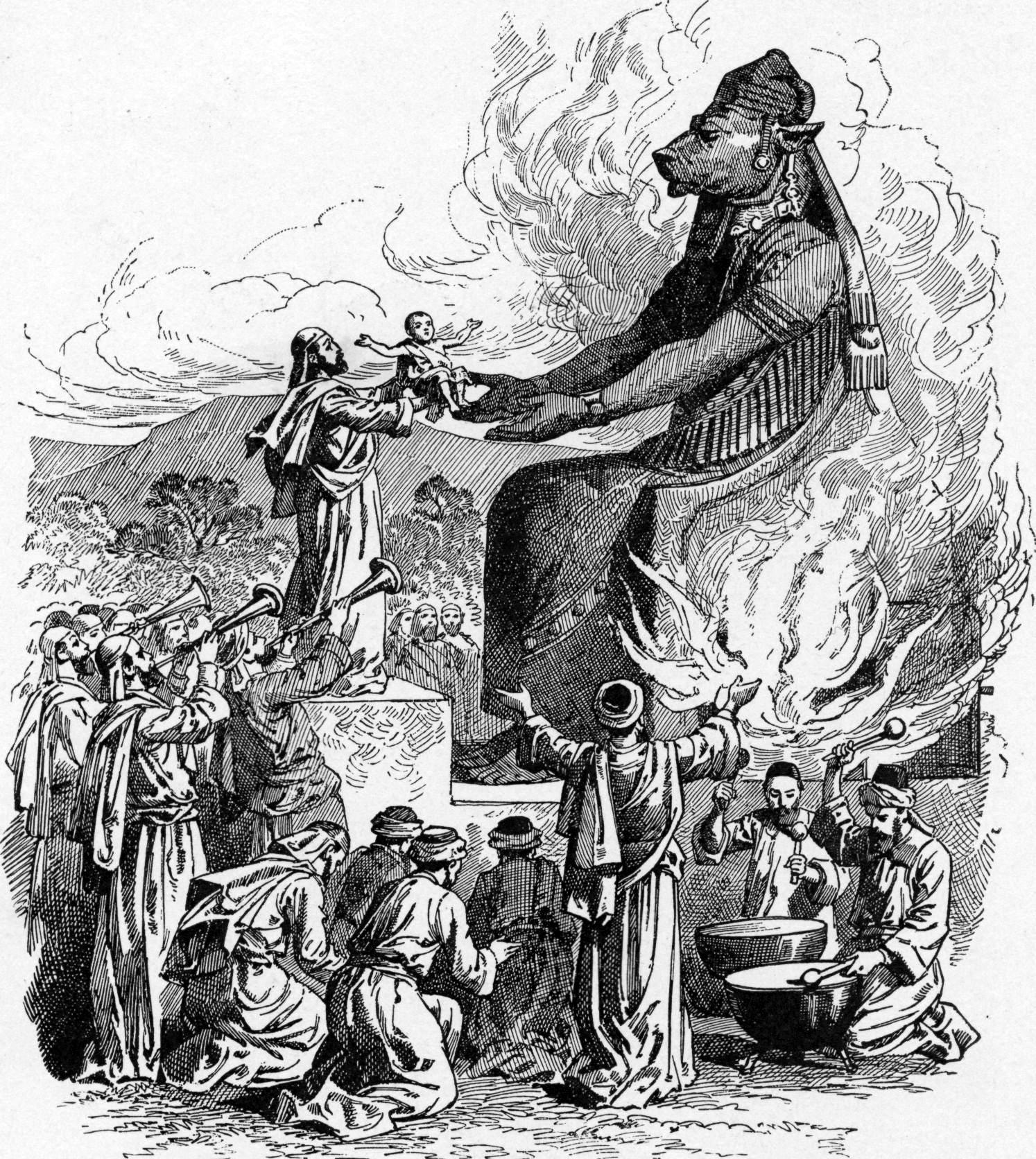
Moloch
thumb|Offering to Molech in Bible Pictures and What They Teach Us, by Charles Foster, 1897. The drawing is typical of Moloch depictions in nineteenth-century illustrations.
Moloch, Molech, or Molek is a word which appears in the Hebrew Bible several times, primarily in the Book of Leviticus. The Greek Septuagint translates many of these instances as "their king", but maintains the word or name Moloch in others, including one additional time in the Book of Amos where the Hebrew text does not attest the name. The Bible strongly condemns practices that are associated with Moloch, which are heavil
Taghut
Taghut (, ṭāġūt; pl. ṭawāġīt (); broadly: "to go beyond the measure") is Islamic terminology denoting the worship of another deity besides God. In traditional theology, the term often connotes idols or demons drawn to blood of pagan sacrifices. They appear wherever a person has been murdered. The pre-Islamic deities al-Lāt and al-ʿUzzā, later also Satan, are associated with that term.

Book of Abraham
religious text of some Latter Day Saint churches
Mazdaism
Mazdaism (Armenian: Մազդէականութիւն; Persian: آیین مزدایی) It is a pre-Zoroastrian Iranian religion, believed to be the ancestor of Zoroastrianism, from which later religions would derive, unlike Zoroastrianism, Ahura Mazda is one of the gods in Mazdaism, considered to be equal to Mithra.
Zbruch Idol
11th-century Slavic religious sculpture
Manaf
pre-Islamic Arabian deity
statolatry
Statolatry is a term formed from the word "state" and a suffix derived from the Latin and Greek word latria, meaning "worship". It first appeared in Giovanni Gentile's Doctrine of Fascism, published in 1931 under Mussolini's name, and was also mentioned in Gramsci's Prison Notebooks (1971) sometime between 1931–1932, while he was imprisoned by Mussolini. The same year, the encyclical Non abbiamo bisogno by Pope Pius XI criticized Fascist Italy as developing "a pagan worship of the state" which it called "statolatry".
Thou shalt not make unto thee any graven image
third of the Ten Commandments
Ryūhō Ōkawa
Japanese religious leader who founded the world religion "Happy Science" (1956-2023)
false god
religious concept
Micah's Idol
biblical narrative
bibliolatry
Bibliolatry (from the Greek , 'book' and the suffix , 'worship') is the worship of a book, idolatrous homage to a book, or the deifying of a book. It is a form of idolatry. The sacred texts of some religions disallow icon worship, but over time, the texts themselves may come to be treated as sacred in the way idols are; believers may end up worshipping the book in effect. Bibliolatry extends claims of Biblical inerrancy to the texts, precluding theological innovation, evolving development, or progress. Bibliolatry can lead to revivalism, disallows reprobation, and can lead to persecution of un
1 Kings 11
1 Kings, chapter 11
Azar (Quranic figure)
legal guardian of Abraham in Islam
American civil religion
sociological theory that a nonsectarian quasi-religious faith exists within the United States with sacred symbols drawn from national history