Moloch
Sign in to saveAlso known as Molech, Milcom, Malcam
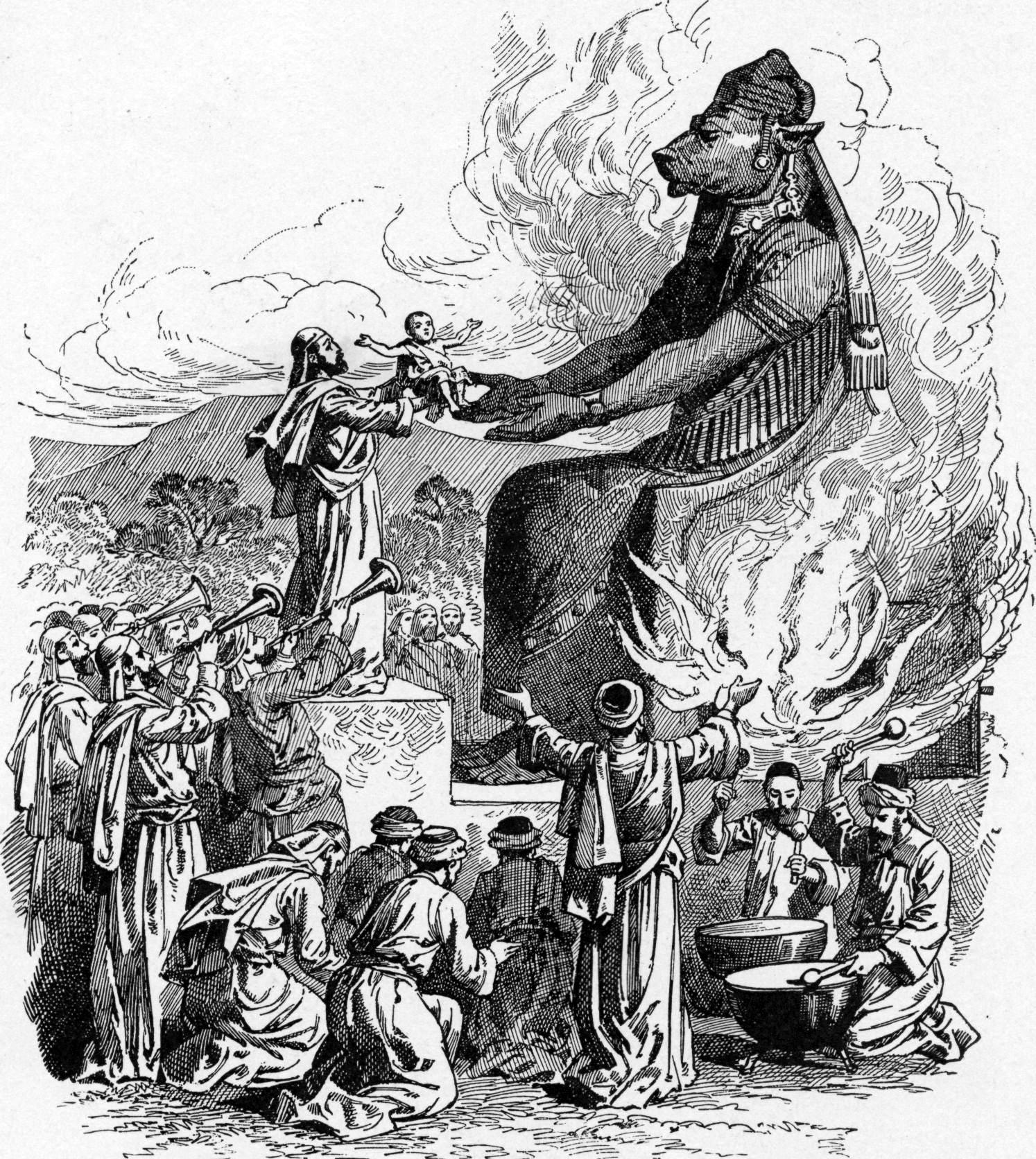
thumb|Offering to Molech in Bible Pictures and What They Teach Us, by Charles Foster, 1897. The drawing is typical of Moloch depictions in nineteenth-century illustrations. Moloch, Molech, or Molek is a word which appears in the Hebrew Bible several times, primarily in the Book of Leviticus. The Greek Septuagint translates many of these instances as "their king", but maintains the word or name Moloch in others, including one additional time in the Book of Amos where the Hebrew text does not attest the name. The Bible strongly condemns practices that are associated with Moloch, which are heavil
Wikipedia views (30d)
78,603 totalvia Wikimedia Pageviews API
Wikidata facts
- Gender
- male
- Image
- Foster Bible Pictures 0074-1 Offering to Molech.jpg
Show 4 more facts
- Commons category
- Moloch
- described by source
- Pauly–Wissowa
- present in work
- Salammbô
- native label
- מלך
Sources (2)
via Wikidata · CC0
~24 min read
Encyclopedic overview
21 sectionsContents
- Etymology
- Biblical attestations
- Masoretic Text
- Septuagint and New Testament
- Theories
- As a deity
- As a form of sacrifice
- As a divine title
- As a rite of passage
- Religious interpretation
- In Judaism
- In Christianity
- In art and culture
- In art
- In literature
- As social or political allegory
- In film and television
- See also
- References
- Sources
- External links
thumb|Offering to Molech in Bible Pictures and What They Teach Us, by Charles Foster, 1897. The drawing is typical of Moloch depictions in nineteenth-century illustrations. Moloch, Molech, or Molek is a word which appears in the Hebrew Bible several times, primarily in the Book of Leviticus. The Greek Septuagint translates many of these instances as "their king", but maintains the word or name Moloch in others, including one additional time in the Book of Amos where the Hebrew text does not attest the name. The Bible strongly condemns practices that are associated with Moloch, which are heavily implied to include child sacrifice.
Traditionally, the name Moloch has been understood as referring to a Canaanite god. However, since 1935, scholars have speculated that Moloch refers to the sacrifice itself, since the Hebrew word mlk is identical in spelling to a term that means "sacrifice" in the closely related Punic language. This second position has grown increasingly popular, but it remains contested. Among proponents of this second position, controversy continues as to whether the sacrifices were offered to Yahweh or another deity, and whether they were a native Israelite religious custom or a Phoenician import.
Excerpted from Wikipedia’s “Moloch” article, available under the CC BY-SA 4.0 licence.