Category
page 1Impostor pretenders
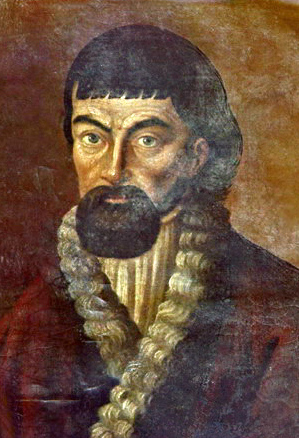
Yemelyan Pugachev
leader of a Russian peasant uprising (1742–1775)

Bardiya
Bardiya or Smerdis ( ; ; possibly died 522 BCE), also named as Tanyoxarces (; ) by Ctesias, was a son of Cyrus the Great and the younger brother of Cambyses II, both Persian kings. There are sharply divided views on his life. Bardiya either ruled the Achaemenid Empire for a few months in 522 BCE, or was impersonated by a magus called Gaumata ( ), whose name is given by Ctesias as Sphendadates (; ), until he was toppled by Darius the Great.

Thomas the Slav
Byzantine military commander (c. 760–823)

Alexandros II Zabinas
Ruler of the Greek Seleucid kingdom
Eumenes III
king of Pergamum, imposter
Perkin Warbeck
Imposter-pretender to the throne of England

Andriscus
Andriscus (, Andrískos; 154/153 BC – 146 BC), also often referenced as Pseudo-Philip, was a Greek pretender who became the last independent king of Macedon in 149 BC as Philip VI (, Philipos), based on his claim of being Philip, a now-obscure son of the last legitimate Macedonian king, Perseus. His reign lasted just one year and was toppled by the Roman Republic during the Fourth Macedonian War.
Sigurd Slembe
Pretender to the Norwegian throne
False Dmitriy
Wikimedia disambiguation page
Nebuchadnezzar IV
Armenian leader of Babylonian revolt against the Achaemenid Empire (died 521 BC)
Nebuchadnezzar III
king of Babylon
Lambert Simnel
Imposter-pretender to the throne of England
Pierre Plantard
French draughtsman (1920-2000)

Sebastianism
thumb|right|King Sebastian of Portugal
Princess Tarakanoff
Pretender to the Russian throne
Šćepan Mali
Ruler of Montenegro
Terentius Maximus
Peudo-Nero during the reign of Titus
Alexander of Montenegro
European braggart, self claimed to be the Son of Ottoman Sultan Mehmed III
Mary Baker
imposter princess (1791–1864)
Ioan Iacob Heraclid
ruler of Moldavia (1511–1563)
Clemens
Roman slave and imposter for Agrippa Postumus

Pseudo-Nero
thumb | right
After the emperor Nero committed suicide near the villa of his freedman Phaon in June of 68 AD, various Nero impostors appeared between the autumn of 69 AD and the reign of the emperor Domitian. Most scholars set the number of Nero impostors to two or three, although St. Augustine wrote of the popularity of the belief that Nero would return in his day, known as the Nero Redivivus legend. In addition to the three documented Pseudo-Neros, Suetonius refers to imperial edicts forged in the dead Nero's name that encouraged his followers and promised his imminent return to avenge himse
False Waldemar
Imposter of the Margrave of Brandenburg
Ceclava Czapska
Romanov imposter (1899-1970)
False Olaf
Imposter pretender executed in 1402
Basil the Copper Hand
Byzantine rebel leader active in Bithynia
False Margaret
Norwegian imposter
Konstantinos Diogenes
Byzantine pretender
Zaga Christ
Ethiopian politician and traveller

Olivia Serres
British artist and imposter (1772-1834)
Pseudo-Alexios II
late 12th-century Byzantine Empire usurper
Romana Didulo
Canadian conspiracy theorist linked to the QAnon movement
Helga de la Brache
Swedish con artist (1817-1885)