Category
page 1Inanna

Enheduanna
Enheduanna ( , also transliterated as , , or variants; ) was the (high) priestess of the moon god Nanna (Sīn) in the Sumerian city-state of Ur in the reign of her father, Sargon of Akkad ( BCE). She was likely appointed by her father as the leader of the religious group at Ur to cement ties between the Akkadian religion of her father and the native Sumerian religion. Enheduanna has been celebrated as the earliest known named author in world history.

Inanna
Inanna is the ancient Mesopotamian goddess of war, love, and sex. She is also associated with political power, divine law, sensuality, and procreation. Originally worshipped in Sumer, she was known by the Akkadians, Babylonians, and Assyrians as Ishtar. Her primary title is "the Queen of Heaven".

Ishtar Gate
eighth gate to the inner city of Babylon

femme fatale
stock character; beautiful but mischievous and traitorous woman

Astarte
Astarte (; ) is the Hellenized form of the Ancient Near Eastern goddess ʿAṯtart. ʿAṯtart was the Northwest Semitic equivalent of the East Semitic goddess Ishtar.

crescent
A crescent shape (, ) is a symbol or emblem used to represent the lunar phase (as it appears in the northern hemisphere) in the first quarter (the "sickle moon"), or by extension a symbol representing the Moon itself.
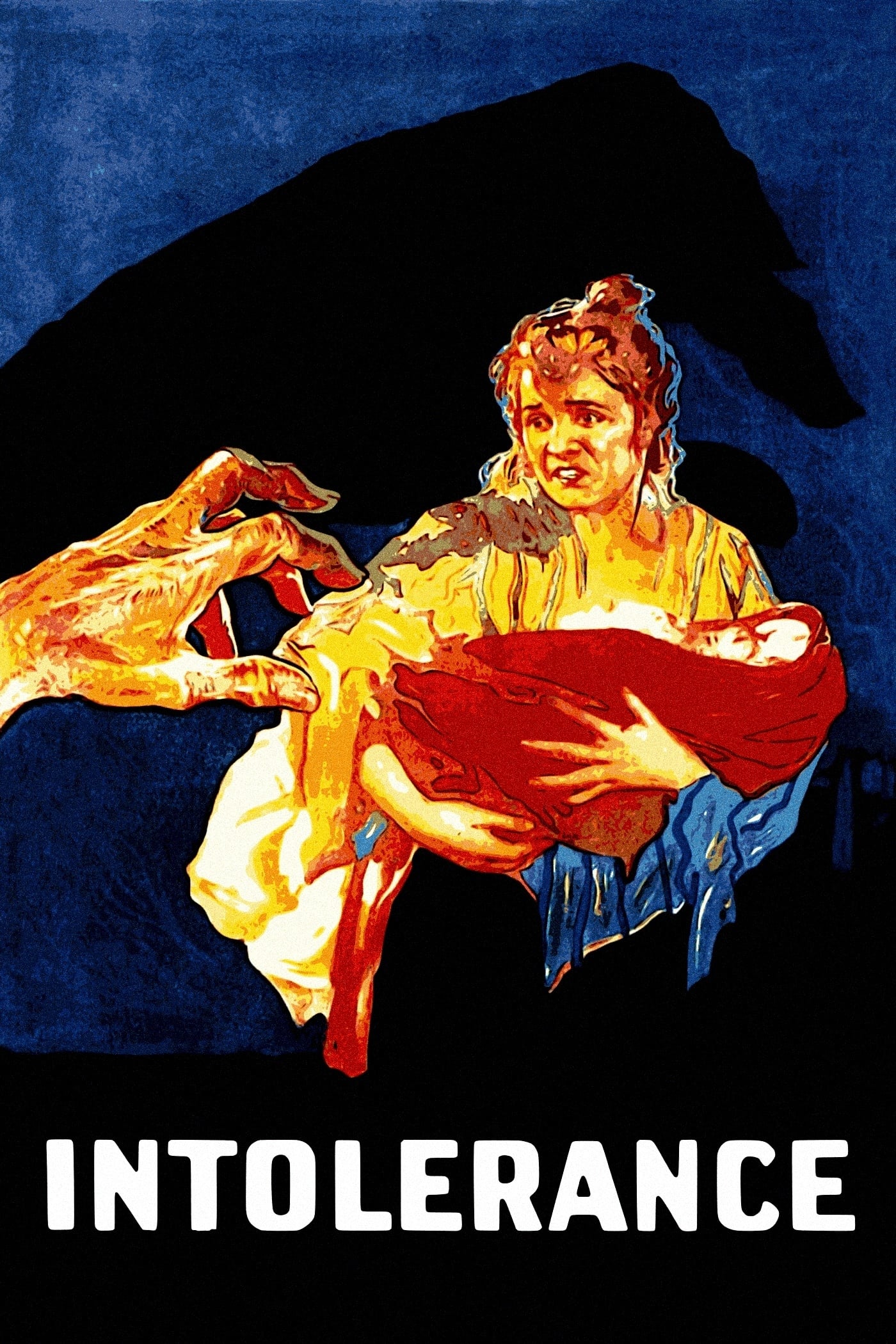
Intolerance
1916 epic silent film directed by D. W. Griffith

Tammuz
Dumuzid, Dumuzi, or Tammuz (; ; ), known to the Sumerians as Dumuzid the Shepherd () and to the Canaanites as Adon (; Proto-Hebrew: 𐤀𐤃𐤍), is an ancient Mesopotamian and Levantine deity associated with agriculture and shepherds, who was also the first and primary consort of the goddess Inanna (later known as Ishtar). In Sumerian mythology, Dumuzid's sister was Geshtinanna, the goddess of agriculture, fertility, and dream interpretation. In the Sumerian King List, Dumuzid is listed as an antediluvian king of the city of Bad-tibira and also an early king of the city of Uruk.
.jpg)
Actaeon
thumb|The death of Actaeon on Red-figure pottery|red-figure [[skyphos from Paestum, 4th century BC (Karlsruhe, Badisches Landesmuseum).]]

hamsa
upright|thumb|A hanging hamsa in a car in Tunisia.
The hamsa (Arabic ), also romanized khamsa, and known as the hand of Fatima, is a palm-shaped amulet popular throughout North Africa and in the Middle East and commonly used in jewellery and wall hangings. Depicting the open hand, an image recognized and used as a sign of protection in many times throughout history, the hamsa is believed to provide defense against the evil eye.
star and crescent
symbol
Civilization II
1996 turn-based strategy video game
hieros gamos
divine marriage
sacred prostitution
sexual rite performed in the context of religious worship
Ishtar Terra
terra on Venus

Year One
2009 film by Harold Ramis
7088 Ishtar
asteroid
The Dinner Party
installation artwork by feminist artist Judy Chicago
Mesh-ki-ang-gasher
Meshkiangasher was a legendary king mentioned in the Sumerian King List as the priest of the Eanna temple in Uruk, whose journey led him to the enter the sea and ascend the mountains.
Burney Relief
historical artifact
Eanna
E-anna ( , "House of Heaven"), also referred to as the Temple of Inanna, was a monumental ancient Sumerian temple complex in Uruk. Considered the "residence" of Inanna, it was among the most prominent and influential religious institutions of ancient Mesopotamia. Mentioned throughout the Epic of Gilgamesh and various other texts, the evolution of the gods to whom the temple was dedicated to over time is also the subject of scholarly study.
Joseph and His Brothers
1923-1943 novel tetralogy by Thomas Mann

Ninshubur
Ninshubur (,; Ninšubur, "Lady of Subartu" or "Lady of servants"), also spelled Ninšubura, was a Mesopotamian goddess regarded as the sukkal (divine attendant) of the goddess Inanna. While it is agreed that in this context Ninshubur was regarded as female, in other cases the deity was considered male, possibly due to syncretism with other divine messengers, such as Ilabrat. No certain information about her genealogy is present in any known sources, and she was typically regarded as unmarried. As a sukkal, she functioned both as a messenger deity and as an intercessor between other members of th

Nanaya
Nanaya (Sumerian , DNA.NA.A; also transcribed as "Nanāy", "Nanaja", "Nanāja", '"Nanāya", or "Nanai"; antiquated transcription: "Nanâ"; in Greek: Ναναια or Νανα; , ) was a Mesopotamian goddess of love closely associated with Inanna.

Attar
ʿAṯtar is a deity whose role, name, and even gender varied across ancient Semitic religion. In both genders, ʿAṯtar is identified with the planet Venus, the morning and evening star. ʿAṯtar is a prominent character in the Baal Cycle. It has been suggested that ʿAṯtar as a masculine Venus god was syncretized into the depiction of feminine Venus goddess Inanna in her depiction as having a masculine beard.
Zabala
human settlement
Ain Dara
archaeological site in Syria
Esther
female given name
mask of Warka
mask possibly depicting Inanna
Mullissu
Mullissu is a goddess who is the consort of the Assyrian god Asshur. Mullissu may be identical with the Sumerian goddess Ninlil, wife of the god Enlil, which would parallel the fact that Asshur himself was modeled on Enlil. Mullissu's name was written . Mullissu is identified with Ishtar of Nineveh in the Neo-Assyrian Empire times.
Alexander Hislop
Free Church of Scotland minister (1807–1865)
Shara
Mesopotamian god from Umma

Blood Feast
1963 film by Herschell Gordon Lewis
Queen of heaven
title given to a number of ancient sky goddesses worshipped throughout the ancient Mediterranean and Near East during ancient times
Star of Venus
symbol of the Sumerian goddess Inanna

Pinikir
Pinikir, also known as Pinigir, Pirengir, Pirinkir, and Parakaras, was an Ancient Near Eastern astral goddess who originates in Elamite religious beliefs. While she is only infrequently attested in Elamite documents, she achieved a degree of prominence in Hurrian religion. Due to her presence in pantheons of many parts of the Ancient Near East, from Anatolia to Iran, modern researchers refer to her as a "cosmopolitan deity."

Red River
Japanese manga series

The Two Babylons
book by Alexander Hislop

Narundi
Narundi ( dna-ru-ti) or Narunde was an Elamite goddess worshiped in Susa. She is attested there roughly between 2250 BCE and 1800 BCE. Multiple inscriptions mention her, and it assumed she was a popular deity at the time. In later periods, she occurs exclusively in Mesopotamia, where she played a role in apotropaic rituals in association with the Sebitti. Many attestations are available from late Assyrian sources, but it is not certain if they should be regarded as an indication of continuous worship.

The Mole People
1956 film by Virgil W. Vogel
Išḫara
Išḫara was a goddess originally worshipped in Ebla and other nearby settlements in the north of modern Syria in the third millennium BCE. The origin of her name is disputed, and due to lack of evidence supporting Hurrian or Semitic etymologies it is sometimes assumed it might have originated in a linguistic substrate. In Ebla, she was considered the tutelary goddess of the royal family. An association between her and the city is preserved in a number of later sources from other sites as well. She was also associated with love, and in that role is attested further east in Mesopotamia as well. M
sacred king
Monarch with a religious significance
doves as symbols
symbological concepts pertaining to doves since the Mezopotamian age, dove used as symbol of a god, love, peace or even war
Istanbul 2461
Ancient love poem about sacred marriage
Dance of the Seven Veils
Dance of Inanna, Salome
Anobanini rock relief
rock relief from the Isin-Larsa period
Ishtar Sheraton Hotel
building in Baghdad, Iraq

Blood Feast 2: All U Can Eat
2002 film by Herschell Gordon Lewis
Ninegal
Ninegal (also spelled Ninegalla) or Belat Ekalli (Belet-ekalli) was a Mesopotamian goddess associated with palaces. Both her Sumerian and Akkadian name mean "lady of the palace."
Assyrian statue
Ainina and Danina
Goddesses in Georgian mythology
Uruk Trough
Article of Inanna temple
Artimpasa
Artimpasa (; ) was a complex androgynous Scythian goddess of fertility who possessed power over sovereignty and the priestly force. Artimpasa was the Scythian variant of the Iranian goddess Arti/Aṣ̌i.
Lulal
Lulal, inscribed dlú.làl in cuneiform(𒀭𒇽𒋭), was a Mesopotamian god associated with Inanna, usually as a servant deity or bodyguard but in a single text as a son. His name has Sumerian origin and can be translated as "syrup man."

The Quest of Ki
1988 video game
The Sandman: Brief Lives
comic book album by Neil Gaiman
Ninsianna
Ninsianna (Sumerian: "Red Queen of Heaven") was a Mesopotamian deity considered to be the personification of Venus. This theonym also served as the name of the planet in astronomical texts until the end of the Old Babylonian period. There is evidence that Ninsianna's gender varied between locations, and both feminine and masculine forms of this deity were worshiped. Due to their shared connection to Venus, Ninsianna was associated with Inanna. Furthermore, the deity Kabta appears alongside Ninsianna in many texts, but the character of the relation between them remains unclear.
Statue of Iddi-Ilum
21st-century BC statue from Mari, Syria