Category
page 1Indian male writers

B. R. Ambedkar
Bhimrao Ramji Ambedkar was an Indian jurist, economist, social reformer and politician who chaired the committee that drafted the Constitution of India based on the debates of the Constituent Assembly of India and the first draft of Sir Benegal Narsing Rau. Ambedkar served as Law and Justice minister in the first cabinet of Jawaharlal Nehru. He later renounced Hinduism and converted to Buddhism, inspiring the Dalit Buddhist movement.

Nagarjuna
Nāgārjuna (, ; ) was an Indian philosopher and Mahāyāna Buddhist monk of the Madhyamaka (Centrism, Middle Way) school. Nāgārjuna is widely considered one of the most important Buddhist philosophers. He was the founder of the Madhyamaka school of Buddhist philosophy and a defender of the Mahāyāna movement. His Mūlamadhyamakakārikā (Root Verses on Madhyamaka, MMK) is the most important text on the Madhyamaka philosophy of emptiness. The MMK inspired a large number of commentaries in Sanskrit, Chinese, Tibetan, Korean and Japanese and continues to be studied today.

Jiddu Krishnamurti
Indian spiritual philosopher, mystic, speaker and writer (1895–1986)
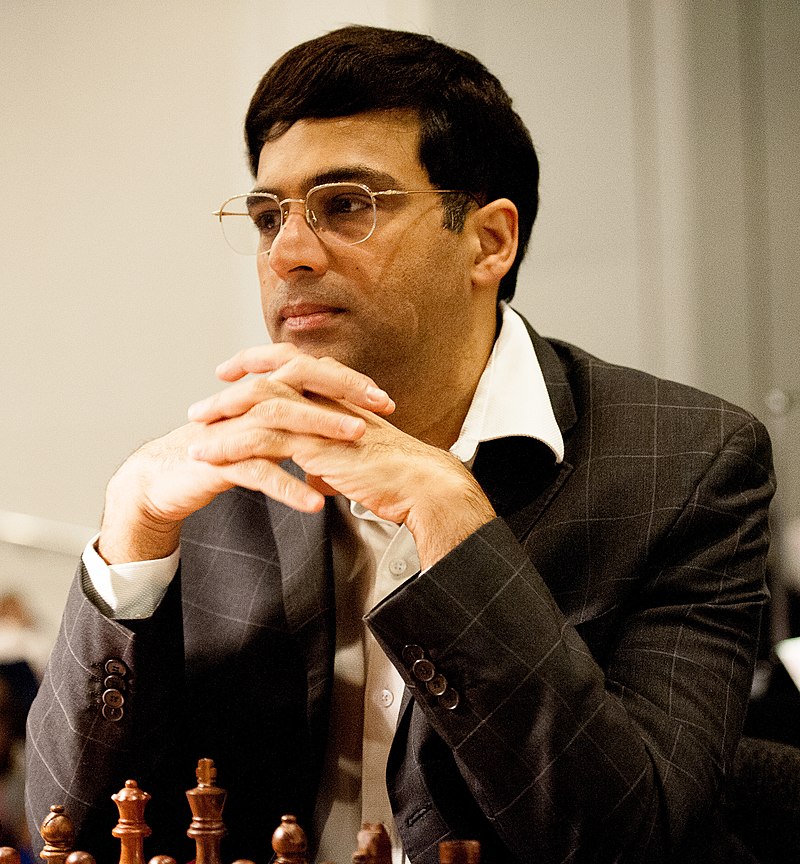
Viswanathan Anand
Indian chess grandmaster

Ādi Shankara
8th-century Hindu philosopher and theologian- Restorer of “Dashanami Sampradaya”.

Abhijit Banerjee
Indian American economist
.jpg)
Sadhguru
Jagadish "Jaggi" Vasudev (born 3 September 1957), also known as Sadhguru, is an Indian guru and founder of the Isha Foundation, based in Coimbatore, India. The foundation, established in 1992, operates an ashram and yoga centre that carries out educational and spiritual activities. Sadhguru has been teaching yoga since 1982. He is the author of the New York Times bestsellers ''Inner Engineering: A Yogi's Guide to Joy and Karma: A Yogi's Guide to Crafting Your Destiny'', and a frequent speaker at international forums.
Vinoba Bhave
Indian advocate of nonviolence and human rights (1895-1982)

Abhinavagupta
Abhinavagupta (Devanāgarī अभिनवगुप्तः; c. 950 – 1016 CE) was a philosopher, mystic and aesthetician from Kashmir. He was also considered an influential musician, poet, dramatist, exegete, theologian, and logician – a polymathic personality who exercised strong influences on Indian culture.

Abu'l-Fazl ibn Mubarak
Grand vizier of Mughal emperor Akbar from 1579 to 1602

Gaudapada
Gauḍapāda (Sanskrit: गौडपाद; ), also referred as Gauḍapādācārya (Sanskrit: गौडपादाचार्य; "Gauḍapāda the Teacher"), was an early medieval era Hindu philosopher and scholar of the Advaita Vedanta school of Hindu philosophy. While details of his biography are uncertain, his ideas inspired others such as Adi Shankara who called him a Paramaguru (highest teacher).
Jaimini
Jaimini was an ancient Indian scholar who founded the Mīmāṃsā school of Hindu philosophy. He is the son of Parāśara and is considered to be a disciple of sage Vyasa. Traditionally attributed to be the author of the Mimamsa Sutras and the Jaimini Sutras, he is estimated to have lived around 4th to 2nd century BCE. Some scholars place him between 250 BCE and 50 CE. His school is considered non-theistic, but emphasizes ritual parts of the Vedas as essential to dharma. Jaimini is known for his studies of the older Vedic rituals.
Kalhana
Kalhana (c. 12th century) was the author of Rajatarangini (River of Kings), an account of the history of Kashmir. He wrote the work in Sanskrit between 1148 and 1149. All information regarding his life has to be deduced from his own writing, a major scholar of which is Mark Aurel Stein. Robin Donkin has argued that with the exception of Kalhana, "there are no [native Indian] literary works with a developed sense of chronology, or indeed much sense of place, before the thirteenth century".
Narayana Guru
Indian spiritual leader and social reformer (1856–1928)
Jagdish Bhagwati
economist
Vishnu Sharma
Indian writer 3 c. BCE

Hemachandra
Hemachandra () was a 12th century Śvetāmbara Jaina ācārya, scholar, poet, mathematician, philosopher, yogi, grammarian, law theorist, historian, lexicographer, rhetorician, logician, and prosodist. Noted as a prodigy by his contemporaries, he gained the title kalikālasarvajña, "the knower of all knowledge in his times" and is also regarded as father of the Gujarati language.

Bhoja
Bhoja ( 1010–1055 CE) was the Paramara king of Malwa region in central India. He ruled from Dhara (modern Dhar), and fought wars with nearly all his neighbours in attempts to extend his kingdom, with varying degrees of success. At its zenith, his empire extended from Chittor in the north to upper Konkan in the south, and from the Sabarmati River in the west to Vidisha in the east.
Damodar Dharmananda Kosambi
Indian mathematician (*1907 - †1966)
E. M. S. Namboodiripad
Indian communist politician and theorist and first Chief Minister of Kerala state (1909-1998)
Irfan Habib
Indian Marxist historian
Prakash Karat
Indian politician
Jyotindra Nath Dixit
Indian diplomat (1936–2005)
Ram Swarup
Indian historian
Satish Kumar
Indian activist and editor
Devdutt Pattanaik
Indian physician; leadership consultant, mythologist and author

Kaka Kalelkar
Indian social reformer, historian, educationist, and journalist (1885–1981)

Umaswati
Vācaka Umāsvāti, also spelled as Vācaka Umasvati and known as Vācaka Umāsvāmī, was an Indian scholar, possibly between the 2nd and 5th centuries CE, known for his foundational writings on Jainism. He authored the Jainatext Tattvartha Sutra (literally '"All That Is", also called Tattvarthadhigama Sutra). According to historian Moriz Winternitz, Umāsvāti may have been a Śvetāmbara ascetic as his views correspond more with the Śvetāmbara sect than with the Digambara sect, and that the latter is 'hardly entitled to claim him.' Umāsvāti's work was the first Sanskrit language text on Jaina philosoph
Vijay Prashad
Indian historian and journalist (born 1967)
Birendra Kumar Bhattacharya
Indian writer (1924–1997)
Prabhat Patnaik
Indian economist
Bhupendranath Dutta
Indian revolutionary and noted sociologist (1880–1961)
D. V. Gundappa
Indian writer
Nanabhoy Palkhivala
Indian jurist and economist (1920-2002)
Mahendravarman I
Pallava king who ruled the Northern regions of what forms present-day Tamil Nadu in India in the early 7th century
Abraham Kovoor
Sri Lankan rationalist and professor (1898–1978)
Nannayya
Nannayya Bhattaraka or Nannayya Bhattu (sometimes spelled Nannaya; ) was a Telugu poet and the author of Andhra Mahabharatam, a Telugu retelling of the Sanskrit-language Mahabharata. Nannaya is generally considered the first poet (Adi Kavi) of Telugu language. He was patronised by Rajaraja Narendra of Rajamahendravaram. Rajaraja Narendra was an admirer of Mahabharata and wanted the message of the Sanskrit epic to reach the Telugu masses in their own language and idiom. He commissioned Nannaya, a scholar well versed in Vedas, Puranas, and Itihasas for the task. Nannaya began his work in and wro

Abdul Malik Isami
14th century Indian historian who wrote the Persian language chronicle ''Futuh-us-Salatin''

Kundakunda
Kundakunda is the name given to the author or authors of sixteen influential Digambara texts, including Niyamasāra ("The Essence of the Restraint"), Pañcāstikāyasāra ("The Essence of the Five Existents"), Samayasāra ("The Essence of the Self"), and Pravacanasāra ("The Essence of the Teaching"). These attributions are questioned, and "only parts of some works are likely to have been written by him," showing "clear signs of interpolations" and multiple authorship.
Sunil Kothari
Indian academic (1933-2020)
Govind Chandra Pande
Indian historian
Nirendranath Chakravarty
Popular contemporary Bengali poet
G. N. Devy
Indian social activist, literary critic and academic

Joseph Edamaruku
Indian activist (1934-2006)
Bhamaha
Bhamaha (, ) () was a Sanskrit poetician believed to be contemporaneous with Daṇḍin. He is noted for writing a work called the Kavyalankara (, ) ("The ornaments of poetry"). For centuries, he was known only by reputation, until manuscripts of the Kāvyālaṃkāra came to the attention of scholars in the early 1900s.

Ramchandra Gandhi
Indian philosopher (1937-2007)
Jayanta Bhatta
Indian logician
Shibdas Ghosh
Indian politician (1923-1976)
Vijñāneśvara
Vijnaneshwara was a prominent jurist of the first millennium CE India. His treatise, the Mitakshara, dealt with inheritance, and is one of the most influential legal treatises in Hindu law. Mitakshara is the treatise on Yājñavalkya Smṛti, named after a sage of the same name.

Bharatchandra Ray
Bengali writer 18th Century.
Santidev Ghosh
Indian singer (1910-1999)
Yahya bin Ahmad Sirhindi
15th century Indian chronicler, author of Tarikh-i-Mubarak Shahi
Joravarsinh Jadav
Indian folklorist
Sohrab Pirojsha Godrej
Indian businessperson, entrepreneur
P. N. Dhar
Indian economist (1919-2012)
Hasu Yajnik
Gujarati novelist from India
Sukhlal Sanghvi
Jain Scholar and Philosopher from India

G. S. Ghurye
Founder of Indian sociology (1893–1983)
K. S. Manilal
Indian botany scholar and taxonomist (1938–2025)
K. S. Lal
Indian historian (1920–2002)