Category
page 1Indigenous peoples in Argentina

Mapuche
The Mapuche ( , ), also known as Araucanians, are a group of Indigenous inhabitants of south-central Chile and southwestern Argentina, including parts of Patagonia. The collective term refers to a wide-ranging ethnicity composed of various groups who share a common social, religious, and economic structure, as well as a common linguistic heritage as Mapudungun speakers. Their homelands once extended from Choapa Valley to the Chiloé Archipelago and later spread eastward to Puelmapu, a land comprising part of the Argentine pampa and Patagonia. Today, the Mapuche represent 77.16% of Chile’s indig

Quechua people
ethnic group indigenous to South America
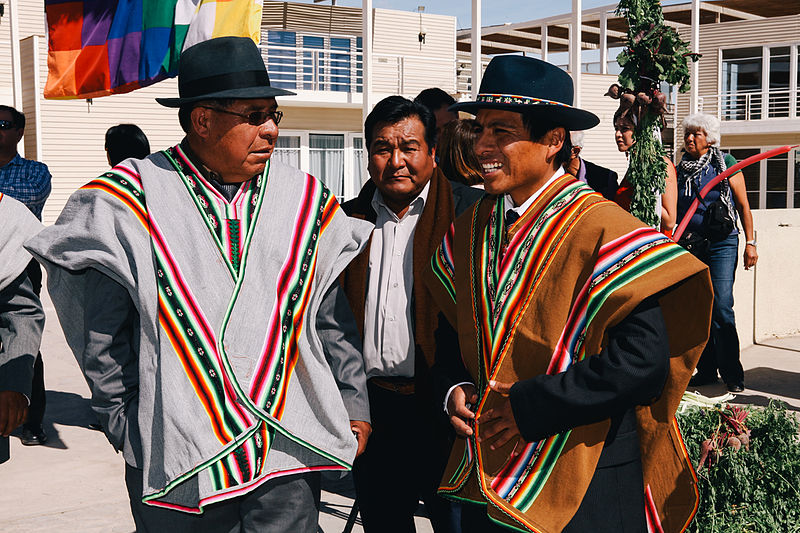
Aymara
indigenous people in the Andes and Altiplano regions of South America

Guaraní people
ethnic group of South America
Tehuelche
indigenous people from Patagonia

Charrúa people
The Charrúa are an Indigenous people or Indigenous Nation of the Southern Cone in present-day Uruguay and the adjacent areas in Argentina (Entre Ríos) and Brazil (Rio Grande do Sul). They were a semi-nomadic people who sustained themselves mainly through hunting and gathering. Since resources were not permanent in every region, they would constantly be on the move. Rain, drought, and other environmental factors determined their movement. For this reason they are often classified as seasonal nomads.
Toba people
Indigenous group of South America of guaicurú origin
.jpg)
Abipón
The Abipones (, singular ) were an Indigenous people of Argentina's Gran Chaco region and Paraguay, speakers of one of the Guaicuruan languages. They ceased to exist as an independent ethnic group in the early 19th century. A small number of survivors assimilated into Argentine society.
Atacameños
indigenous people from the Atacama Desert

Wichís
The Wichí are an indigenous people of South America. They comprise a large group of tribes inhabiting the headwaters of the Bermejo and Pilcomayo rivers in Argentina and Bolivia.
Guaicurú
Indigenous group of South America, root of partialities falta agregar Uruguay entre la banderas
Ava guaraníes
Denomination to the Guarani warriors

Diaguitas
The Diaguita people are a group of South American Indigenous people native to the Chilean Norte Chico and the Argentine Northwest. Western or Chilean Diaguitas lived mainly in the Transverse Valleys that incise semi-arid mountains. Eastern or Argentine Diaguitas lived in the provinces of La Rioja and Catamarca and part of the provinces of Salta, San Juan and Tucumán. The term Diaguita was first applied to peoples and archaeological cultures by Ricardo E. Latcham in the early 20th century.

Chanés
Chané is the collective name for the southernmost Arawakan-speaking peoples. They lived in the plains of the northern Gran Chaco and in the foothills of the Andes in Paraguay, Brazil, Bolivia, and Argentina. The historical Chané are divided into two principal groups: the Chané proper who lived in eastern Bolivia, and the Guaná who lived in Paraguay and adjacent Brazil. Twenty-first century survivors of the Chané are the Izoceno people of Bolivia and 3,034 descendants reported in Argentina by the 2010 census. Survivors of the Guaná are the Tereno and the Kinikinao both of Mato Grosso do Sul pro
Puelche people
extinct ethnic group
Mbya Guarani
subgroup of the Guarani indigenous people in South America

Pehuenche
thumb|Flag
indigenous peoples in Argentina
original peoples
%20bag%20-%20South%20American%20objects%20in%20the%20American%20Museum%20of%20Natural%20History%20-%20DSC06043.JPG)
Nivaclé people
The Nivaclé are an Indigenous people of the Gran Chaco. An estimated 13,700 Nivaclé people live in the President Hayes and Boquerón Departments in Paraguay, while approximately 200 Nivaclé people live in the Salta Province of Argentina. A very small number of Nivaclé live in Tarija, Bolivia.
thumb|Nivaclé people dancing 1908.
In the last 50 years, 15,000 Mennonites from Canada, Russia, and Germany have settled in traditional Nivaclé territory.

Payaguá people
thumb|300px|An anonymous watercolor from , one of the earliest depictions of the Payaguá people.
Quilmes people
indigenous peoples group in Argentina

Mocoví people
300px|thumb|Mocoví flag|Flag of Mocoví peoples
The Mocoví (Mocoví: moqoit) are an Indigenous people of the Gran Chaco region of South America. They speak the Mocoví language and are one of the ethnic groups belonging to the Guaycuru peoples. In the 2010 Argentine census, 22,439 people self-identified as Mocoví.
Chiripá
ethnic group in Argentina, Brazil and Paraguay

Chicoana
200px|thumb|right|Chicoana
The Chicoana are a Diaguita tribe in the Salta Province, Argentina.

Pilagás
The Pilagá () are an indigenous people of the Guaycuru group that inhabits the center of the province of Formosa, in Argentina. Some migrant groups also live in the provinces of Chaco and Santa Fe.
Colla People
The Qulla (Quechuan for south, Hispanicized and mixed spellings: Colla, Kolla) are an Indigenous people of western Bolivia, northern Chile, and the western portions of Jujuy and Salta provinces in Argentina. The 2004 Complementary Indigenous Survey reported 53,019 Qulla households living in Argentina. They moved freely between the borders of Argentina and Bolivia. While mostly living in arid highlands, their easternmost lands are part of the yungas, an altitude forests at the edge of the Amazon rainforest.
Teushen
The Teushen or Tehues were an Indigenous hunter-gatherer people of Patagonia in Argentina. They were considered "foot nomads", whose culture relied on hunting and gathering. Their territory was between the Tehuelche people to the south and the Puelche people to their north.
Patagon
thumb|200px|right|1840s (fanciful) illustration of a Patagon chief from near the Strait of Magellan, bedecked in costume of war; from ''Voyage au pôle Sud et dans l'Océanie...'' by French explorer [[Jules Dumont d'Urville]]
The Patagons or Patagonian giants were a mythical race of giant humans rumoured to be living in Patagonia described in early European accounts. They were said to have exceeded at least double normal human height, with some accounts giving heights of or more. Tales of these people maintained a hold upon European conceptions of the region for nearly 300 years.
Querandí
The Querandí were one of the Het peoples, indigenous South Americans who lived in the Pampas area of Argentina; specifically, they were the eastern Didiuhet (Diuihet). The name Querandí was given by the Guaraní people, as they would consume animal fat in their daily diet. Thus, Querandí means "men with fat". Prior to the 19th century, they were also known as the Pampas. The Mapuche (or araucanos) called them Puelche.
Huarpe people
The Huarpes or Warpes are an Indigenous people of Argentina, living in the Cuyo region. Some scholars assume that in the Huarpe language, this word means "sandy ground", but according to Arte y Vocabulario de la lengua general del Reino de Chile, written by Andrés Febrés in Lima in 1765, the word Cuyo comes from Araucanian cuyum puulli, meaning "sandy land" or "desert country".
Comechingón
thumb|240px|View of the Comechingones Mountains.
Comechingón (plural Comechingones) is the common name for a group of people indigenous to the Argentine provinces of Córdoba and San Luis. By the end of the 17th century, most Comechingones had been killed or displaced by the Spanish conquistadores.
Tonocoté
thumb|Flag
The Tonocotés or Tonokotés are an aboriginal people inhabiting the provinces of Santiago del Estero and Tucumán in Argentina.
Poya people
South American people
Capayán
The Capayán were an Indigenous people, now extinct, that lived in Argentine territory.
Ranquel people
The Ranquel or Rankülche are an indigenous tribe from the northern part of La Pampa Province, Argentina, in South America. With Puelche, Pehuenche and also Patagones from the Günün-a-Küna group origins, they were conquered by and assimilated into the Mapuche.
Het peoples
indigenous people of the northern Patagonian pampas west of the Paraná River
Robert Lehmann-Nitsche
German anthropologist (1872-1938)
Calchaquí
thumb|Calchaqui pottery
The Calchaquí or Kalchakí were a tribe of South American Indians of the Diaguita group, now extinct, who formerly occupied northern Argentina. Stone and other remains prove them to have reached a high degree of civilization. Under the leadership of Juan Calchaquí they offered a vigorous resistance to the first Spanish colonists coming from Chile.
Vilela people
indigenous people in Argentina
Minuane people
Minuane were one of the native nations of Uruguay, Argentina (specially in the province of Entre Rios) and Brazil (specially in the state of Rio Grande do Sul). Their territory was along the Paraná and Uruguay Rivers. In one source, they are fully identified with the Guenoas, being actually considered the same tribe.