Category
page 1Indigenous peoples in Bolivia

Quechua people
ethnic group indigenous to South America
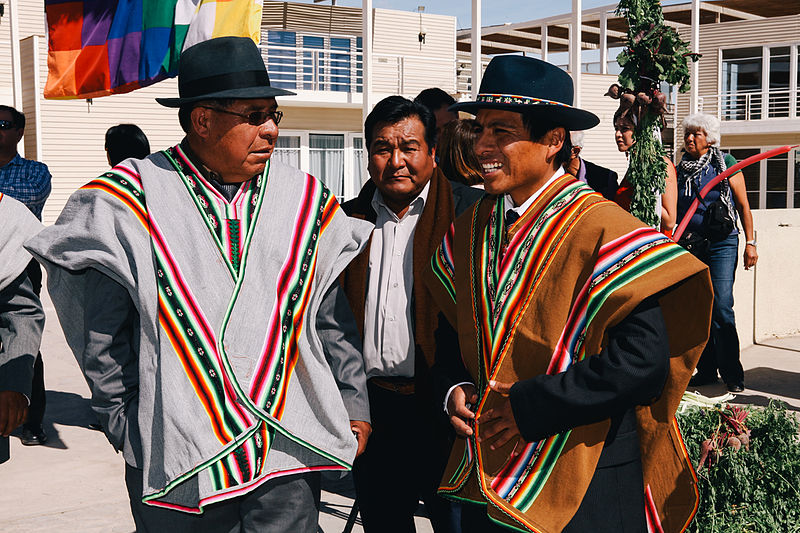
Aymara
indigenous people in the Andes and Altiplano regions of South America

Guaraní people
ethnic group of South America
Urus
indigenous group of the Andes of South America of the arahuaco bias (arawak)

Bororo people (Brazil)
The Bororo are indigenous people of Brazil, living in the state of Mato Grosso. They also extended into Bolivia and the Brazilian state of Goiás. The Western Bororo live around the Jauru and Cabaçal rivers. The Eastern Bororo (Orarimogodoge) live in the region of the São Lourenço, Garças, and Vermelho Rivers. The Bororo live in eight villages. The Bororo (or even Coroados, Boe, Orarimogodo) are an ethnic group in Brazil that has an estimated population of just under two thousand. They speak the Borôro language (code ISO 639 : BOR) and are mainly of animistic belief. They live in eight villages
Toba people
Indigenous group of South America of guaicurú origin

Ayoreo people
The Ayoreo (Ayoreode, Ayoréo, Ayoréode) are an indigenous people of the Gran Chaco. They live in an area surrounded by the Paraguay, Pilcomayo, Parapetí, and Grande Rivers, spanning both Bolivia and Paraguay. There are approximately 5,600 Ayoreo people in total. Around 3,000 live in Bolivia, and 2,600 live in Paraguay. Traditionally nomadic hunter-gatherers, the majority of the population was sedentarized by missionaries in the twentieth century. The few remaining uncontacted Ayoreo are threatened by deforestation and loss of territory.

Wichís
The Wichí are an indigenous people of South America. They comprise a large group of tribes inhabiting the headwaters of the Bermejo and Pilcomayo rivers in Argentina and Bolivia.
Guaicurú
Indigenous group of South America, root of partialities falta agregar Uruguay entre la banderas
Ava guaraníes
Denomination to the Guarani warriors

Chanés
Chané is the collective name for the southernmost Arawakan-speaking peoples. They lived in the plains of the northern Gran Chaco and in the foothills of the Andes in Paraguay, Brazil, Bolivia, and Argentina. The historical Chané are divided into two principal groups: the Chané proper who lived in eastern Bolivia, and the Guaná who lived in Paraguay and adjacent Brazil. Twenty-first century survivors of the Chané are the Izoceno people of Bolivia and 3,034 descendants reported in Argentina by the 2010 census. Survivors of the Guaná are the Tereno and the Kinikinao both of Mato Grosso do Sul pro
.jpg)
Yaminawá people
thumb|Patchwork from the 9th Festival of Yawanawa Culture. Brazil-Acre-Amazon-Rio Gregório
thumb|Mariri Yawanawá festivity exposes an active culture in the Brazilian Amazon
thumb|Patchwork from the 9th Festival of Yawanawa Culture. Brazil-Acre-Amazon-Rio Gregório
thumb
The Yaminawá (Iaminaua, Jaminawa, Yawanawa) are an Indigenous people who live in Acre (Brazil), Madre de Dios (Peru) and Pando (Bolivia). Their homeland is Acre, Brazil.
Yuracaré people
indigenous people of Bolivia
Tsimané people
The Tsimané, also known as the Tsimane' or Chimane, are an indigenous people of lowland Bolivia, living chiefly in the Beni Department municipalities of San Borja, San Ignacio de Moxos, Rurrenabaque, and Santa Ana del Yacuma. The Tsimané are the main residents of the T'simane Council Territory () and the Pilón Lajas Reserve. They are primarily a subsistence agriculture culture, although hunting and fishing contribute significantly to many of the settlements' food supply. Those Tsimané living in the Reserve are affiliated with the multiethnic Consejo Regional Tsimane Moseten (CRTM), which holds
Ese Ejja people
indigenous people of Bolivia and Peru, in the southwestern Amazon basin
Moxo people
The Mojeños, also known as Moxeños, Moxos, or Mojos, are an indigenous people of Bolivia. They live in south central Beni Department, on both banks of the Mamore River, and on the marshy plains to its west, known as the Llanos de Mojos. The Mamore is a tributary to the Madeira River in northern Bolivia.

Chiquitano people
The Chiquitano or Chiquitos are an indigenous people of Bolivia, with a small number also living in Brazil. The Chiquitano primarily live in the Chiquitania tropical savanna of Santa Cruz Department, Bolivia, with a small number also living in Beni Department and in Mato Grosso, Brazil. In the 2012 census, self-identified Chiquitanos made up 1.45% of the total Bolivian population or 145,653 people, the largest number of any lowland ethnic group. A relatively small proportion of Bolivian Chiquitanos speak the Chiquitano language. Many reported to the census that they neither speak the language

Guarayos
thumb|The Guarayos Providence in Santa Cruz, Bolivia
The Guarayos are an indigenous group living in their ancestral land in eastern Bolivia. They are located north of the department of Santa Cruz. The current population of the Guarayo group in Bolivia is 12,000. They primarily speak Guarayu, and 70% of the population is Roman Catholic with the remaining 30% practicing ethnic religions. Guarayu comes from the language of Guaraní as it belongs in the Tupí Family. They are known to be predominantly agricultural as much of their culture and lifestyle relies on their land.
Tacana people
ethnic group in Bolivia

Payaguá people
thumb|300px|An anonymous watercolor from , one of the earliest depictions of the Payaguá people.
%20bag%20-%20South%20American%20objects%20in%20the%20American%20Museum%20of%20Natural%20History%20-%20DSC06043.JPG)
Nivaclé people
The Nivaclé are an Indigenous people of the Gran Chaco. An estimated 13,700 Nivaclé people live in the President Hayes and Boquerón Departments in Paraguay, while approximately 200 Nivaclé people live in the Salta Province of Argentina. A very small number of Nivaclé live in Tarija, Bolivia.
thumb|Nivaclé people dancing 1908.
In the last 50 years, 15,000 Mennonites from Canada, Russia, and Germany have settled in traditional Nivaclé territory.

Sirionó people
The Sirionó are an indigenous people of Bolivia. They primarily live in the forested northern and eastern parts of Beni and northwestern Santa Cruz departments of Bolivia. They live between the San Martín, Negro Rivers, and the Machado River.
Colla People
The Qulla (Quechuan for south, Hispanicized and mixed spellings: Colla, Kolla) are an Indigenous people of western Bolivia, northern Chile, and the western portions of Jujuy and Salta provinces in Argentina. The 2004 Complementary Indigenous Survey reported 53,019 Qulla households living in Argentina. They moved freely between the borders of Argentina and Bolivia. While mostly living in arid highlands, their easternmost lands are part of the yungas, an altitude forests at the edge of the Amazon rainforest.
Machinere people
The Machinere are an Indigenous people of Brazil, Bolivia, and Peru. They live along the Acre River in Bolivia. In Brazil they mostly live in the Mamoadate Indigenous Territory, although some live in the Chico Mendes Extractivist Reserve, both in Acre.
Movima people
Bolivian ethnic group
Guató people
indigenous people in Brazil and Bolivia
Guarasu’wes
The Pauserna are an indigenous people in Bolivia and Brazil who live along the upper Río Guaporé. Most of them live in the southeastern part of the department of Beni, in Bolivia. The people derive their name from the fact that the pao cerne tree is abundant in their area. Only a few of the older people speak the Pauserna language, which is closely related to Guaraní and is a member of the Tupí language family.
Lupaca
The Lupaca, Lupaka, or Lupaqa people were one of the divisions of the ancestral Aymaras. The Lupaca lived for many centuries near Lake Titicaca in Peru and their lands possibly extended into Bolivia. The Lupacas and other Aymara peoples formed powerful kingdoms after the collapse of the Tiwanaku Empire in the 11th century. In the mid 15th century they were conquered by the Inca Empire and in the 1530s came under the control of the Spanish Empire.
indigenous peoples in Bolivia
Native Bolivians constitute approximately 62% of Bolivia's population
Yuqui
The Yuqui are an indigenous people of Bolivia. They primarily live in the Santa Cruz and Cochabamba Departments of eastern Bolivia.
Toromona people
The Toromona are an indigenous people of Bolivia. They are an uncontacted people living near the upper Madidi and Heath Rivers in northwestern Bolivia. Bolivia's Administrative Resolution 48/2006, issued on 15 August 2006, created an "exclusive, reserved, and inviolable" portion of the Madidi National Park to protect the Toromona.
flag of the patujú flower
flag of the indigenous of eastern Bolivia
Chakobo
ethnic group
Pacahuara
The Pacahuara are an indigenous people of Bolivia. A small group live in Tujuré, a community located near the Chácobo people on the Alto Ivón River in the Beni Department. The group only consists of four contacted people. The fifth, a 57-year-old woman, died on 31 December 2016 in the village of Tujure in the north-east of the country. Another uncontacted group of Pacahuara, with 50 members in eight families, lives between Rio Negro and Río Pacajuaras in the Pando of northeastern Bolivia, near the Brazilian border.